

Wiser after injury, Savolainen returns with 'same hunger to win'
Thursday, July 6, 2023 - 06:22 By Vinay Siwach

BUDAPEST, Hungary (July 6) -- A year ago, Arvi SAVOLAINEN (FIN) was preparing for the World Championships at a training camp in Poland. On the final day of the training camp, Savolainen experienced a setback.
While practicing the gut wrench, a common scoring technique in Greco-Roman wrestling, he inadvertently lost his grip and felt intense pain in his left wrist. Concerned about a possible break, he immediately stopped training. Unfortunately, his fears were confirmed by a doctor who diagnosed a torn ligament and recommended surgery.
Apart from the physical pain, Savolainen was deeply disappointed that he would have to miss the World Championships. Reflecting on the situation, he explained, "It was the last planned training camp before the World Championships. Surgery was the only option as the ligaments were completely torn, and if left untreated, my wrist would worsen."
"It was the last training camp planned before the World Championships,” Savolainen said. “Only surgery was the option as the ligaments were completely broken and if we didn't do the surgery, the wrist would get worse.”
In an Instagram post after the surgery, Savolainen shared a photo of his tapped left wrist and wrote a caption: “We have the main competition [World Championships] in fall, but this year I'm focusing on practicing life temporarily as a left-handed.”
This setback marked the first major obstacle for Savolainen, a 24-year-old wrestler widely regarded as Finland's most promising talent and its best hope for a medal at the upcoming Paris Olympics. At the 2022 World Championships, he would have been among the favorites to step onto the podium at 97kg, the only world medal missing from his impressive collection.
In 2018, Savolainen ended Finland's 24-year wait for a U20 world champion title. The following year, he became the first Finnish wrestler to secure U23 world gold and added a bronze in 2021. At the 2022 European Championships, he reached the final, a milestone achievement for Finland after an eight-year absence.
Savolainen also made a mark at the Tokyo Olympics, finishing fifth and narrowly missing out on a bronze medal. His performance made him the first Finnish wrestler to reach the medal rounds at the Olympics since the 2004 Athens Games.
All this success came despite Finland's decline as a powerhouse in Greco-Roman wrestling.
“Sparring partners is a huge problem, I think, for all Nordic countries,” he said. “There is not much wrestling like in Hungary. There are some younger guys, but if you want real good sparring with a lot of partners, then you have to go to other countries like here in Hungary.”
However, these challenges didn't deter Savolainen from his wrestling journey. Though the injury posed a temporary setback, he used the time to focus on strengthening his lower body, dedicating extra hours at the gym to leg exercises.
“Mostly I trained lower body like power to the legs and the mid-body power,” he said. “With time, I was able to do normal stuff and also wrestle. But wrestling is quite hard for the wrists.”
For a Greco-Roman wrestler, wrists play a crucial role in bouts, from gripping opponents' hands to enduring constant pressure and utilizing the wrists for techniques like rolls.
“When you have normal wrists, you don't think that wrestling is that hard for the wrist,” he said. “But when you have a broken wrist, you realize 'oh damn, wrestling is really hard.' The grip of your hand is different than before.”
Undeterred by his injury, Savolainen decided to return to competition. He participated in an international training camp in Croatia in February and then entered the Thor Masters in March to prepare for the European Championships.
“We had technique sessions to wrestle in standing position and do some in which you can avoid using your wrist,” he said. “I taped it in the beginning. I thought I'm ready to compete with the tape wrist and I competed in a Thor Masters.”
However, an unfortunate turn of events awaited Savolainen in Denmark. After winning his first bout with ease, he broke the cartilage of his ribs while executing a roll, requiring another surgery and extending his recovery time. As a result, he had to withdraw from the European Championships.
“I rolled him [my opponent] and broke cartilage in my rib,” he said. “I had to have another operation. Fortunately, it was not a big one so it only took maybe one month to recover from it, but now I've.”
This was the longest the Lahti native was away from wrestling since he began aged four. Not that it was the only sport he took part in as a kid.
Savolainen, being an extremely energetic kid, tried his hands at three other sports before settling for wrestling. As his family owned a few horses, he took part in equestrian at a junior level along with snowboarding and ice hockey.
“I had older siblings who also wrestled but they quit maybe after a year,” he said. “Wrestling was quite cheap and a good hobby in Finland.
“When I was younger, we had our own horses. I've also done some snowboarding. I also acted for a year. But at 15, you have to decide if you want to be a wrestler. And you don't have the energy to do a lot of other stuff if you become a wrestler.”
To resume his history-making streak for Finland, Savolainen has entered the fourth Ranking Series in Budapest, scheduled from July 13 to 16. Competing against some of the world's best wrestlers in Budapest, providing him the test before the World Championships in September.
Among the notable competitors entered for Budapest are Daniel GASTL (AUT), Markus RAGGINGER (AUT), Murat LOKIAYEV (AZE), Arif NIFTULLAYEV (AZE), Tamas LEVAI (HUN), Alex SZOKE (HUN), Tyrone STERKENBURG (NED), and Felix BALDAUF (NOR).
But Savolainen is not worried.
“Getting your mind ready to compete and also get some good matches in the competition is the main thing,” he said. “When we have other competitions before the World Championships, as my condition gets better and better, I feel confident with myself before the real test in Serbia.”
A lot of that confidence also comes from the lessons he learned about wrestling and himself during the time his away from training.
“I'm much more experienced,” he said. “Maybe after some injuries, you learn stuff. You don't have to push your body to your limits in every training so be wise.
“I missed it [wrestling], sometimes. It's a good feeling when you have a successful competition and all the pressure goes away. That's the feeling you miss.”
He could not have picked up a better competition to experience the winning feeling. Budapest holds a special significance for Savolainen as it was this city where he claimed the U20 world title in 2018 and secured a silver medal at the European Championships the previous year.
Despite wrestling's physical toll, Savolainen remains determined to achieve greatness in the sport and experience that gratifying sensation once again.
“Wrestling is quite hard on your body,” he said. “Sometimes you just want to lay on your sofa and watch Netflix. I like to go sauna to relax when we have off time. But I still have a hunger to win and the same feeling when you have a successful competition. You might have your body hurting, but [when you win] you feel that you did it and it's a good feeling.”

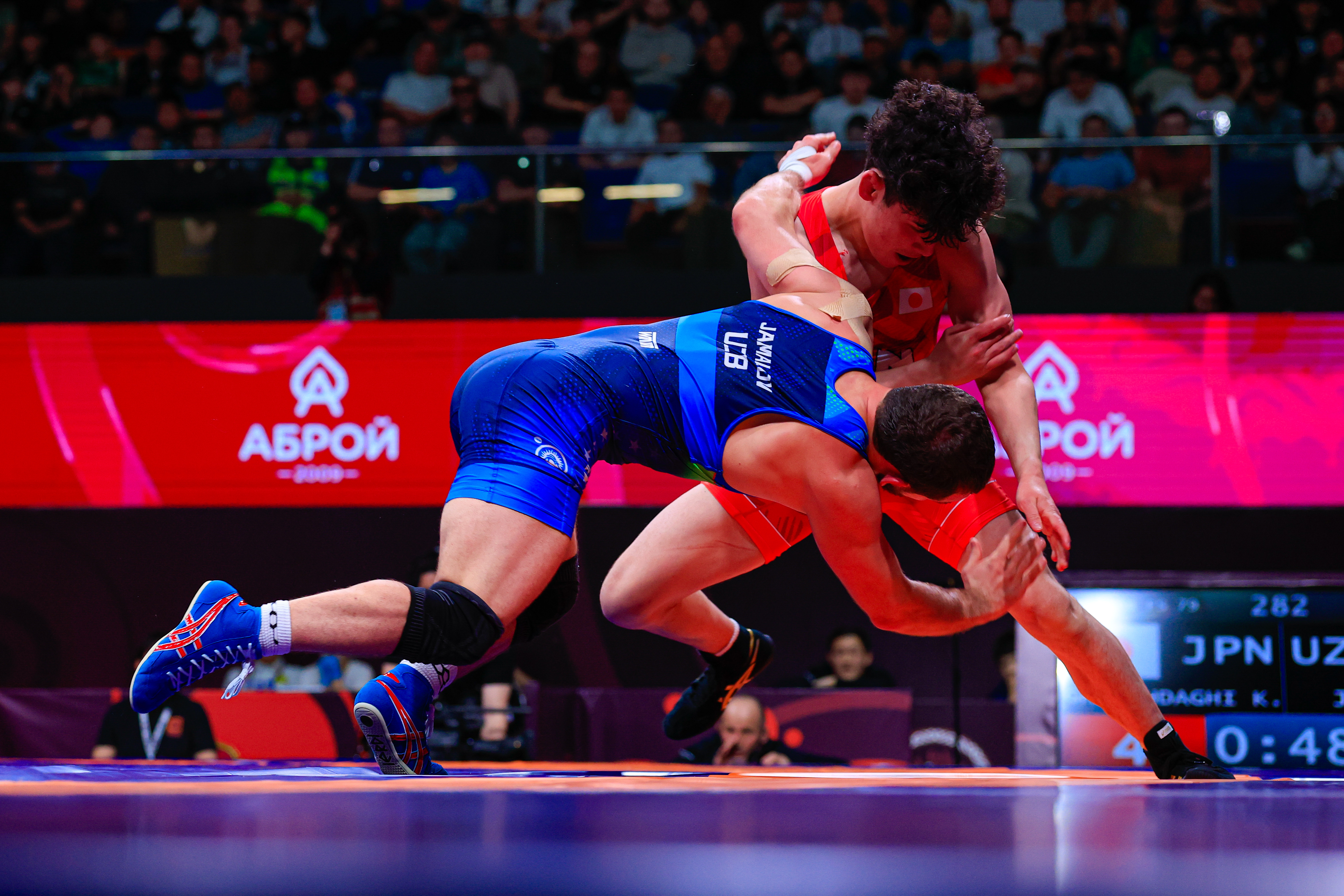 Keyvan GHAREHDAGHI (JPN) battles it out witb Razambek JAMALOV (UZB) during the 79kg semifinal. (Photo: United World Wrestling / Kostadin Andonov)
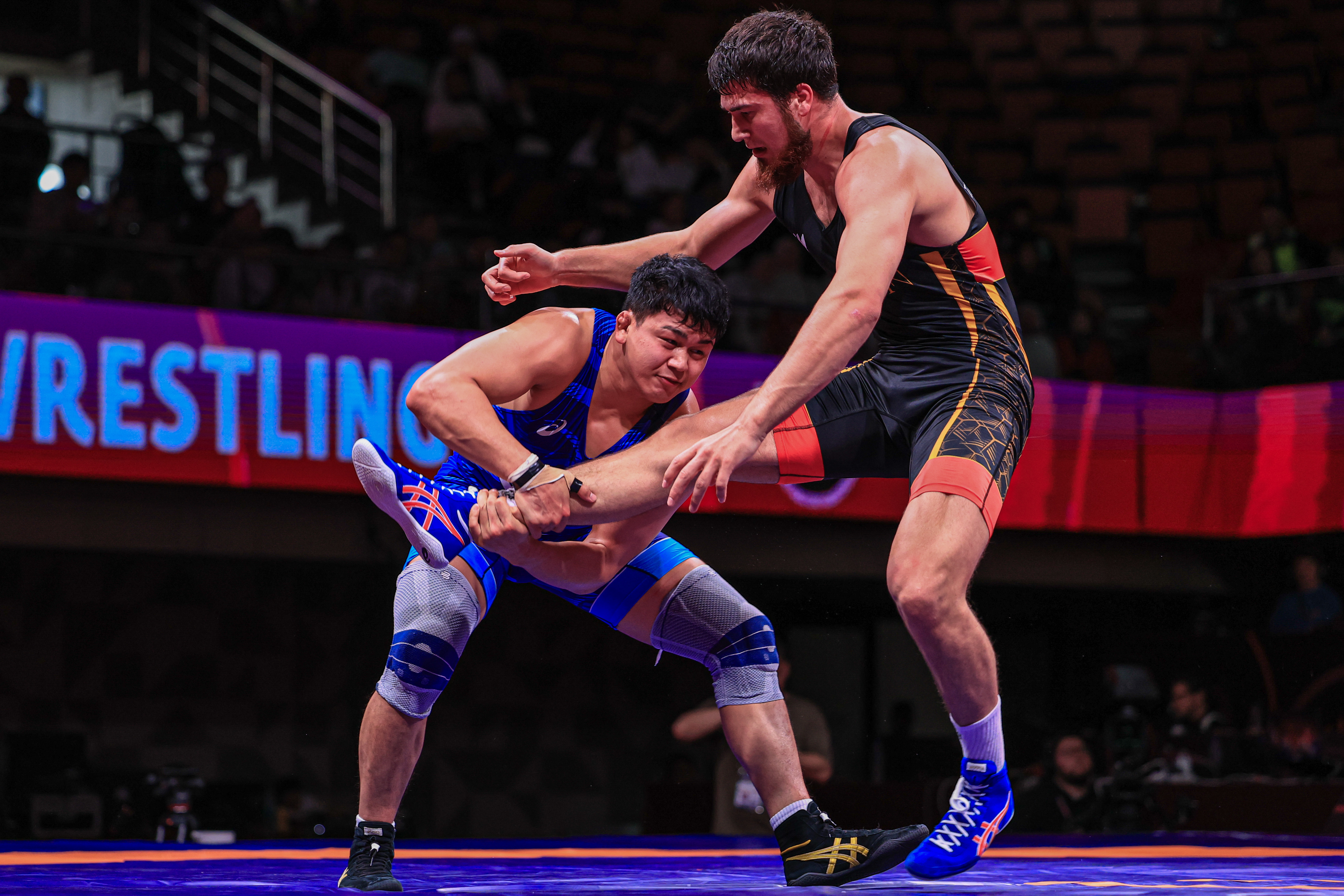 Arash YOSHIDA (JPN) scores on Akhmed TAZHUDINOV (BRN) during the 97kg semifinal. (Photo: United World Wrestling / Amirreza Aliasgari)
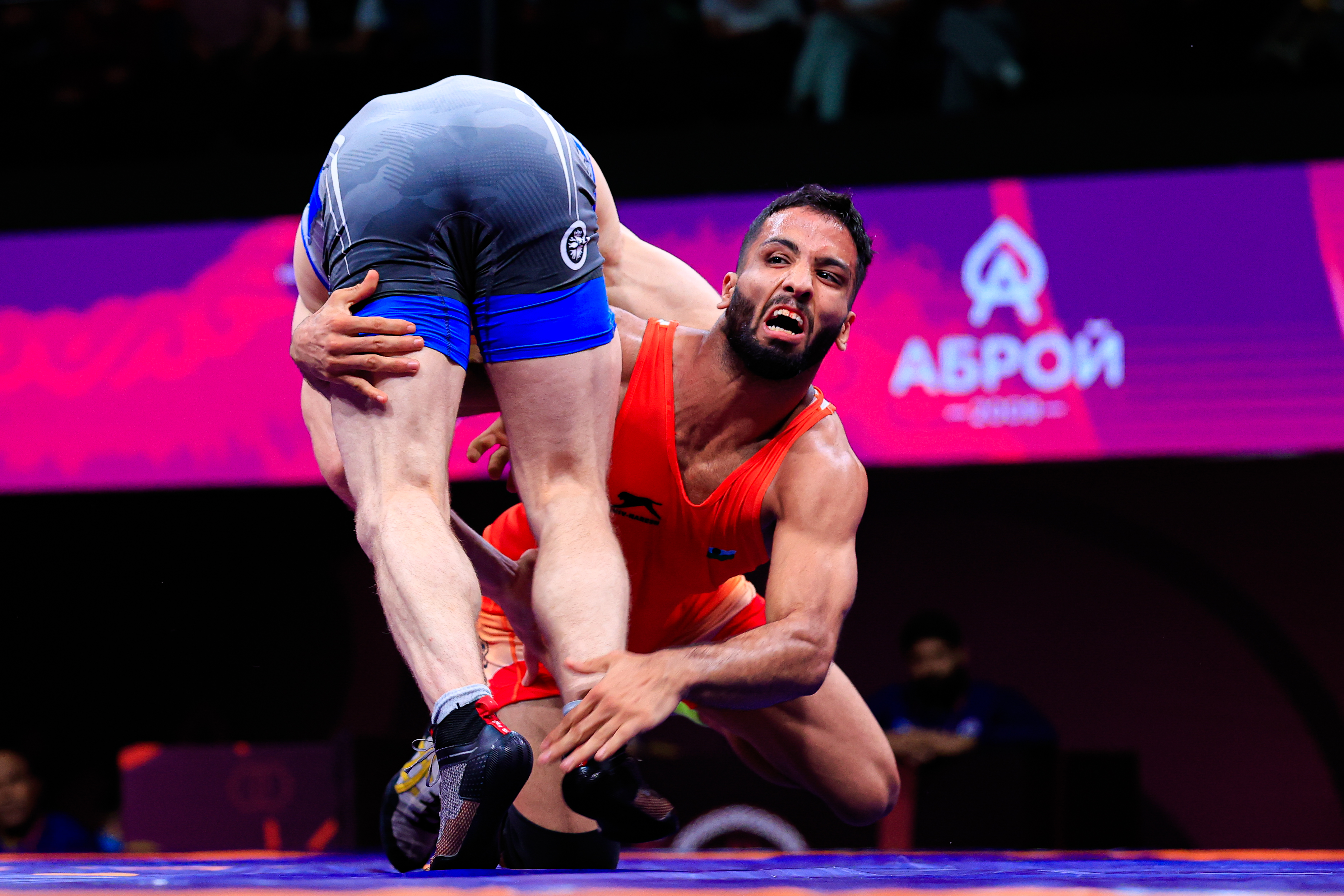 SUJEET (IND) reached his first-ever Asian Championships final. (Photo: United World Wrestling / Kostadin Andonov)
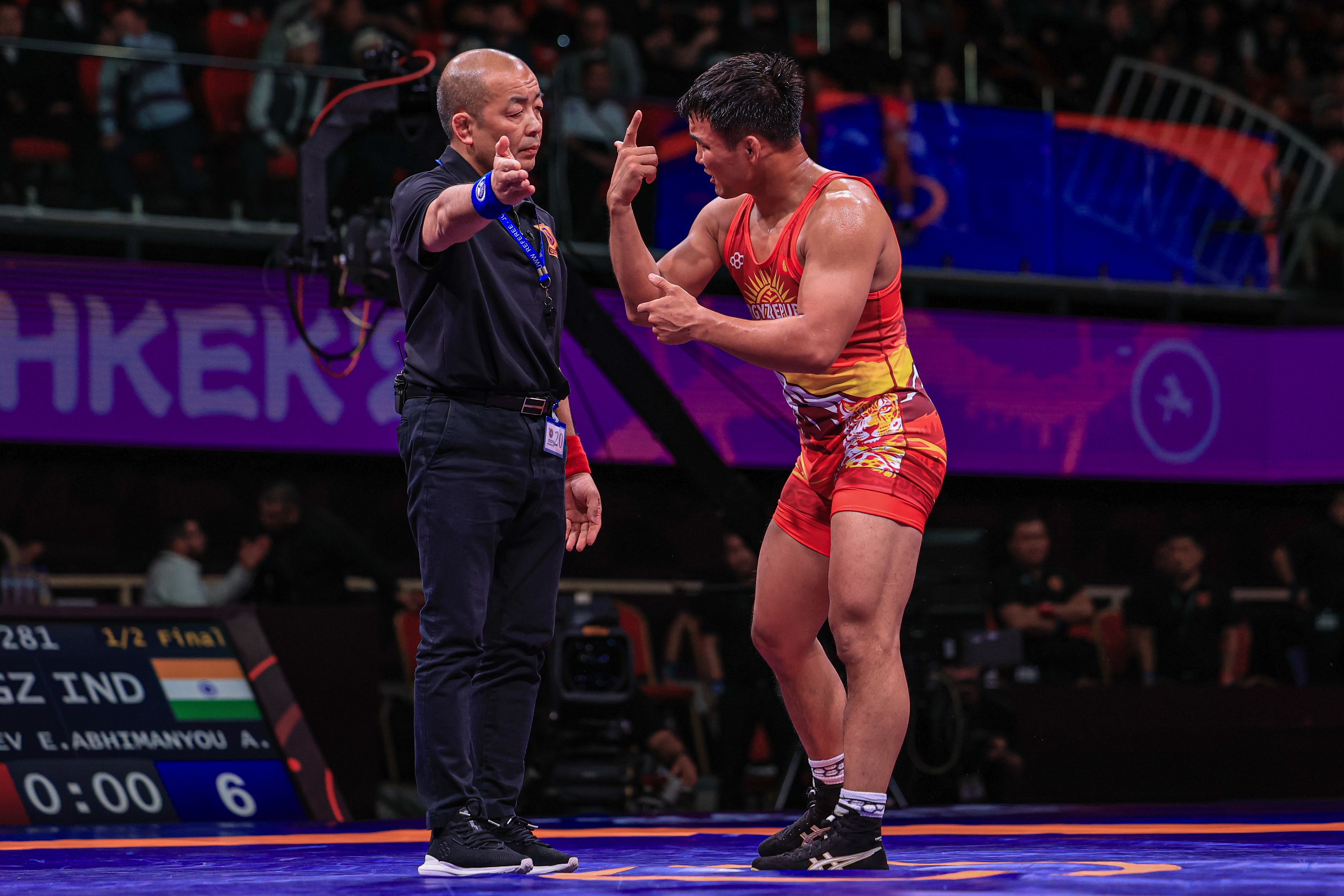 Ernazar AKMATALIEV (KGZ) presents his case to referee after the semifinal against ABHIMANYOU (IND). (Photo: United World Wrestling / Amirreza Aliasgari)
Share your thoughts.
Comments