

Wiebe inspires next gen at UWW-IIS camp in India
Saturday, February 15, 2025 - 08:21 By Vinay Siwach

KARNATAKA, India (February 15) -- Erica WIEBE (CAN), the 2016 Rio Olympic champion, usually doesn't take it around but for her India trip, she made sure to pack her gold medal from Rio.
Call it luck, the gold medal turned out to be the highlight of her trip.
In India for a masterclass at the international women's wrestling camp organized by the Inspire Institute of Sport and United World Wrestling, Wiebe got mobbed by 50 young wrestlers as she showed them her medal. Wrestlers from Jordan, Estonia, South Africa, Mauritius, Mongolia, Kazakhstan and hosts India, all part of the camp, wanted to touch it, feel it and may be keep it.
"To see the looks on their faces and in their bodies responding to what it felt like to hold the kind of weight of your dream in your hand, I got emotional with them," Wiebe says. "It was so surreal for me to share the medal with the athletes because it brought me back to where I was at that time, and how it felt like winning an Olympic gold medal was just like this impossible dream that would never happen. It's really important for me to come here and do things like this to remind these women that, these crazy, unimaginable things are real. They can happen and to encourage them to continue to dream big."
No wrestler could walk away without a photo. A few even got emotional as they took the medal in their hands.
"God, I don't know how many times I have dreamt about that in the night," U17 world bronze medalist Lisette BOTTKER (EST) says. "When I got the medal on my hands, I was also trying not to cry but the feeling is awesome."
Maya QUTAISHAT (JOR) adds, "It seemed like the dreams of most of us wrestlers in front of us. Like getting the Olympic gold medal."
UWW and IIS organized the camp for wrestlers from around the world from January 15 to 31. It was hosted by IIS at it's world class facility in Vijayanagar, a township in Ballari district of north Karnataka, India.
Wiebe held a masterclass for the wrestlers along with training sessions with IIS head coach Amir TAVOKKALIAN, a former world silver medalist and Asian champion.
"It's a really amazing development opportunity for a young wrestlers from all around the world," Wiebe said. "There's several nations here, and it's so incredible to see the level of talent and passion of these young athletes. At the camp this week, we've had a number of sessions kind of leveraging different unique styles, having the different countries lead different warmups. We're here at the Inspire Institute of Sport which is a phenomenal world class facility. We don't have anything like this in Canada, there's very few facilities like this in the world. It's really exciting to see that India has this.
"Not only that, they have this for their athletes training, but they've invited many countries around the world to share in this moment and to leverage the resources that are available here on this site."
IIS President Manisha MALHOTRA also visited the camp and threw some light on the partnership with UWW to grow the sport.
"We're very passionate about the sport from an Indian ecosystem point of view," Malhotra said. "But what we realized is that, we need to start looking outside India to bring in expertise, look in partnerships. With that in mind, I think there was no better partner than UWW.
"They’ve done a phenomenal job with wrestling worldwide and growing the sport very well. The idea was to have a very good mix of people, whether they are from a very developed wrestling nation or from an underdeveloped wrestling nation, it needs to be a common platform where people can extract some sort of benefit for everybody. That was the main premise with what we worked with."
Apart from the training, wrestlers at the camp used the high performance center at IIS and indulged in sightseeing.
"Training here is very strong. We come out of the mat sweating a lot, and it's very tough," Qutaishat said, "The girls here are very high level. When I wrestle them, I learn a lot of techniques and so many things that I usually don't see back in my country. But I get to explore more as I go out to the camps."
Wiebe had an advice for all wrestlers, especially coming from smaller countries to the development camps.
"I told the athletes the goals are: to have fun, and to get better," Wiebe said. "And how do you do that? You find strength on the edge of failure. You have to put yourself on the line. Wrestling is not easy. You see it on the athletes bodies. They're pushing themselves to their limits, physically and mentally. They are tired. I remember being that way as an athlete. You always have to find another level to yourself."
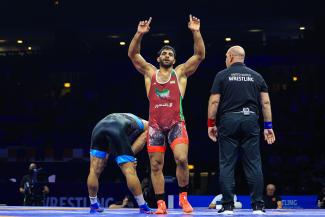
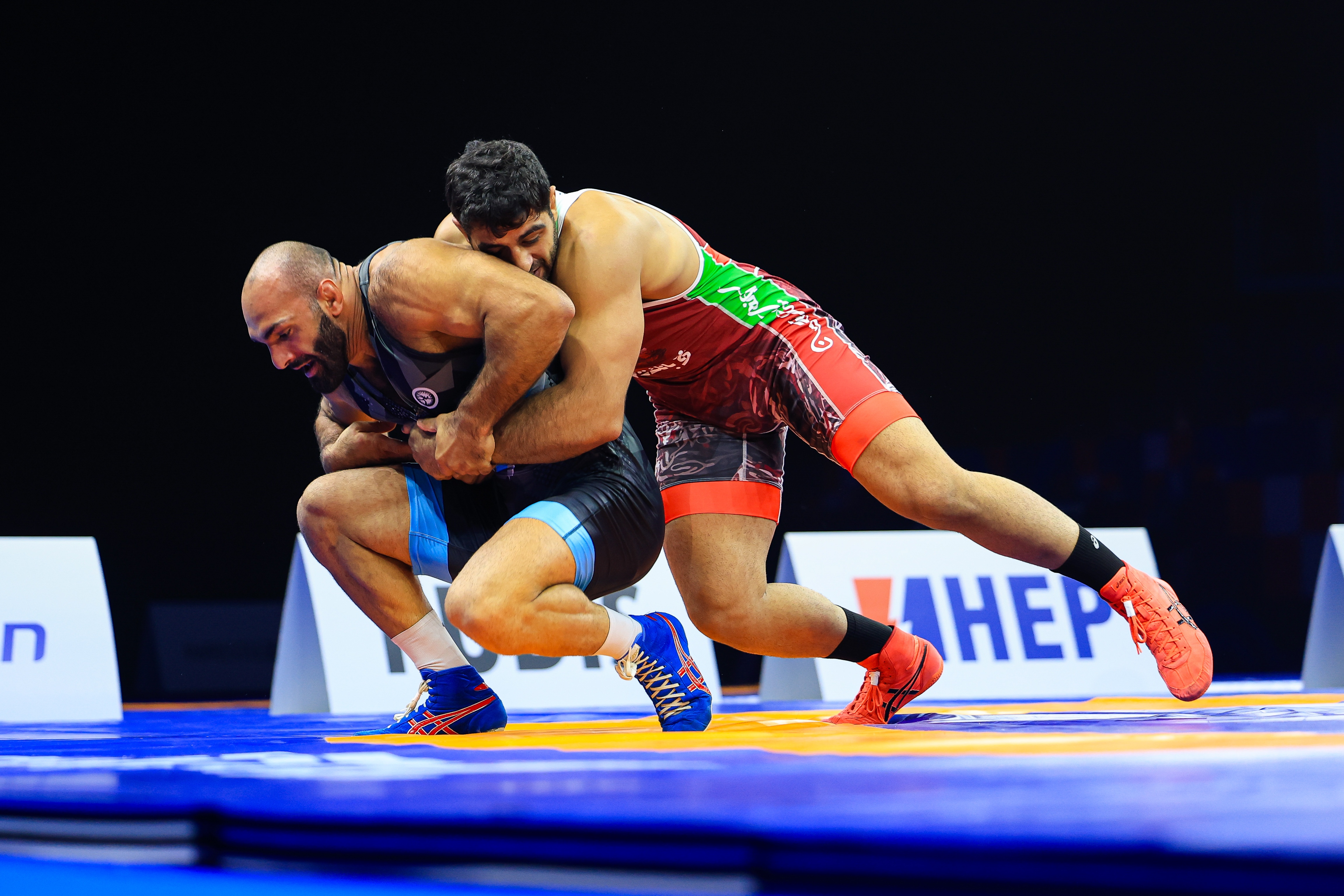 Mohammadhadi SARAVI (IRI) scores a takedown on Artur SARGASIAN (UWW) in the 97kg final. (Photo: United World Wrestling / Kadir Caliskan)
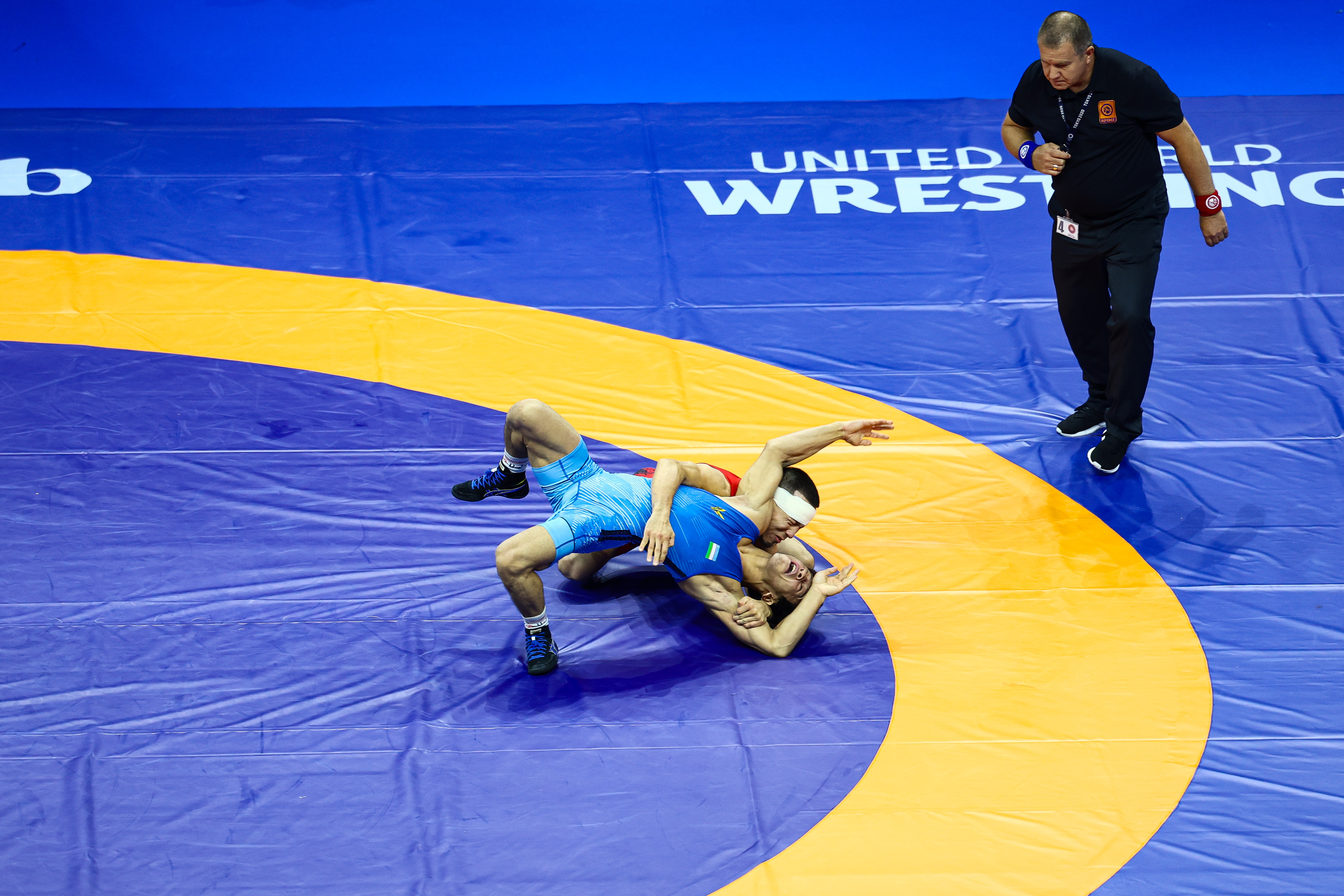 Aidos SULTANGALI (KAZ) scores a four-pointer on Alisher GANIEV (UZB) in the 60kg final. (Photo: United World Wrestling / Jake Kirkman)
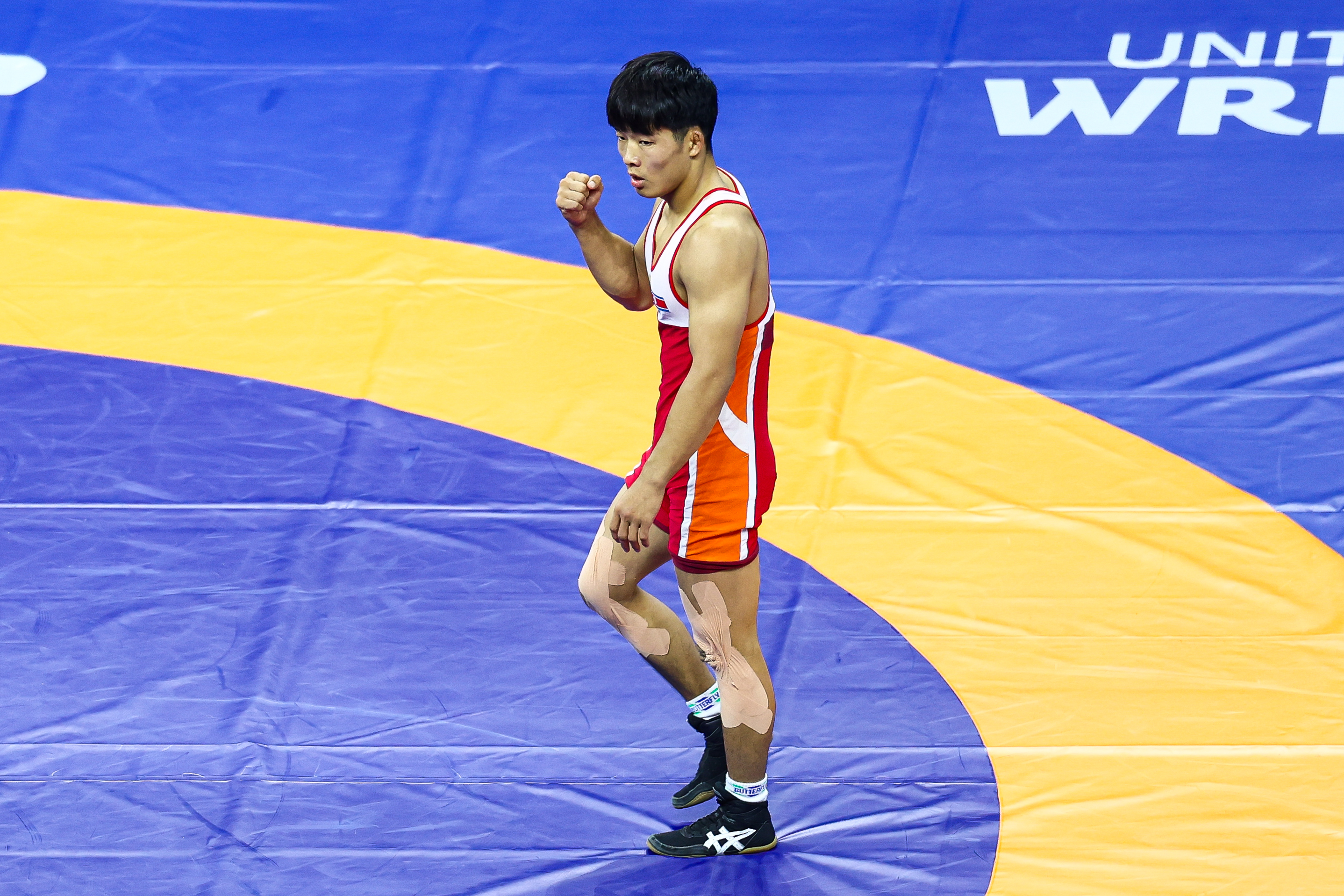 Se Ung RI (PRK) won a bronze medal at the 60kg weight class. (Photo: United World Wrestling / Jake Kirkman)
Share your thoughts.
Comments