ATHENS, Greece (August 3) -- Three gold medals for the United States and Iran's incredible choke on Sunday saw the U.S. defend its Freestyle team title at the World U17 Championships in Athens, Greece.
Going into the final day, Iran needed to win one bout out of four it had wrestlers in to claim the title irrespective of U.S. results. On the other hand, U.S. needed to win all its four bouts, including two head-to-head finals, and hope that Iran loses all its other matches as well.
That is exactly what transpired on the mat as U.S. put on an inspired show and won three gold and one bronze medal to reach 154 points. Iran finished with 150 points after its three loses in the finals and one in a bronze-medal bout.
Kazakhstan managed to pip Azerbaijan by one point and finish third with 91 points. Azerbaijan finished fourth 90 points and Japan got 79 points and finished fifth.
On Saturday, Ariah MILLS (USA) had won one gold as well apart from Japan, Azerbaijan, Ukraine and one UWW wrestler winning gold medals.
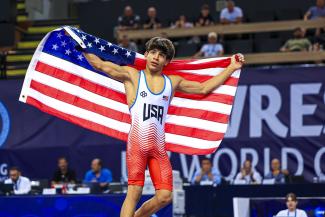
It began with Keegan BASSETT (USA), who gave hope to U.S. by claiming the gold medal at 45kg, as he pinned Parsa TAHMASBI (IRI) in the final inside the first period.
The first scramble saw the two wrestlers called back to center as neither wrestler was able to break the arm-lock. Bassett got the first takedown to lead 2-0 and then a turn made it 4-0. The American wrestler got another takedown and kept Tahmasbi's back on the mat.
The referees took their time but eventually called the fall, giving Bassett the gold medal at 45kg. Incidentally, its the same weight class his brother Bowen won the world U17 gold medal in 2021.
"Ever since I started wrestling, this was one of my goals to be a world champ," Bassett said. "It feels unbelievable to find a way to do it."
Over the two days he wrestled, Bassett showed how technically sound and physically strong he is at the weight class.
"I wrestled pretty good overall. First match was a little rough; nerves, and it was my first match in about three months," he said. "But I think I got better overall as the weekend went on and that's what I needed."
Four years ago, he was in Budapest watching Bowen win the gold medal in similar fashion as he pinned his opponent in the final. Keegan recalled that day.
"I definitely had that in mind going into this," he said. "Four years, that's unreal. I was there for him when he won in Budapest. I cried then, I cried now. It's just means so much. We work so hard and it's just truly such a surreal moment."
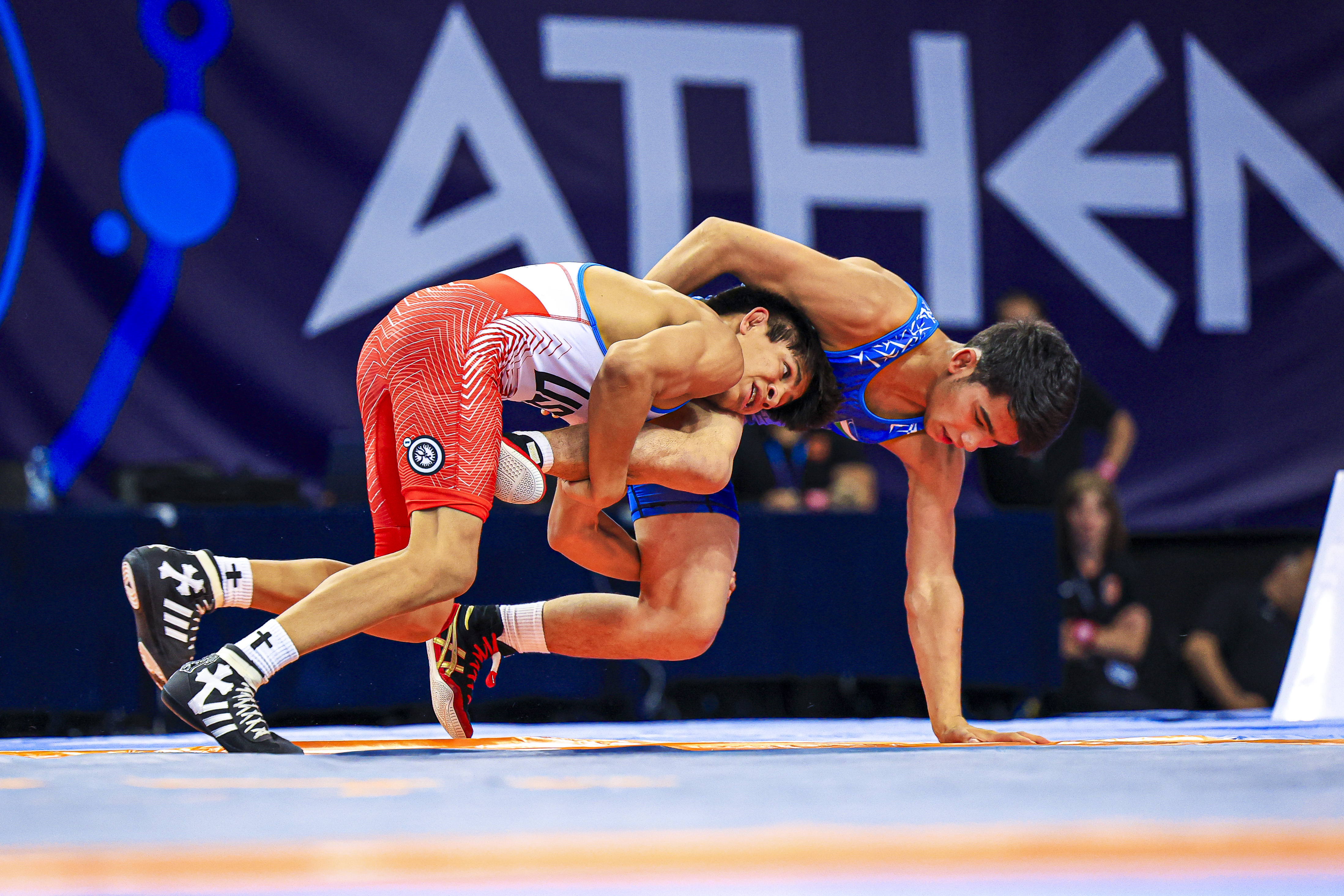 Samuel SANCHEZ (USA) scores the gold winning takedown against Ulugbek RASHIDOV (UZB) in the 51kg final. (Photo: United World Wrestling / Amirreza Aliasgari)
Samuel SANCHEZ (USA), a returning world champion facing another returning world champion Ulugbek RASHIDOV (UZB), consolidated U.S. position by winning a thrilling 51kg final.
Rashidov was put on the passivity clock in the first period which gave Sanchez a 1-0 lead. He tried to score a go-behind and was awarded two points in the sequence. The U.S. challenged the decision and on review, it was clear that Rashidov never passed behind Sanchez and the two points were removed.
Sanchez came out attacking in the second period and got on a single-leg attack. Rashidov got his best defense of the match and defended that attack. Soon, Sanchez was put on the clock but he got the takedown on the edge with another leg attack to lead 3-0 and also got the activity time removed .
While Rashidov did get a front headlock turn in the final five seconds, Sanchez did not let him another and planted Rashidov's back on the mat for two more points as the time expired.
"I knew he was going to be a tough opponent," Sanchez said. "I got a little tired in the match, but I kept going, kept digging deep and going through it. I got a couple shots but wasn't able to finish. But my last shot, I was able to take him out of bounce and get the two-point takedown."
Sanchez now has two gold medals at the World U17 Championships, having won at 45kg last year.
"This year I was definitely better than I was last year at controlling my opponent and moving him around," he said. "Not letting them on my legs as much. Last year, I was down like 5-0 in the finals. This year, didn't take me down."
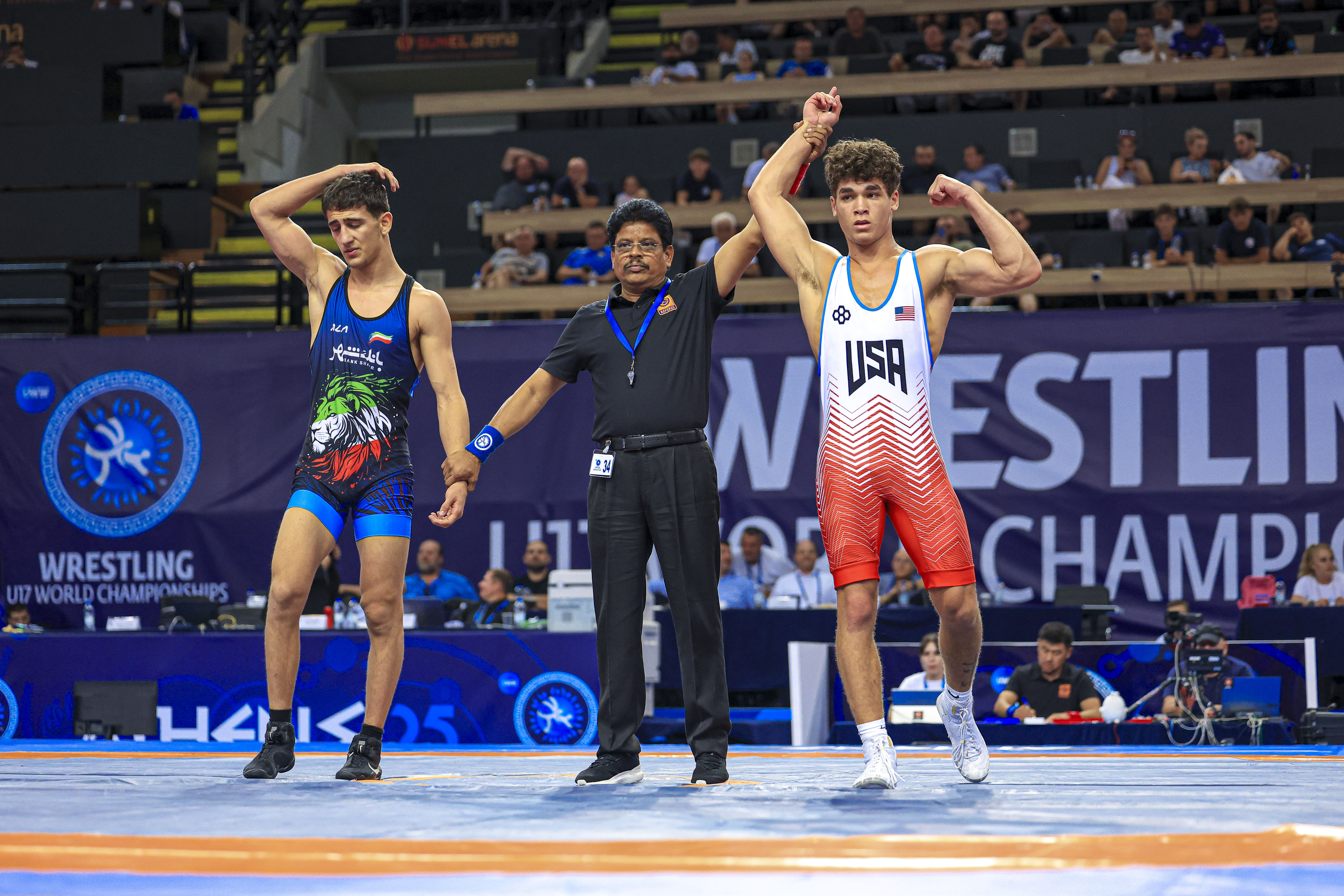 Jayden JAMES (USA) defeated Arsham VAHABIAN (IRI), 9-2, in the 71kg. (Photo: United World Wrestling / Amirreza Aliasgari)
Jayden JAMES (USA) put the U.S. closer to the title as he humbled Arsham VAHABIAN (IRI), 9-2, in the 71kg.
Vahabian was looking for his leg attacks but they never came as James showed some of the best defense of the night. He countered and scored a takedown. That remained the theme of the match as James kept going and did not even return to his corner during the break.
Soon, James had Vahabian broken and he ended the bout as Vahabian tried to pull of a headpinch. The win made U.S. go to 139 points while Iran was on 130 points.
In the 92kg bronze medal bout, Tanner HODGINS (USA) rallied to beat Elguja LOMIDZE (GEO), 10-0, and took the final tally of U.S. to 154 points.
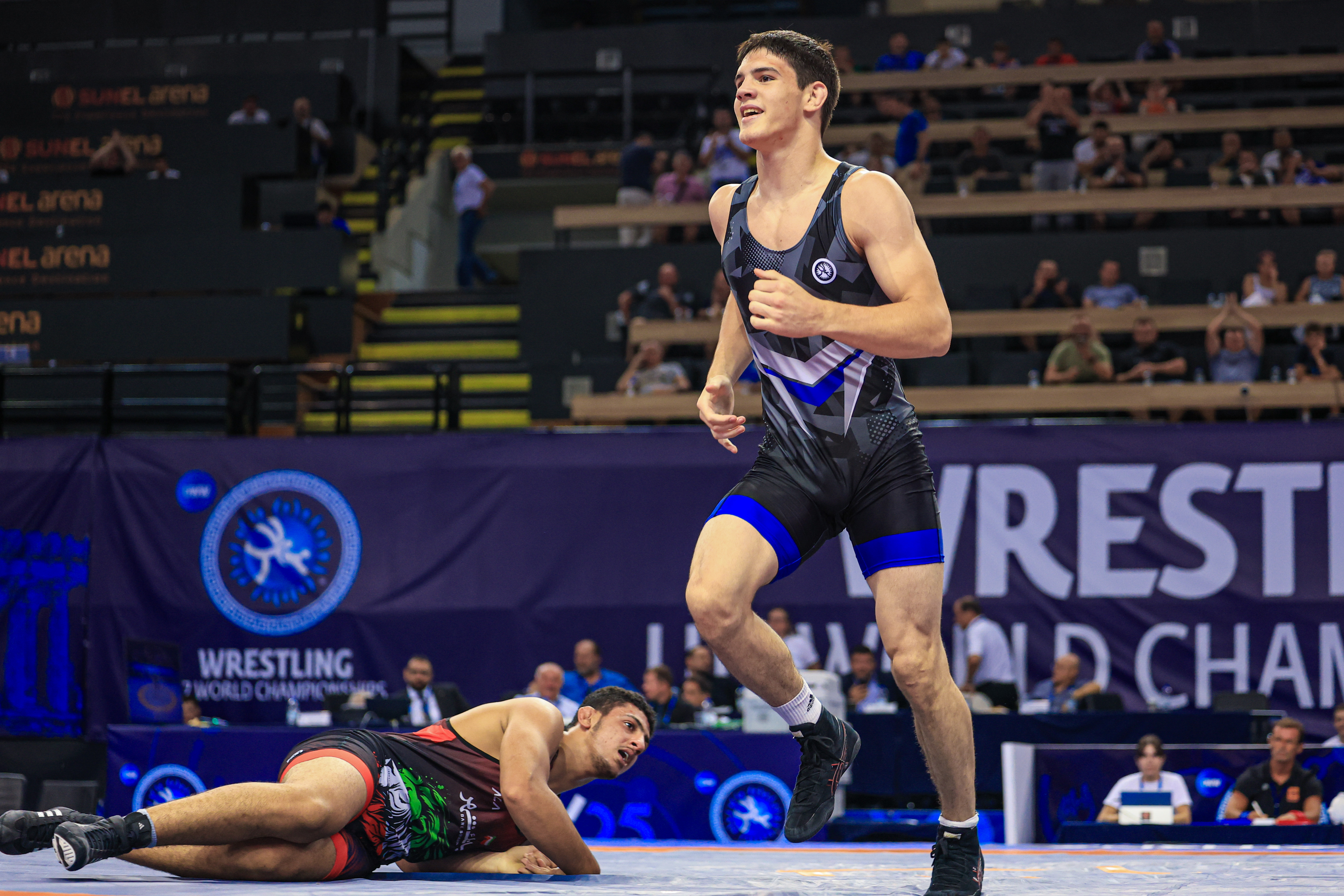 David DZEBISOV's (UWW) win over Amirali ALIZADEH (IRI) in the 92kg final indirectly helped the U.S. win the team title. (Photo: United World Wrestling / Amirreza Aliasgari)
It was now on Amirali ALIZADEH (IRI), who needed to win his 92kg final, a win which would have propelled Iran to 155 points and the team title.
But David DZEBISOV (UWW) ruined that party. Dzebisov defeated Alizadeh 6-2 in the 92kg final to deny Iran and earn a world title for himself.
Dzebisov scored the first takedown to lead 2-0 but Alizadeh fired one back on the second period to make it 2-2 and lead on criteria. He went into defense mode after that.
He, however, got caught in a tangle with Dzebisov who managed to finish on top and score two points and a lead of 4-2. There was only desperation from Alizadeh after that as he gave up two more points to drop the final 6-2.
In the only final in which neither Iran nor the U.S. featured, SITENDER (IND) won India's first Freestyle gold medal by beating Rihito HIURA (JPN) in the 60kg final.
A takedown masterclass saw Sitender break Hiura to the core and he was not able to finish his attacks nor defend the ones from Sitender.
The gold was first in Freestyle for India at U17 Worlds since 2022 and only the second time ever that the country had gold medals in all three styles.
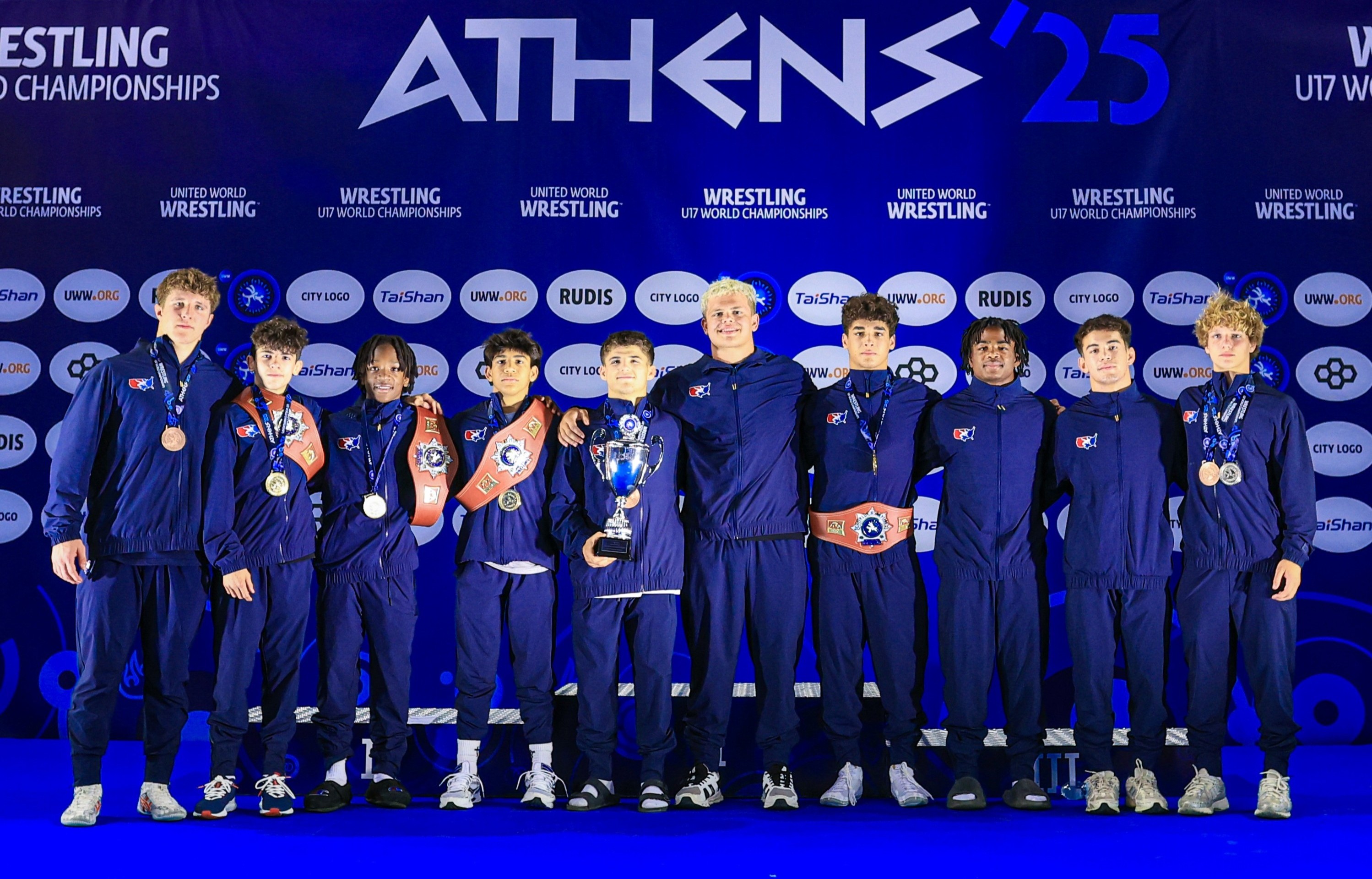 The 10 United States Freestyle wrestlers with the champion's team trophy. (Photo: United World Wrestling / Amirreza Aliasgari)
RESULTS
45kg
GOLD: Keegan BASSETT (USA) df. Parsa TAHMASBI (IRI), via fall (6-0)
BRONZE: Mirjalol MUKAMMILOV (UZB) df. Arnur NURSAIDOV (KGZ), 4-4
BRONZE: Ibragim VELIULLOV (UWW) df. Bakdaulet AGABEK (KAZ), 9-2
51kg
GOLD: Samuel SANCHEZ (USA) df. Ulugbek RASHIDOV (UZB), 5-2
BRONZE: Danael ABDYKASSYM (KAZ) df. Temuri TUTARASHVILI (GEO), 9-4
BRONZE: Dzhamal BAKAEV (UWW) df. Haruku SHIINA (JPN), 12-5
60kg
GOLD: SITENDER (IND) df. Rihito HIURA (JPN), 9-4
BRONZE: Hasan HASANOV (AZE) df. Nathan NASH (CAN), 5-4
BRONZE: Bekassyl ASSAMBEK (KAZ) df. Arian MEHRALIZADEH (IRI), 9-0
71kg
GOLD: Jayden JAMES (USA) df. Arsham VAHABIAN (IRI), 9-2
BRONZE: Ayubjon BOZORZODA (TJK) df. Jason KEIL (GER), 6-0
BRONZE: Yeghishe MOSESYAN (ARM) df. Farrukhbek JUMANAZAROV (UZB), 7-6
92kg
GOLD: David DZEBISOV (UWW) df. Amirali ALIZADEH (IRI), 6-2
BRONZE: Tanner HODGINS (USA) df. Elguja LOMIDZE (GEO), 10-0
BRONZE: Said PASHAYEV (AZE) df. Beibarys YERGALI (KAZ), 5-3



Share your thoughts.
Comments