SANYA, China (April 28) -- Just two weeks ago, Jia LONG (CHN) and Mengyu XIE (CHN) were winning Asian Championships gold medals on mat in Bishkek.
Now on the beach in home country, Long and Xie entered the Beach Wrestling finals at the 6th Asian Beach Games that are underway in Sanya, China.

Apart from China, India and Vietnam also entered two wrestlers each in the gold medal bouts while Sri Lanka and Mongolia managed one each.
In men's, Iran has a chance to sweep the gold medals after all four its wrestlers reached the final. Pakistan was the most successful country after Iran with two wrestlers in the final whereas India and China made one final each.
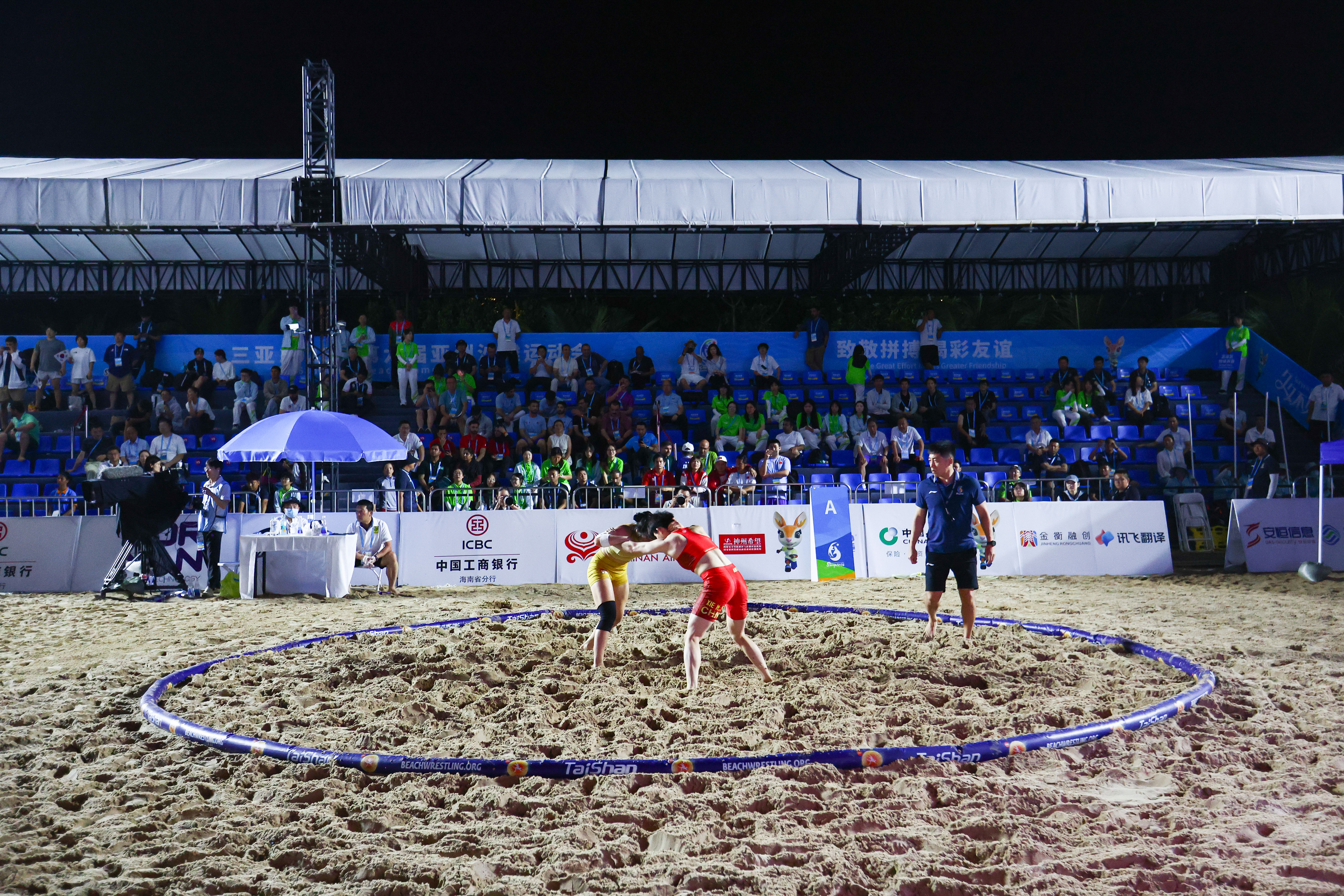 Beach Wrestling at the 6th Asian Beach Games in Sanya, China. (Photo: United World Wrestling / Jake Kirkman)
Beach Wrestling got underway at the Games on April 28, Tuesday, with knockout rounds, group round-robin bouts, quarterfinals and semifinals in eight weight categories -- four men's and four women's.
Also Read: Inam Reaches For Beach Wrestling Glory
Asian champion at 72kg Long reached making the 70kg final in Sanya. Long defeated Beibit SEIDUALY (KAZ), 3-1, in the semifinals. She will now face Thi Linh DANG (VIE) for the gold medal after the Vietnam wrestler pinned Jaspreet KAUR (IND) in the other semifinal.
The host country's chances of gold were further boosted when Asian champion at 59kg Xie reached the final in 60kg. She had to battle it out against Thi My Hanh NGUYEN (VIE) but prevailed 3-2. She will now take on Pushpa YADAV (IND) who claimed a 3-1 win over Asian bronze medalist Youngjin KWON (KOR).
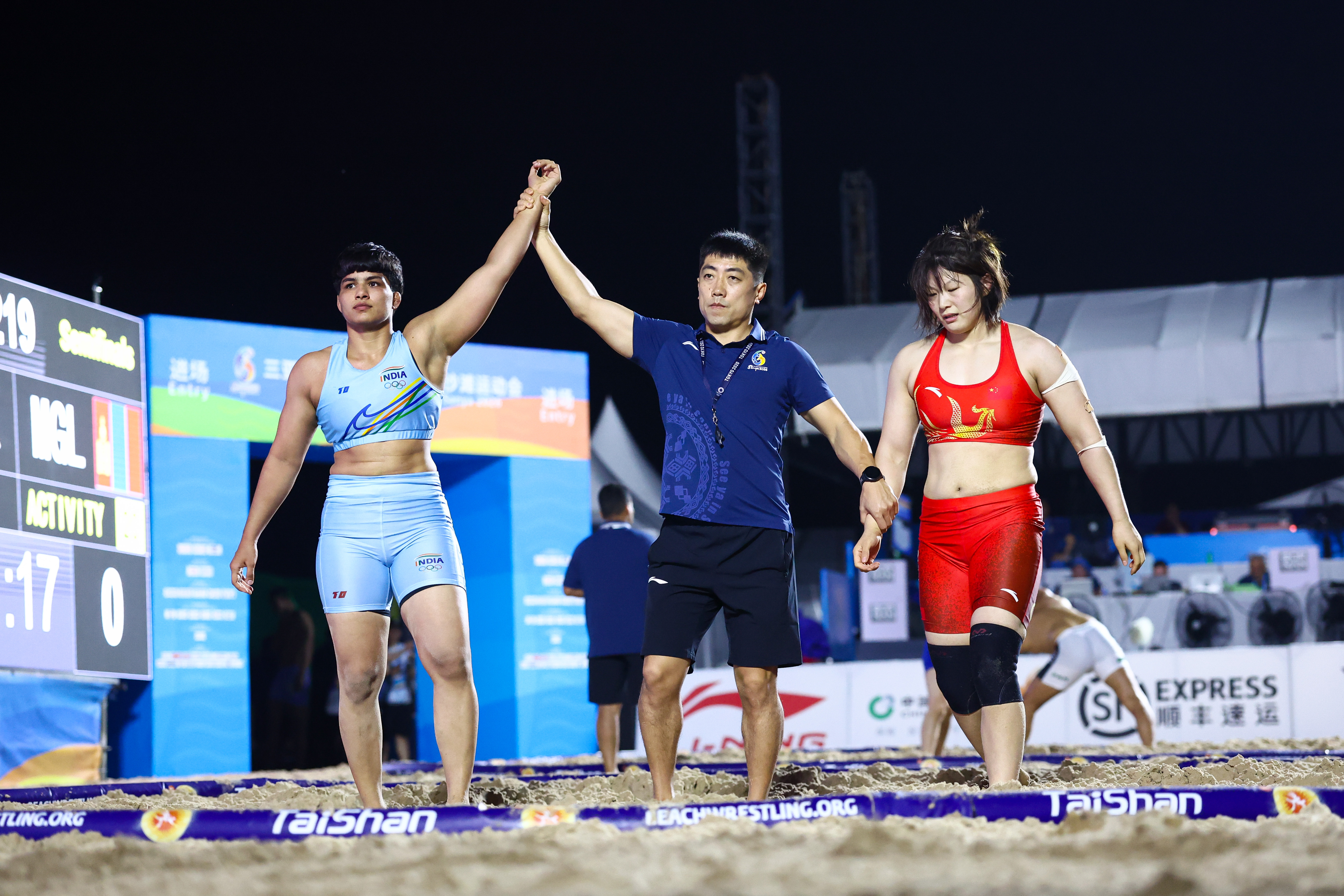 PRIYA (IND) defeated Wenji LI (CHN) in the +70kg semifinal. (Photo: United World Wrestling / Jake Kirkman)
Former U17 and U20 world champion PRIYA (IND) reached the final at +70kg after a close 2-0 win over Asian bronze medalist Wenji LI (CHN). She will now face Bolortungalag ZORIGT (MGL) who defeated Alina YERTOSTIK (KAZ), 3-0, in the other semifinal.
At 50kg, Nipuni HEWA PEDIGE (SRI) has put her country within reach of its first gold medal of the Games after making the final with fall over Funa YANO (JPN). She will now have to beat Thi Kim Oanh DOAN (VIE) for the historic gold. The Vietnam wrestler made it to the final after beating Priyanshi PRAJAPAT (IND), 3-0, in the other semifinals.
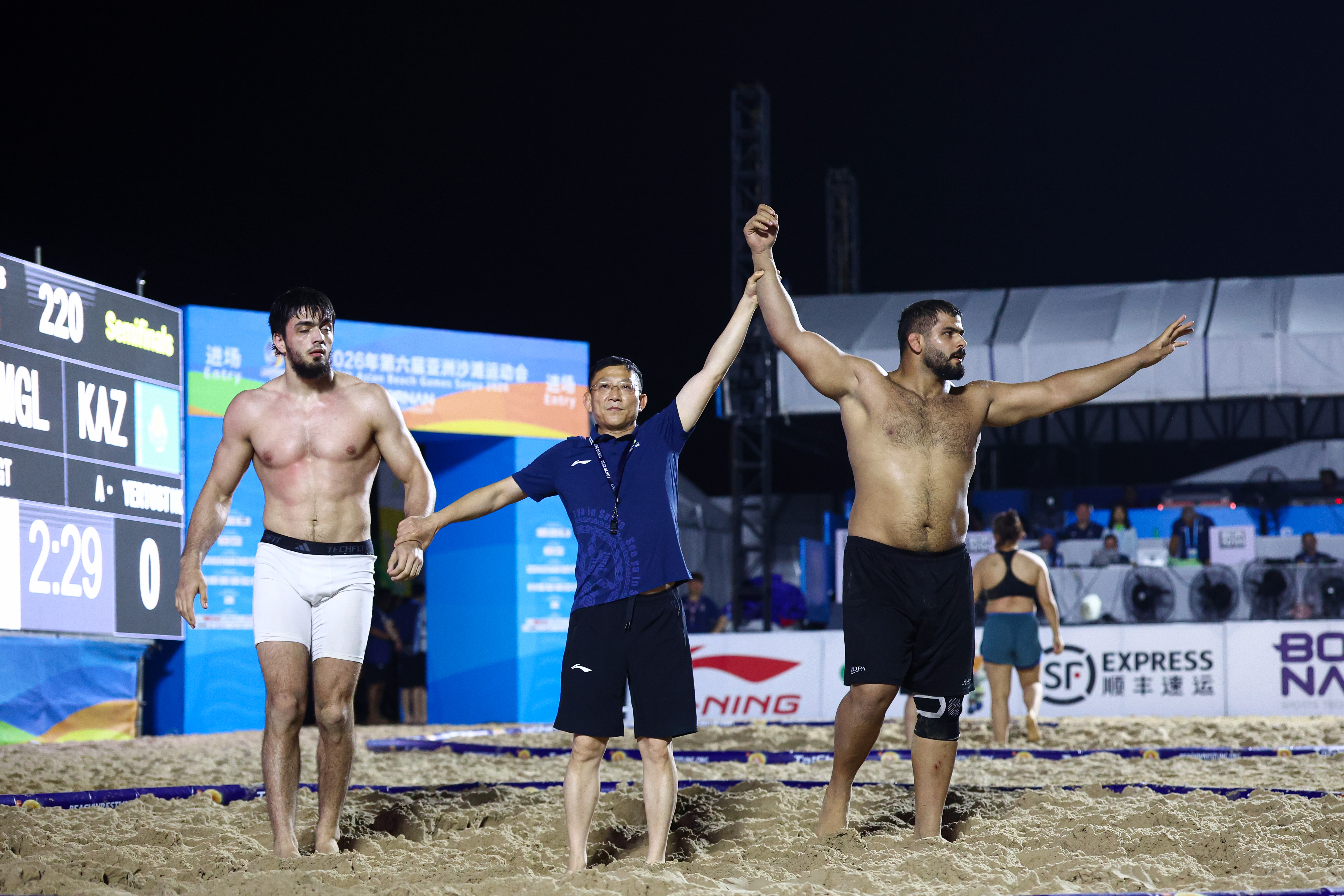 Seyedamirreza SAHRAEMAHALI (IRI) defeated world bronze medalist Shamil SHARIPOV (BRN) in the +90kg semifinal. (Photo: United World Wrestling / Jake Kirkman)
Iran Puts 4 in Finals
Iran's first finalist came at 70kg as Aliakbar ZAROUDI (IRI) defeated Adis RAKHAT UULU (KGZ), 2-0, in a close semifinal. He will face SIDDARTH (IND) who defeated Muhammad ABDULLAH (PAK), 1-0 to advance.
At 80kg, winner of Katerini World Series in 2025 Ali GHOLAMI (IRI) had no trouble beating Yermakhan KOSHKINBAYEV (KAZ) via fall in the semifinals. He will take on Muhammad Asad ULLAH (PAK) for the gold medal after the Pakistan wrestler confirmed a 4-0 victory over world bronze medalist Feng LU (CHN).
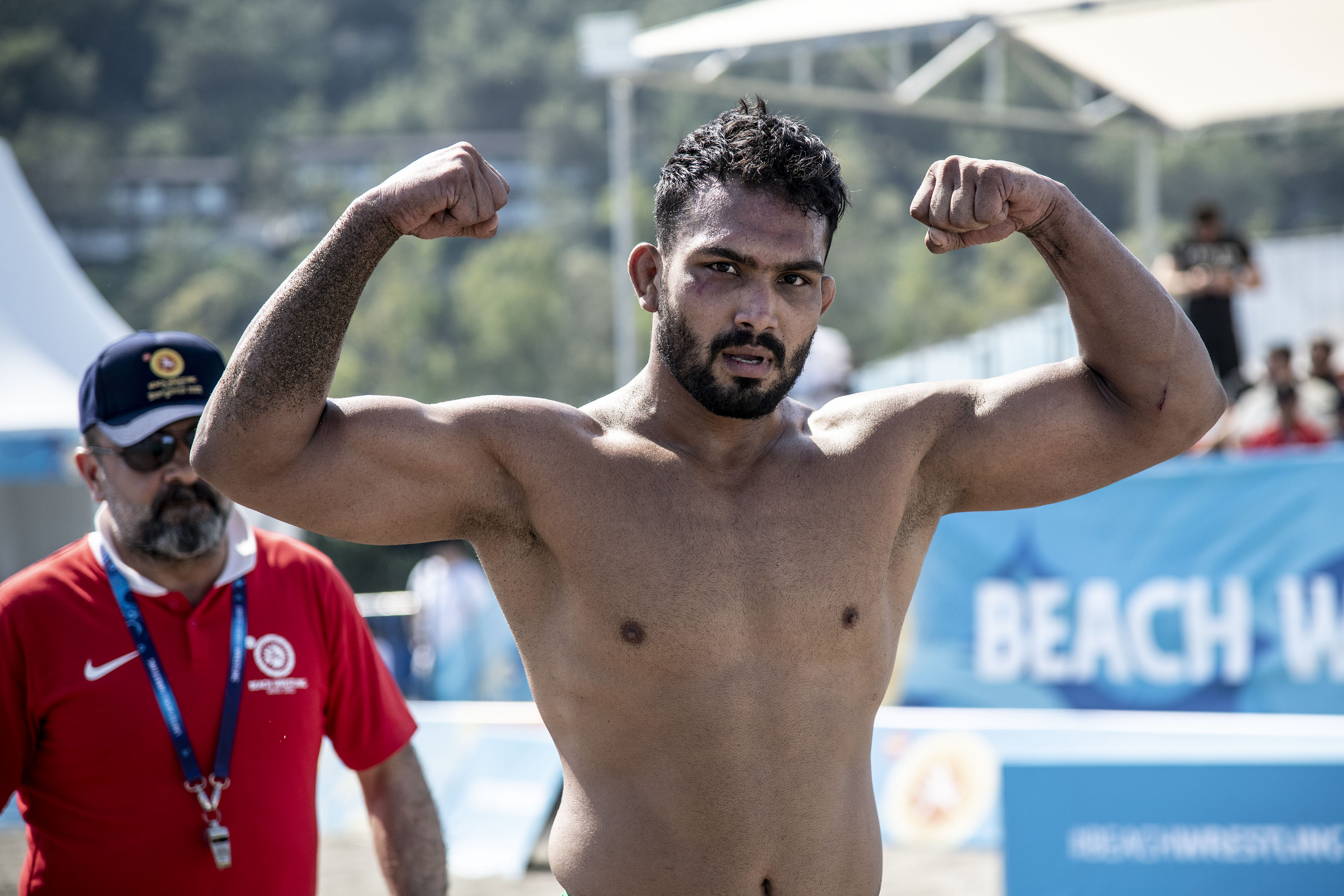 Muhammad INAM (PAK) reached the 90kg final. (Photo: United World Wrestling File)
A mouth-watering final is set in 90kg after former Asian Championships bronze medalist and Katerini World Series gold medalist Amirhossein KAVOUSI (IRI) secured the spot in last two against former Beach Wrestling world champion Muhammad INAM (PAK).
While Kavousi secured a 3-0 win over Peilong LI (CHN), Inam defeated Turbold GANBOLD (MGL) by 1-0 to enter the finals.
The +90kg category will see Seyedamirreza SAHRAEIMAHALI (IRI) take on Da LU (CHN) in the final. Sahraeimahali stunned Asian Championships silver medalist Shamil SHARIPOV (BRN) by pinning him to enter the final. Lu also won via fall, pinning Muzafar ZHAPPUEV (KGZ).
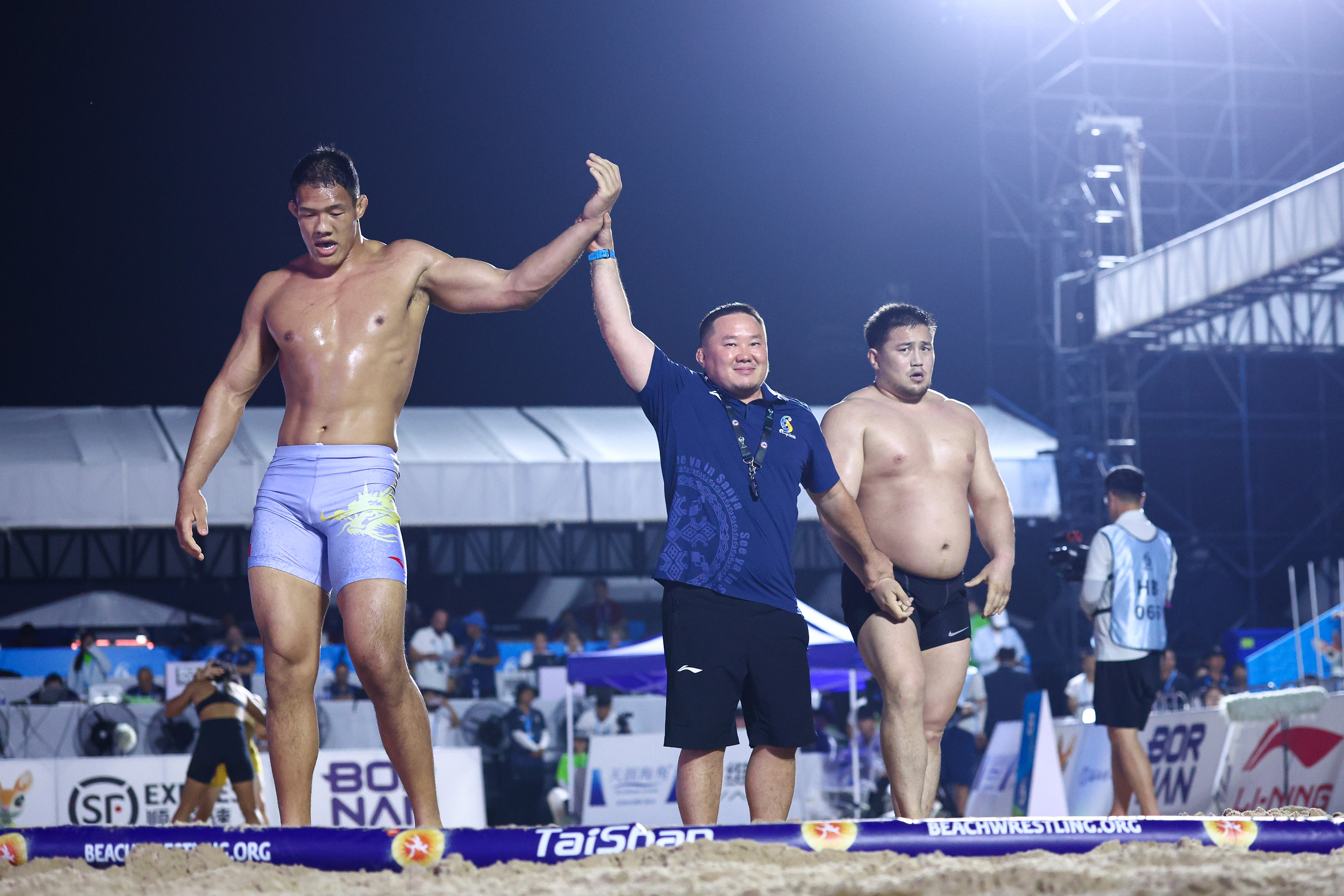 Da LU (CHN) reached the +90kg final at the 6th Asian Beach Games. (Photo: United World Wrestling / Jake Kirkman)
RESULTS
Men's Beach Wrestling
70kg
SF 1: SIDDHARTH (IND) df. Muhammad ABDULLAH (PAK), 1-0
SF 2: Aliakbar ZAROUDI (IRI) df. Adis RAKHAT UULU (KGZ), 2-0
80kg
SF 1: Muhammad Asad ULLAH (PAK) df. Feng LU (CHN), 4-0
SF 2: Ali GHOLAMI (IRI) df. Yermakhan KOSHKINBAYEV (KAZ), via fall
90kg
SF 1: Amirhossein KAVOUSI (IRI) df. Peilong LI (CHN), 3-0
SF 2: Muhammad INAM (PAK) df. Turbold GANBOLD (MGL), 1-0
+90kg
SF 1: Seyedamirreza SAHRAEIMAHALI (IRI) df. Shamil SHARIPOV (BRN), via fall
SF 2: Da LU (CHN) df. Muzafar ZHAPPUEV (KGZ), via fall
Women's Beach Wrestling
50kg
SF 1: Nipuni HEWA PEDIGE (SRI) df. Funa YANO (JPN), via fall
SF 2: Thi Kim Oanh DOAN (VIE) df. Priyanshi PRAJAPAT (IND), 3-0
60kg
SF 1: Mengyu XIE (CHN) df. Thi My Hanh NGUYEN (VIE), 3-1
SF 2: Pushpa YADAV (IND) df. Youngjin KWON (KOR), 3-1
70kg
SF 1: Thi Linh DANG (VIE) df. Jaspreet KAUR (IND), via fall
SF 2: Jia LONG (CHN) df. Beibit SEIDUALY (KAZ), 3-1
+70kg
SF 1: PRIYA (IND) df. Wenji LI (CHN), 2-0
SF 2: Bolortungalag ZORIGT (MGL) df. Alina YERTOSTIK (KAZ), 3-0




Share your thoughts.
Comments