

Moldova steps up, hosts coaching and referee courses
Wednesday, December 10, 2025 - 19:57 By United World Wrestling Press
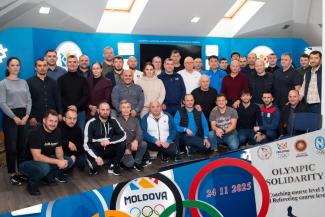
KISHINEV, Moldova (December 10) -- Moldova, a country rich with wrestling history and some good performances in recent years, continues to develop the sport.
Moldovan Wrestling Federation has taken steps to train and improve its coaches, referees and wrestlers and organized two courses [Level 3 Coaching and Level 2 National Referee] and a competition from November 23 to 29.
The two courses were organized in conjunction with Olympic Solidarity, UWW and Moldova Olympic Committee. United World Wrestling also supported their national tournament that was held at the conclusion of the courses.
"We are pleased with the successful implementation of the Level 3 coaching program and Level 2 referee program," said Ivan GHEORGHIU, President of the Moldova Wrestling Federation. "The course introduced modern international coaching and refereeing methodologies that are essential for the continued development of wrestling in Moldova. We value the collaboration with UWW and Olympic Solidarity and look forward to further educational initiatives."
The Level 3 coaching course was led by Yusup ABDUSALAMOV (UWW Educator). The course focused on performance analysis periodization and preparation, coaching philosophy training load management, and safe sport. There were 17 individuals that participated in the course.
“The course progressed smoothly and the participants showed interest, discipline, and engagement during all sessions," Abdusalamov said. "They actively participated in theoretical discussions and performed well during practical and micro-training tasks. I am confident that the skills they developed will significantly improve the effectiveness of their training work."
Anatolie GUIDEA, one of the coaches who attended the course expressed his appreciation and said, "I greatly appreciated the depth of information on periodization and training load management. The micro-training sessions were especially useful, as they provided clear practical tools that I can apply immediately in my own training environment."
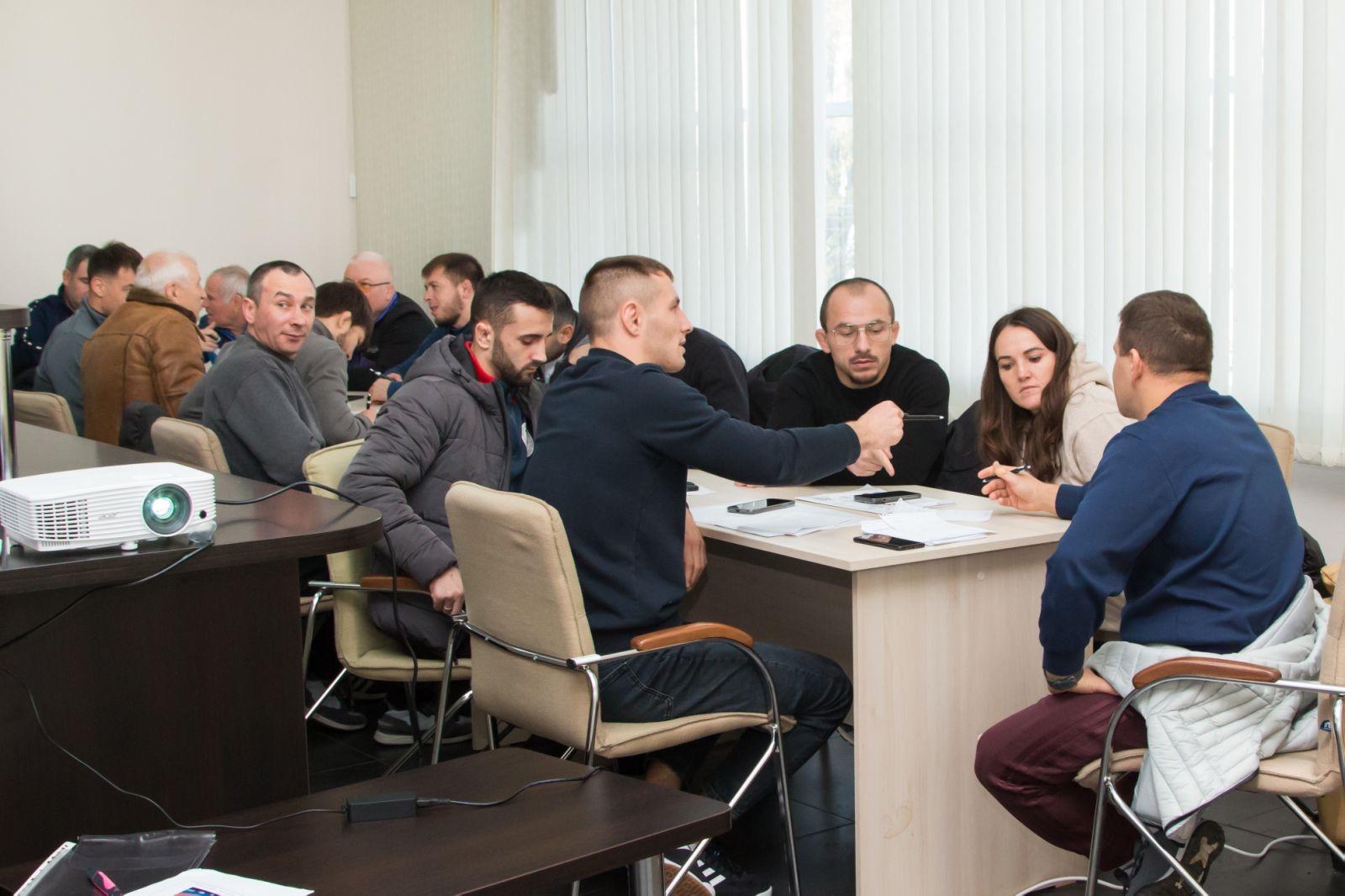
The Level 2 referee course was also held and was called Referee Foundations. This course was led by Igor LIGAY (IS Referee and UWW Educator) and included 22 participants.
During the course, the referees went through more advanced scoring situations including risk, out of bounds, takedown and control, and attack vs counter attack. They also worked on strategies for controlling the bout and being a mat chairman. Their training included theoretical and practical sessions.
"All participants actively took part in discussions, successfully handled practical exercises during the competitions, and I am confident that the skills and knowledge they acquired will enhance their effectiveness and raise the overall standard of judging at competitions," Ligay said.
In addition to the courses, Moldova hosted a national competition that was also supported by UWW. This competition featured wrestlers from 26 clubs and included 134 Freestyle wrestlers, 121 Greco-Roman wrestlers, and 27 women wrestlers.
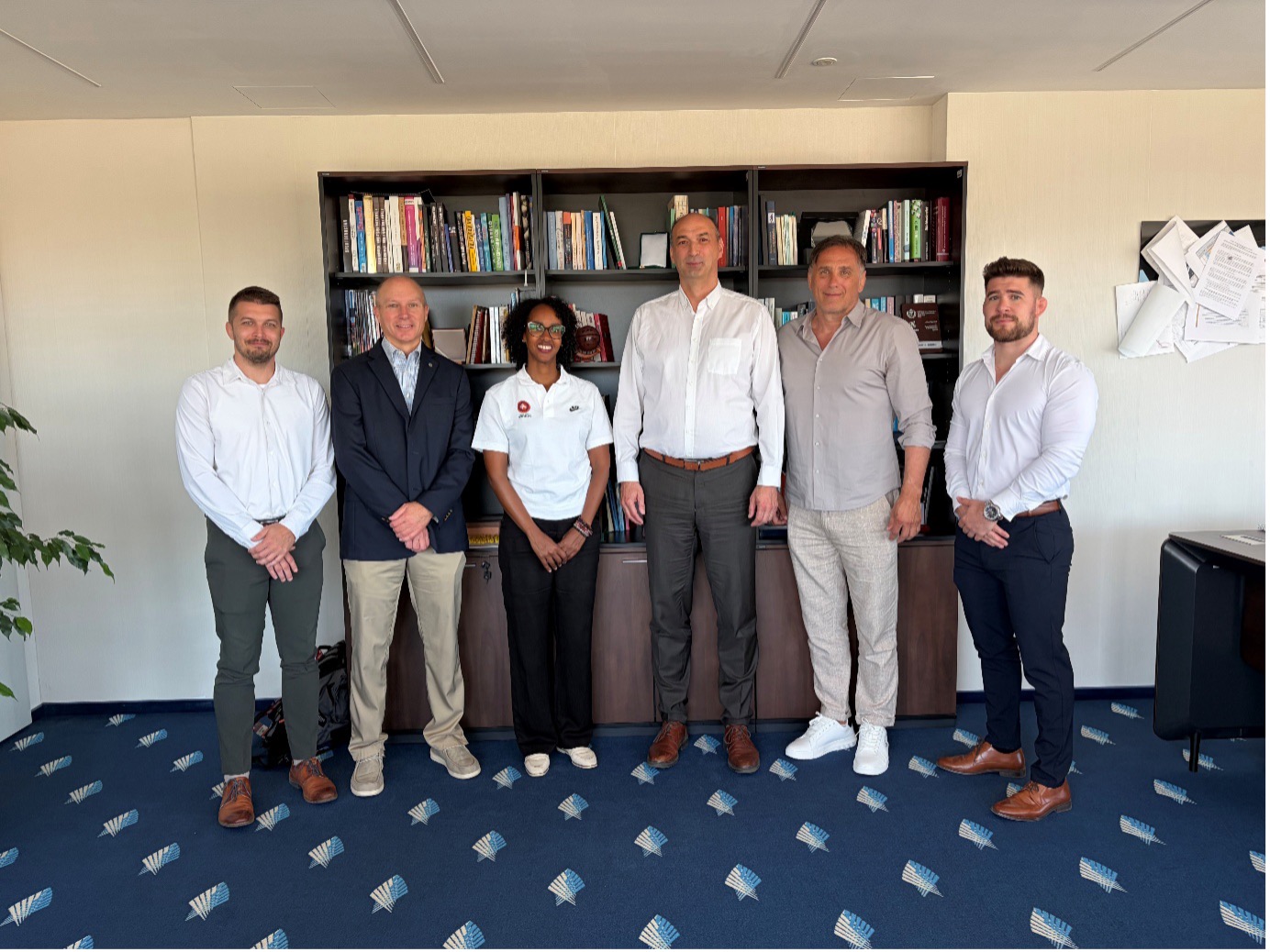 From left to right: Gabor FARKAS (HUN), Zach ERRETT, Deqa NIAMKEY, Tamas STERBENZ (HUN), Peter BACSA and Gergely BABSZKY (HUN).
Share your thoughts.
Comments