LOUTRAKI, Greece (November 4) -- There was little competition for Ukraine at the age-group Grappling World Championships in Loutraki, Greece as it swept the U17 team titles in Grappling Gi and Grappling No-Gi in both the men's and women's categories.
In men's, Ukraine were way ahead as it finished with 140 points while Kazakhstan was second with 94 points in Grappling Gi. It scored 132 points in Grappling No-Gi while second placed Armenia managed only 78 points to finish at the second position.
In women's, Ukraine edged past Poland with 97 points to 95 points to finish top of the table in Grappling Gi. It was a similar story in Grappling No-Gi as Ukraine finished first with 103 points while Poland was second with 100 points.
Grappling Gi competition saw Roman SHOSTAK (UKR) beat Nursat BAIKASSOV (KAZ), 6-4, in the 50kg final to kick start the gold rush. Soon after, Zakhar DREMLIUHA (UKR) won 8-3 against Jakub BARDEN (POL) in the 54kg final to earn the second gold for Ukraine. At 63kg, Andrii PERZHAN (UKR) blanked Rafik ALEKSANYAN (ARM), 4-0, to win Ukraine's third gold medal.
At 69kg, Artem SHALAEV (UWW) won via submission against Illes VICTOR (HUN) in the final to win the gold medal while Aigun OMAROV (UWW) denied Ukraine a fourth gold when he defeated Artem DOTSIUK (UKR), 8-2, in the 76kg final.
Kazakhstan won a gold medal through Mansur ZHANTEMIROV (KAZ) who hung on for a close 2-2 victory over Izan RODRIGUEZ ROSA (ESP) in the 69kg final.
Ukraine had another silver medalist in Yaroslav FEDYNA (UKR) who was submitted by Mateusz KUCA (POL) in the 85kg final. Hungary won a gold medal at 110kg as Levente SZABO (HUN) won via submission against Gasan KHASAEV (UWW).
In No-Gi competition, Shostak and Dremliuha doubled up as champions, beating Baikassov and Dawid BALTRUKANIS (POL) respectively in the 50kg and 54kg finals. The third gold medal for Ukraine came through a different grappler, Andrii SHTUNDER (UKR), who defeated Aleksei SKOREV (UWW) via submission after a 6-0 lead in the 76kg final.
Kuca also struck double gold after he defeated Hurhen MKRTCHIAN (UKR), 6-4, in a thrilling 85kg final. He remained the only gold medalist for Poland in both competitions.
Szabo failed to win two golds but the 110kg gold still went to Hungary as Balazs KIS (HUN) managed to win all his bouts in the Nelson bracket to claim the top spot in the rankings and the gold medals. Szabo finished with a silver medal.
At 58kg, Kurbanali MAKHMUDOV (UWW) denied Rafik ALEKSANYAN (ARM), 5-3, in the final as the Armenian collected his second silver. Ramil ZHIROV (UWW) managed to submit Leved GRANER (HUN) in the 63kg final to win the gold medal while Gusein KHASAEV (UWW) stepped up to win a gold medal after silver as he defeated Amir KHABICHEV (UWW), 2-2, in the 69kg final.
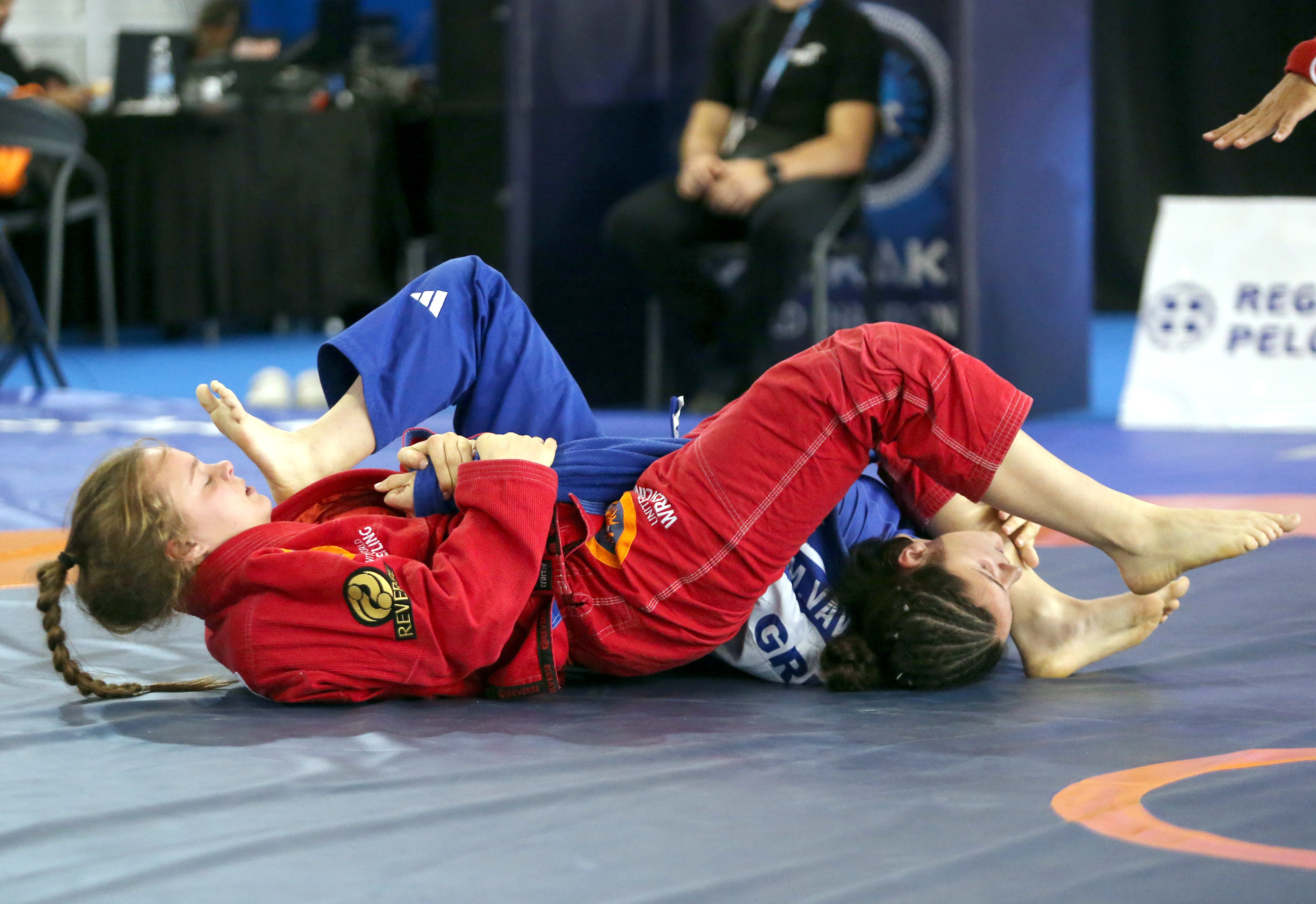 Aleksandra PETUKHOVA (UWW) won double golds at 60kg. (Photo: United World Wrestling)
Double champs
In an unprecedented finish in women's competition, all the gold medalists in Grappling Gi also finished as champions in No-Gi. The former had seven weight categories in action while No-Gi had eight.
Ukraine did not win any golds but still managed to emerge as the best team, thanks to two silvers, three bronze and one four place finish.
In Grappling-Gi, Vasilisa SHUTOVA (UWW) defeated Karolina HYRIA (UKR), 10-0, in the 46kg final while Mariia SHMELEVA (UWW) emerged as champion at 49kg after winning all bouts in Nelson bracket.
Shantel AMBRIZ (USA) dominated her way to the 52kg gold medal after winning the Nelson bracket, which occurs when a weight class has three to six participants.
At 56kg, Oliwia GREWLING (POL) submitted Agnes KOSZTA (HUN) with ease to win gold while Aleksandra PETUKHOVA (UWW) submitted Petra SZALAY (HUN) in the 60kg final to win gold.
The gold medal at 65kg went to Anastasiia SHAROVA (UWW) who managed to submit Karolina HRYNIUK (UKR) after building a 6-2 lead. Mercedes GARCIA RODRIGUEZ (ESP) captured the gold medal in the heaviest weight class, 90kg, after winning the Nelson bracket.
In No-Gi, Shutova, Shmeleva, Ambriz, Grewling, Petukhova, Sharova, and Garcia Rodriguez, repeated. Barring these, the 43kg weight class also saw participation and Ailina GALIEVA (UWW) submitted Kateryna SERBOVA (UKR) to win gold.
RESULTS
U17 Men's Grappling Gi
50kg
GOLD: Roman SHOSTAK (UKR) df. Nursat BAIKASSOV (KAZ), 6-4
BRONZE: Ronan PALLARES (FRA) df. Ayoub SI ALI (FRA), 9-3
BRONZE: Rustam KIM (KAZ) df. Georgios TERSENIDIS (GRE), via submission
54kg
GOLD: Zakhar DREMLIUHA (UKR) df. Jakub BARDEN (POL), 8-3
BRONZE: Darrington DE LA CRUZ (ESP) df. Jivan ARAKELYAN (ARM), via submission (15-2)
BRONZE: Julen TRUJILLO HERNANDEZ (ESP) df. Yerkanat NARIMAN (KAZ), via submission (5-6)
58kg
GOLD: Artem SHALAEV (UWW) df. Illes VICTOR (HUN), via submission (6-0)
BRONZE: Vanik SARGSYAN (ARM) df. Artem KULYK (UKR), 9-2
BRONZE: Aleksandr NOVOSELTSEV (UWW) df. Daniel CABRERA PORTELA (ESP), via submission (2-1)
63kg
GOLD: Andrii PERZHAN (UKR) df. Rafik ALEKSANYAN (ARM), 4-0
BRONZE: Leved GRANER (HUN) df. Dimitrios THOMOS (GRE), via submission (1-2)
BRONZE: Danylo TERESHCHENKO (UKR) df. Kalman SAJCZ (HUN), 9-3
69kg
GOLD: Mansur ZHANTEMIROV (KAZ) df. Izan RODRIGUEZ ROSA (ESP), 2-2
BRONZE: Leonard HRUSA (GER) df. Zisis SVANAS (GRE), via submission (6-3)
BRONZE: Gor SAHAKYAN (ARM) df. Baron NELSON (USA), 5-5 (overtime)
76kg
GOLD: Aigun OMAROV (UWW) df. Artem DOTSIUK (UKR), 8-2
BRONZE: Andrii SHTUNDER (UKR) df. Heorhi HLAZKO (UWW), 5-1
BRONZE: Roman NAZAROV (UWW) df. Ivan KUCHYNSKI (UWW), 15-5
85kg
GOLD: Mateusz KUCA (POL) df. Yaroslav FEDYNA (UKR), via submission
BRONZE: Shynggyskhan ABDIROV (KAZ) df. Hurhen MKRTCHIAN (UKR), via disqualification
110kg
GOLD: Levente SZABO (HUN) df. Gasan KHASAEV (UWW), via submission (3-2)
BRONZE: Maksym ILIN (UKR) df. Alexios ALEXOPOULOS (GRE), via submission (3-0)
BRONZE: Artem BIKMURZIN (UWW) df. Amirlan ABAKHANOV (KAZ), 10-2
U17 Women's Grappling Gi
46kg
GOLD: Vasilisa SHUTOVA (UWW) df. Karolina HYRIA (UKR), 10-0
49kg
GOLD: Mariia SHMELEVA (UWW)
SILVER: Sylwia WELC (POL)
BRONZE: Daria HORDIIENKO (UKR)
52kg
GOLD: Shantel AMBRIZ (USA)
SILVER: Daria KHAMETOVA (UWW)
BRONZE: Helena ALEKSANDROWICZ (POL)
56kg
GOLD: Oliwia GREWLING (POL) df. Agnes KOSZTA (HUN), via submission (0-2)
BRONZE: Vladyslava SMILIANSKA (UKR) df. Eirini PAPADOPOULOU (GRE), via submission (13-0)
BRONZE: Sonia RUBIO HERGUIJUELA (ESP) df. Yana PAVLIUK (UKR), (2-2)
60kg
GOLD: Aleksandra PETUKHOVA (UWW) df. Petra SZALAY (HUN), via submission (9-2)
BRONZE: Susana GONZALEZ GONZALEZ (ESP) df. Anastassiya KRASNOLUTSKAYA (KAZ), via submission (7-2)
BRONZE: Mariia SUSKA (UKR) df. Texenery TEJERA GARCIA (ESP), 8-4
65kg
GOLD: Anastasiia SHAROVA (UWW) df. Karolina HRYNIUK (UKR), via submission (6-2)
BRONZE: Anais MORANTA ALBRECH (ESP) df. Zhasmin KAIRAT (KAZ), via submission (6-0)
BRONZE: Malgorzata SALAMON (POL) df. Efthymia PANAGIOTOPOULOU (GRE), 6-3
90kg
GOLD: Mercedes GARCIA RODRIGUEZ (ESP)
SILVER: Karolina KARALUS (POL)
BRONZE: Elena ZAIMIDOU (GRE)
U17 Men's Grappling No-Gi
50kg
GOLD: Roman SHOSTAK (UKR) df. Nursat BAIKASSOV (KAZ), 8-4
BRONZE: Yerkanat NARIMAN (KAZ) df. Ilkin GULIEV (UWW), 7-6
BRONZE: Jivan ARAKELYAN (ARM) df. Oinatz IRUSTA GARCIA (ESP), 8-1
54kg
GOLD: Zakhar DREMLIUHA (UKR) df. Dawid BALTRUKANIS (POL), via submission (14-1)
BRONZE: Jakub BARDEN (POL) df. Julen TRUJILLO HERNANDEZ (ESP), via submission (9-0)
BRONZE: Amir SHURDUMOV (UWW) df. Athanasios TAGKALAKIS TSAKOPOULOS (GRE), 15-0
58kg
GOLD: Kurbanali MAKHMUDOV (UWW) df. Rafik ALEKSANYAN (ARM), 5-3
BRONZE: Lohan DURANDET (FRA) df. Artem KULYK (UKR), via submission (11-0)
BRONZE: Daniel CABRERA PORTELA (ESP) df. Adam KARAMANOLIS (GRE), via submission
63kg
GOLD: Ramil ZHIROV (UWW) df. Leved GRANER (HUN), via submission (2-2)
BRONZE: Shermat ZHAMALBEK (KAZ) df. Yanis ANGELOSANTO (FRA), 4-4
BRONZE: Danylo TERESHCHENKO (UKR) df. Edgar SIMONYAN (ARM), via submission (3-0)
69kg
GOLD: Gusein KHASAEV (UWW) df. Amir KHABICHEV (UWW), 2-2
BRONZE: Gor SAHAKYAN (ARM) df. Antoni BLACH (POL), 2-1
BRONZE: Mansur ZHANTEMIROV (KAZ) df. Leonard HRUSA (GER), via submission (5-2)
76kg
GOLD: Andrii SHTUNDER (UKR) df. Aleksei SKOREV (UWW), via submission (6-0)
BRONZE: Heorhi HLAZKO (UWW) df. Ivan KUCHYNSKI (UWW), via submission (10-1)
BRONZE: Donat HOLLOSY (HUN) df. Aldiyar KARIMOV (KAZ), via submission (2-1)
85kg
GOLD: Mateusz KUCA (POL) df. Hurhen MKRTCHIAN (UKR), 6-4
BRONZE: Yaroslav FEDYNA (UKR) df. Shynggyskhan ABDIROV (KAZ), 3-2
110kg
GOLD: Balazs KIS (HUN)
SILVER: Levente SZABO (HUN)
BRONZE: Gasan KHASAEV (UWW)
U17 Women's Grappling No-Gi
43kg
GOLD: Ailina GALIEVA (UWW) df. Kateryna SERBOVA (UKR), via submission
46kg
GOLD: Vasilisa SHUTOVA (UWW) df. Karolina HYRIA (UKR), 15-0
49kg
GOLD: Mariia SHMELEVA (UWW)
SILVER: Sylwia WELC (POL)
BRONZE: Tomiris ZAGIDULLINA (KAZ)
52kg
GOLD: Shantel AMBRIZ (USA) df. Daria KHAMETOVA (UWW), 2-1
BRONZE: Helena ALEKSANDROWICZ (POL) df. Amina ZHEKSHENBEKOVA (KGZ), 9-2
56kg
GOLD: Oliwia GREWLING (POL) df. Vladyslava SMILIANSKA (UKR), via submission (0-2)
BRONZE: Yana PAVLIUK (UKR) df. Vivien SZABO (HUN), 6-2
BRONZE: Safiya UALIAKHMETOVA (KAZ) df. Eleni TOLIA (GRE), 12-8
60kg
GOLD: Aleksandra PETUKHOVA (UWW) df. Petra SZALAY (HUN), via submission (9-3)
BRONZE: Susana GONZALEZ GONZALEZ (ESP) df. Laila DAVIS (GER), via submission (9-1)
BRONZE: Texenery TEJERA GARCIA (ESP) df. Daria HLADUN (UKR), 5-3
65kg
GOLD: Anastasiia SHAROVA (UWW) df. Malgorzata SALAMON (POL), via submission (0-2)
BRONZE: Anais MORANTA ALBRECH (ESP) df. Sohane EDDAMI (FRA), via submission (14-0)
BRONZE: Efthymia PANAGIOTOPOULOU (GRE) df. Gulzhaina SULTANOVA (KAZ), via submission (9-0)
90kg
GOLD: Mercedes GARCIA RODRIGUEZ (ESP)
SILVER: Karolina KARALUS (POL)
BRONZE: Tetiana TKACHYK (UKR)



 Participants during the Introduction to Referee course in Jakarta. (Photo: United World Wrestling)
 Participants of the three courses implementing their skills during the U20 National Championships in Jakarta. (Photo: United World Wrestling)
Share your thoughts.
Comments