

#development

UAE aims for wrestling boost

By United World Wrestling Press

ABU DHABI, UAE (March 10) -- The United Arab Emirates Wrestling Federation has launched a new development program to promote the sport of wrestling in the country, with the help of United World Wrestling.

The initiative kicked off with the hosting of the 'Maritime Heritage Festival 2023' in Abu Dhabi, which featured the traditional wrestling form known as Mutaraha.

The UAE Wrestling Federation has outlined a long-term strategy to develop the sport of wrestling in the country, which includes increasing participation in the sport among young people, promoting training and education programs for coaches and athletes, and organizing international competitions.

UAE
The winners of the Maritime Festival 2023.

With a rich history of traditional wrestling, the UAE wants to engage the youth in Mutaraha in which the two wrestlers face each other in a circular ring on sand that is approximately six meters in diameter. The objective of the game is to force the opponent to touch the ground with any part of their body other than their feet, without using any striking or kicking techniques.

The partnership with UWW is a major step towards achieving these goals, as it will provide the necessary resources, expertise, and support to help the UAE Wrestling Federation implement its development program. With the 'Maritime Heritage Festival 2023', the UAE has taken a significant step towards promoting the sport of wrestling and raising its profile in the region.
#development

South Africa Advances National Wrestling System with DNSS Phase 2

By United World Wrestling Press

PRETORIA, South Africa (April 8) -- South Africa has reached a decisive milestone in its long-term wrestling development strategy with the successful implementation of Phase 2 of the Development of National Sport System (DNSS) programme, delivered in collaboration with United World Wrestling (UWW) and supported by Olympic Solidarity.

Following the diagnostic and mapping phase conducted earlier, Phase 2 marks a clear transition from analysis to structured implementation, laying the foundation for a sustainable and internationally aligned wrestling system.

Led by UWW Development Officer Vincent AKA, in close cooperation with the South African Wrestling Federation (SAWF), the National Head Coach, Markus DEKKER and Provincial Coordinators, the programme was deployed across multiple provinces through a structured 10-day intervention from March 2 to 13. 

Activities were conducted in key locations including:

· LPWA (Ion Bachu)
· CGWA (Ruiter)
· NGWA (Menlo Park Hall)
· Frank Joubert Tournament (Menlo Park Hall)

This nationwide approach ensured direct engagement with provincial structures, strengthening alignment between national leadership and local associations while promoting inclusive development across the country.

From Talent Identification to System Building

Unlike traditional training camps, DNSS Phase 2 focused on identifying talent and building long-term development systems. Wrestlers and coaches from all age categories -- U13, U15, U17, U20, and Senior -- were actively involved, ensuring a complete pathway approach.

Provincial visits and stakeholder meetings played a key role in assessing facilities and operational structures, strengthening coordination between SAWF and provinces, and identifying emerging wrestlers.

Building Athlete Pipeline

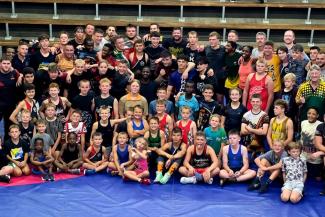
A training camp for different provinces brought together wrestler to consolidate talent identified during Phase 1 and introduce standardized training methodologies.

The training camp included technical sessions, physical conditioning, match simulations and wrestling. The initiative contributed to the creation of an updated national prospect and the foundation of a structured athlete monitoring system.

South Africa

Beach Wrestling Gains Momentum

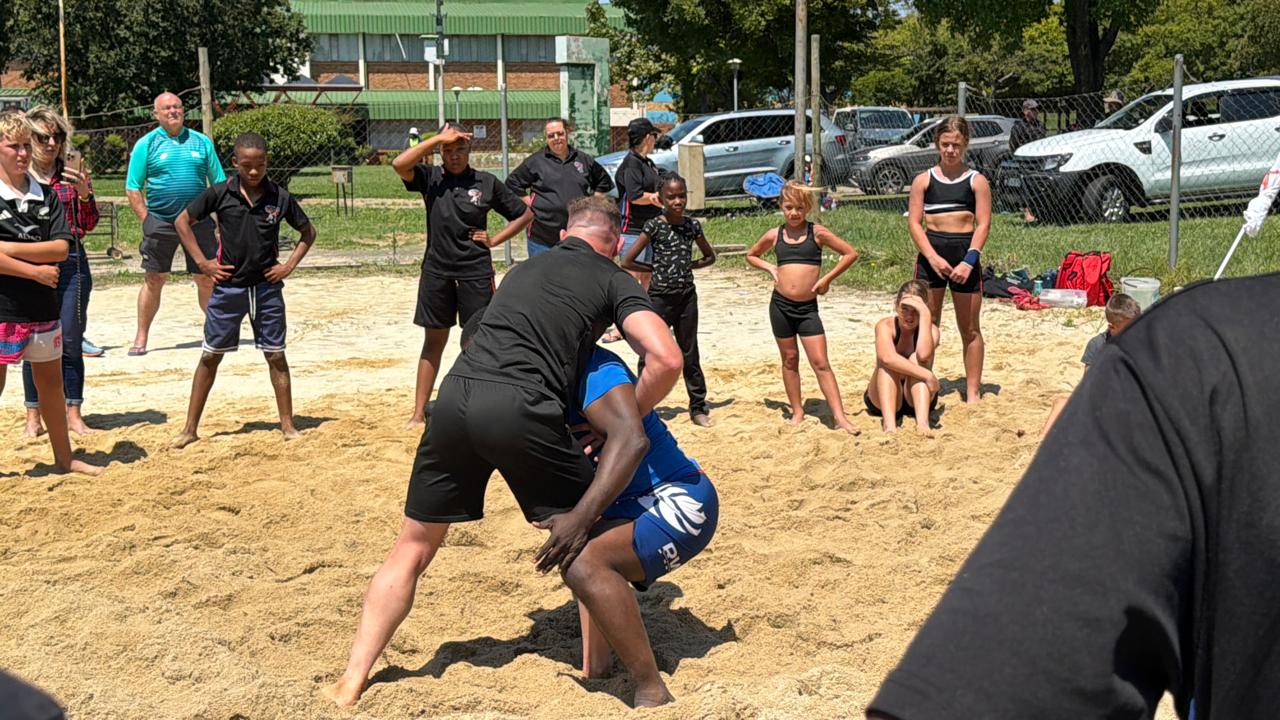
As part of the DNSS activities, a Beach Wrestling training session in Roodepoort highlighted the programme’s expanding impact.

During the visit, Aka led a specialized session, sharing advanced technical insights adapted to beach wrestling. It included stance and balance adjustments, grip and control techniques, and movement adaptation on sand.

The training programme comes at a crucial time, as South African athletes prepare for African Beach Wrestling Championships in Alexandria, Egypt and other international tournaments.