

#development

Record number attend India's Introduction to Referee Course

By United World Wrestling Press

SONEPAT, India (November 30) -- The Wrestling Federation of India (WFI) organized an Introduction to Referee course on November 18-20 in Sonepat. This was the largest-ever course with 96 participants (86 men and 10 women).

“The course was very useful for developing skills and knowledge of the Indian national referees. WFI organizes 25 domestic competitions in a year. After this course, we have enough national referees to conduct these competitions as this group will serve as referees at many of those events,” said Brijbhushan Sharan Singh, WFI President.

This course was led by Carlos GARCIA (ESP) and assisted by Ashok KUMAR (IND). Both are IS Referees and certified UWW Educators.

During the three-day course, the participants concentrated on several areas that are important to the development of referees. After an initial assessment, the main topics were focused on referee mechanics, positioning, referee team duties, and athlete safeguarding.

The morning sessions centered around the theory, mainly through videos or direct examples from their practical sessions. The afternoon sessions were dedicated to practicing on the mat by refereeing short matches. These practical sessions allowed participants to apply what they learned and improve their performance.

“I learned a lot from this course and even things that I did not know about including the latest rules and regulations of the competition. This course was very useful for me, and I really enjoyed this course," Shivaji, a referee, said.

“I would like to thank the Wrestling Federation of India for organizing the course and their hospitality. It is very motivating when you see so much interest and passion which may not be everything, but it gets you to your goals faster. The young Indian referees have a passion that could drive Formula 1 cars at maximum speed," Garcia said.
#development

South Africa Advances National Wrestling System with DNSS Phase 2

By United World Wrestling Press

PRETORIA, South Africa (April 8) -- South Africa has reached a decisive milestone in its long-term wrestling development strategy with the successful implementation of Phase 2 of the Development of National Sport System (DNSS) programme, delivered in collaboration with United World Wrestling (UWW) and supported by Olympic Solidarity.

Following the diagnostic and mapping phase conducted earlier, Phase 2 marks a clear transition from analysis to structured implementation, laying the foundation for a sustainable and internationally aligned wrestling system.

Led by UWW Development Officer Vincent AKA, in close cooperation with the South African Wrestling Federation (SAWF), the National Head Coach, Markus DEKKER and Provincial Coordinators, the programme was deployed across multiple provinces through a structured 10-day intervention from March 2 to 13. 

Activities were conducted in key locations including:

· LPWA (Ion Bachu)
· CGWA (Ruiter)
· NGWA (Menlo Park Hall)
· Frank Joubert Tournament (Menlo Park Hall)

This nationwide approach ensured direct engagement with provincial structures, strengthening alignment between national leadership and local associations while promoting inclusive development across the country.

From Talent Identification to System Building

Unlike traditional training camps, DNSS Phase 2 focused on identifying talent and building long-term development systems. Wrestlers and coaches from all age categories -- U13, U15, U17, U20, and Senior -- were actively involved, ensuring a complete pathway approach.

Provincial visits and stakeholder meetings played a key role in assessing facilities and operational structures, strengthening coordination between SAWF and provinces, and identifying emerging wrestlers.

Building Athlete Pipeline

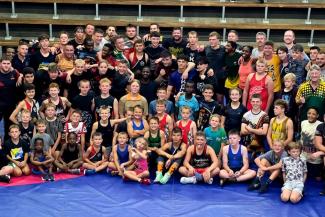
A training camp for different provinces brought together wrestler to consolidate talent identified during Phase 1 and introduce standardized training methodologies.

The training camp included technical sessions, physical conditioning, match simulations and wrestling. The initiative contributed to the creation of an updated national prospect and the foundation of a structured athlete monitoring system.

South Africa

Beach Wrestling Gains Momentum

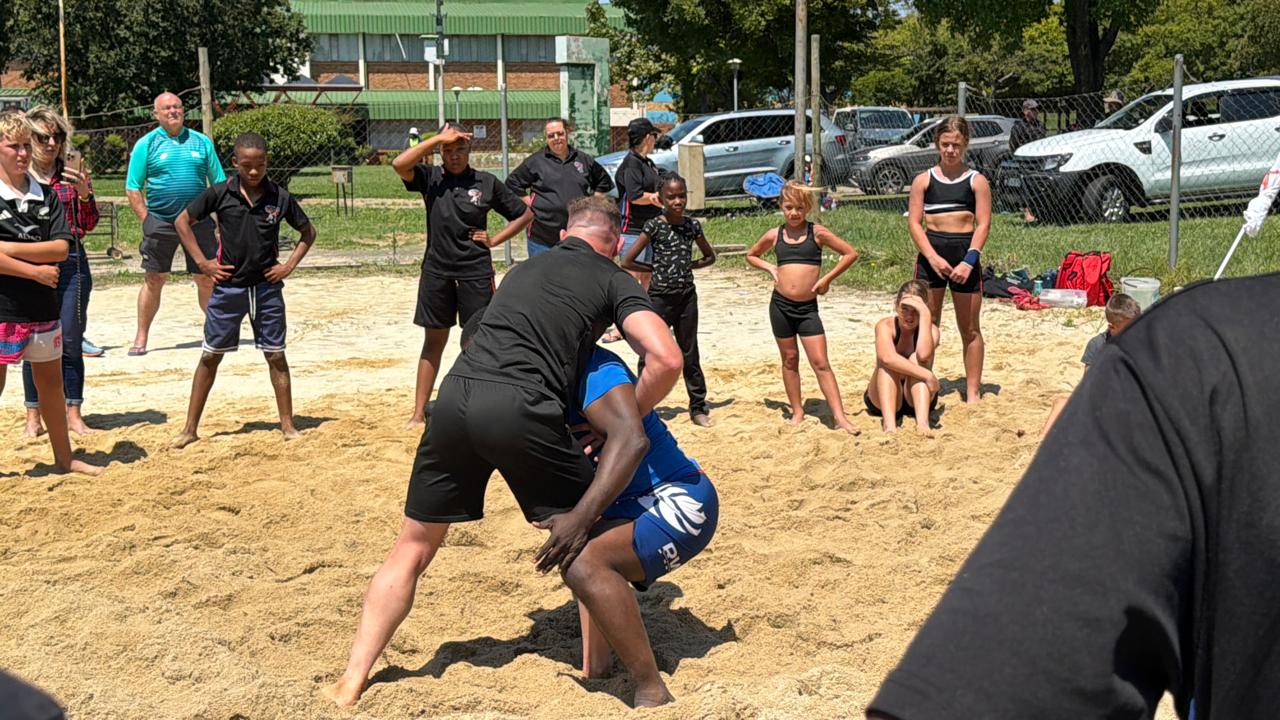
As part of the DNSS activities, a Beach Wrestling training session in Roodepoort highlighted the programme’s expanding impact.

During the visit, Aka led a specialized session, sharing advanced technical insights adapted to beach wrestling. It included stance and balance adjustments, grip and control techniques, and movement adaptation on sand.

The training programme comes at a crucial time, as South African athletes prepare for African Beach Wrestling Championships in Alexandria, Egypt and other international tournaments.