#development

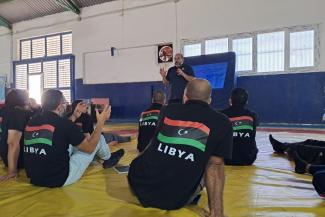
Libya hosts its first coach and referee course

By United World Wrestling Press

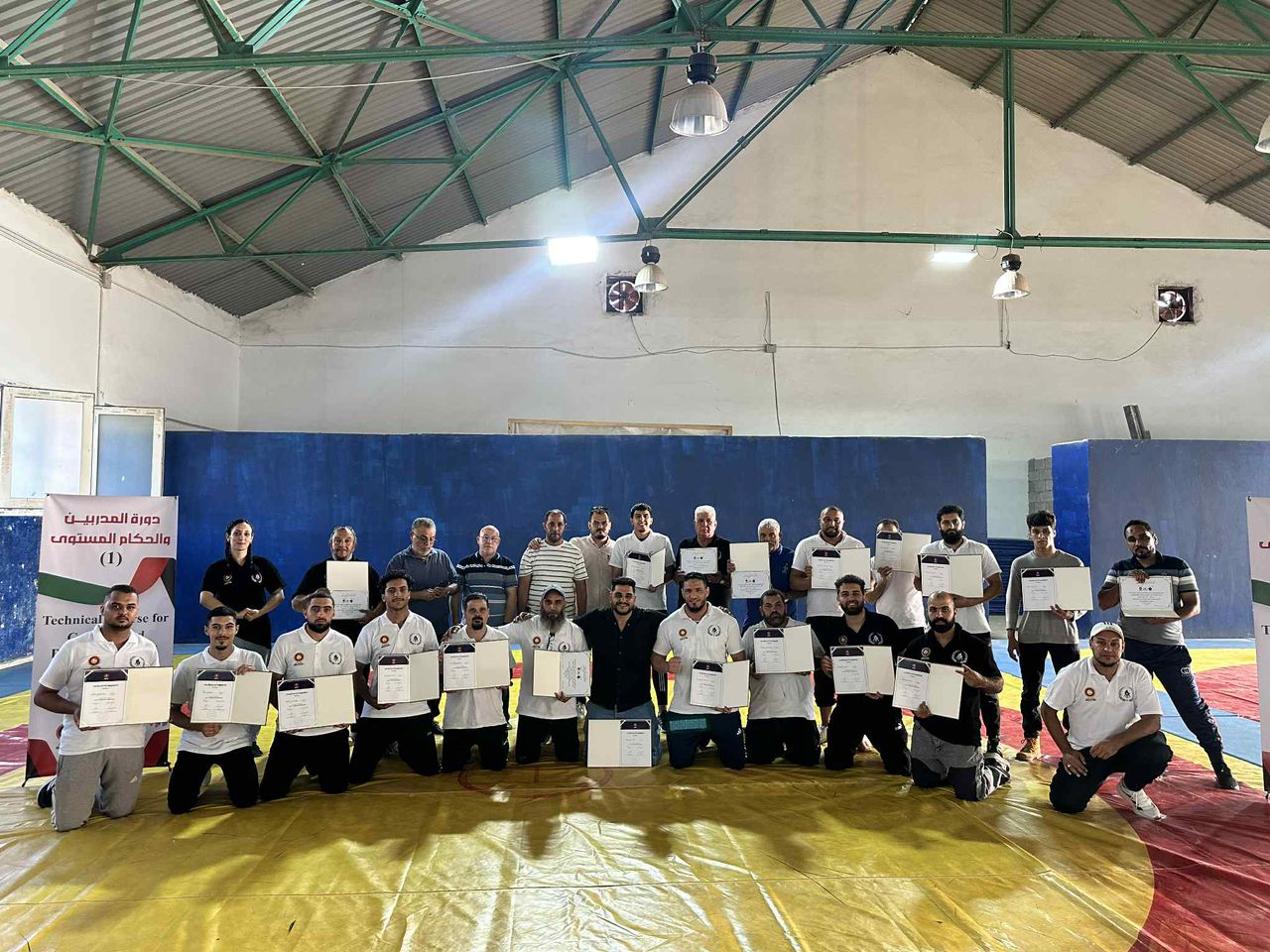
TRIPOLI, Libya (November 17) -- Libya hosted its first ever education courses for coaches and referees from October 27 to November 3 in Tripoli, Libya.

The courses were conducted in conjunction with United World Wrestling, Olympic Solidarity, Libya NOC and the Libya Wrestling Federation. The coaching course was led by Ahmed KHEDHRI. The referee course was led by Kamel BOUAZIZ.

"This course was considered a success, as we were fortunate to have tutors Khedhri and Bouaziz," Khaled EZANKULI, Secretary General of Libyan Olympic Committee, said. "These courses are a step in the Libyan Wrestling Federation's programs and is part of the joint work with Olympic Solidarity, United World Wrestling and the Libyan Olympic Committee. We consider it a step forward in developing the skills of local coaches, raising their level, and relying on their actual abilities to achieve fair competition."
Libya

During the first half of the program, the technical course for coaches was conducted from October 17 to 31. The course was attended by 21 coaches who participated in Level 1 Course [Introduction to Coaching and Safety]. The following topics were covered throughout the course: discovery games, introducing a new technique, coaching skills, giving feedback, risk management, age and developmental stage characteristics.

The coaches actively practiced and developed their skills through practical evaluations. There was special emphasis placed learning new techniques and applying them in a realistic training environment.

"The coaches in the course showed lot of enthusiasm, cooperation, and exchange of experiences which was reflected in the participants’ active engagement and positive interaction throughout both the theoretical and practical sessions," Khedhri said. "This contributed to enhancing the overall learning outcomes and helped participants acquire new knowledge and skills in a professional yet friendly environment."

The Introduction to Refereeing Course was conducted from November 1 to 3. This course was led by Bouaziz and had 18 participants. The participants learned the foundations of what it takes to be a great referee.

The areas covered during the course included: safety of the athletes, evaluation of holds, referee mechanics, positioning, and controlling the bout. 

"A good number of participants already had knowledge of wrestling," Bouaziz said. "They were very attentive to the explanations, which allowed me to pass on as much information as possible. The same was true for the theoretical part, where their participation and interest were remarkable."

The program was praised by the federation and the participants as well.

"I am very pleased with the success achieved by this course on both the technical and organizational levels. It represents an important step toward building a strong training foundation that will contribute to developing coaches and referees and raising the overall standard of wrestling in Libya," Nabil Abou CHAHMA, President of Libyan Wrestling Federation, said.

#development

Italy Organizes UWW Level 3 Technical Course for Coaches

By United World Wrestling Press

CESEBATICO, Italy (February 9) -- A United World Wrestling Level 3 Technical Course for coaches was successfully organized in Cesenatico, Italy from January 5 to 9, 2026. The course was organized in collaboration with UWW and the FIJLKAM.

Organised after a international tournament, the course brought together 33 coaches from Italy and other countries, including Germany, Poland, Croatia and Ivory Coast creating a rich environment for technical exchange, professional development and international cooperation.

This tournament provided an important practical framework for the educational programme, allowing coaches to observe real competition situations, analyze match management and technical-tactical aspects, and directly link theoretical learning to high-level competitive practice.

The programme was led by UWW Development Officer Vincent AKA, with practical sessions conducted by Olympic Champion and UWW expert Komeil GHASEMI. The course followed the new UWW education pathway, focusing on advanced coaching competencies for high-performance environments.

Italy

The key topics in the course included coaching philosophy and leadership, advanced planning and periodization, pedagogical situations and match analysis, technical and tactical development, safeguarding, anti-doping and athlete protection and introduction to Beach Wrestling.

Both theoretical and practical evaluations were conducted, allowing participants to apply their knowledge in real coaching situations. At the conclusion of the course, all successful participants were awarded the UWW Level 3 Coaching Certificate.

"I want to thank everyone for this course, for what you did, and for how we got along together," Carmelo RICCARDO, a coach and participant said. "It was a wonderful experience and very interesting course. Thanks to the UWW and FIJLKAM for these important opportunities for growth."

The Italian Wrestling Federation provided high-quality facilities, with classrooms and training venues meeting international standards. All activities were centralized at Villaggio Accademia Cesenatico, ensuring optimal logistical conditions for both learning and training.

The course benefited from the continuous presence of national federation representatives, including the Technical and Sports Directors, as well as the participation of FIJLKAM leadership during the closing ceremony—demonstrating strong institutional commitment to coach education.

After the course, it achieved its educational and development objectives. The combination of high-level technical content, structured evaluations, international expertise, and strong human values.

The course not only strengthened the competencies of participating coaches but also reinforced Italy’s role as a key hub for wrestling education and excellence in Europe, contributing sustainably to the long-term development of the sport.

Sustainability

From a sustainability perspective, the use of the covered stadium contributed to the efficient organization of Beach Wrestling activities by optimizing existing infrastructure. By adapting a multi-purpose covered venue for Beach Wrestling sessions, the organizers limited the need for additional temporary installations, reduced logistical and environmental impact, and ensured continuity of activities regardless of weather conditions.

This approach reflects UWW’s commitment to sustainable event organization through the рационal use of facilities and long-term infrastructure legacy.