

Kenyan Wrestling Federation aims to go beyond the summits
Tuesday, November 14, 2023 - 18:33 By United World Wrestling Press

NAIROBI, Kenya (November 14) The Kenyan Wrestling Federation, in partnership with the Kenyan Olympic Committee, is working to grow and develop wrestling in their country. Today, the Kenyan Wrestling Federation is one of the leading wrestling federations participating at the world and continental levels. Based on that, the NOC and the KWF have decided to organize courses for their coaches and referees to help their training further.
The coaches and referees participated in a Level 1 Coaching Course and an Introduction to Referee Course from October 20-24. The Refereeing Course ended with a competition on October 25, intending to evaluate the referees understanding.
The Level 1 Coaching Course was conducted by Vincent AKA – UWW development officer from the Ivory Coast. The course had 25 participants (18 men and seven women). "The participants were very disciplined, excited, and asked questions. Their active participation during the course showed their willingness to learn," said Aka.
For the first time, the Kenyan Wrestling President came to the closing ceremony, sending a warm word to the participants and the trainers. "We appreciate you; thank you for coming to Kenya to train our coaches and referees," said Mr. President.
At the closing ceremony, Humphrey KAYANGE, a Kenyan IOC member representing the President of the Kenyan National Olympic Committee, sent a very encouraging word to the participants. "Continue to enjoy the sport; you have so many opportunities. There are so many opportunities where the National Olympic Committee supports you. But this is a start; you cannot stop here," said Kayange.
Kayange also mentioned there's a lot of potential in Kenya for wrestling. "There's a lot of Mahabilas in Kenya and we need to create a pathway for them. We also want to continue to support all the coaches and referees who have shown their commitment," said Kayange.
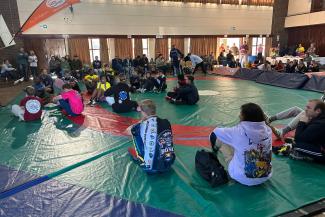
 Kenya hosted an Introduction to Referee Course in Nairobi in late October. (Photo: United World Wrestling)
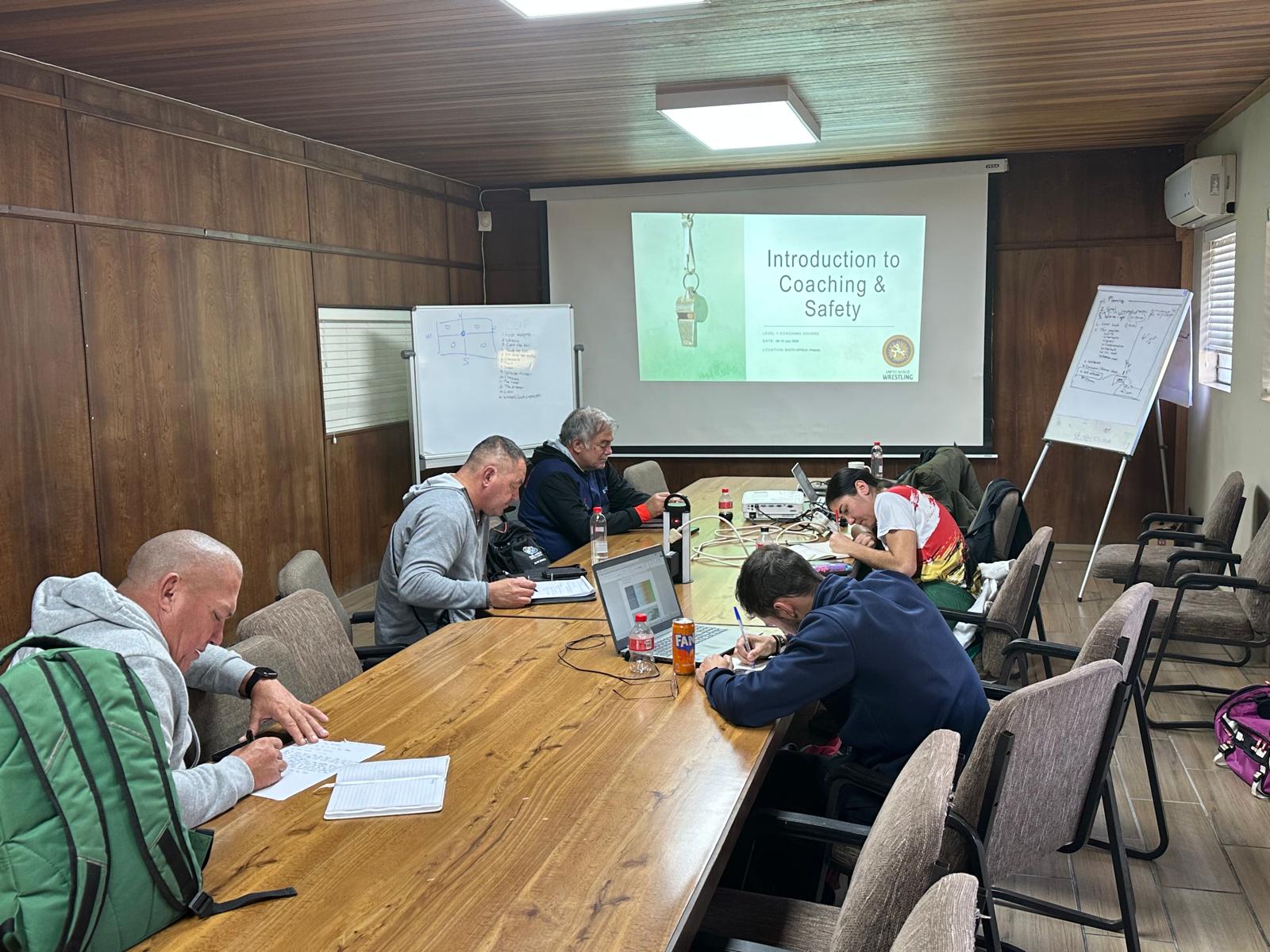
The Level 1 Course focused more on how to coach. The coaches participated in practical assessments to demonstrate their skills, while the theoretical part was a written examination.
Mr. Charles VILLET – UWW Educator, IS, Olympic Referee and Rio Golden Whistle winner, conducted the Introduction to Refereeing course. This course had the same participants.
The referee participants focused on skills that would provide a solid foundation as a referee. They focused on evaluations of holds, starting and ending matches, and referee mechanics, among many other areas. The participants learned these areas through theoretical and practical applications. Then, at the end of the course, the new candidates refereed the local U17 tournament. This allowed them to use the skills that they learned during the course.
"All of you are winners. This sport is the best for development, respect, teaching people, and respecting your father, mother, and country," said Villet.
"We have been fortunate in these areas, especially on technical issues. Techniques are changing, and how people execute techniques becomes different. We need to improve our technical game because that is the base of everything," said Mr. Wallucho, the Kenyan Wrestling Federation Secretary.
Share your thoughts.
Comments