

Moldova Hosts UWW Coaching Course
Monday, October 30, 2023 - 12:38 By United World Wrestling Press

KISHINEV, Moldova (October 30) --- Moldova boasts a rich wrestling history and a strong tradition of excellent performance in the sport. In their ongoing efforts to foster the development and growth of wrestling, a Technical Course for Coaches (Level 2) and an Introduction to Refereeing Course were organized. These courses were conducted in partnership with the Moldova Olympic Committee, Olympic Solidarity and United World Wrestling.
"As the President of the Wrestling Federation of Moldova, I feel satisfaction in seeing how our shared passion for wrestling unites us," said Ivan GHEORGHIU. "The seminar has brought a wealth of interesting information and knowledge, as well as a valuable opportunity to discuss and exchange experiences. We must use this experience and knowledge to uphold high standards in our sport in Moldova."
Yusup ABDUSALAMOV, UWW Educator, and Arsen JULFALAKYAN, President of UWW Athlete Commission, led the Level 2 Coaching Course, which took place October 16-20.
 Participants walk through how to develop a practice plan during the Level 2 Coaching Course in Moldova. (Photo: United World Wrestling)
Throughout the course, Abdusalamov and Julfalakyan led 59 participants in sessions focused on practice-plan development, long-term athlete development model, risk management, discipline in sport, anti-doping, mental development and athlete safeguarding.
"Overall, the course went well, and I am satisfied with the participants' engagement and progress throughout the training. I anticipate their enhanced coaching skills will have a positive impact on their athletes in the future," said Abdusalamov.
"Since my cadet ages, I had the opportunity to compete with Moldavian wrestlers, be acquainted with their wrestling style and build friendly relations. Until now, I haven't managed to visit their beautiful country to witness their conditions for wrestling and how they run our beloved sport," said Julfalakyan, the world champion and Olympic silver medalist. "We met most of the Moldavian coaches and referees, held very fruitful seminars (theory and practical part), and discussed some important wrestling topics with the NF President and other members. They are very motivated to develop all wrestling styles in their country."

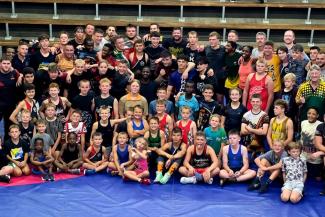
Participants of the Technical Course for Coaches (Level 2) and the Introduction to Refereeing Course pose for a group photo. (Photo: United World Wrestling)
"As both an athlete and a coach, the information I received at the Technical Course for Coaches Level II was incredibly beneficial, particularly concerning the long-term athlete development model. I also appreciated your personal experiences and the practical applicability of all the information," said Mikhail SAVA.
In addition to the coaching course, Moldova hosted an Introduction to Refereeing course. Igor LIGAY, an IS Referee and UWW Educator, led the course, which 29 participants attended. During the course, the participants focused on the tools needed to excel as a high-level referee. These areas included referee team duties, referee mechanics, controlling the bout, referee position, and scoring situations.
"Thank you very much for the knowledge, skills, abilities and information you shared with us," said Mihail.
"All seminar participants actively participated in the process, asked questions and participated in discussions. They were often surprised how much the rules had changed. After the seminar, many expressed gratitude for the knowledge they received and expressed a desire to hold similar seminars in Moldova every year," Ligay.
Share your thoughts.
Comments