

#CommonWealthGames

Grevemberg to Leave Role as Commonwealth Games CEO

By United World Wrestling Press

David Grevemberg is stepping down as chief executive of the Commonwealth Games Federation (CGF), the organization has announced.

Grevemberg has held the role since November 2014 following a spell at the helm of the 2014 Commonwealth Games in Glasgow, and is set to leave his GGF role on March 5.

In 2015, Grevemberg oversaw the development and launch of the organization's strategic plan entitled Transformation 2022.

Grevemberg said it had been "a privilege" to work within the Commonwealth Sport Movement for more than a decade and he was "proud" of the work he had achieved during his tenure.

"I am enormously proud of the work that we have achieved and continue to drive through our strategy, Transformation 2022, which has always been delivered in ambitious partnership with our team, our leadership and our passionate global network of members and Commonwealth athletes," said Grevemberg. 

“Grevemberg has had a positive impact on the Commonwealth Games during his time as CEO and will leave the federation in a place to succeed for many years to come. I wish him all the best in his future endeavours,” said UWW president Nenad Lalovic.

Grevemberg, a former wrestler was the Executive Director of The International Paralympic Committee (IPC) prior to becoming CEO of the Commonwealth Games.
#development

South Africa Advances National Wrestling System with DNSS Phase 2

By United World Wrestling Press

PRETORIA, South Africa (April 8) -- South Africa has reached a decisive milestone in its long-term wrestling development strategy with the successful implementation of Phase 2 of the Development of National Sport System (DNSS) programme, delivered in collaboration with United World Wrestling (UWW) and supported by Olympic Solidarity.

Following the diagnostic and mapping phase conducted earlier, Phase 2 marks a clear transition from analysis to structured implementation, laying the foundation for a sustainable and internationally aligned wrestling system.

Led by UWW Development Officer Vincent AKA, in close cooperation with the South African Wrestling Federation (SAWF), the National Head Coach, Markus DEKKER and Provincial Coordinators, the programme was deployed across multiple provinces through a structured 10-day intervention from March 2 to 13. 

Activities were conducted in key locations including:

· LPWA (Ion Bachu)
· CGWA (Ruiter)
· NGWA (Menlo Park Hall)
· Frank Joubert Tournament (Menlo Park Hall)

This nationwide approach ensured direct engagement with provincial structures, strengthening alignment between national leadership and local associations while promoting inclusive development across the country.

From Talent Identification to System Building

Unlike traditional training camps, DNSS Phase 2 focused on identifying talent and building long-term development systems. Wrestlers and coaches from all age categories -- U13, U15, U17, U20, and Senior -- were actively involved, ensuring a complete pathway approach.

Provincial visits and stakeholder meetings played a key role in assessing facilities and operational structures, strengthening coordination between SAWF and provinces, and identifying emerging wrestlers.

Building Athlete Pipeline

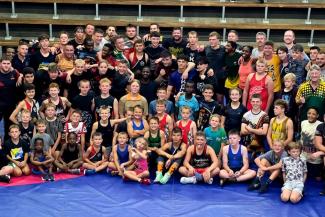
A training camp for different provinces brought together wrestler to consolidate talent identified during Phase 1 and introduce standardized training methodologies.

The training camp included technical sessions, physical conditioning, match simulations and wrestling. The initiative contributed to the creation of an updated national prospect and the foundation of a structured athlete monitoring system.

South Africa

Beach Wrestling Gains Momentum

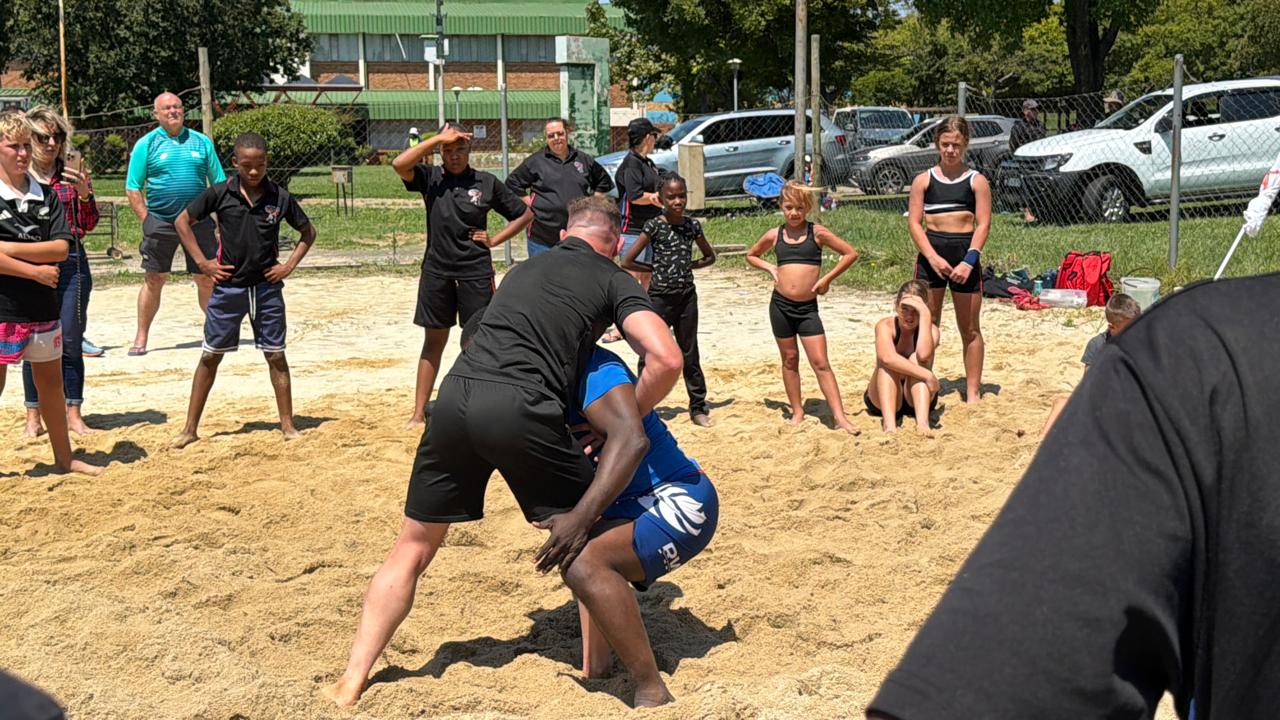
As part of the DNSS activities, a Beach Wrestling training session in Roodepoort highlighted the programme’s expanding impact.

During the visit, Aka led a specialized session, sharing advanced technical insights adapted to beach wrestling. It included stance and balance adjustments, grip and control techniques, and movement adaptation on sand.

The training programme comes at a crucial time, as South African athletes prepare for African Beach Wrestling Championships in Alexandria, Egypt and other international tournaments.