

Zagreb Open Best Move: Blades Suplex
Friday, February 14, 2025 - 15:22 By Vinay Siwach

ZAGREB, Croatia (February 14) -- Kennedy BLADES (USA) is making the suplex her own. After thrilling a packed Champs de Mars Arena with a majestic suplex at the Paris Olympics, the 21-year-old star began her 2025 season with two of them at the Zagreb Open last week.
"When I get behind, in my mind, I am like I have to execute this because it's so rare to hit a suplex," Blades said in Zagreb. "So every time I get behind in matches or big stages, I try to hit the suplex. I want to do it at the world stage because I know it will be on the highlights."
At the Zagreb Open, Blades was at 68kg, two weight classes down from 76kg, in which she won the silver medal at the Paris Games. She debuted at 68kg with a fall over Kendra DACHER (FRA) and another fall over world bronze medalist Adela HANZLICKOVA (CZE).
The first glimpse of her suplex in the match against Noémi SZABADOS (HUN). Close to a minute had gone in the bout when Blades used her reach for a outside single-leg. Instead of going for a takedown, she stood up and locked Szabados from behind and out came the throw.
However, the perfect arch was missing and it was awarded four points.
Blades wasn't satisfied. In Round 5 and leading 7-0, Blades countered Karolina POK (HUN) in a perfect set up for a suplex. Pok made a half-hearted attempt for a headlock but Blades snuck out and moved behind.
Pok knew it was coming. She did not resist and Blades did not relent. A picture-perfect arch, a beautiful throw, safe landing and a cheeky smile at the end. Blades was content.
"I just feel like when someone gets a headlock, they probably have to throw it really hard because growing up, I used to wrestle Greco in the summer," she said. "So my coach always taught us how to set up the suplex if they grab your head for a headlock and they don't go. When someone gets in a headlock position and they don't go super hard, then the suplex is there. If I would ever be in that position, I just go flat because I know that they can probably throw me. "
While it has become relatively easy for Blades to throw her opponents at 68kg, she still needs to tackle their speed and movement.
"I think at 68kg, the girls just feel lighter and that's what makes it a tiny bit easier," she said. "The difference though is that they wrestle a little bit more so my conditioning and footwork needs to be better. Whereas at 76kg, they're kind of hand fighting. It's more like strength. But at 68kg, it's speed and technique. It's hard to distinguish if it's easier or not, but I think the fact that I was able to lift the girls up easy was the best thing ever."
The suplex isn't new to Blades. She performed one at the U20 World Championships back in 2021, then at the Olympics and now in Zagreb. However, Blades picks the one in Paris as the best one so far.
"The best suplex is probably my Olympic one because that was straight back on her neck, on the Olympic stage, first match." she said. "I was on fire. I kind of want to see that the suplex I just hit because I think it was pretty nice. But the Olympic one is so hard to beat and I was in a pink singlet."
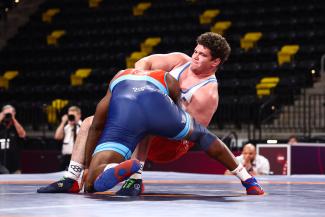

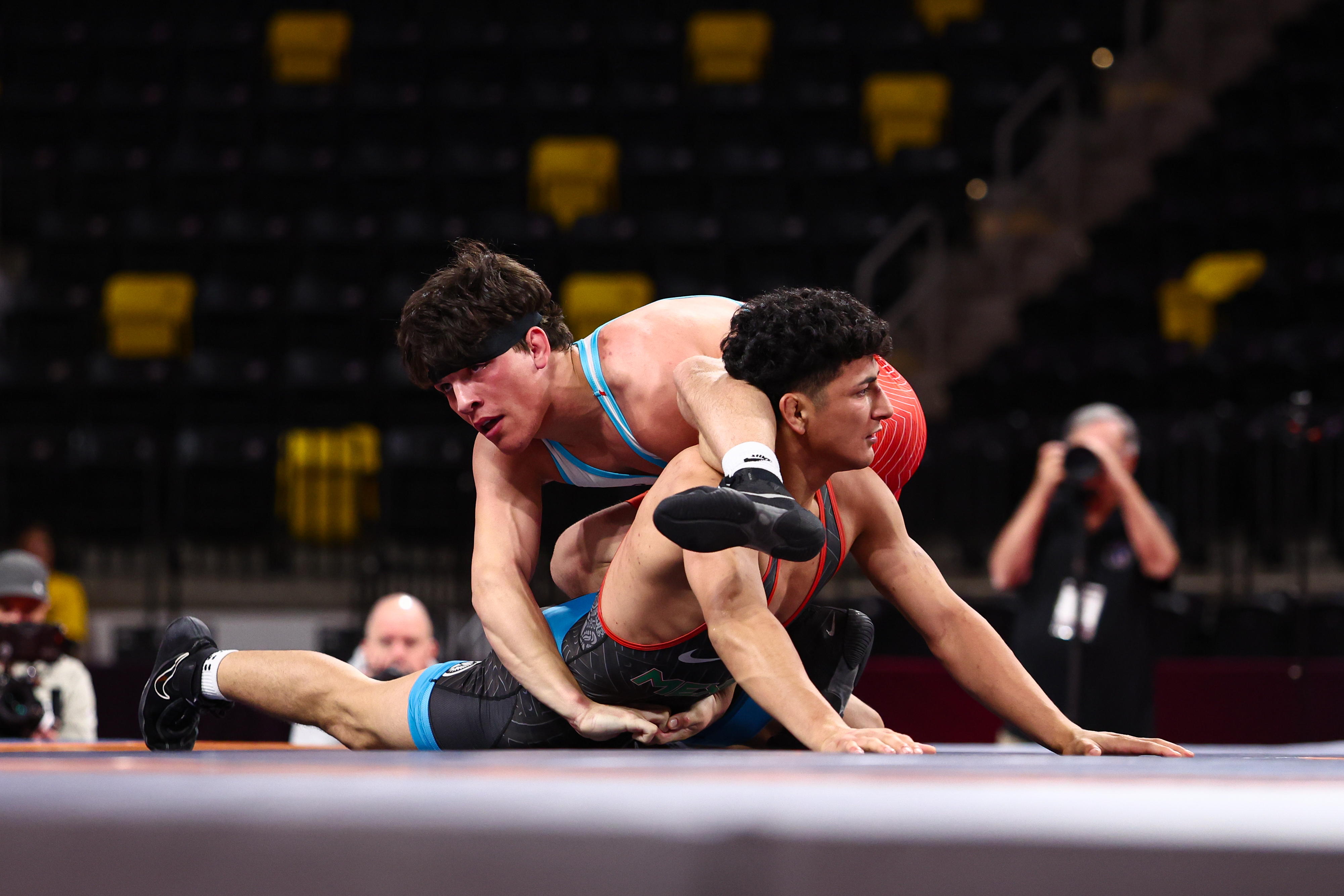 Landon DRURY (USA) tries to score on Angel SEGURA (MEX) during their 63kg bout. (Photo: United World Wrestling / Jake Kirkman)
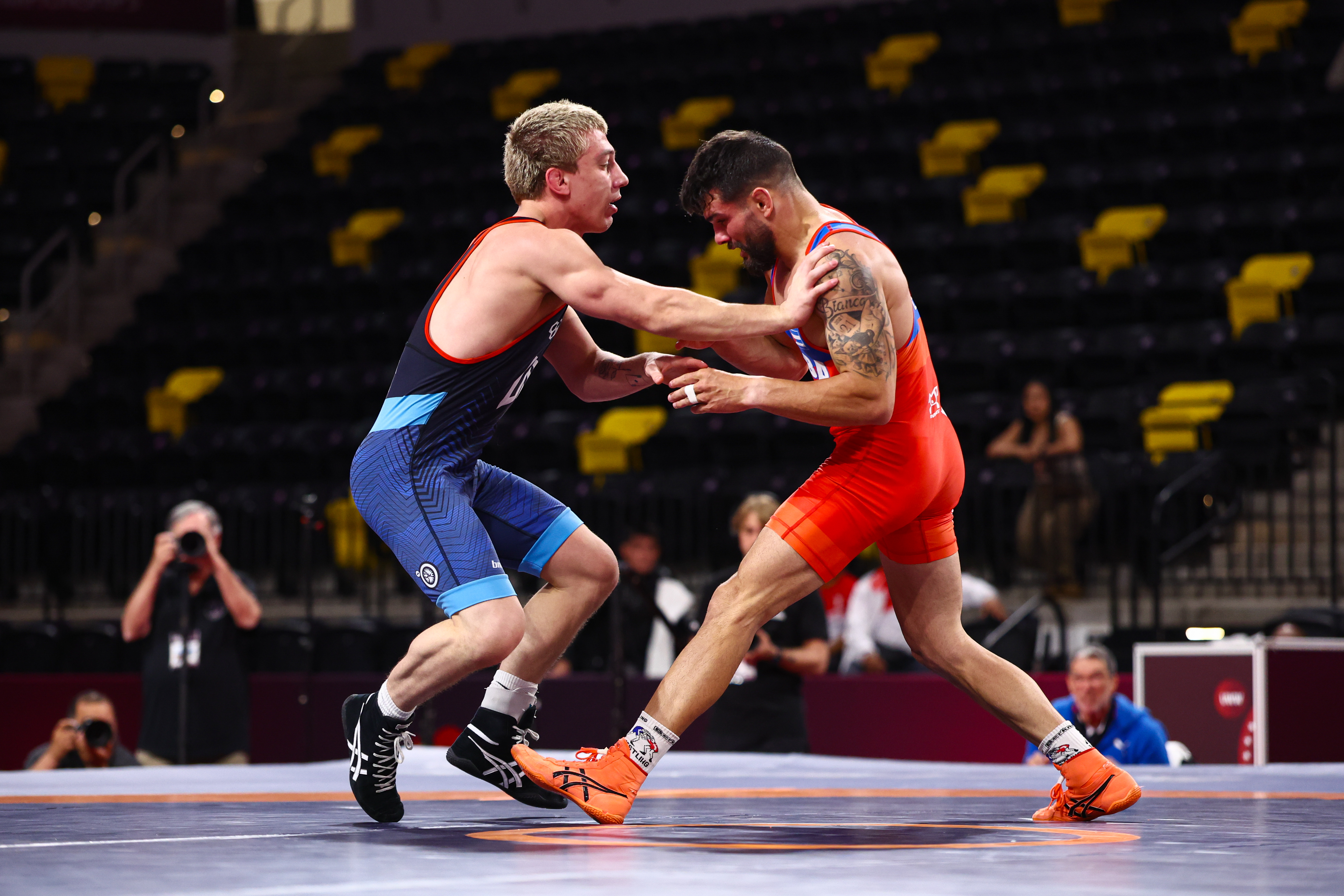 Luis ORTA (CUB), red, wrestles Otto BLACK (USA) during the 67kg final. (Photo: United World Wrestling / Jake Kirkman)
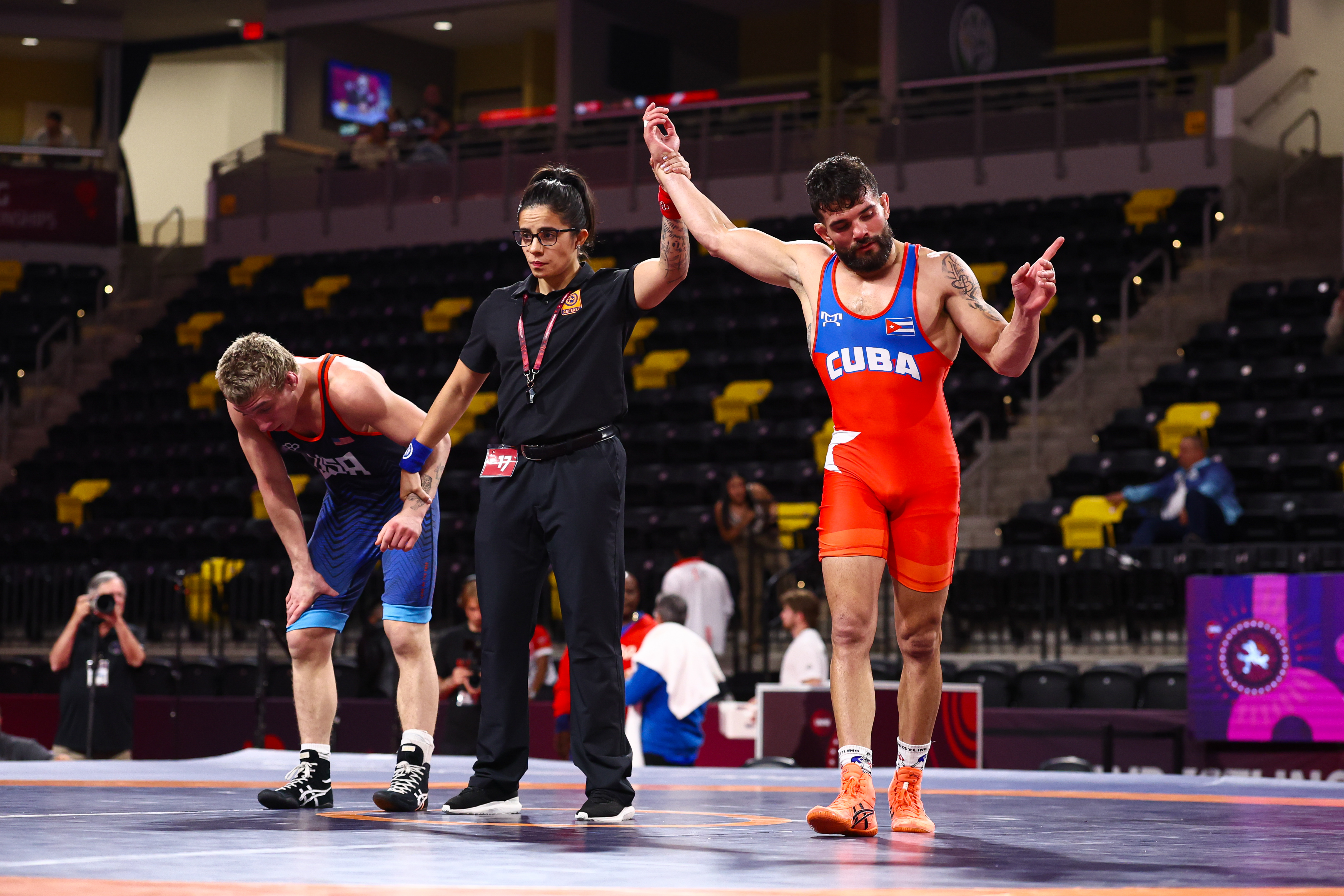 Luis ORTA (CUB) won his fifth Pan-American gold medal on Thursday. (Photo: United World Wrestling / Jake Kirkman)
Share your thoughts.
Comments