

Wrestling Present at 3rd Annual IOC-IF Gender Equality in Leadership Forum
Thursday, April 12, 2018 - 21:04 By Tim Foley

LAUSAUNNE, Switzerland (April 12) – United World Wrestling sent two top leaders to this month's 3rd Annual IOC-IF Gender Equality in Leadership Forum in Lausanne.
Farnaz Panahidez, a member of United World Wrestling’s Women’s Commission member and Director of International Relations of Iran Wrestling Federation, presented at the forum alongside UWW Development Director Deqa Niamkey. The duo on the advancements of UWW in gender equality and women’s wrestling on the panel of “meaningful Inclusion in decision making roles.”
Ms. Panahidez and Ms. Niamkey were joined on stage by World Rugby President, Mr. Beaumont, International Gymnastics Federation President, Mr. Watanabe, FISA Council Member, Ms. Ravensberger and Vice President of Luge, Mrs. Del Negro.
The forum included more than 150 participants presenting on a variety of topics, with the intention of further improving gender balance throughout all levels of international sport. The event was highlighted by the IOC Gender Equality Review Project recommendations, which includes 25 areas of focus to promote gender quality across international sport.
The forum was introduced by International Olympic Committee president Thomas Bach.
Highlighting the discussions were interactive panel sessions on women’s role in their respective sport’s election processes, the portrayal of sports women in the media, and a discussion of best practices by national and international federations in promoting women in sport.
United World Wrestling’s involvement in the forum was another example of the organization’s firm commitment to gender equality. Over the past few years United World Wrestling president Nenad Lalovic has taken several steps to ensure the inclusion of more women in the sport’s decision-making positions. He has also worked with partners to an increase in the number of women’s competitions and provide more visibility to women’s wrestling.
The Development Department, along with the Women and Sport Commission, have been tasked with turning the President’s commitment to gender equality and related initiatives into concrete action.


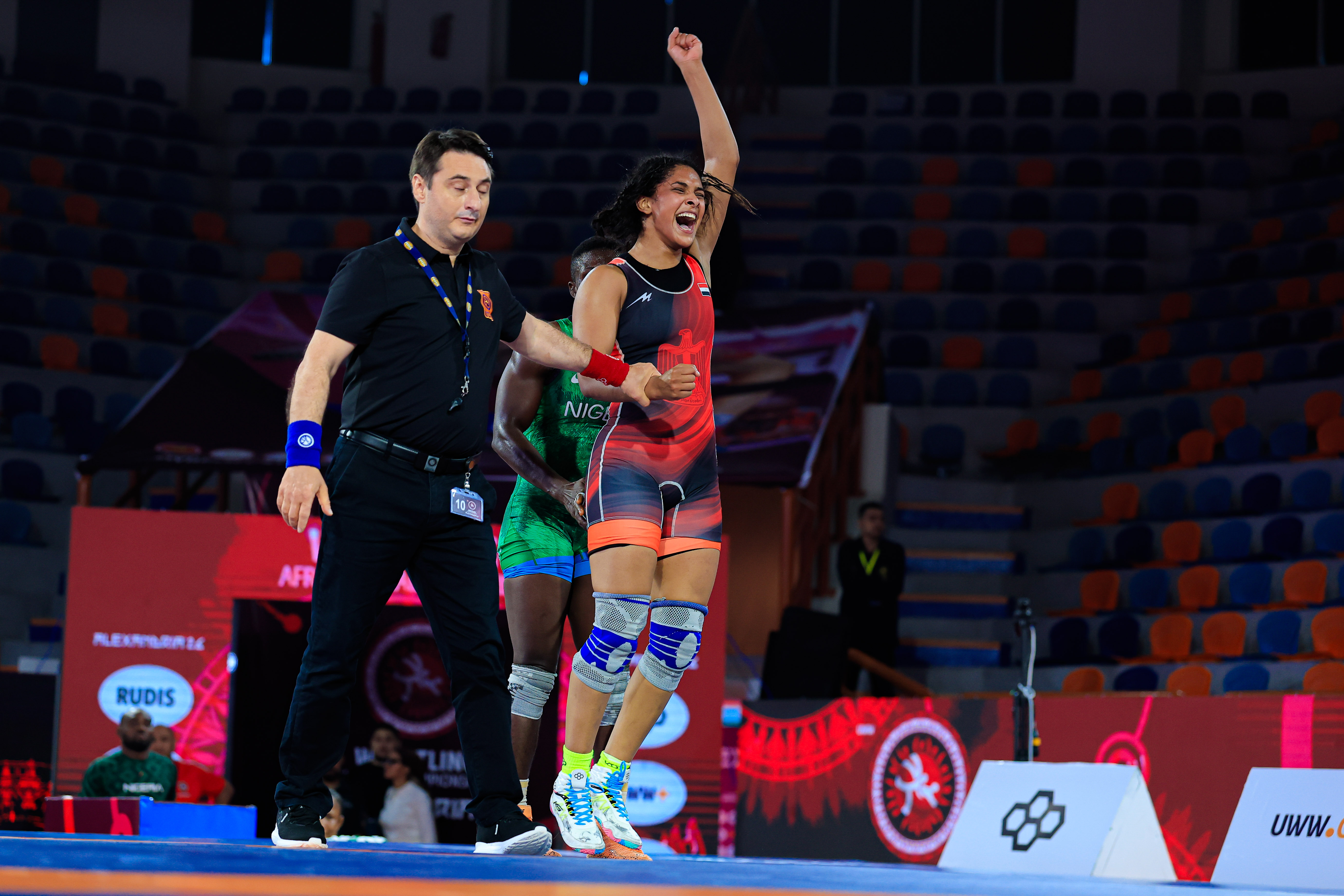 Sabah KHAMIS (EGY) celebrates after beating Hannah RUEBEN (NGR) in Round 1 bout at 68kg. (Photo: United World Wrestling / Kostadin Andonov)
Share your thoughts.
Comments