ULAANBAATAR, Mongolia (May 21) -- United World Wrestling's continental championships are over and the Ranking Series will return for its third stop.
Ulaanbaatar Open, the third Ranking Series of the year, will be held in the Mongolian capital from June 4-7.
Note: The entries are subject to change 72 hours before the draws of respective style. For latest, click here

Greco-Roman
55kg
LALIT (IND)
Payam AHMADI (IRI)
Davaabandi MUNKH ERDENE (MGL)
Sumiyabazar MUNKHZAYA (MGL)
Emin CAKIR (TUR)
60kg
BAOYINJIYA (CHN)
SAHIL (IND)
SUMIT (IND)
Ali AHMADI VAFA (IRI)
Akyl SULAIMANOV (KGZ)
Dahyun KIM (KOR)
Seunghak KIM (KOR)
Yu Chol RO (PRK)
63kg
Sunny KUMAR (IND)
Erfan JARKANI (IRI)
Mohammad KESHTKAR (IRI)
Doszhan UTEPKALIYEV (KAZ)
Yerkebulan ARDAKOV (KAZ)
Zholaman SHARSHENBEKOV (KGZ)
Hyunwoong CHOI (KOR)
67kg
Tsuchika SHIMOYAMADA (AUS)
Alamusi ALAMUSI (CHN)
Xinxin JIN (CHN)
Sachin SAHRAWAT (IND)
Karajit SINGH (IND)
Hanjae CHUNG (KOR)
Otgonnasan TSERENPUNTSAG (MGL)
Ganbayar NAMSRAI (MGL)
Man Gwang SON (PRK)
Murat FIRAT (TUR)
72kg
ANIL (IND)
Javad REZAEI (IRI)
Danial SOHRABI (IRI)
Sultan ASSETULY (KAZ)
Amanat SAMAT UULU (KGZ)
Amantur ISMAILOV (KGZ)
Zhantoro MIRZALIEV (KGZ)
Minseong KWON (KOR)
Aldarkhuu YESUNCHUDUR (MGL)
Borgil TUVSHINBAATAR (MGL)
77kg
Stoyan KUBATOV (BUL)
Amuguleng BAI (CHN)
AMAN (IND)
Ankit GULIA (IND)
Bekzat ORUNKUL UULU (KGZ)
Yeonghun NOH (KOR)
Kyeongbin LEE (KOR)
Ariyabadraa TUUL (MGL)
Jason BAUCAS (PHI)
82kg
Aik MNATSAKANIAN (BUL)
Deyvid DIMITROV (BUL)
Imur TEMIRBEKOV (KGZ)
Lkhagvasuren DASHJAMTS (MGL)
Orgil NYAM ERDENE (MGL)
Turbold ENKHBAYAR (MGL)
87kg
Sunil KUMAR (IND)
PRINCE (IND)
Rohit BURA (IND)
Gholamreza FAROKHI (IRI)
Azat SALIDINOV (KGZ)
Seunghwan LEE (KOR)
Batbayar TSOGTBAATAR (MGL)
Turbold GANBOLD (MGL)
Usukhbayar BAATARKHUU (MGL)
Luis AVENDANO (VEN)
97kg
ADIYA (CHN)
Kevin MEJIA (HON)
NITESH (IND)
Nurassyl AMANALY (KAZ)
Minho LEE (KOR)
Batsuuri PUREVDORJ (MGL)
Gankhuyag GANBAATAR (MGL)
Tuvshinsanaa ERDENEJARGAL (MGL)
Juan DIAZ (VEN)
130kg
Zhiyong DONG (CHN)
Gino AVILA (HON)
Joginder RATHEE (IND)
Olzhas SYRLYBAY (KAZ)
Minseok KIM (KOR)
Lkhagvajamts MUNKHDORJ (MGL)
Nambardagva BATBAYAR (MGL)
Moises PEREZ (VEN)
Freestyle
57kg
DENGBURILE (CHN)
ANKUSH (IND)
SUMIT (IND)
Abzal OKENOV (KAZ)
Meirambek KARTBAY (KAZ)
Merey BAZARBAYEV (KAZ)
Sangboum HAN (KOR)
Sunggwon KIM (KOR)
Davaabandi MUNKH ERDENE (MGL)
Jiguur SARANTUYA (MGL)
Batmend ZORIGOO (MGL)
Chong Song HAN (PRK)
Darian Toi CRUZ (PUR)
Musa MEKHTIKHANOV (RUS)
Aiaal BELOLYUBSKII (TJK)
Pedro MEJIAS (VEN)
61kg
Georgii OKOROKOV (AUS)
DEEPAK (IND)
Ahora KHATERI (IRI)
Assyl AITAKYN (KAZ)
Assylzhan YESSENGELDI (KAZ)
Adilet ALMUKHAMEDOV (KAZ)
Omurbek ASAN UULU (KGZ)
Batnasan GANKHULEG (MGL)
Tserendondov DORJPUREV (MGL)
Zanabazar ZANDANBUD (MGL)
Bair BAIANDUEV (RUS)
65kg
Shamil MAMEDOV (BUL)
Mohit KUMAR (IND)
ROHIT (IND)
SUJEET (IND)
Rahman AMOUZAD (IRI)
Adlan ASKAROV (KAZ)
Ossimzhan DASTANBEK (KAZ)
Junsik YUN (KOR)
Gantulga BATBAATAR (MGL)
Turbayar DAVAANYAM (MGL)
Zeneemeder BYAMBASUREN (MGL)
Kwang Jin KIM (PRK)
Christopher COMPOSTO (USA)
70kg
ABHIMANYOU (IND)
Rodion ANCHUGIN (KAZ)
Bakdaulet AKIMZHAN (KAZ)
Aden SAKYBAEV (KGZ)
Rustamzhan KAKHAROV (KGZ)
Tulga TUMUR OCHIR (MGL)
Usukhbayar BAATARKHUU (MGL)
Zandanbat BATSAIKHAN (MGL)
Konstantin KAPRYNOV (RUS)
Magomed ELTEMIROV (RUS)
Cross WASILEWSKI (USA)
74kg
BATUQINGGELE (CHN)
Erihetu BAYIN (CHN)
JAIDEEP (IND)
Sagar JAGLAN (IND)
Sandeep MANN (IND)
Darkhan YESSENGALI (KAZ)
Daegil HAN (KOR)
Jin su JEON (KOR)
Sangho HAN (KOR)
Sumiyabazar ZANDANBUD (MGL)
Tolui MUNKHBAT (MGL)
Tugsjargal ERDENEBAT (MGL)
Tamir ESHINIMAEV (RUS)
Tumen BODIEV (RUS)
79kg
MOHIT (IND)
Mahdi YOUSEFI (IRI)
Nurdaulet KUANYSHBAY (KAZ)
Shamsat TAIR (KAZ)
Bekzat RAKHIMOV (KGZ)
Gan Erdene BAATARKHUU (MGL)
Khangaibayar GANBOLD (MGL)
Suldkhuu OLONBAYAR (MGL)
Ismail KHANIEV (RUS)
86kg
Magomed RAMAZANOV (BUL)
Suhe GANG (CHN)
ARYAN (IND)
Mukul DAHIYA (IND)
Mohammad NOKHODI (IRI)
Bolat SAKAYEV (KAZ)
Malik SHAVAEV (KGZ)
Gyeongyeon LEE (KOR)
Taegyu HWANG (KOR)
Batbilguun NAADAMBAT (MGL)
Bilguundalai PUREVDAGVA (MGL)
Byambadorj BAT ERDENE (MGL)
Abdulmuslim ABULMUSLIMOV (RUS)
Weng CHOW (SGP)
92kg
Punit KUMAR (IND)
Abolfazl RAHMANI (IRI)
Bekzat AMANGALI (KAZ)
Azamat DAULETBEKOV (KAZ)
Yelnar SHILDEBAY (KAZ)
Sung Yup RYU (KOR)
Bat Erdene BYAMBASUREN (MGL)
Delgerdalai DEMBEREL (MGL)
Ganbat TSERENPUNTSAG (MGL)
Askhab SAADULAEV (RUS)
97kg
Thomas BARNS (AUS)
Yaraslau SLAVIKOUSKI (BLR)
TUXIGE (CHN)
Deepak CHAHAL (IND)
VICKY (IND)
Nurdaulet BEKENOV (KAZ)
Juhwan SEO (KOR)
Pureun KIM (KOR)
Demchigdorj TUMURBAATAR (MGL)
Gankhuyag GANBAATAR (MGL)
Mukhamed Takhir KHANIEV (RUS)
Cristian SARCO (VEN)
125kg
BUHEEERDUN (CHN)
DINESH (IND)
RONAK (IND)
Yedige KASSIMBEK (KAZ)
Gwanuk KIM (KOR)
Altangerel CHINBAT (MGL)
Nambardagva BATBAYAR (MGL)
Narantulga DARMAABAZAR (MGL)
Kamil KOSCIOLEK POL
Robert BARAN POL
Timur KOTAEV (RUS)
Jose DIAZ (VEN)
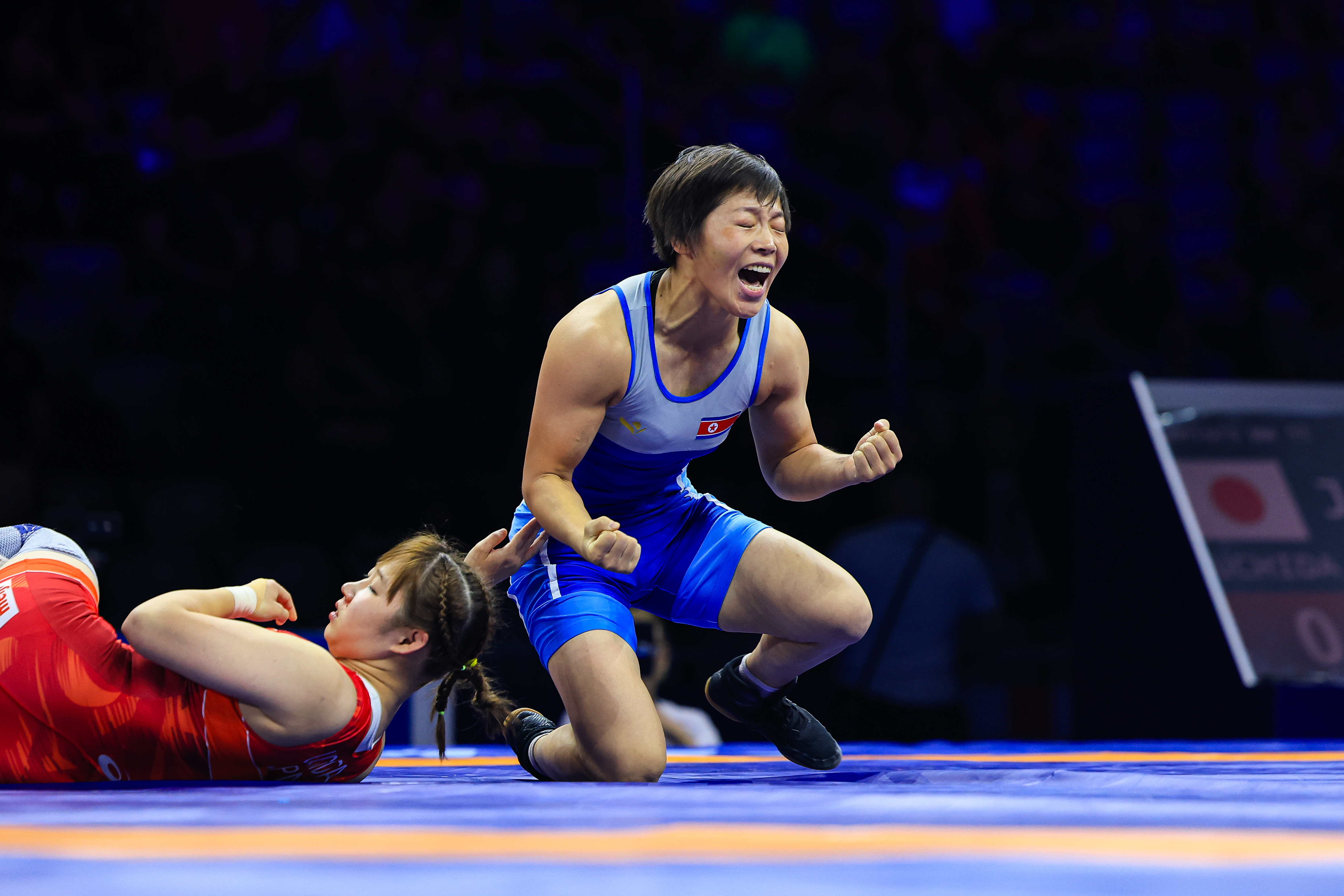 Kyong Ryong OH (PRK), world champion at 55kg, will be wrestling at 53kg. (Photo: United World Wrestling / Kadir Caliskan)
Women's Wrestling
50kg
Ziqi FENG (CHN)
NEELAM (IND)
SWEETY (IND)
Miyu NAKAMURA (JPN)
Maral TANGIRBERGENOVA (KAZ)
Miran CHEON (KOR)
Munkhgerel MUNKHBAT (MGL)
Munkhnar BYAMBASUREN (MGL)
Suvd Erdene BAYARBAATAR (MGL)
Miesinnei GENESIS (NGR)
Son Hyang KIM (PRK)
Evin DEMIRHAN YAVUZ (TUR)
53kg
NAOGUGAN (CHN)
MEENAKSHI (IND)
MUSKAN (IND)
Moe KIYOOKA (JPN)
Maral TANGIRBERGENOVA (KAZ)
Seoyoung PARK (KOR)
Chuluun Erdene BATTOGTOKH (MGL)
Namuuntsetseg TSOGT OCHIR (MGL)
Otgontuya BAYANMUNKH (MGL)
Christianah OGUNSANYA (NGR)
Kyong Ryong OH (PRK)
Andreea ANA (ROU)
Natalia MALYSHEVA (RUS)
Alexa ALVAREZ (VEN)
55kg
Hansika LAMBA (IND)
Natsumi MASUDA (JPN)
Laura ALMAGANBETOVA (KAZ)
Ariunzaya ODONCHIMEG (MGL)
Bayarjargal TUMURBAATAR (MGL)
Chimgee BUYANDALAI (MGL)
Hyo Gyong CHOE (PRK)
Beatrice FERENT (ROU)
Tuba DEMIR (TUR)
57kg
MANISHA (IND)
Nilufar RAIMOVA (KAZ)
Youngjin KWON (KOR)
Khulan BATKHUYAG (MGL)
Munkhchimeg URJIN (MGL)
Il Sim SON (PRK)
Danielle LIM (SGP)
Elvira SULEYMAN KAMALOGLU (TUR)
59kg
NEHA (IND)
Bolortuya KHURELKHUU (MGL)
Enkhtuvshin BALJINNYAM (MGL)
Saruul ERDENEBILEG (MGL)
Pyol HONG (PRK)
Eleonora USEINOVA (RUS)
Bediha GUN (TUR)
62kg
Bilyana DUDOVA (BUL)
Huan YANG (CHN)
MANSI (IND)
NITIKA (IND)
Subeen JO (KOR)
Altjin TOGTOKH (MGL)
Tserenchimed SUKHEE (MGL)
Esther KOLAWOLE (NGR)
Ok Ju KIM (PRK)
Amina CAPEZAN (ROU)
Amina TANDELOVA (RUS)
Ekaterina OLEINIKOVA (RUS)
Astrid MONTERO (VEN)
65kg
Shuai ZHANG (CHN)
PULKIT (IND)
Enkhjin TUVSHINJARGAL (MGL)
Erdenebulgan LKHAGVASUREN (MGL)
Narkhajid NYAMSUREN (MGL)
Hyon Gyong MUN (PRK)
68kg
Irina KAZYULINA (KAZ)
Hyeonyeong PARK (KOR)
Delgermaa ENKHSAIKHAN (MGL)
Gantsetseg BATSUKH (MGL)
Odzaya ERDENEBAT (MGL)
Sol Gum PAK (PRK)
Kateryna ZELENYKH (ROU)
Elizaveta PETLIAKOVA (RUS)
Nesrin BAS (TUR)
Nathaly GRIMAN (VEN)
72kg
HARSHITA (IND)
Zhamila BAKBERGENOVA (KAZ)
Batsuren MYAGMARSUREN (MGL)
Bolortungalag ZORIGT (MGL)
Odgerel ERDENE OCHIR (MGL)
Wiktoria CHOLUJ (POL)
Olesia BEZUGLOVA (RUS)
76kg
Saihan AO (CHN)
Wenji LI (CHN)
KAJAL (IND)
PRIYA (IND)
Elmira SYZDYKOVA (KAZ)
Gulmaral YERKEBAYEVA (KAZ)
Eunju HWANG (KOR)
Davaanasan ENKH AMAR (MGL)
Tuvshinjargal TARAV (MGL)
Urtnasan GAN OCHIR (MGL)
Damola OJO (NGR)
Patrycja CUBER (POL)
Alexandra ANGHEL (ROU)
Valeriia TRIFONOVA (RUS)




Share your thoughts.
Comments