

#WrestleOslo Weight-to-Watch: Freestyle 61kg
Tuesday, September 28, 2021 - 10:13 By Vinay Siwach

CORSIER-SUR-VEVEY, Switzerland (September 28) -- When the Russian Wrestling Federation was deciding its squad for the World Championships, only two weight classes were confirmed. Just a week ago, they hosted their team trials and once again, only two wrestlers were given direct entry to the Worlds.
One was the obvious choice of two-time Olympic champion Abdulrashid SADULAEV (RWF) at 97kg. The other was Abasgadhzi MAGOMEDOV (RWF) at 61kg.
While Sadulaev has been the Russian Wrestling Federation’s leader of the freestyle team, Magomedov claimed that spot with some consistent and dominant performances at the international level since his junior years.
He is a junior world champion, senior European champion and the winner of the Individual World Cup and is the favorite to win the gold medal in Oslo.
A weight that has talented youngsters and defending world champion, 61kg promises to be a slugfest and the fans can enjoy the quality action on day one of the tournament.
Beka LOMTADZE (GEO) will be on the mat trying to defend his world title from 2019 but he faces a stiff challenge from Magomedov, Tokyo Olympians Arsen HARUTYUNYAN (ARM) and Stevan MICIC (SRB).
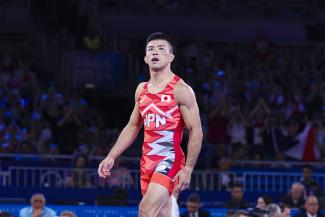
But don’t take your eyes off two-time junior world champion Rahman AMOUZADKHALILI (IRI), former junior world gold Daton FIX (USA), three U23 world champions in Adlan ASKAROV (KAZ), Ulukbek ZHOLDOSHBEKOV (KGZ) and Toshihiro HASEGAWA (JPN).
Akhmednabi GVARZATILOV (AZE) and RAVINDER (IND) along with Tuvshintulga TUMENBILEG (MGL) can easily upset anyone of the aforementioned names.
Lomtadze tried qualifying for the Tokyo Olympics but failed after losing in the Last Chance Qualifiers. But that was at 65kg. He will now be back to his more favored weight but with age catching up, it will be difficult ask for him to keep the gold.
Amouzadkhalili once again showed why he is rated so high around the world after winning his second junior world title with little to no challenge in Ufa, Russia. His attacking and composed wrestling makes it difficult for his opponents to stop him from making scoring moves in crunch situations.
He is also Iran’s big hope to take over the 65kg category in the future and this World Championships can be a decent view of what we can expect from him.
Fix will revive his rivalry against Magomedov after the two met at the cadet worlds six years ago, a meeting Magomedov won in a close encounter 3-2.
Fix won the team trials in the USA with ease and can notch up wins in Oslo over anyone in the field but his weight loss issues along with the rise of youngsters he has never faced before could well be a problem.
One such wrestler is Zholdobeshkov who won the U23 Worlds in 2019. While he hasn’t been consistent, his Asian Championships gold and experience at competing at big events gives him the edge. Askarov too was exceptional in recent times with silver at Asian Championships and at Yasar Dogu.
Hartunyan has a win over Lomtadze and was also at the Tokyo Olympics and his ability to perform when no one expects him to will be a thing to watch out for.
Magomedov's run in Oslo will also determine how he plans to wrestle in the future, challenging 2019 world champion at 65kg Gazdhimurad RASHIDOV (RWF). Not only him, but a few of these wrestlers at 61kg will be trying to be the representatives for their countries come Paris 2024.
Freestyle 61kg Entries:
Arsen HARUTYUNYAN (ARM)
Akhmednabi GVARZATILOV (AZE)
Andrei BEKRENEU (BLR)
Alibeg ALIBEGOV (BRN)
Georgi Valentinov VANGELOV (BUL)
Arman Norik ELOYAN (FRA)
Beka LOMTADZE (GEO)
Nico MEGERLE (GER)
Ravinder RAVINDER (IND)
Rahman Mousa AMOUZADKHALILI (IRI)
Toshihiro HASEGAWA (JPN)
Adlan ASKAROV (KAZ)
Kenneth KOECH (KEN)
Ulukbek ZHOLDOSHBEKOV (KGZ)
Sunggwon KIM (KOR)
Chakir ANSARI (MAR)
Leomid COLESNIC (MDA)
Tuvshintulga TUMENBILEG (MGL)
Eduard GRIGOREV (POL)
Ivan GUIDEA (ROU)
Abasgadzhi MAGOMEDOV (RWF)
Stevan Andria MICIC (SRB)
Emrah ORMANOGLU (TUR)
Yaroslav HURSKYY (UKR)
Daton FIX (USA)
Share your thoughts.
Comments