CORALVILLE, IOWA, United States (May 9) -- Olympic bronze medalist, world bronze medalist and world champion. That was the hit-list of Kylie WELKER (USA) as she defended her Pan-American 76kg title in Coralville on Saturday.
Welker, a world bronze medalist herself last year, was among the three United States wrestlers who won gold medals as Women's Wrestling came to a close at the Pan-American Championships. The U.S. was the best team of the tournament with 235 points as all 10 wrestlers won medals including eight golds. Canada finished second with 136 points while Mexico was third with 128 points.

Welker's path to gold medal was nothing short of a minefield as she faced Paris 2024 bronze medalist Tatiana RENTERIA (COL) in the quarterfinals. But Welker got to work straightaway scoring a stepout to lead 1-0. She then countered Renteria's attack and scored a takedown to extend the lead to 3-0 before adding another to go into the break leading 5-0. She took 30 seconds in the second period to score her third takedown and then rolled Renteria twice to finish the match 11-0.
Up against world bronze medalist Milaimy MARIN (CUB) in the semifinals, Welker finished the bout with 1:18 remaining. Marin was put on the activity clock in the first period before Welker rushed her into a takedown to lead 3-0. Welker then overpowered Marin when the Cuban tried reaching for Welker's legs. It was scored four points as Marin fell straight from standing. A go-behind and then an arm-bar exposure was enough for an 11-0 win but Welker held Marin on the mat for the fall.
World champion Genesis REASCO (ECU) reached the final from the other side of the bracket with hopes of avenging her 10-0 loss to Welker from last year's Pan-Am semifinals. But the final did not start in Reasco's favor as she was put on the activity clock in the first period which gave Welker a 1-0 lead. In the second period, Welker was put on the activity clock but with seconds left in the 30-second clock, she tried reaching Reasco's leg.
The Ecuadorian world champion thought it was ideal moment to drag Welker towards the zone, but as she did that, Welker whizzed her for a two-point exposure and then held her on the mat for a fall which was confirmed just before Reasco went out of wrestling area.
With the gold medal, U23 world champion Welker is now a two-time Pan-Am champion.
The two other champions for the U.S. were former world medalist Kayla MIRACLE (USA) and Abigail NETTE (USA) at 65kg and 59kg respectively.
Miracle, returning to wrestling since Paris 2024, won both her bouts via technical superiority. She defeated Alexis GOMEZ (MEX), 10-0, in Round 1 and then Miki ROWBOTTOM (CAN), 10-0, in Round 3. Rowbottom defeated Gomez 6-4 in Round 2 to win the silver medal.
Nette had to win three bouts for the gold medal. She began with a 12-2 win over defending champion Laurence BEAUREGARD (CAN) and then secured two falls, first over Daniela MARTINEZ (MEX) and then against Mayara RAMOS (BRA) to confirm her title.
Beauregard, a four-time Pan-Am champion and world bronze medalist, defeated both Martinez and Ramos to secure the silver medal. And since Ramos defeated Martinez earlier in the day, she won the bronze medal.
Yepez Wins Fourth Straight Gold
Olympic and world silver medalist Lucia YEPEZ (ECU) captured her fourth straight Pan-American title at 53kg as she won the gold medal after beating Serena DI BENEDETTO (CAN), 12-2, in the final.
Yepez scored first in the final when Di Benedetto tried a snap down and Yepez quickly turned it into a leg attack. She scored a takedown and then a turn to lead 4-0 before adding a stepout to lead 5-0. But she missed one of her attack and Di Benedetto scored a go-behind to make it 5-2.
If that takedown gave any hopes to Di Benedetto, Yepez quickly quashed then hitting a double-leg for four points and then a turn to lead 11-2. The two wrestlers split for the break but on return, Yepez took just 20 seconds to score the match-winning takedown, taking her score to 13-2.
Earlier in the quarterfinals, Yepez defeated former U20 world champion Cristelle RODRIGUEZ (USA), 11-0.
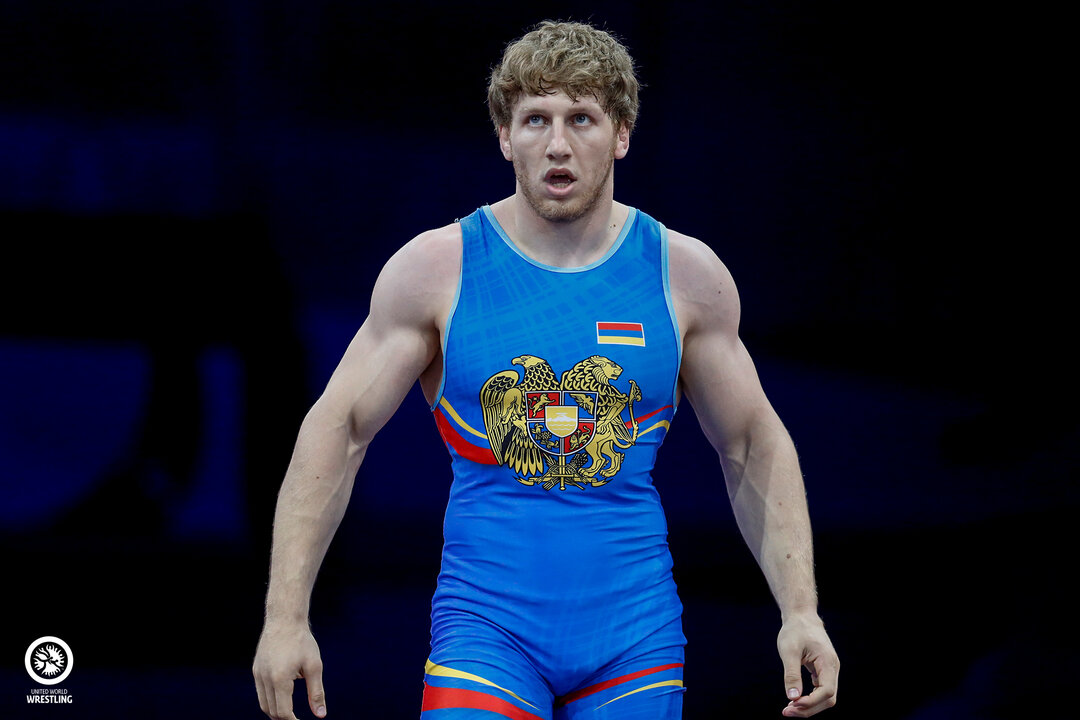
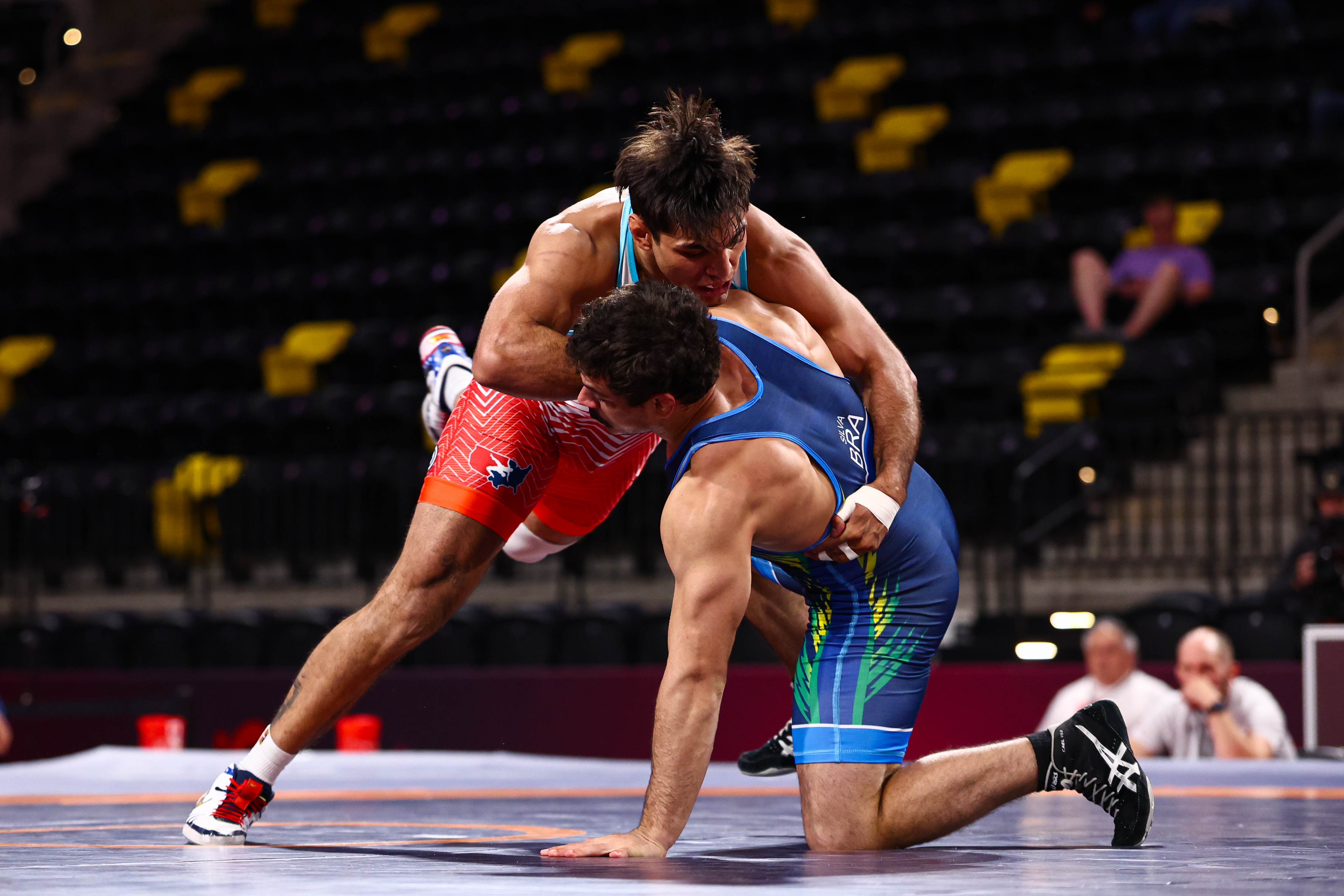 Zahid VALENCIA (USA) outscored his opponents 31-0 en route his third Pan-Am title. (Photo: United World Wrestling / Jake Kirkman)
Valencia Defends 86kg Gold
Freestyle commenced on Saturday at the Pan-Ams and the U.S., like in Greco-Roman and Women's Wrestling, dominated it.
In the three weight classes in action on Saturday, the U.S. won two golds medals through world champion Zahid VALENCIA (USA) at 86kg and Austin DE SANTO (USA) at 61kg. The third Freestyle gold of the night went to Geannis GARZON (CUB) who denied Phillip WEBSTER (USA) in the 74kg final.
Valencia, the defending champion at 86kg, went 31-0 in his three bouts. He began with a 10-0 win over Nestor TAFUR (COL) before beating Pedro GONCALVES (BRA), 11-0, in the semifinals.
In the final, Valencia opened the scoring against Christopher FOCA (DOM) using a snap down takedown and then scored another at the edge to lead 4-0. He then used a single-leg attack to lift Foca and slam him on the mat for four points and double the lead to 8-0. Foca attempted a head pinch but Valencia defended it and scored two points as Foca landed on the mat, giving Valencia the win with 2:31 remaining.
De Santo won his first two bouts in the Nelson bracket and then the semifinal, all with the score of 10-0, before blanking Caleb SMITH (PUR), 9-0, in the final. While Smith was pace-setter in the first period, it was De Santo who counter efficiently to lead 4-0 at the break.
But De Santo changed it in the second period, scoring a takedown and turn in the first 34 seconds and lead 8-0. He defended his lead without engaging much with Smith and also scored a stepout late in the final to clinch the gold medal.
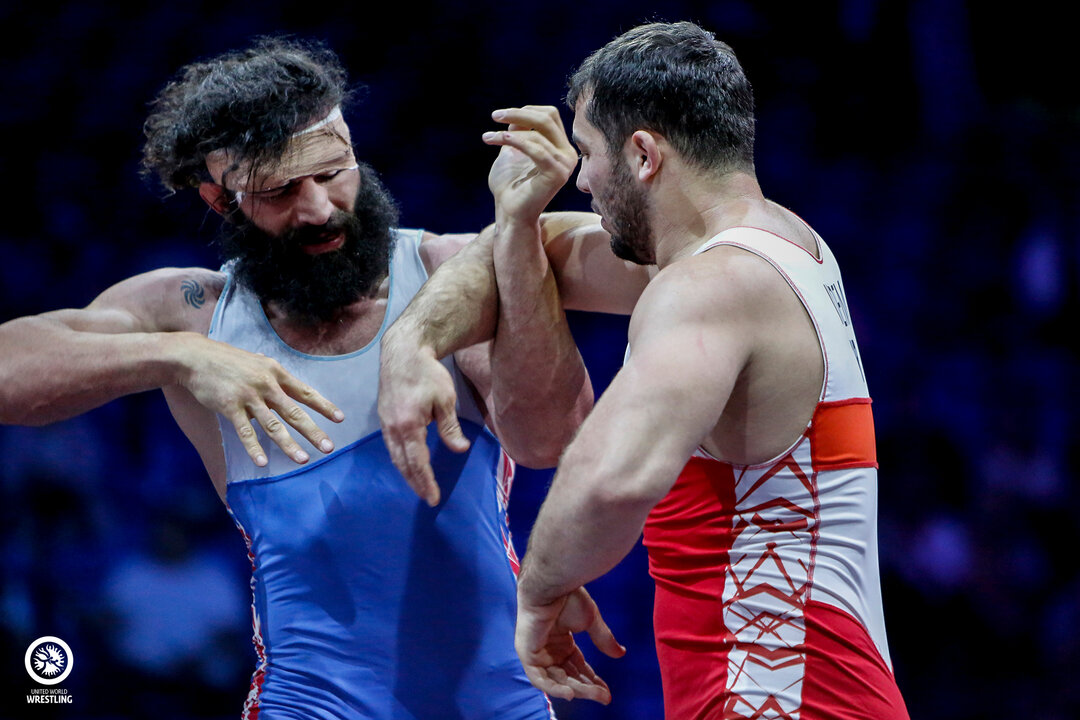
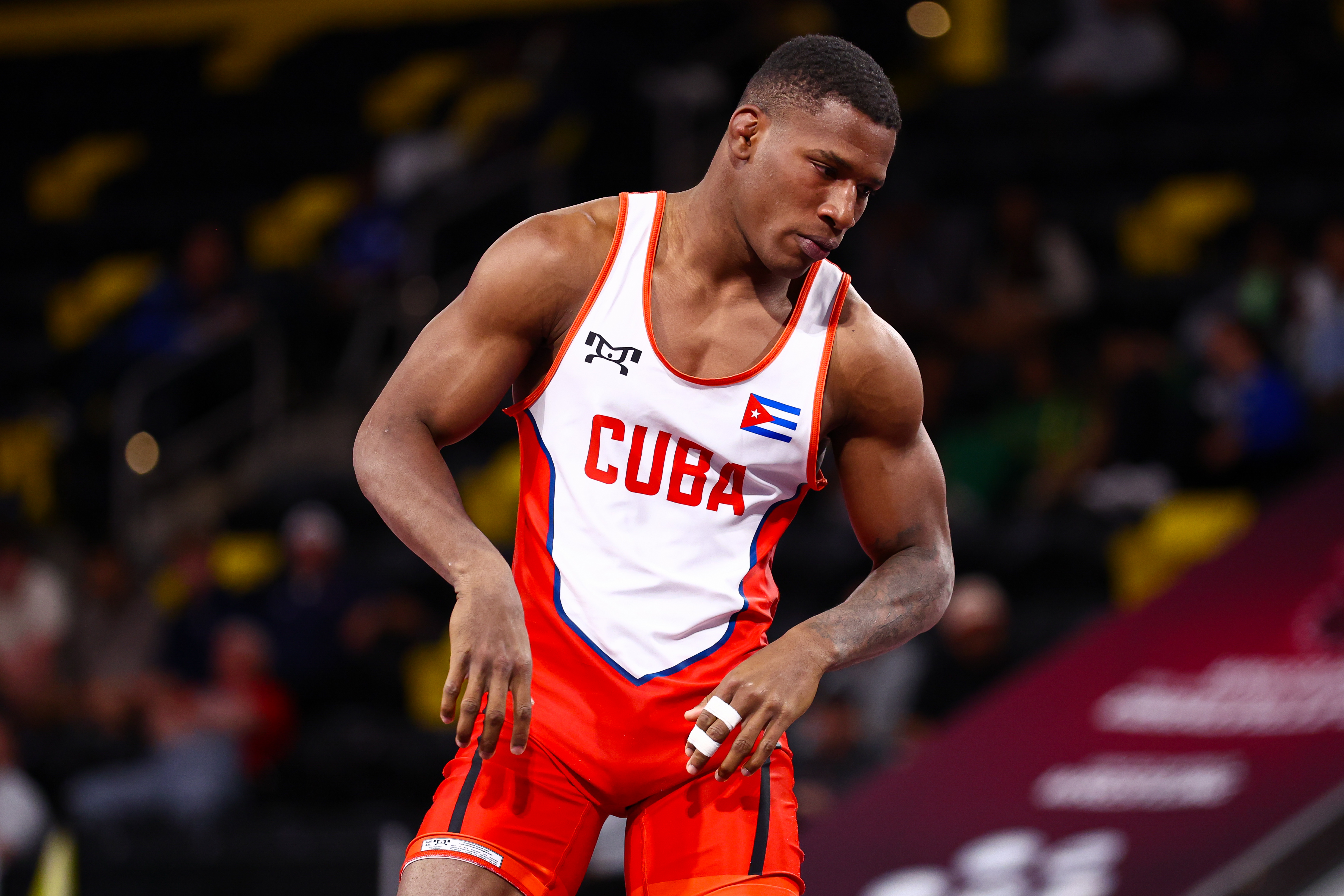 Geannis GARZON (CUB) won the 74kg gold medal. (Photo: United World Wrestling / Jake Kirkman)
At 74kg, Garzon made amends after being disqualified for brutality last year, by winning the gold medal this year. Facing Webster in the final, Garzon led 4-0 at the break. In a back-and-forth second period, Garzon tried using a chest wrap to defend an attack from Webster. It was initially scored two for Garzon and one for Webster's reversal, giving Garzon a 6-1 lead.
The U.S. challenged the decision and after the review, the scoring was changed to four points for Garzon and two points for Webster with the former lead 8-2. Webster got a clean takedown soon after to trim the lead to 8-4 but as he was working on the next takedown, Garzon scored exposure lift for two points and Webster got a reversal for one point.
Garzon led 10-5 when Webster scored stepout to make it 10-6 but the U.S. challenged, saying the score should be 10-7. The scoring was deemed correct and Garzon body locked Webster in the final eight seconds to score a takedown and confirm his victory.

RESULTS
Women's Wrestling
53kg
GOLD: Lucia YEPEZ (ECU) df. Serena DI BENEDETTO (CAN), 13-2
BRONZE: Sabrina GAMA (BRA) df. Antonia VALDES (CHI), 8-2
BRONZE: Cristelle RODRIGUEZ (USA) df. Alexa ALVAREZ (VEN), 7-2
59kg
GOLD: Abigail NETTE (USA)
SILVER: Laurence BEAUREGARD (CAN)
BRONZE: Mayara RAMOS PEREIRA (BRA)
65kg
GOLD: Kayla MIRACLE (USA)
SILVER: Miki ROWBOTTOM (CAN)
BRONZE: Alexis GOMEZ (MEX)
76kg
GOLD: Kylie WELKER (USA) df. Genesis REASCO (ECU), via fall
BRONZE: Milaimy MARIN (CUB) df. Tatiana RENTERIA (COL), 7-0
BRONZE: Edna JIMENEZ (MEX) df. Neirili BANGUERO (VEN), 9-5
Freestyle
61kg
GOLD: Austin DE SANTO (USA) df. Caleb SMITH (PUR), 9-0
BRONZE: Garette SAUNDERS (CAN) df. Alex VEGA TUN (GUA), 12-5
74kg
GOLD: Geannis GARZON TAMAYO (CUB) df. Phillip WEBSTER (USA), 12-6
BRONZE: Ibsen AGUILAR (VEN) df. Luis BARRIOS (HON), 8-6
BRONZE: Adam THOMSON (CAN) df. Raul PALACIOS (MEX), 10-0
86kg
GOLD: Zahid VALENCIA (USA) df. Christopher FOCA (DOM), 10-0
BRONZE: Ethan RAMOS (PUR) df. Jose PINERO (VEN), 10-0
BRONZE: Nestor TAFUR (COL) df. Pedro GONCALVES (BRA), 11-0



Share your thoughts.
Comments