SKOPJE, North Macedonia (June 26) -- The U20 European Championships will be held in Skopje, North Macedonia from July 6 to 12.
More than 500 wrestlers are expected to take part in the tournament which will start with Greco-Roman, then Women's Wrestling and finish with Freestyle.

Greco-Roman
55kg
Edgar PETROSYAN (ARM)
Emin JAVADLI (AZE)
Stanislav IVANOV (BUL)
Jakub SEDLAK (CZE)
Nolan PISSOCHER (FRA)
Sos KOTANJYAN (FRA)
Koba KARUMIDZE (GEO)
Lenny WOERNER (GER)
Vasileios PAPAGEORGIOU (GRE)
Maxim SARMANOV (MDA)
Dawid MALIK (POL)
Alexandre DE ALMEIDA (POR)
Vlad TRIP (ROU)
Ilia KANDALIN (RUS)
Denizhan OGUN (TUR)
Bohdan RIZNYCHENKO (UKR)
60kg
Marat ATSHEMYAN (ARM)
Aykhan JAVADOV (AZE)
Rasim IBRAHIMAU (BLR)
Zhivko HINKOV (BUL)
Magomed VARAEV (FRA)
Kakhaber GOGINASHVILI (GEO)
Ivan SEIBEL (GER)
Vasileios TSAROUCHAS (GRE)
Gabriele PUCHER (ITA)
Emilis NEVERAUSKAS (LTU)
Alin CHITIC (MDA)
Storm RYDEN (NOR)
Kacper SOBCZYK (POL)
Billy MARQUES (POR)
Dragos DRAGA (ROU)
ILIA PANIUTIN (RUS)
Levin MEIER (SUI)
Nikolasz PALENYIK (SVK)
Olivier PEREZ IBARRA (SWE)
Furkan ODEN (TUR)
Herman BASARAB (UKR)
63kg
Mikel TROPLINI (ALB)
Aleks MARGARYAN (ARM)
Tural AHMADOV (AZE)
Dzmitry DUDUK (BLR)
Alyosha ILIEV (BUL)
Raimond PROUS (EST)
Matias ARPIAINEN (FIN)
Ilies DAHMANI (FRA)
Giorgi TCHIKAIDZE (GEO)
Mika LABES (GER)
Marios KAPANTAIS (GRE)
Levente FIGE (HUN)
Riccardo DELLE CAVE (ITA)
Maxim CARAUS (MDA)
Vetle GUNHEIM HATLAND (NOR)
Filip IWASZKO (POL)
Ionut MEREUTA (ROU)
Salim KAZMAKHOV (RUS)
Andrej VELISAVLJEV (SRB)
Balint VARGA (SVK)
Abdul ARSLANTAS (TUR)
Maksut SULTANOV (UKR)
67kg
Yurik MKHITARYAN (ARM)
Roman KARIMOV (AZE)
Mikhail MARKOUSKI (BLR)
Kristiyan MILENKOV (BUL)
Tin TURKOVIC (CRO)
Hugo RIEHUNKANGAS (FIN)
Ilian DOUBACH (FRA)
Erekle TAVBERIDZE (GEO)
Ilja PAVLENKOV (GER)
Sergios BOULOUTIDIS (GRE)
Petro ZHYTOVOZ (HUN)
Alessio ARANCIO (ITA)
Eimantas ANDRIUSKA (LTU)
Maxim DAMASCHIN (MDA)
Ilias LAAOUINA (NED)
Andreas FJELDSTAD (NOR)
Iosif ZLOTAR (ROU)
Amir SOVMIZ (RUS)
Kristian DOBI (SRB)
Roland CSICSO (SVK)
Omer ALTAS (TUR)
Vladyslav POKOTYLO (UKR)
72kg
Narek GRIGORIAN (ARM)
Kamran RAJABLI (AZE)
Uladzimir NEHODA (BLR)
Atanas RADEV (BUL)
Jure RAJKOVIC (CRO)
Bruno HANZEL (CZE)
Andreas VAELJA (EST)
Bilel GHARBI (FRA)
Aleksandre RUSITASHVILI (GEO)
Finn KUEHN (GER)
Arionas KOLITSOPOULOS (GRE)
Barna TOPLAK (HUN)
Timur NADORGIN (ISR)
Andrea PROIETTI (ITA)
Ignat MEICO (MDA)
Mate VAN OS (NED)
Kacper GOLONKA (POL)
Vladislav BYRLIA (RUS)
Balaz UJHELJI (SRB)
Alvin THULINDER (SWE)
Salih YAZICI (TUR)
Dmytro DEMIANOVSKYI (UKR)
77kg
Samvel TERTERYAN (ARM)
Lars MATT (AUT)
Javidan NAHMATOV (AZE)
Hristo VALENTINOV (BUL)
Rasmus TONISMAEE (EST)
Luka KAJANNE (FIN)
Giorgi GOGELASHVILI (GEO)
Raphael TITZE (GER)
Adamantios PAPADATOS (GRE)
Zalan TOPLAK (HUN)
Nilo VIRGILII (ITA)
Robertas VOLOTKEVIC (LTU)
Nichita APOSTOL (MDA)
Noe WOLSKI (POL)
Nazar BERKOVSKII (RUS)
Zalan PEK (SRB)
Ruben STRAAKEVED (SWE)
Alkan AKAR (TUR)
Pavlo POSHUTYLOV (UKR)
82kg
Vahe HOVHANNISYAN (ARM)
Christopher SZENTKIRALYI (AUT)
Elmin ALIYEV (AZE)
Kiryl VALEUSKI (BLR)
Martin SHISHEKOV (BUL)
Petr ZAK (CZE)
Severi MAEENPAEAE (FIN)
Haik SARGSYAN (FRA)
Luka PIPIA (GEO)
Bogomir EISMONT (GER)
Vasileios SEMERTZIDIS (GRE)
Szabolcs SZINAY (HUN)
Toms IRKLIS (LAT)
Stanislav MUSABECOV (MDA)
Zaur BESLEKOEV (RUS)
Dominik HERVAI (SVK)
Axel BAFF (SWE)
Ismail BEREKET (TUR)
Yehor LEHKYI (UKR)
87kg
Iurik PETROSIAN (ARM)
Paul MAIER (AUT)
Orkhan HAJIYEV (AZE)
Danil SKLIZKOU (BLR)
Valentin VALENTINOV (BUL)
Josef CERNY (CZE)
Marcus UHTJAERV (EST)
Luka KOCHALIDZE (GEO)
Anton BUCHHOLZ (GER)
Eleftherios PAPPAS (GRE)
Zalan VARGA (HUN)
Itzhak NEMSADZE (ISR)
Olivers IRKLIS (LAT)
Marius STIHARU (MDA)
Stanislaw FUSSY (POL)
Gabriel STAN (ROU)
Mikhail SHKARIN (RUS)
Stevan KOJIC (SRB)
Max HALS (SWE)
Abdulvahab KALAFAT (TUR)
Vladyslav SOLODCHUK (UKR)
97kg
Erik TER MATEVOSYAN (ARM)
Mahir GURBANLI (AZE)
Pavel SAVITSKI (BLR)
Martin TITOV (BUL)
Andrej RODIN (CRO)
Vitezslav ZAK (CZE)
Pauli PERKIOE (FIN)
Arman MKRTCHYAN (GEO)
Keymi ROTHWEILER (GER)
Dimitrios PAPPAS (GRE)
Vendel VITAI (HUN)
Julius GIKARAS (LTU)
Alexandr PLESCAN (MDA)
Yassine BEN LABED (POL)
Nikita KATERYNYUK (POR)
Vlad PETREAN (ROU)
Saipula GADZHIMAGOMEDOV (RUS)
Emir BOZBAG (TUR)
Yehor YAKUSHENKO (UKR)
130kg
Lyova SHUKHYAN (ARM)
Museyi HUSEYN (AZE)
Mihail KRALEV (BUL)
Dominik KOCMAN (CZE)
Tomas RUSI (FIN)
Saba PURTSELADZE (GEO)
Koppany LASZLO (HUN)
Dominik SKOWRON (POL)
Ali ILIASOV (RUS)
Cemal BAKIR (TUR)
Ivan YANKOVSKYI (UKR)
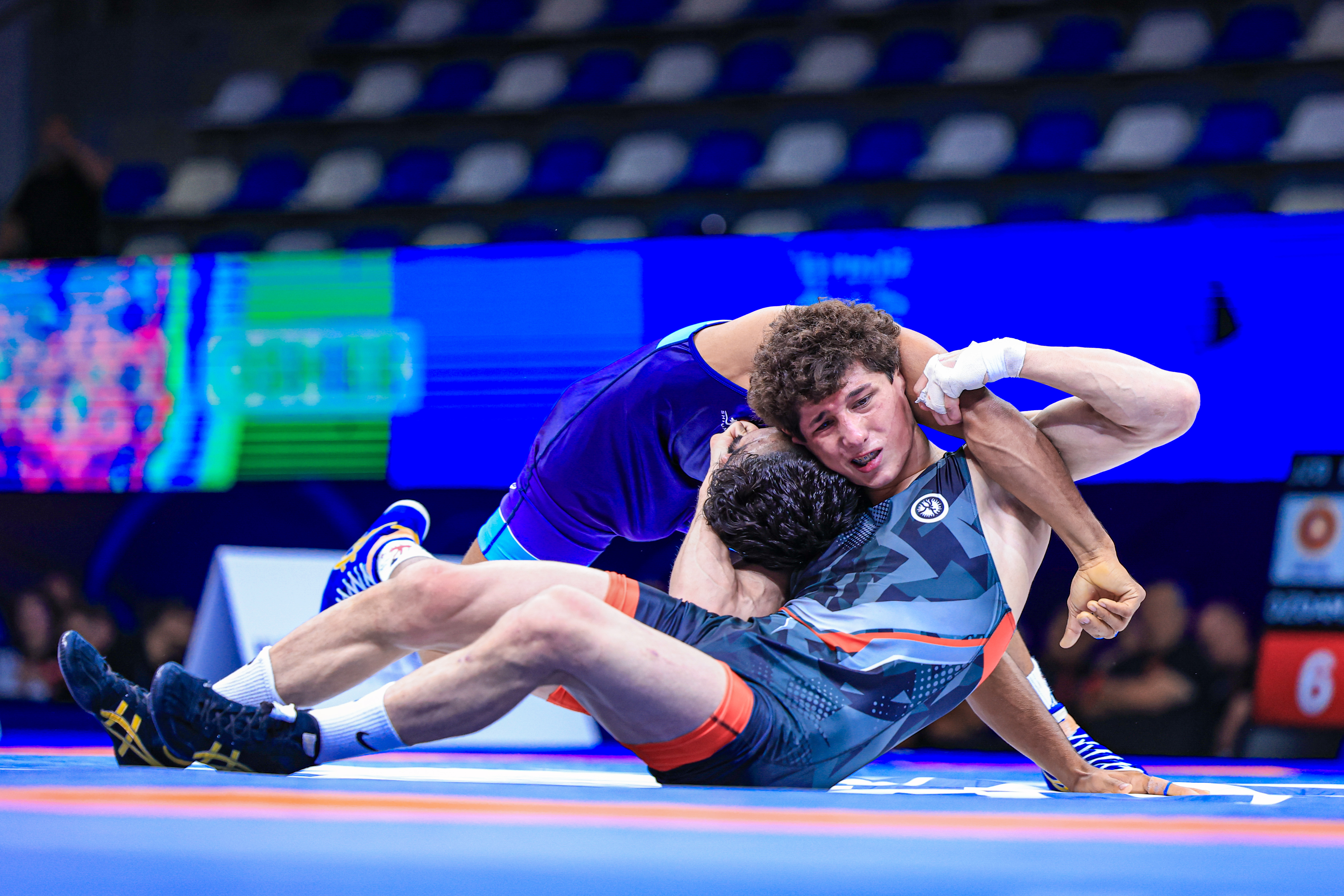 Magomed OZDAMIROV (RUS) is a U20 world champion at 57kg. (Photo: United World Wrestling / Kadir Caliskan)
Freestyle
57kg
Sasha PETROSYAN (ARM)
Muhammad ISMAYILOV (AZE)
Matsvei SYTSEVICH (BLR)
Nik DOYCHINOV (BUL)
Gaspard CHEYNOUX (FRA)
Danoush JOWKAR (GBR)
Giorgi TSURIASHVILI (GEO)
John KETERLING (GER)
Karoly BARATH (HUN)
Gheorghi GAIDARJI (MDA)
Nikola GICEV (MKD)
Pavlo ILNYTSKYI (POL)
Marian RUSU (ROU)
Magomed OZDAMIROV (RUS)
Kevin BIRCHLER (SUI)
Ebubekir GUR (TUR)
Mykola BRATOV (UKR)
61kg
Ajndi KRYEZIU (ALB)
Gagik GHAZARYAN (ARM)
Kristian CIKEL (AUT)
Jamal ABBASOV (AZE)
Hleb PIATROU (BLR)
Erdal GALIP (BUL)
Kaspar KOERT (EST)
Deni DAOUDOV (FRA)
Ruben TANGAMYAN (GEO)
Eliah LUCYGA (GER)
Balint NEMETH (HUN)
Pasquale LIUZZI (ITA)
Marcel ANDRONACHE (MDA)
Sufjan SINANI (MKD)
Kajetan WIECZOREK (POL)
Gabriel Florin MIHALCEA (ROU)
Usman INDIRBAEV (RUS)
Nurettin KAPAL (TUR)
Andrii SHOKALIUK (UKR)
65kg
Ervis BARDHI (ALB)
Aren HAYRAPETYAN (ARM)
Bashir VERDIYEV (AZE)
Dzianis KATOK (BLR)
Aleksandar DELCHEV (BUL)
Khizir DASIYEV (FRA)
Joseph MAHONEY (GBR)
Tengiz BARBAKADZE (GEO)
Dominic THIEL (GER)
Pavlos NTIANTIADIS (GRE)
Mozes LASZLO (HUN)
Maxim DIMOV (MDA)
Mario ANANIEV (MKD)
Ivan OKSIUK (POL)
Said GERGOKOV (RUS)
Haci ZADE (TUR)
Zorab ALOIEV (UKR)
70kg
Davit DAVTYAN (ARM)
Haji KARIMOV (AZE)
Movsar CHUPALAEV (BEL)
Vitali HARDZEI (BLR)
Vladislav SEIZOV (BUL)
Denis KODAKOV GIL (ESP)
Bayssangour BITMURZAEV (FRA)
Zurab ABALAKI (GEO)
Jason KEIL (GER)
Aik KAZARIAN (GRE)
Ahmad ARSZUNKAEV (HUN)
Daniel KRUTULES (LTU)
Ionut TRIBOI (MDA)
Filip TODOROV (MKD)
Jakub KESY (POL)
David BOICEA (ROU)
Ramazan ABDULKADYROV (RUS)
Aaron ZBERG (SUI)
Dominik ZAVACKY (SVK)
Remzi TEMUR (TUR)
Mykyta SARIIEV (UKR)
74kg
Vladimir AZARYAN (ARM)
Nurlan AGHAZADA (AZE)
Artsiom BOLSUN (BLR)
Nikifor PETROV (BUL)
Daniel JASNOV (EST)
Abdoullah NAKAEV (FRA)
Luka TATIASHVILI (GEO)
Manuel WAGIN (GER)
Vasileios KESIDIS (GRE)
Mate VARGA (HUN)
Eli SOLTANOV (ISR)
Erand FLUGAJ (KOS)
Oleg KNISEVSKIJ (LTU)
Catalin SPINU (MDA)
Muhamed VESELI (MKD)
Gracjan MATYJASEK (POL)
Inal CHELDIEV (RUS)
Umut USLU (TUR)
Bohdan OLIINYK (UKR)
79kg
Narek NIKOGHOSYAN (ARM)
Eljan ISMAYILZADA (AZE)
Halil MAGOMADOV (BEL)
Aliaksei KURYLA (BLR)
Yanaki MARCHOKOV (BUL)
David KODAKOV GIL (ESP)
Tristan ALEKSANDROV (EST)
Iakobi KOBULASHVILI (GEO)
Felix SCHMITT (GER)
Stefanos VAVILIS (GRE)
Arnold TAKACS (HUN)
Declan BLIGH (IRL)
Daniel SIMONIAN (ISR)
Xander GUATTA (ITA)
Adriatik BERISHA (KOS)
Piotr CARADJOV (MDA)
Trim ISMAILI (MKD)
Kyryll DANDAN (ROU)
Magomed ALIBAKHARCHIEV (RUS)
Jaroslav ZAREMBA (SVK)
Yasin UZUN (TUR)
Bohdan OLEKSIIENKO (UKR)
86kg
Razmik YEPREMYAN (ARM)
Mahammad ABASZADA (AZE)
Alan TIGIEV (BUL)
Nikolai TARASSOV (EST)
Dachi PAPINASHVILI (GEO)
Emil ULAMEC (GER)
Tomer DROZHNIAK (ISR)
Aidas SARUNAS (LTU)
Ivan PASLARI (MDA)
Redjep TAIRI (MKD)
Magor LORINCZ (ROU)
Ismail KHANIEV (RUS)
Nick SCHERRER (SUI)
Nikolaj SZILAGYI (SVK)
Sefa CESUR (TUR)
Artur KOSTIUK (UKR)
92kg
Albin PEPOSHI (ALB)
Narek IKILIKYAN (ARM)
Huseyn MAMMADTAGHIZADA (AZE)
Aliaksei KULAKOU (BLR)
Grigor CHERNAKOV (BUL)
Mykola TOLMACHOV (ESP)
Sandro KURASHVILI (GEO)
Abdurrahim SEKMEN (GER)
Youssef SOLIMAN (HUN)
Brando MAGNANI (ITA)
Alexandru BORS (MDA)
Omer MEMEDI (MKD)
Filip NOWAKOWSKI (POL)
Darius SAS (ROU)
Artur TOGOEV (RUS)
Jacek FUDALEJ (SUI)
Eyyup CETIN (TUR)
Yehor HOROKH (UKR)
97kg
Hakob HAKOBYAN (ARM)
Farhad SULEYMANLI (AZE)
Aliaksei KHADUNOU (BLR)
Valentin BORISOV (BUL)
Joona JUNNILA (FIN)
Ashab DADAEV (FRA)
Konstantine PETRIASHVILI (GEO)
Tom ULAMEC (GER)
Robert ERDELYI (HUN)
Vitalie PERCIUN (MDA)
Ilija ATANASOV (MKD)
Balazs LORINCZ (ROU)
Shamil TAMBIEV (RUS)
Suleyman RIZA (TUR)
Rostyslav KURYLIAK (UKR)
125kg
Henrik HAYKYAN (ARM)
Yusif DURSUNOV (AZE)
Yaraslau KOKHAN (BLR)
Dian MANEV (BUL)
Aleksandre ABRAMISHVILI (GEO)
Ahmet SEKMEN (GER)
Nikolaos KARAVANOS (GRE)
Daniel SZILAGYI (HUN)
David ERHAN (MDA)
Piotr GRELA (POL)
Brian TECHEREAN (ROU)
Soslan GABUEV (RUS)
Rusen GULER (TUR)
Ivan MYROSHNYCHENKO (UKR)
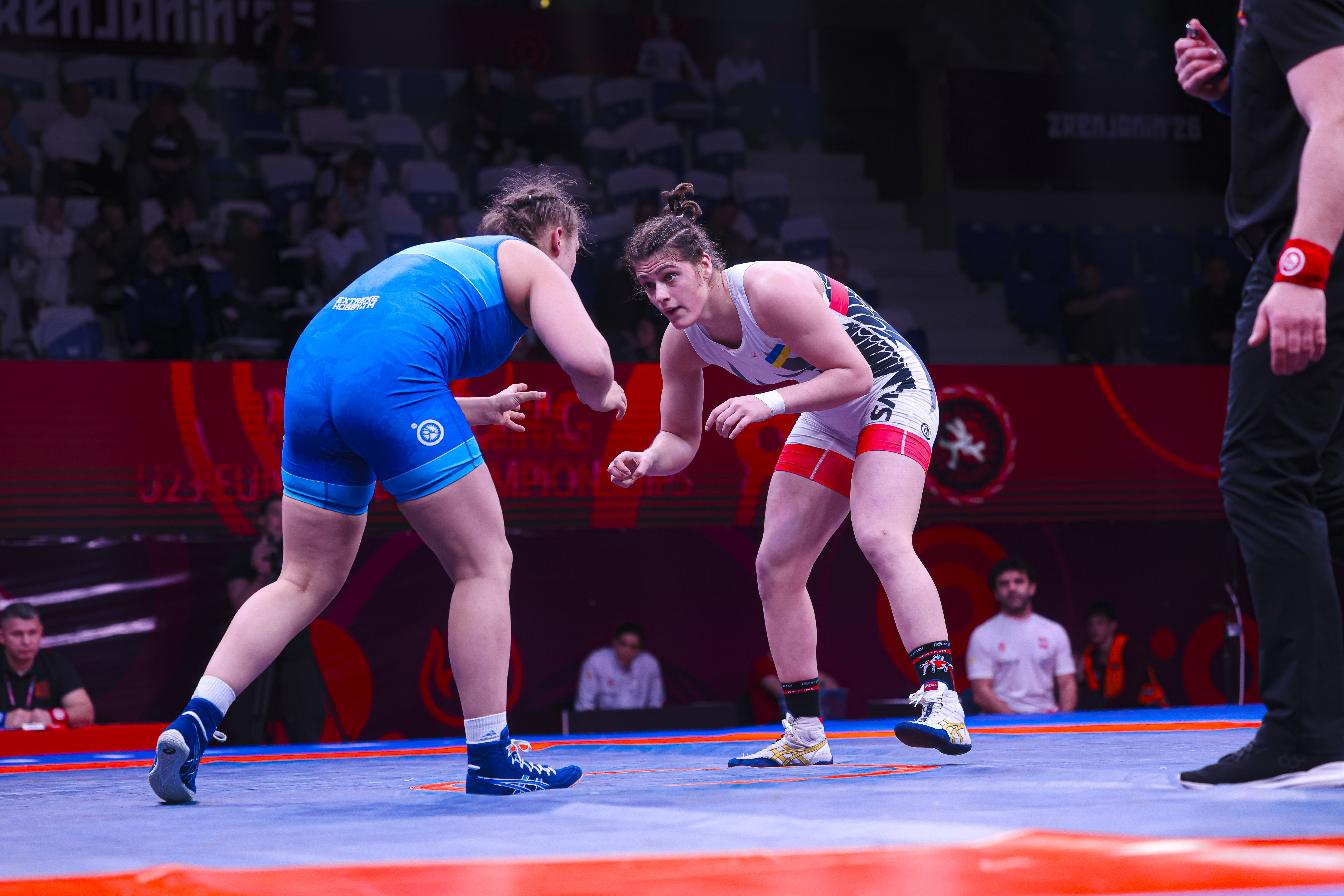 Senior European champion at 72kg, Nadiia Sokolovska (UKR) will be wrestling at 76kg. (Photo: United World Wrestling / Kadir Caliskan)
Women's Wrestling
50kg
Serineh CRANE (ARM)
Nazrin AHMADLI (AZE)
Sviatlana KATENKA (BLR)
Ena ZEMUNIC (CRO)
Rita RANTONEN (FIN)
Josephine WRENSCH (GER)
Maria GKIKA (GRE)
Lonisa REKA (KOS)
Mihaela BACOS (MDA)
Frosina ATANASOVA (MKD)
Olivia VAN KLEUNEN (NED)
Daniella HOSSEIN BEKY (NOR)
Karolina ZIEN (POL)
Leticia OLIVEIRA (POR)
Diana VOICULESCU (ROU)
Margarita IARYGINA (RUS)
Sally Vega MALMGREN (SWE)
Nil AKTAS (TUR)
Yelyzaveta KULAKIVSKA (UKR)
53kg
Esra MAMMADLI (AZE)
Aliaksandra VISTSIAK (BLR)
Nikol ALEKSANDROVA (BUL)
Anais MARTIN (FRA)
Fiona GASSER (GER)
Evgenia LAMPROU (GRE)
Szonja NEMETH (HUN)
Naomi LIUZZI (ITA)
Dorentina NEZAJ (KOS)
Bojana KOVACHOVA (MKD)
Ilona VALCHUK (POL)
Electra GARAIACU (ROU)
Ekaterina CHIKANOVA (RUS)
Remziye KARADAG (TUR)
Anastasiia POLSKA (UKR)
55kg
Garatel GULIYEVA (AZE)
Valeryia MIKITSICH (BLR)
Nataliya BOYADZHIEVA (BUL)
Lisette BOETTKER (EST)
Sara RANTONEN (FIN)
Eleni ZAGLIVERI (GER)
Angela CRAPIO CASAROLA (ITA)
Kanita SPAHIJA (KOS)
Enrika DEVETINAITE (LTU)
Eliza GONTA (MDA)
Sadije DURA (MKD)
Thea BERGERSEN (NOR)
Amelia TOMALA (POL)
Bianca RUSU (ROU)
Olesia MALAKHOVA (RUS)
Milica PEROVIC SEKULOVIC (SRB)
Anja EPP (SUI)
Elif ATAKAN (TUR)
Mariia YEFREMOVA (UKR)
57kg
Viktoryia ALISEYENKA (BLR)
Olga POPOVA (BUL)
Théa ROUSSEL (FRA)
Nini TSITSVIDZE (GEO)
Ioanna XENIDOU (GRE)
Liliana KAPUVARI (HUN)
Fabiana RINELLA (ITA)
Elsa NIKOCI (KOS)
Alexandrina BARBANOUA (MDA)
Angela TRAJKOSKA (MKD)
Julia GIBALSKA (POL)
Dolzhon TSYNGUEVA (RUS)
Ivana GAJIC (SRB)
Lara GORCS (SVK)
Stella Hildur SOEROE (SWE)
Su SOYALP (TUR)
Diana KOTVYTSKA (UKR)
59kg
Hiunai HURBANOVA (AZE)
Varvara ALISEYENKA (BLR)
Viktoria BOYNOVA (BUL)
Rosa MOLINA RODRIGUEZ (ESP)
Oona PEKKARINEN (FIN)
Franziska BLAUMEISER (GER)
Eda BALAZS (HUN)
Maria PIRA (ITA)
Madalina PRISACARI (MDA)
Viktorija SPASOVSKA (MKD)
Csilla VAN OS (NED)
Marta MANKOWSKA (POL)
Sofiia CHORNAIA (RUS)
Karin Amelia SAMUELSSON (SWE)
Elif ELMALI (TUR)
Oleksandra MALKOVA (UKR)
62kg
Sophia MERANER (AUT)
Ruzanna MAMMADOVA (AZE)
Karyna FISHCHUK (BLR)
Desislava IVANOVA (BUL)
Graciela ENINGO ASAMA (ESP)
Nella HONKANIEMI (FIN)
Violette DUCHET ANNEZ (FRA)
Miranda KAPANADZE (GEO)
Leonie STEIGERT (GER)
Foteini NALMPANTI (GRE)
Barbara BAGER (HUN)
Maria DI GIACINTO (ITA)
Gabriela RUDOI (MDA)
Tamara CVETKOSKA (MKD)
Nadia KOCIA (POL)
Ekaterina RADYSHEVA (RUS)
Viktoria FOELDESIOVA (SVK)
Vera STOLTZ (SWE)
Ozdenur OZMEZ (TUR)
Albina KLIEFAS (UKR)
65kg
Valeryia KANDZIAKOVA (BLR)
Marijana SUMSKI (CRO)
Anna MAZGAJOVA (CZE)
Eveliina HANHISUANTO (FIN)
Ani CHACHANIDZE (GEO)
Annalena POHL (GER)
Vasiliki KARAVANOU (GRE)
Viktoria PUPP (HUN)
Cristina ZAPOROJAN (MDA)
Marija CVETANOVA (MKD)
Mirijam HANSEN (NOR)
Zuzanna HORBIK (POL)
Margarita SALNAZARIAN (RUS)
Linnea SVENSSON (SWE)
Beyza Nur AKKUS (TUR)
Iryna BORYSIUK (UKR)
68kg
Maryana MURADYAN (BLR)
Lise LANDOUZY (FRA)
Chandni BANKS (GBR)
Mina WITT (GER)
Maja MUNK (HUN)
Juliana CATANZARO (ITA)
Raisa SIRBU (MDA)
Melani MITEVSKA (MKD)
Leah SAMSONSEN (NOR)
Aurelia GODZINSKA (POL)
Ana MARIOARA (ROU)
Evangeliia BEREZHNOVA (RUS)
Michaela SEBOEKOVA (SVK)
Tilda WANNGAARD (SWE)
Elif Sevval KURT (TUR)
Oleksandra RYBAK (UKR)
72kg
Zahra KARIMZADA (AZE)
Karalina PAPOVA (BLR)
Veronika VILK (CRO)
Melanie LORENZ (GER)
Petra MUELLER (HUN)
Greta TVERSKYTE (LTU)
Alexandra MOISEI (MDA)
Anabela DANILOVA (MKD)
Maia GHERGUT (ROU)
Amina MUSAEVA (RUS)
Ilayda CIN (TUR)
Daryna ZAISHLA (UKR)
76kg
Aliaksandra SIAMIONAVA (BLR)
Lotta ENGLICH (GER)
Stefani NIKOLOVA (MKD)
Dominika POCHOWSKA (POL)
Diana TITOVA (RUS)
Evelin UJHELJI (SRB)
Elmira YASIN (TUR)
Nadiia SOKOLOVSKA (UKR)



Share your thoughts.
Comments