

Weekly Five! November 12, 2019
Tuesday, November 12, 2019 - 16:17 By Eric Olanowski

Discussing the Women’s World Cup team race, wrestlers and weights to watch and Iran hosting the Greco-Roman World Cup (November 28-29).
1. The Road to the Finals
In the 18-year history of the Women’s World Cup, Japan, China and the United States are the only teams to hoist the annual dual meet team trophy. But, dating back to 2003 when the United States claimed their lone team title, Japan or China has had a stronghold on women’s wrestling -- claiming 14 consecutive World Cup championships.
Japan and China met in the previous two World Cup finals, with Japan coming out on the winning end of both of those meetings. But, this year is slated to be a different story, as Japan and China will wrestle on Saturday night in Group A action for a potential spot in Sunday night’s gold-medal dual. That is, of course, if they both get past a fairly young and inexperienced Ukrainian team that’s looking to send shock waves through the wrestling world and make their first finals appearance since 2005.
Russia, the United States and Mongolia are the three Group B teams.
Though Mongolia has a pair of returning world bronze medalists, they likely won’t have enough firepower to match that of the Russian Federation or the United States -- who both have at least one world champ on their squad.
The premier Group B matchup between Russia and the United States, which will take place on Saturday afternoon, will feature four of the ten women’s wrestling world champions.
Inna TRAZHUKOVA (RUS), this year’s 62kg world champion, will lead the Russian Federation in the dual, while reigning world champions Jacarra WINCHESTER, Tamyra MENSAH and Adeline GRAY headline the entries for the Stars and Stripes.
The two teams with the best record after their pair of group matches will meet in Sunday’s gold-medal match. The third and fourth-place match will feature the two teams with the second-best record in their groups and the remaining teams will meet for fifth and sixth place.
Number of World Cup Titles
Japan: 10
China: 6
United States: 1
SCHEDULE
Saturday (November 16)
10:30 – Mat A: JPN vs. UKR / Mat B: RUS vs. MGL
12: 00 – Mat A: RUS vs. USA / Mat B: CHN vs. UKR
16:30 – Opening Ceremony
17:00 – Mat A: JPN vs. CHN / Mat B: USA vs. MGL
Sunday (November 17)
8:00 – Medical Examination & Weigh-in
10:30 – Finals 5/6
13:00 – Finals 3/4
14:30 – Finals 1/2
16:00 – Award Ceremonies
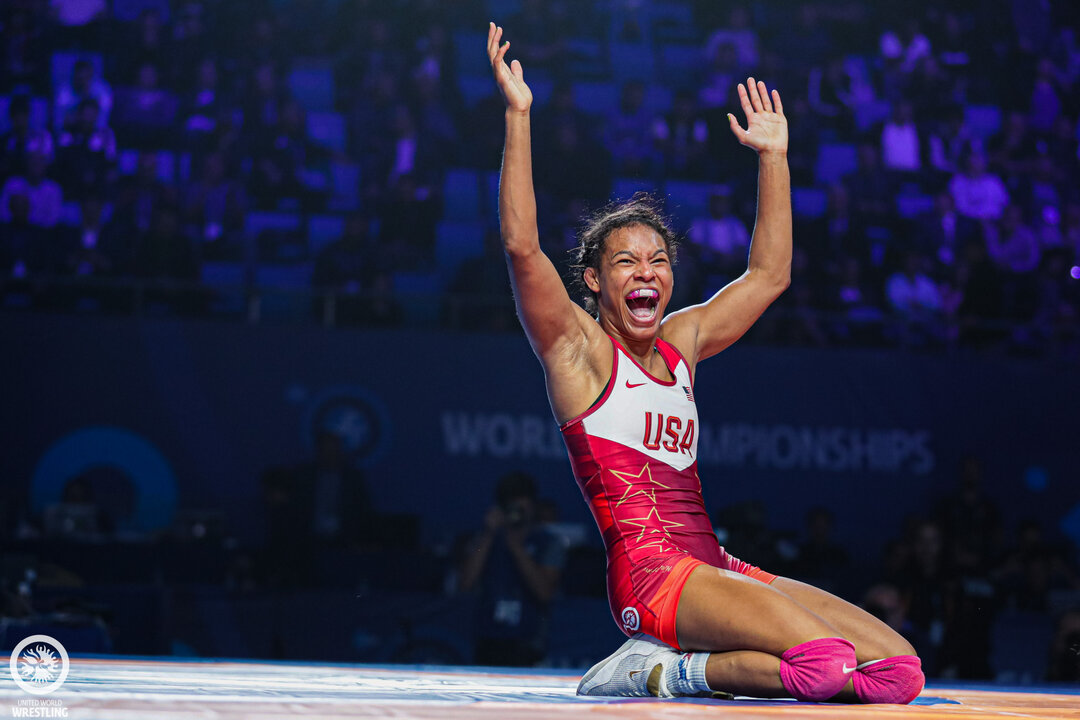 Jacarra WINCHESTER (USA) is one of five world champions that'll be wrestling at this weekend's Women's World Cup. (Photo: Kadir Caliskan)
2. Wrestlers to Watch: The Five World Champs
Five of the six teams entered into the Women’s Wrestling World Cup bring at least two returning world medalists – totaling 17 podium finishers from this year’s World Championships (Ukraine is the lone team without a 2019 world medalist entered). But, without a doubt, the five newly-crowned must-watch world champions are:
55kg - Jacarra WINCHESTER (USA)
57kg - Risako KAWAI (USA)
62kg - Inna TRAZHUKOVA (RUS)
68kg - Tamyra MENSAH (USA)
76kg - Adeline GRAY (USA)
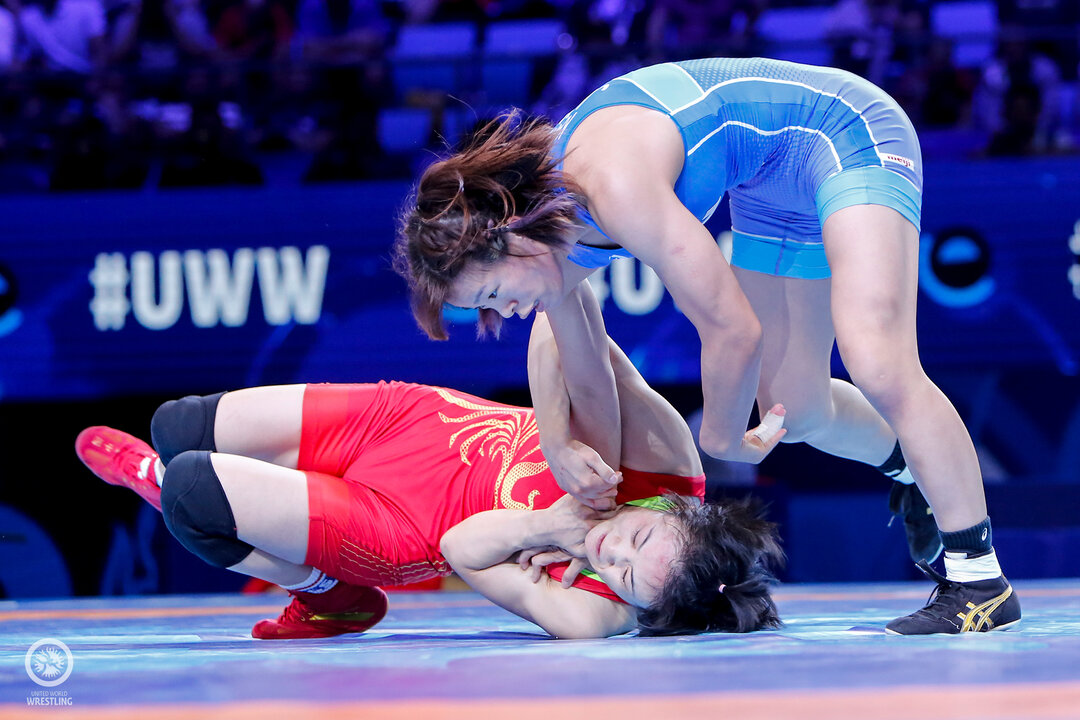 Risako KAWAI (JPN) and Ningning RONG (CHN) met in the world finals at 57kg just over a month ago. They could square off again at this weekend's Women's World Cup. (Photo: Gabor Martin)
3. Weights to Watch: 57kg and 76kg
The two can't-miss weights at this weekend’s Women’s Wrestling World Cup will be 57kg and 76kg. Both weight classes will feature the reigning world champion and the wrestler they defeated to win their world title. This means, there could be a pair of world finals rematches that take place this weekend.
Risako KAWAI (JPN) and Ningning RONG (CHN), who met in Nur-Sultan for the 57kg world title, could square off on Saturday night when Japan takes on China. That match will take place at 17:00 (local time).
Kawai is widely regarded as the top women’s wrestler in the world. Since winning her Rio Olympic title in 2016, Kawai has won three consecutive world titles. Her potential Chinese opponent, Ningning Rong, is a 2018 world champion and 2019 world runner-up. The highly emotional Chinese star is coming off a second consecutive year where she made the world finals, claimed a continental title and won at least three tournaments.
Two other wrestlers that could cause Kawai and Rong fits at 57kg are ALTANTSETSEG Battsetseg (MGL) and Olena KREMZER (UKR). The 25-year-old Mongolian wrestler was a 2017 U23 world runner-up, while the Ukrainian wrestler was a 2018 U23 world bronze medalist.
At 76kg, the two best women’s heavyweights in the world, Adeline Gray and Hiroe MINAGAWA (JPN), could square off in a rematch of September’s 76kg finals, but that all depends on how the group stage plays out. Additionally, Ekaterina BUKINA (RUS) and ZHOU Qian (CHN) will also wrestle at 76kg. Bukina is a Rio Olympic bronze medalist, and Zhou is a 2015 world runner-up.
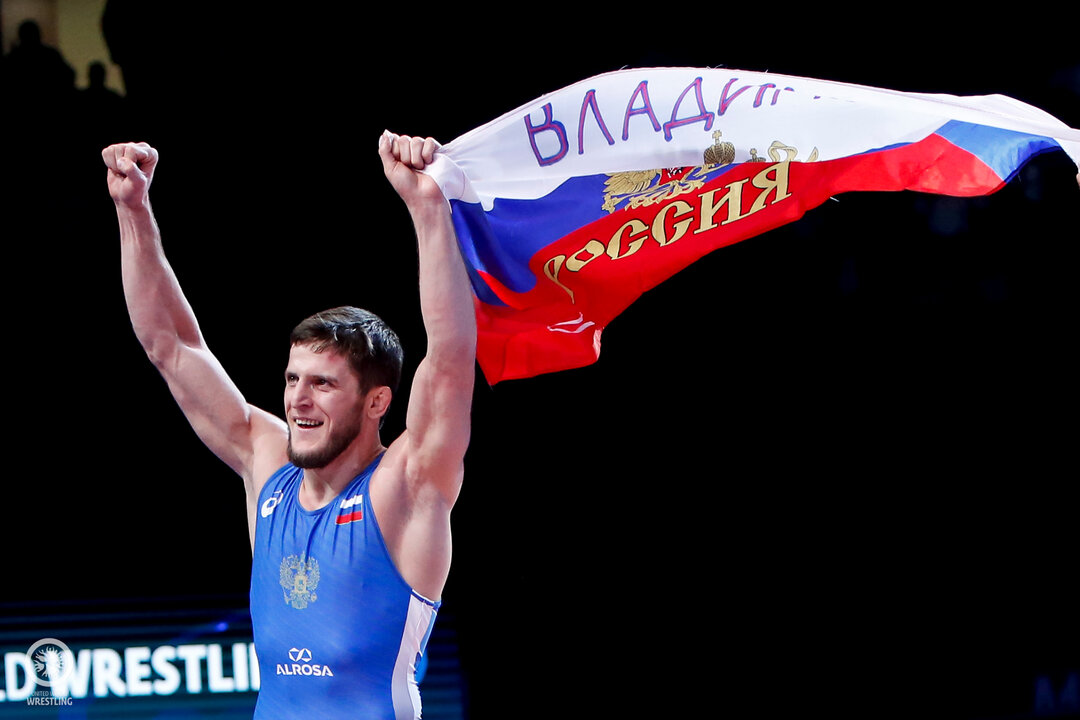 Reigning world champion Abuiazid MANTSIGOV (RUS) leads a loaded Russian team into Tehran for the Greco-Roman World Cup. (Photo: Gabor Martin)
4. Iran Set to Host Greco-Roman World Cup (November 28-29)
Iran is gearing up to host the Greco-Roman World Cup for the seventh consecutive time. The two-day Greco-Roman World Cup kicks off November 28-29 in Tehran’s Azadi Stadium and will feature six teams -- which is the first time the event has housed less than eight teams since 2008.
The Russian Federation, who are the defending champions, are looking to become the first team to win back-to-back World Cup titles since Iran did it in 2011 and ’12. To earn their eighth overall World Cup team trophy, they’ll rely heavily on reigning world champion Abuiazid MANTSIGOV (RUS), who’ll wrestle at 72kg.
In addition to Mantsigov, Aleksandr CHEKHIRKIN, Stepan MARYANYAN and Sergey SEMENOV are will also compete on Russia's team at the Greco-Roman World Cup. The trio were all 2018 world champions, but Maryanan, who finished with a silver medal at this year’s World Championships, is the lone reigning medalist in the group of three.
Outside of Russia’s loaded squad, six reigning world champs will travel to Tehran to compete in the Greco-Roman World Cup.
The biggest storyline heading into the dual meet event is the potential Rio Olympic finals rematch between Ismael BORRERO MOLINA (CUB) and Shinobu OTA (JPN), which could be looming at 67kg.
Borrero and Ota both won world titles in Nur-Sultan, but the Japanese wrestler will begin his ascent from his title-winning non-Olympic weight of 63kg to the Olympic weight of 67kg, where the Cuban wrestler is the current world-title holder. Shortly after winning his world title last month, Ota announced that he'd climb up 4kg to 67kg to make a run at improving his silver medal from the Rio Olympic Games, where he fell to Borrero in the finals.
In addition to Borrero, Mantsigov and Ota, the Greco-Roman World Cup will also welcome three other world champs. The returning world champs are: Nugzari TSURTSUMIA (GEO), Kenichiro FUMITA (JPN) and Lasha GOBADZE (GEO).
Reigning World Champions Entered
55kg - Nugzari TSURTSUMIA (GEO)
60kg - Kenichiro FUMITA (JPN)
67kg - Ismael BORRERO MOLINA (CUB)
67kg - Shinobu OTA (JPN)
72kg - Abuiazid MANTSIGOV (RUS)
82kg - Lasha GOBADZE (GEO)
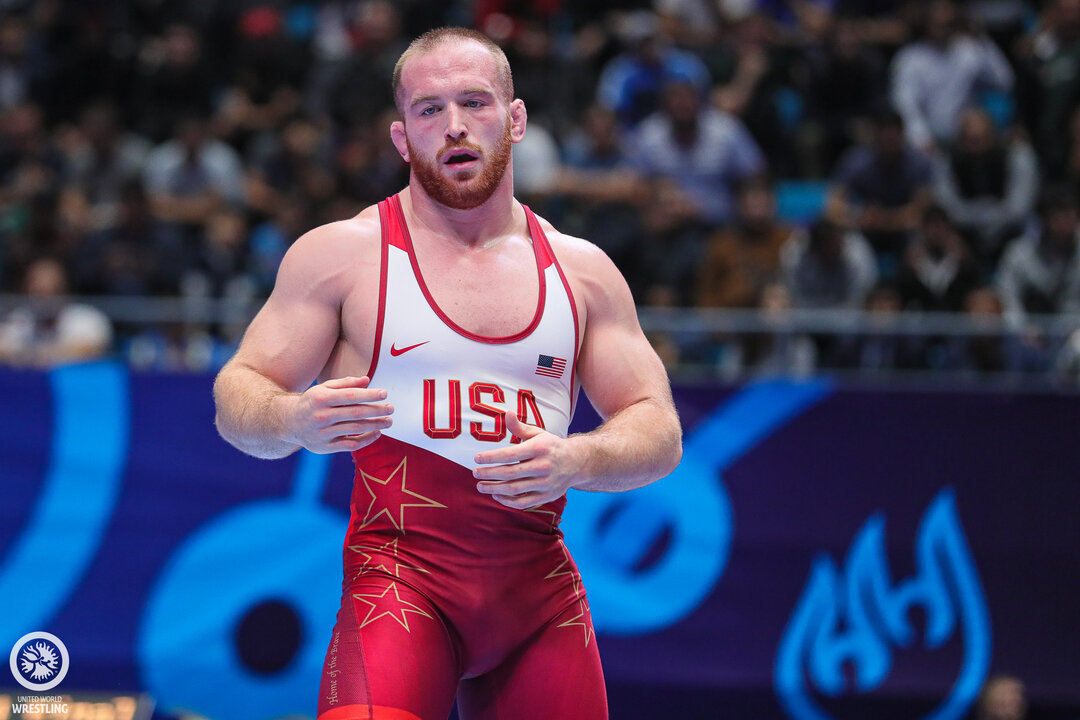 Two-time world and Olympic champion Kyle SNYDER (USA) highlights the list of entries at the Bill Farrell. (Photo: Kadir Caliskan)
5. Bill Farrell Live on FloWrestling.org
The New York Athletic Club will host the first qualifier for America’s Olympic Team Trials, the Bill Farrell Memorial (November 16-17). The highest finisher at the six Olympic weight classes in freestyle, Greco-Roman and women's wrestling will cement their spot at April’s Tokyo Olympic Team Trials.
Our friends at Flowrestling.org have the streaming rights to the event and have provided an early list of participants who are expected to compete.
Weekly FIVE! In Social Media
1. Big Move Monday -- Khoroshavtseva O. (RUS) -- Senior Worlds 2019
2. Iszmail MUSZHKAJEV ??: World Championship Highlights
3. Hassan YAZDANI ?? World Championship Highlights
4. Behind the Scenes: Sadulaev and 97kg at #WrestleNurSultan
5. Kazakhstan ?? put on a show at the #WrestleNurSultan World Championships — on and off the mat.

Share your thoughts.
Comments