

Weekly FIVE! March 17, 2020
Tuesday, March 17, 2020 - 12:36 By Eric Olanowski

Discussing Valencia Escoto and Destribats' historic performances at the Pan-Am Olympic Qualifiers. Also looking at Cuba's GR team qualifying every weight for #Tokyo2020 and Olympic champs Maroulis and Wiebe qualifying their nation's for the Tokyo Games.
1. Valencia Escoto First Mexican Woman to Qualify for Olympic Games
Alma Jane VALENCIA ESCOTO (MEX) became the first-ever Mexican women's wrestler to qualify for the Olympic Games after winning the 57kg gold medal at the Pan-American Olympic Qualifier. She won all four of her bouts in Ottawa – including a win by fall over world champion Linda MORAIS (CAN) and a victory via forfeit over Helen MAROULIS (USA).
Valencia Escoto opened her day up with a pair of decisive wins over Betzabeth SARCO COLMENAREZ (VEN) and Nes RODRIGUEZ TIRADO (PUR), which inserted her into the semifinals against Canada's reigning world champion, Linda Morais.
In her semifinals meeting with the current 59kg world-title holder, Valencia Escoto stopped an early open double-leg attempt with a counter-offensive throw. She snuck in an underhook on the Canadian's right side during her shot attempt and tossed her to her back for the early 4-0 lead.
Valencia Escoto's opponenet fought off her back and nearly scored a takedown of a slide by attempt. Still, somehow, the newly-minted Olympian had the world champion fighting off her back for the second time in the opening period.
The tides turned quickly, and Valencia Escoto was the one fighting off her back. She got saved by the period-ending whistle and carried the 6-2 lead into the closing period.
In the final period, Valencia Escoto halted a left side high crotch attempt and flattened Morais for the fall – becoming the first-ever Mexican women to wrestle at the Olympic Games.
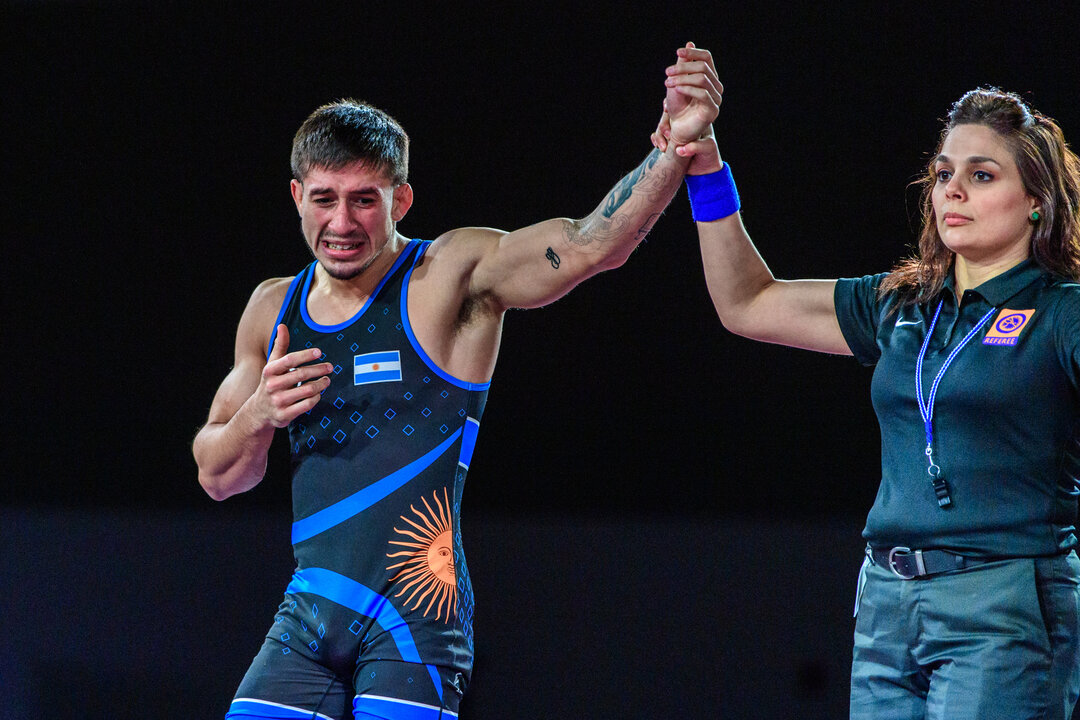 Agustin DESTRIBATS (ARG) finished in second place at 65kg at the Pan-American Olympic Qualifier and qualified Argentina for the Olympic Games. (Photo: Tony Rotundo)
2. Destribats Ends 24-year Argentinean Freestyle Olympic Drought
Agustin DESTRIBATS (ARG) ended a 24-year Argentinean freestyle Olympic drought and qualified his nation for the Tokyo Olympics after he pinned American Zain RETHERFORD (USA) in the 65kg semifinals. With his semifinal victory via fall, Destribats became the first Argentinean freestyle wrestler to qualify for the Olympic Games since Paulo IBIRE (ARG) did so at the 1996 Atlanta Olympic Games.
In his meeting with the Retherford, Destribats conceded an open double leg and nearly gave up an ankle lace but was able to fend off the turn and catch the American on his back. He held Retherford on his back for 25 seconds before picking up the opening period fall to secure his spot at the Tokyo Olympics.
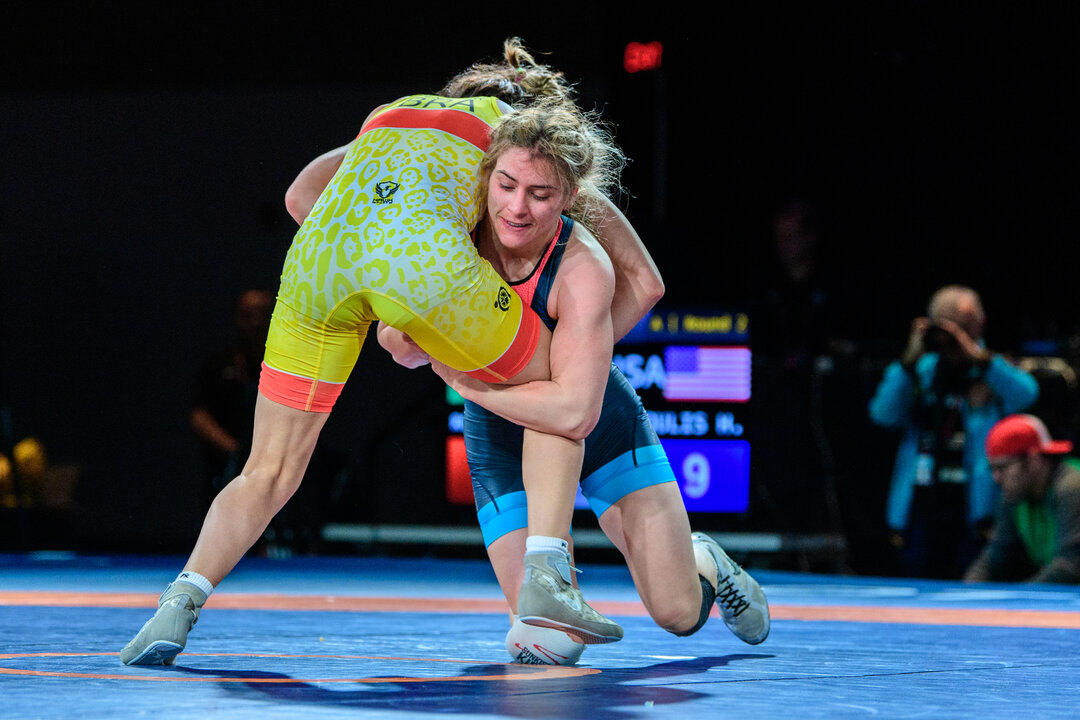 Helen MAROULIS (USA) qualified the United States for the Olympic Games at 57kg with her silver-medal finish at the Pan-American Olympic Qualifier. (Photo: Tony Rotundo)
3. Olympic Champs Maroulis and Wiebe Qualify Nation's for Olympic Games
Olympic champions Helen MAROULIS (USA) and Erica WIEBE (CAN) qualified their nations for the 2020 Tokyo Olympic Games after finishing in the top-two of their respective weights at the Pan-American Olympic Qualifier. The pair remained on course to defend their gold medals from the Rio Olympic Games.
Maroulis, who was wrestling in her first international competition since the 2018 World Championships, won four matches before injury defaulting out of the finals after locking up the United States' spot at 57kg for the Olympics.
In her first match, Maroulis easily handled Canada's Linda Morias, 10-2, in the battle of Olympic champion and world champion.
Maroulis defeated Giullia RODRIGUES (BRA) and Lissette ANTES (ECU) in the next two rounds and was one win away from earning a second berth to the Olympic Games for the United States.
In the semifinals, Maroulis crushed Nes RODRIGUEZ (PUR), 10-0, and qualified the Stars and Stripes for the Olympic Games at 57kg.
She'll now have to win the Olympic Trials to become the United States' Olympic representative at 57kg.
Canada's Erica Wiebe was the second Olympic champion who qualified for the Olympic Games over the weekend. Wiebe, who was wrestling in her hometown of Ottawa, won the 76kg bracket and locked up her shot at repeating as Olympic champion.
She opened up her day with a narrow 2-1 win over Aline DA SILVA FERREIRA (BRA). She tacked on dominant wins over Milaimys de la Caridad MARIN POTRILLE (CUB) and Andrimar LAZARO (VEN), setting up a semifinals match with Genesis REASCO (ECU).
Wiebe shutout Reasco Valdez, 6-0, in their semifinals meeting and earned her berth to the Olympic Games. She injury defaulted out of the gold-medal match against Aline Da Silva Ferreira and finished with a silver medal.
Wiebe won the Canadian Wrestling Trails in December and will represent Canada at 76kg at the Tokyo Olympic Games.
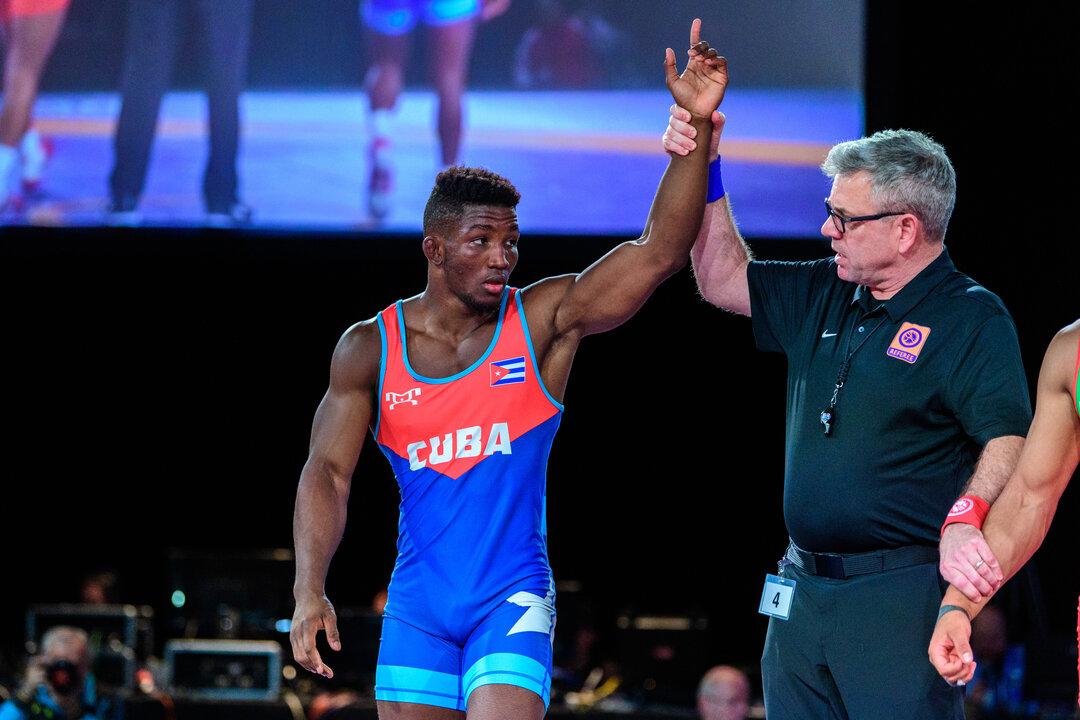 Yosvanys PENA FLORES (CUB) is one of six Cuban Greco-Roman wrestlers who will wrestle at the Tokyo Olympic Games. (Photo: Tony Rotundo)
4. Cuba Sending All Six GR Wrestlers to Olympics
Cuba’s Greco-Roman team came into the Pan-American Olympic Qualifier searching for four qualification spots after earning two Olympic berths from the Nur-Sultan World Championships from Ismael BORRERO MOLINA (CUB) Oscar PINO HINDS (CUB). Over the weekend, they had three wrestlers win gold medals and one individual finish in second place at the Pan-American Olympic Qualifier – which took their qualification total to all six weight categories.
Their three champions were Luis Alberto ORTA SANCHEZ (CUB), Yosvanys PENA FLORES (CUB) and Gabriel Alejandro ROSILLO KINDELAN (CUB), while Daniel GREGORICH HECHAVARRIA (CUB) finished in second place.
In addition to their Greco-Roman success, Cuba's women's wrestling team also shined in Ottawa.
Coming into the Pan-American Olympic Qualifier, Katherine VIDIAUX (CUB) was the lone Cuban woman who ever wrestled at the Olympic Games. She'll now be joined in the history books by Lianna MONTERO (CUB) and Yusneylis GUZMAN (CUB), who won gold medals at 50kg and 53kg, respectively, and qualified for the Olympic Games.
Greco-Roman Qualifying Weights/Athletes
60kg - Luis Alberto ORTA SANCHEZ (CUB) – Pan-Am OG Qualifier gold
67kg - Ismael BORRERO MOLINA (CUB) – World Championships gold
77kg - Yosvanys PENA FLORES (CUB) – Pan-Am OG Qualifier gold
87kg - Daniel GREGORICH HECHAVARRIA (CUB) – Pan-Am OG Qualifier silver
97kg - Gabriel Alejandro ROSILLO KINDELAN (CUB) – Pan-Am OG Qualifier gold
130kg - Oscar PINO HINDS (CUB) World Championships silver

5. European, World 'Last Chance' Olympic Qualifiers Postponed
The European Qualifier for the 2020 Olympic Games, scheduled for March 19-22 in Budapest, along with the World "Last Chance" Qualifier in Sofia, Bulgaria, scheduled for April 30-May 3, have been postponed.
The events will be rescheduled, with the European Qualifier expected to take place in mid-May and the World "Last Chance" Qualifier held at the beginning of June.
"We are closely monitoring the governmental response to COVID-19 and will continue to provide updates to our wrestlers, coaches, and fans with more information as it becomes available," said United World Wrestling president Nenad Lalovic.
"The process for determining our Olympic participants will happen on the field of play, but we need to remain patient and vigilant as the worldwide community battles this pandemic. The health and well-being of the athletes is an absolute priority."

 Over 100 participants competed in the national youth tournament during the
Share your thoughts.
Comments