

Weekly FIVE! January 21, 2019
Monday, January 21, 2019 - 15:22 By Eric Olanowski

In a Russia-heavy week, we review the Mindiashvili Grand Prix and Russian Greco-Roman National Championship results. We also review this week's first Ranking Series event of the year, the Ivan Yariguin.
1. Final Yariguin Qualification Tournament, Mindiashvili Concludes in Krasnoyarsk
In order to qualify for the Ivan Yariguin as a Russian wrestler, you had to be a 2018 world team member, an Alany Tournament champion or a Mindiashvili finalist.
This weekend, the final qualification tournament for the Ivan Yariguin, the Mindiashvili Grand Prix, concluded in Krasnoyarsk, Russia, just three days before the first Ranking Series event begins in Siberia. The Mindiashvili finalists locked up their spot at the Yariguin and placed heavy importance on the Ranking Series event later this week, only wrestling four of the ten finals matches. The four matches that were wrestled were the 61kg, 65kg, 74kg, and 86kg gold-medal bouts.
Of the four finals matches, the most notable match came at 65kg. Nachyin KUULAR (RUS), the 2017 U23 world champion and 2018 U23 world runner-up, avenged his 2-1 loss Alay loss to Kurban SHIRAEV (RUS) and grabbed the Mindiashvili gold medal with a 3-2 victory.
RESULTS
57kg – Aryian TYUTRIN df. Amirkhan GUVAZHOKOV, via forfeit
61kg – Eduard GRIGOREY df. DONGAK, 6-1
65kg – Nachyin KUULAR df. Kurban SHIRAEV, 3-2
70kg – Razambek ZHAMALOV df. Anzor ZAKUEV, via forfeit
74kg – Nikita SUCHKOV df. Arslan BUDAZHAPOV, 5-3
79kg – Alan ZASSEEV df. Khalil AMINOV, via forfeit
86kg – Soslan KTSOEV df. Omar ZIYAUTDIOV, 10-0
92kg – Alikhan ZHABRAILOV df. Magomed KURBANOV, via forfeit
97kg – Magomedov df. Tamerlan RASUEV, via forfeit
125kg – Pavel KRIVTSOV df. Zelimkhan KHIZRIEV, via forfeit
2. Olympic Champions Vlasov and Chakvetadze win Russian Greco-Roman Nationals
The Russian Federation wrapped up their 2019 Russian Greco-Roman National Championships in Kaliningrad, Russia, and the pair Olympic champions, Roman VLASOV and Davit CHAKVETADZE, inched closer to regaining their top position on the Russian Greco-Roman ladder after winning the 77kg and 87kg gold medals respectively.
The six current Greco-Roman world champions, Sergey EMELIN, Stepan MARYANIAN, Artem SURKOV, Alexander CHEKHIRKIN, Musa EVLOEV, and Sergey SEMENOV, were exempt from the Russian Greco-Roman National Championships and will take on last weekend's winners at a later date for a trip to the 2019 World and European Championships.
For Vlasov to regain the 77kg spot, he’ll have to defeat reigning world champion Alexander Chekhirkin, while 87kg didn’t have a world medalist, so Chakvetadze will represent Russia at the World and European Championship.
Another interesting note coming out of the Greco-Roman National Championships, Alexander KOMAROV, the four-time age-level world champion, made his domestic debut on the senior-level and beat Vaah MARGARYAN, 8-1 in the 82kg gold-medal bout.
RESULTS
55kg – Vitaly KABALOEV df. Victor VEDERNIKOV, 5-1
60kg – Zambolat Lokyaev df. Dmitry Lyustrickski, 7-3
63kg – Marat GARIPOV df. Alexey TADYKIN, 10-3
67kg - Alexey KIANKIN df. Saur KABALOEV, 4-2
72kg – Abuazid MANCIGOV df. Adam KURAK, 7-1
77kg – Roman VLASOV df. Islam OPIEV, 8-0
82kg – Alexander KOMAROV df. Vaah MARGARYAN, 8-1
87kg – Davit CHAKVETADZE df. Sosruko KODZOKOV, via fall
97kg – Alexander GOLOVIN df. Nikita MELNIKOV, 1-1
130kg – Vitaly SHCHUR df. Rafael Tsistuashvili, 2-0
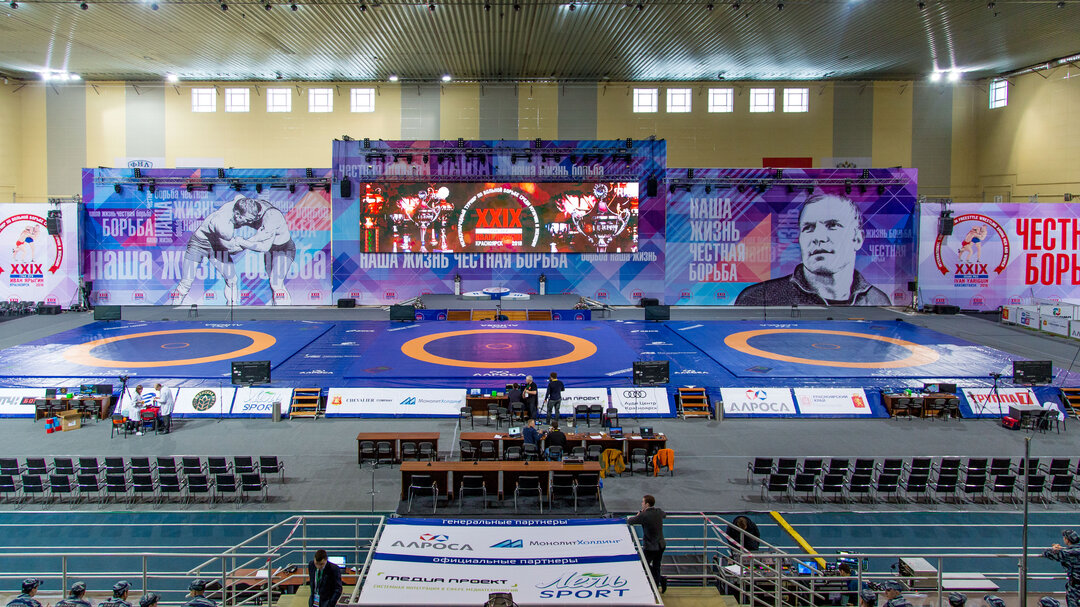 The first Ranking Series event of the year, the Ivan Yariguin, begins Thursday. (Photo: Max Rose-Fyne)
3. Ivan Yariguin Begins Thursday
The 30th Annual Ivan Yariguin, United World Wrestling's first freestyle and women's wrestling Ranking Series event of the year, begins this Thursday in Krasnoyarsk, Russia.
This will be the first Ranking Series event where the revamped point structure will be used. This tournament is especially important because the seeding process at the 2019 Astana World Championships takes into account the number of points competitors accumulate from last year's World Championships, along with the Continental Championships and the Ranking Series events.
2019 Ranking Series Point Structure
GOLD - 8 points
SILVER - 6 points
BRONZE - 4
Fifth - 2
SCHEDULE (Local time)
January 23 (Wednesday)
08.00 - Arrival of delegations
15.30 - Referees clinic
15.30 - Press conference with the Organizing Committee representatives, main referees body, team leaders and coaches
16.30 - Draw: Women: cat: 50,55,59,65 kg Men: cat: 57,61,70 kg
January 24 (Thursday)
08:30 - Medical examination and weigh-in cat: Women: 50,55,59,65 kg Men: 57,61,70 kg
11.00 - Elimination rounds cat: Women: 50,55,59,65 kg Men: 57,61,70 kg
16.00 - Draw cat: Women: 53,57,62,68 kg Men: 65,79,125kg
17.00 -1⁄2 finale cat: Women: 50,55,59,65 kg Men: 57,61,70 kg
January 25 (Friday)
08:15 - Weigh-in cat: Women: 50,55,59,65 kg Men: 57,61,70 kg
08:30 - Medical examination and weigh-in cat: Women: 53,57,62,68 kg Men: 65,79,125kg
11.00 - Elimination rounds and 1⁄2 finale cat: Women: 53,57,62,68 kg Men: 65,79,125kg - Repechage cat: Women: 50,55,59,65 kg Men: 57,61,70 kg
16.30 - Draw cat: Women: 72,76 kg Men: 74,86,92,97 kg
16.00 - Opening ceremony
17.00 - Finals cat: Women: 50,55,59,65 kg Men: 57,61,70 kg
January 26 (Saturday)
08:15 - Weigh-in cat: Women: 53,57,62,68 kg Men: 65,79,125kg
08:30 - Medical examination and weigh-in cat: Women: 72,76 kg Men: 74,86,92,97 kg
11.00 - Elimination rounds and 1⁄2 finale cat: Women: 72,76 kg Men: 74,86,92,97 kg - Repechage cat: Women: 53,57,62,68 kg Men: 65,79,125kg
18.00 - Finals cat: Women: 53,57,62,68 kg Men: 65,79,125kg
January 27 (Sunday)
09:00 - Weigh-in cat: Women: 72,76 kg Men: 74,86,92,97 kg
11.00 - Repechage cat: Women: 72,76 kg Men: 74,86,92,97 kg
13.00 - Finals cat: Women: 72,76 kg Men: 74,86,92,97 kg
January 28 (Monday)
Until 12.00 - Departure of delegations
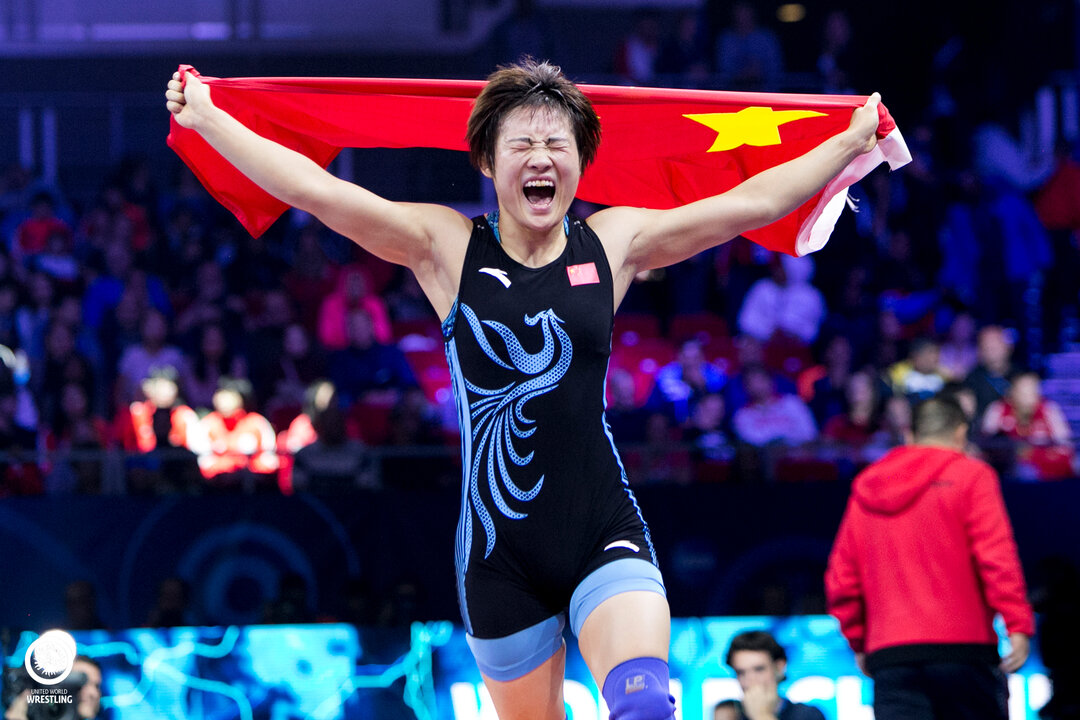
China's 2018 world champion RONG Ningning kicked off her year by winning the Ivan Yariguin. (Photo: Gabor Martin)
4. Yariguin Rewind: Chinese Women Claim Five Gold Medals
United World Wrestling's first Ranking Series event of 2019 kicks off in three days with the Ivan Yariguin Grand Prix. While women's wrestling was featured in 2018, it was not a Ranking Series event. Fast forward a year and the 2019 edition will see women's wrestlers competing for sought after ranking points.
Four different nations claimed a women’s wrestling gold medal at last year’s Ivan Yariguin, but the Chinese women made the best of their trip to Krasnoyarsk and put seven wrestlers in the finals and finished with five champions. Of the five Chinese champions, Asian champion ZHOU Qian was the only Yariguin champion who didn’t represent China at the 2018 World Championships.
Rising star RONG Ningning captained the Chinese success in Krasnoyarsk. The 2018 Ivan Yariguin was a coming out party for Rong, who was relatively unknown coming into last year’s tournament. Rong, the Yariguin rookie, kick-started her year by knocking off reigning world runner-up Allison RAGAN (USA), 10-0 in the 59kg gold-medal bout. She later dropped down to 57kg and continued her dominance, winning the Asian Championships, the China and Poland Opens, and the 2018 Budapest World Championships. In addition to her title-winning performances at the above-mentioned tournaments, Rong was also a U23 world runner-up and an Alexander Medved Prizes bronze medalist.
Japan, Mongolia, and the United States were the other nations who had at least one wrestler reach the top of the podium at the 2018 Ivan Yariguin.
Japan, who had five finalists, grabbed gold medals from Yuki IRIE, Yu MIYAHARA, and Andoriahanako SAWA (JPN), while Mongolia's PUREVDORJ Orkhon and the United States' Tamyra MENSAH-STOCK gave their nation a solo gold medalist.
With just four days left to register, Mensah-Stock is the only returning champion registered to wrestle in Krasnoyarsk, where she'll be looking for her third Ivan Yarigiun title.
2018 WOMEN'S WRESTLING RESULTS
50kg – Yuki IRIE (JPN) df. Sonhyang KIM (PRK), 9-8
53kg – Yu MIYAHARA (JPN) df. Stalvira ORSHUSH (RUS), 4-4
55kg – Andoriahanako SAWA (JPN) df. Mengyu XIE (CHN), 10-8
57kg – ZHANG Qi (CHN) df. Gantuya ENKHBAT (MGL), 6-4
59kg – RONG Ningning (CHN) df. Allison Mackenzie RAGAN (USA), 10-0
62kg – PUREVDORJ Orkhon (MGL) df. Kiwa SAKAE (JPN), 10-0
65kg – TANG Chuying (CHN) df. Yulia PRONTSEVITCH (RUS), 4-1
68kg – Tamyra MENSAH-STOCK (USA) df. HAN Yue (CHN), 3-3
72kg – WANG Juan (CHN) df. Masako FURUICHI (JPN), 4-1
76kg – ZHOU Qian (CHN) df. Ekaterina BUKINA (RUS), via injury default
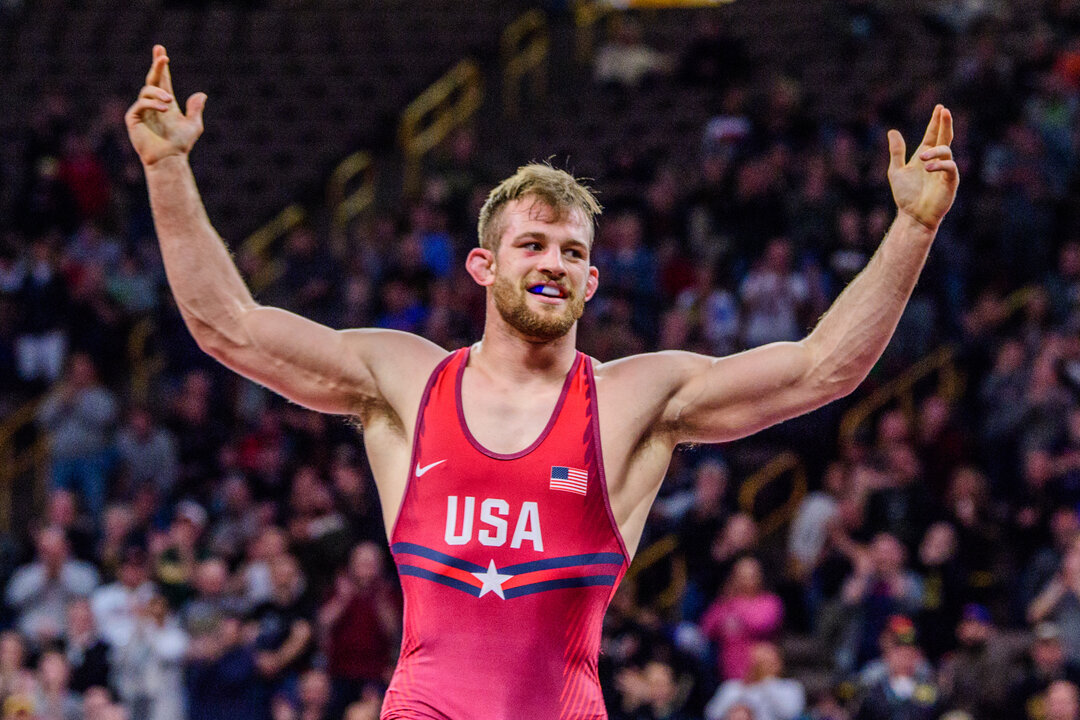 David Taylor was one of three wrestlers to win the Ivan Yariguin and the World Championships. (Photo by Tony Rotundo)
5. Yariguin Rewind: Six Yariguin Medalists Eventually Won Budapest World Titles
The 30th Annual Ivan Yariguin, United World Wrestling’s first Ranking Series event of the year, begins 8 days from today (on January 24), in Krasnoyarsk, Russia. Seven eventual world champions made the trip to Siberia twelve months ago to compete at the “Toughest Tournament in the World,“ but only six left with a medal.
The seven Budapest gold medalists who competed at the 2018 Ivan Yariguin were Zaur UGUEV (RUS) (57kg), Yowles BONNE RODRIGUES (CUB) (61kg), Magomedrasul GAZIMAGOMEDOV (RUS) (70kg), Zaurbek SIDAKOV (RUS) (74kg), Kyle DAKE (USA) (79kg), David TAYLOR (USA) (86kg), and Abdulrashid SADULAEV (RUS) (97kg).
Takuto OTOGURO (JPN) (65kg), J’den COX (USA) (92kg), and Geno PETRIASHVILI (GEO)(125kg) were the three world champions who missed last year's Yariguin.
Uguev, Taylor, and Sadulaev were the only three wrestlers to win gold medals at both the Yariguin and World Championships. Uguev and Taylor won their Yariguin titles at their World Championship weights, while Sadualev won his Yariguin title at 92kg and his world title at 97kg.
Zaurbek Sidakov, Magomedrasul Gazimagomedov, and Kyle Dake were the trio of Yariguin silver medalists who traveled to Budapest and claimed world titles.
On the flip side, Gadzhimurad Rashidov and Kyle Snyder won titles in Krasnoyarsk but fell short in the Budapest World Championship finals.
Cuba’s Yolwes Bonnes Rodrigues was the only 2018 world champion to depart the 2018 Yariguin empty-handed. It should be noted that Bonne competed at 65kg, 4kg heavier than his Budapest World Championship weight of 61kg.
Bonne went 1-1 and lost to Mongolia’s BATCHULUUN Batmagnai, who fell to Ilias BEKBULATOV (RUS) and Nachyn KUULAR (RUS) and finished in fifth-place.
Early registration for the 2019 Ivan Yariguin closed last week but has since reopened. The updated deadline for registrations is January 21.
Results
57kg - Zavur UGUEV (RUS) df. Azamat TUSKAEV (RUS), 4-1
61kg - Gadzhimurad RASHIDOV (RUS)df. Ismail MUSUKAEV (RUS), 3-2
65kg - Ilias BEKBULATOV (RUS)df. Akhmed CHAKAEV (RUS), 3-3
70kg - Magomed KURBANALIEV (RUS)df. Magomedrasul GAZIMAGOMEDOV (RUS), 2 - 2
74kg - Khetik TSABOLOV (RUS)df. Zaurbek SIDAKOV (RUS), 3-1
79kg - Akhmed GADZHIMAGOMEDOV (RUS) df. Kyle DAKE (USA), 8-2
86kg - David TAYLOR III (USA) df. Fatih ERDIN (TUR), via fall.
92kg - Abdulrashid SADULAEV (RUS) df. Anzor URISHEV (RUS), 6-0
97kg - Kyle Frederick SNYDER (USA) df. Rasul Magomedovitch MAGOMEDOV (RUS), 4-1
125kg - Muradin KUSHKHOV (RUS) df. Anzor Ruslanovitch KHIZRIEV (RUS), 1-1
*2018 world champion are in bold.
Weekly FIVE in Social Media
1. Big Move Monday -- BONNE Y. (CUB) -- 2018 Ivan Yariguin #wrestling #wrestler #monday #motivation#throw #takedown #mma
2. Yariguin Rewind: Akhmed GADZHIMAGOMEDOV (RUS) used a six-point opening-period and a second-period takedown to defeat eventual world champion Kyle DAKE (USA), 8-2 in the 79kg finals.
3. Thanks for the #SundaySmiles, @pascal.eisele.
4. #ScoreThat - Before watching, who do you think comes out on top of this exchange? Was it red or was it blue? ?: @krakatauf
5. Yariguin Rewind: In the All-Russian 74kg finals, 2017 world runner-up Khetik TSABOLOV (RUS) stopped eventual 74kg world champion @zaurbek_sidakov from winning his second Yariguin title.


 Future Olympic champion Yui SUSAKI and Beijing Olympic silver medalist Kenichi YUMOTO pose with two proud participants at the 2017 Waku-waku Waseda Cup. (Photo: Japan Wrestling Federation)
 A club member does a double-leg takedown drill as the others watch. (Photo: Japanese Wrestling Federation)
Share your thoughts.
Comments