

WATCH: Shiotani's signature move - Reverse Lift or Tawaragaeshi
Monday, March 3, 2025 - 10:38 By Vinay Siwach

TIRANA, Albania (March 3) -- Yu SHIOTANI (JPN) has done it many times domestically in Japan. On Sunday, he showed it to international fans.
As soon as he get the par terre position, instead for the typical gut-wrench, Shiotani goes for the reverse lift.
The reverse lift, known as Tawaragaeshi in Japanese, majorly seen in Greco-Roman wrestling when the wrestler on top in par terre jumps to face the grounded wrestler and the locks his hands around the opponents waist to throw him over his own head, or sometimes sideways.
That Aleksandr KARELIN photo in which he is clenching his teeth as he lifts his opponent like a sack. Exactly, a reverse lift.
Shiotani, former Asian champion, has mastered that move. And a reverse lift masterclass was on display on the final day of the Muhamet Malo Ranking Series 2025 in Tirana.
Out of the 53 points he scored on Sunday, Shiotani got 33 points from his signature reverse lift. Match after match, he would try the move and succeed as if the opponents did not how to defend it.
"There's not much to think about during a game like this. I do the Tawaragaeshi as if my body were moving on its own," Shiotani said.
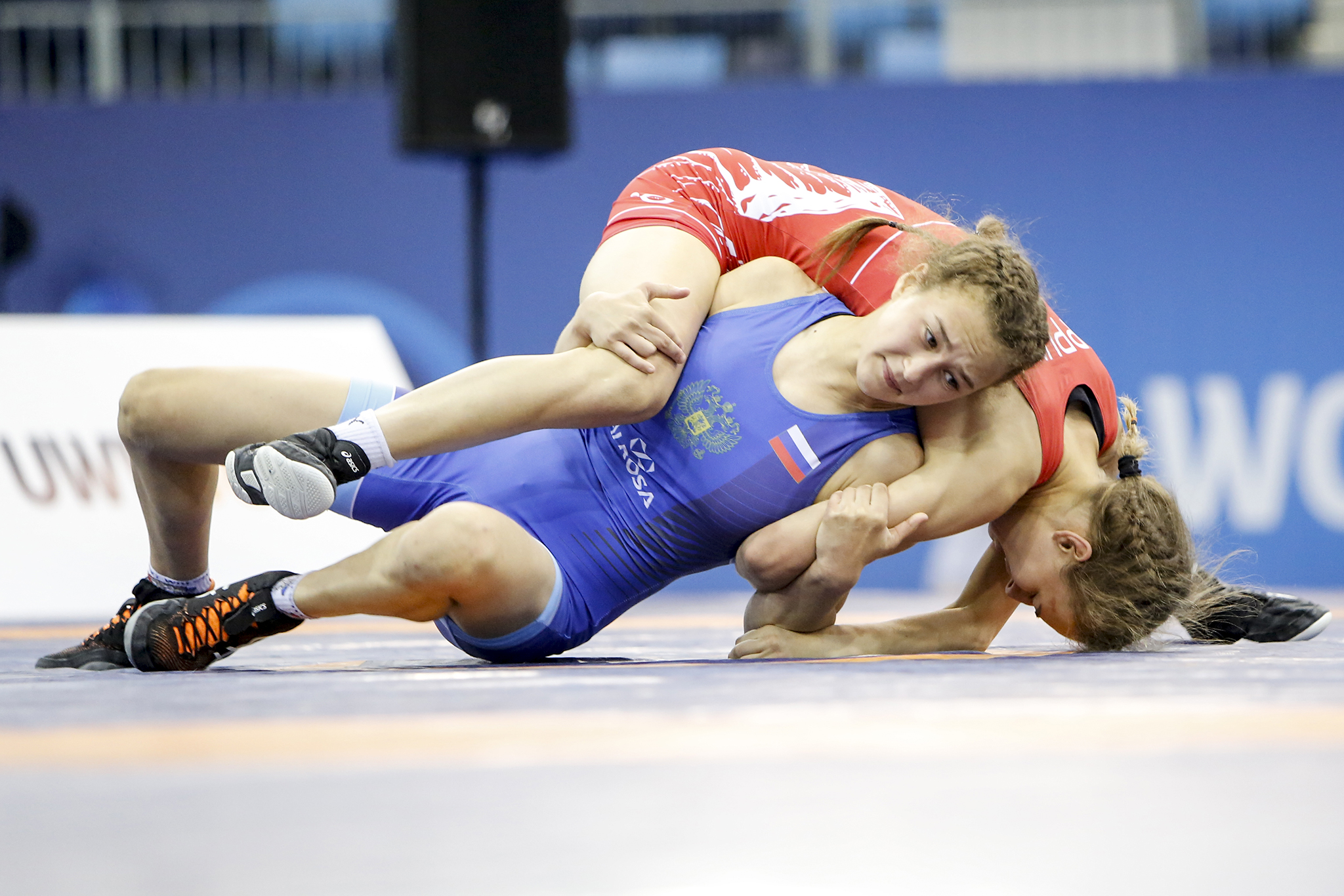
 Yu SHIOTANI (JPN) performs a reverse lift during the 60kg semifinal. (Photo: United World Wrestling / Kostandin Andonov)
The Japanese federation Instagram page is full of Shiotani's reverse lift videos. Despite his go-to move, Shiotani is shy to explain his obsession with the move which he performs even when he is in a position to pin or roll his opponent.
"I'm trying to switch things up and try to lift the wrestlers rather than trying to hold him down," Shiotani said. "I'm always practicing so I am able to do it in any situation."
Shiotani doesn't hide it that he is going for the reverse lift. He ideally starts from a chest wrap and quickly moves his grip to waist. If the opponent tries to raise his head to defend, Shiotani scores an exposure, opening more scoring options.
This was the first time Shiotani was wrestling at 60kg in a UWW event, up from 55kg but he said that he always remained in shape for wrestling.
"I always keep in shape," he said. "Ever since moved up the weight class, I've always believed that I could win by building my body, so I'm glad I was able to do that."
Share your thoughts.
Comments