

Vinesh Gives India Fifth Commonwealth Games Gold
Saturday, April 14, 2018 - 14:47 By Eric Olanowski

GOLD COAST, Australia (April 13) - Vinesh VINESH (IND) gave India their fifth gold medal of the 2018 Commonwealth Games. Although four of India's five golds came in freestyle, Vinesh captured the lone, yet much needed top spot in women’s wrestling.
In her fourth and final bout of the day, the defending champion had hopes of taking out 2012 world champion Jessica Anne Marie MACDONALD (CAN). The No. 2 ranked wrestler in the world struck first with a feet to back double leg for four points, facing MacDonald with her first deficit of the tournament.
The Indian sat on a comfortable 8-0 lead after a second aggressive four-point double leg. The African runner-up used a MacDonald double leg attack to get her hips committed and picked up a counter two points, but not before MacDonald came out in the top position with a reversal.
Vinesh’s final leg attack came with 90 seconds left, as she picked up her second Commonwealth Games gold medal in as many tries.
At 86kg, 2010 Commonwealth Champion Muhammad INAM (PAK) upended 41-year-old 2018 African champion Melvin BIBO (NGR), 6-0.
In the finals, Inam took the lead midway through the first period after Bibo failed to score when he was placed on the activity clock. Shortly after, Inam turned defense into an attack with a crotch lift off Bibo’s attack, taking the 3-0 lead. An additional takedown and an unnecessary hands to the face call would make Inam switch to defensive mode as he had a six-point buffer. The Pakistani closed the match out intelligently and found ways to stay off the activity clock to keep the shutout intact, winning 6-0.
This victory at 86kg gave Pakistan their first Commonwealth Games gold medal since Azhar HUSSAIN (PAK) won the 55kg gold medal at the 2010 Commonwealth Games in Delhi, India.
Meanwhile, the 62kg gold-medal bout between Aminat ADENIYI (NGR) and Michelle FAZZARI (CAN) was halted after the first five seconds due to an apparent right knee injury to the Canadian wrestler.
Adeniyi, the 24-year-old Olympian and three-time African champion snatched an early single leg, only to have the 2017 world bronze medalist, Fazzari stop wrestling and begin to favor the already padded right knee. For the third straight international competition, Fazzari would have to pull out due to this apparent right knee injury.
The African defended her title from four years ago and joined fellow Nigerian’s Blessing OBORUDUDU (NGR) and Odunayo ADEKUOROYE (NGR) as 2018 Commonwealth Games women’s wrestling champions.
Sumit SUMIT (IND) was awarded the 125kg gold medal after knocking off defending champion Korey JARVIS (CAN) and finishing the day with a 4-0 record. Jarvis ended the day with one loss and took home the silver medal, and Tayab RAZA (PAK) had a pair of wins and losses and departed with Commonwealth Games bronze.
RESULTS:
Women's Wrestling
50kg - Nordic Tournament (4 Participants)
GOLD - Vinesh VINESH (IND) df. Jessica Anne Marie MACDONALD (CAN), 13-3.
BRONZE - Miesinnei GENESIS (NGR) df. Rupinder KAUR (AUS), 10-0.
62kg - Nordic Tournament (4 Participants)
GOLD - Aminat ADENIYI (NGR) df. Michelle FAZZARI (CAN), via inj. def.
BRONZE - Sakshi MALIK (IND) df. Tayla FORD (NZL), 6-5.
Freestyle
86kg
GOLD - Muhammad INAM (PAK) df. Melvin BIBO (NGR). 6-0.
BRONZE - Somveer SOMVEER (IND) df. Alexander MOORE (CAN), 7-3
BRONZE - Syerus ESLAMI (ENG) df. David CONTEH (SLE), 11-0.
125kg - Nordic Tournament (5 Participants)
GOLD – Sumit SUMIT (IND) (4-0)
SILVER - Korey JARVIS (CAN) (3-1)
BRONZE - Tayab RAZA (PAK) (2-2)
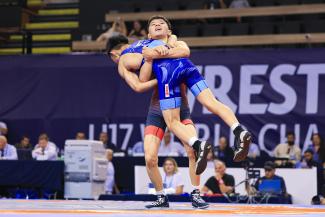
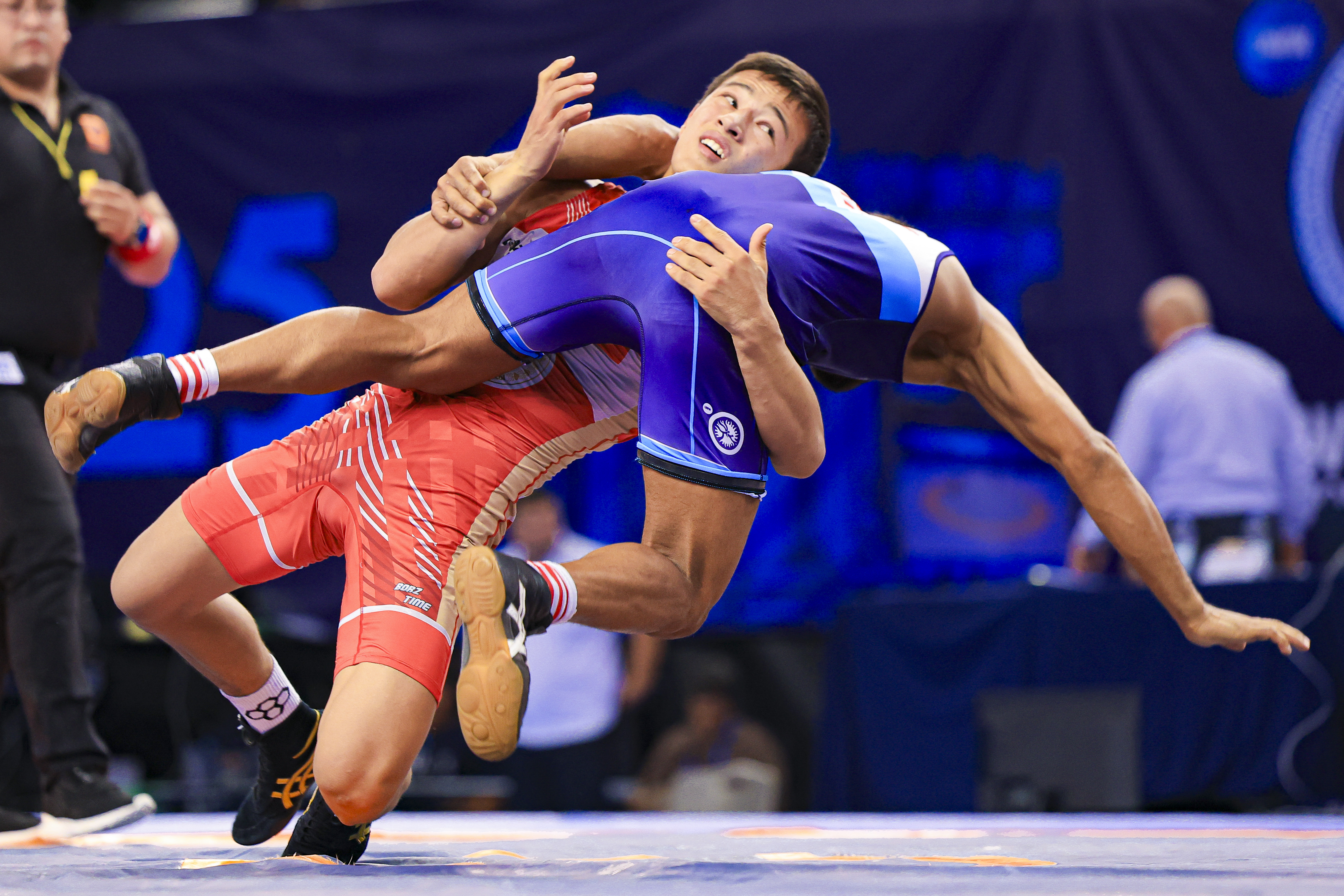 Asian U17 champion Alkham ABDIRASULOV (KGZ) reached the World U17 Championships final at 55kg. (Photo: United World Wrestling / Amirreza Aliasgari)
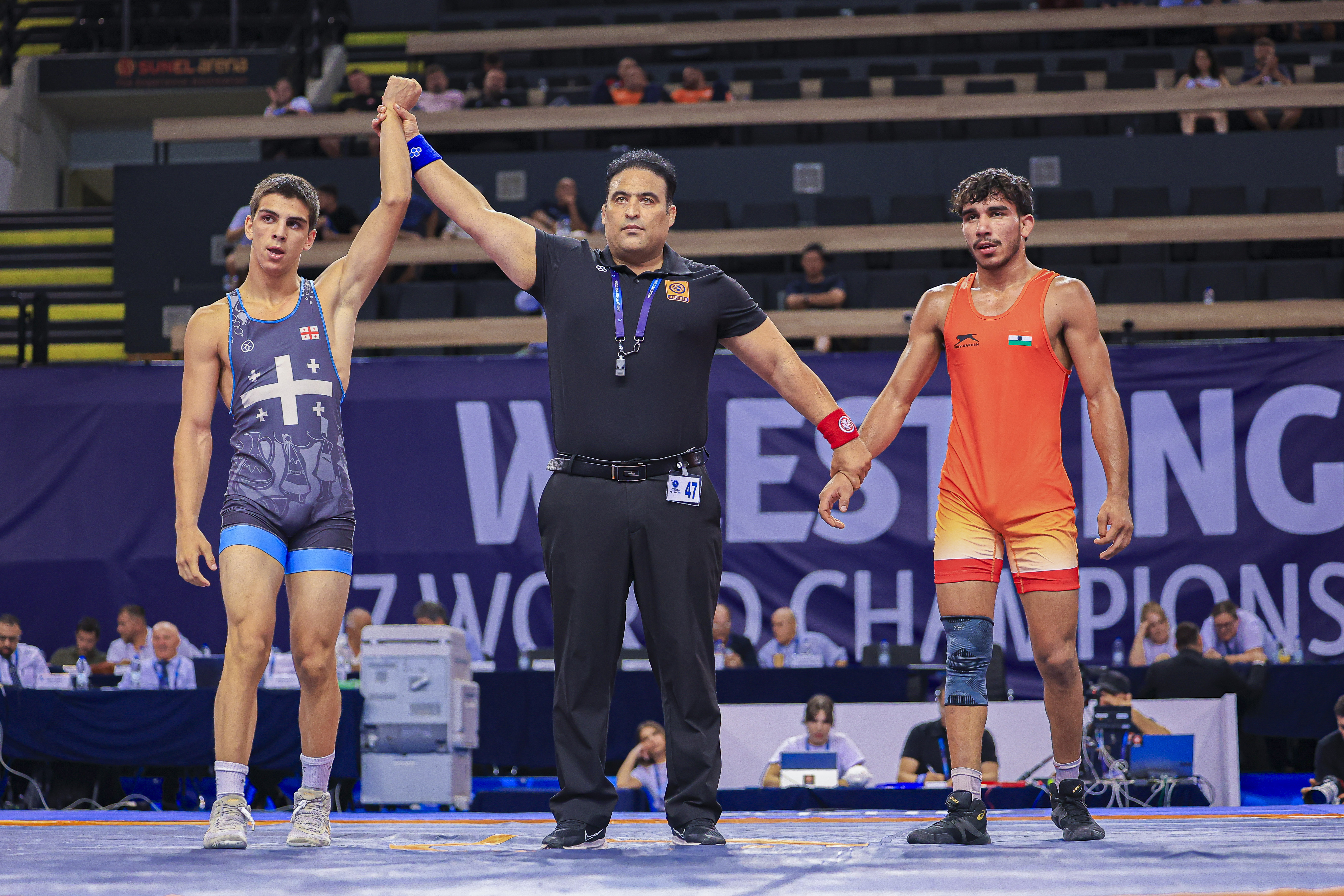 Erekle TAVBERIDZE (GEO), European U17 champion, reached the 65kg final in Athens and will taken on Janes NAZARYAN (ARM), an opponent he defeated in Euro final. (Photo: United World Wrestling / Amirreza Aliasgari)
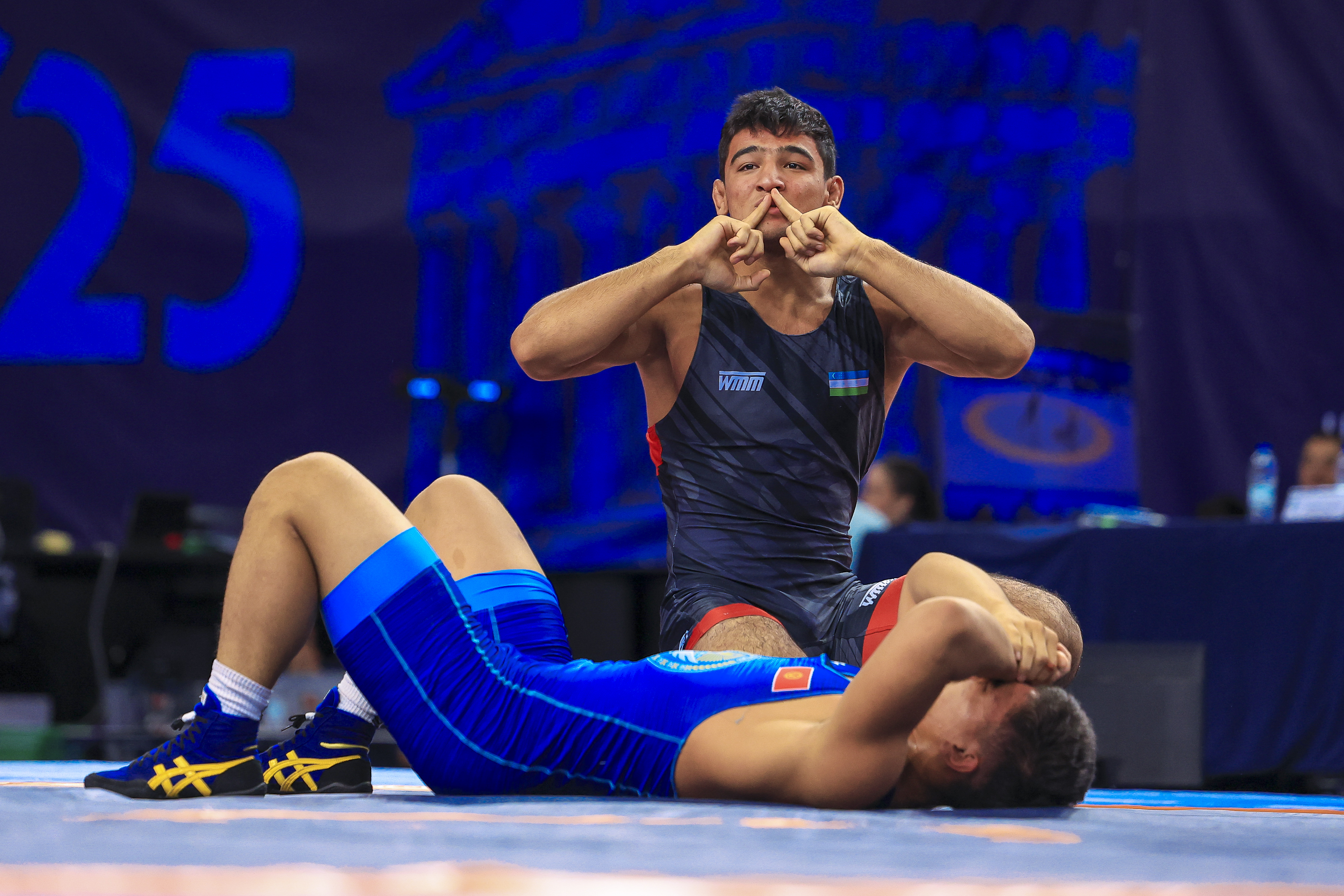 Abdulaziz KHOLMIRZAEV (UZB) pinned Nurislam OSKONBAEV (KGZ) in the 80kg semifinal. (Photo: United World Wrestling / Kadir Caliskan)
 Asian U17 champion HARDEEP (IND) defeated Emrullah CAPKAN (TUR) in the 110kg semifinals. (Photo: United World Wrestling / Kadir Caliskan)
Share your thoughts.
Comments