

UWW sends experts to Hungary to run a high-performance coaching course
Thursday, November 10, 2022 - 20:22 By United World Wrestling Press

BUDAPEST, Hungary (November 10) – The Hungarian Wrestling Federation organized the first-ever high-performance regional coaching course. In all, 32 coaches who participated in the course from seven different countries. The course was conducted on 2-5 November with the support of the Olympic Solidarity, United World Wrestling, the Hungarian National Olympic Committee and the Hungarian Wrestling Federation. The course was held at the KIMBA Wrestling Academy which is a premiere training facility in Budapest where they recently organized an international Greco-Roman training camp with over 100 participants. “HWF was pleased to host the first-ever high-performance coach course in Budapest in our new Kozma István Wrestling Academy. Our federation is always open to new initiatives which helps us improve our skills and improve on the wrestling mat. We are thankful for UWW to allow us to hold this advanced course for our coaches and referees,” said Peter Bacsa (HUN) – UWW Bureau Member and Vice President of the Hungarian Wrestling Federation.
 Attendees of the high-performance regional coaching course come together at the KIMBA Wrestling Academyduring an off-the-mat session. (Photo: Gabor Martin/ United World Wrestling)
This course was conducted by several wrestling experts from around the world.
The experts included Dr. Bahman Mirzaei (IRI) and Dr. Mario Baic (CRO) who are both members of the UWW Scientific Commission along with data expert Dr. Milorad Dokmanac. The technical experts were Arsen Julfalakyan (ARM) and Zac Dominguez (USA). Leading the course programme were Vincent Aka (CIV) and Zach Errett (USA) from the UWW Development Department. These experts led many sessions throughout the week.
The session topics included performance data analysis from the past world championships and Olympic Games, preparation and periodization of elite wrestlers, physical fitness preparation of top wrestlers, creating a system for measuring the physical preparedness of their athletes, how to transition from a successful wrestler to a successful coach, stages of complex technical/tactical development, competition manipulation and athlete safeguarding. In addition to these sessions, the coaches had practical sessions where they worked with the experts on technical skills for each style. They also had to lead training sessions that focused on the energy and attitude of the trainer. The course finished with collaboration among the referees. Both groups worked side-by-side to better understand the rules and their roles. This session was led by Prof. Dr. H.Ibrahim Cicioglu (TUR). “The high-performance coaching course in Hungary was unique because it was the first time ever that coaches, referees, and recently retired athletes came together for a four-day seminar. This course was full of specific scientific information theoretical, and practical sessions designed specifically for high-level coaches. What was also very important during the whole process was that you could feel the interaction as most of the participants were very excited and had fun during the course,” said Arsen Julfalakyan (ARM) – Olympic silver medalist.
 Participants of the course break down film together. (Photo: Gabor Martin/ United World Wrestling)
“The coaches that participated in the course were some of the best wrestlers in the world and recently began their coaching careers. It was great to see them embrace the course and want to continue to improve. By the end of the course, the coaches were working together and sharing ideas. It was very clear to see why the Hungarian Wrestling Federation is one of the leaders in wrestling,” said Mr. Zach Errett (UWW Education Manager). “We had a very strong four-day course with excellent lecturers from their own fields such as science, education, and refereeing. Our coaches learned a lot during these days, and I hope it has opened new areas for them in their field to grow up top wrestlers for our country. Even though our wrestling culture and education are high in Hungary we learned many new things to be more professional and focused,” said Peter Bacsa. “We would like to thank all the organizers of the UWW for the opportunity to organize the UWW Level 4 coaching training in Hungary. It was educational for everyone. We will try to pass on the knowledge acquired here to as many coaches as possible. Special thanks for answering all our questions outside of the lectures. It was a great honor to spend the week with qualified professionals, Olympic and world champions,” said Bábszky Gergely (HUN) - Director of the College of the Hungarian University of Physical Education.
 Participants from the Introduction to Refereeing Course pose together for a photo. (Photo: Gabor Martin/ United World Wrestling)
Also, during the week, the Hungarian Wrestling Federation organized an Introduction to Refereeing Course. This was conducted by Prof. Dr. H.Ibrahim Cicioglu, a member of the UWW Referee Commission and a referee educator. The course was conducted over three days. During that time, the participants learned the foundations of being a great referee. Their topics included referee team duties, evaluation of holds, referee mechanics, proper positioning and movement, and controlling the bout. The participants also had the opportunity to referee simulated matches during their sessions to apply what they learned practically. "It was a very productive event for the high-performance coaches and referees. Our primary goal in this course was to enable the coaches to look at the evaluation of actions and holds with the eyes of the referee and to have them have a different vision on this issue. During the course, we received much positive feedback from the coaches that will contribute to the development of our referees," said Ibrahim Cicioglu (UWW Referee Commission).
 Olympic silver medalist Arsen Julfalakyan (ARM) shows a move during his time in Hungary. (Photo: Gabor Martin/ United World Wrestling)
“This course was very intense, and the commitment of all the coaches and referees lives up the world rank of Hungary. Also, this course was a good opportunity for Hungary coaches and referees to work together to strengthen the Hungary Wrestling Federation,” Said Vincent Aka (UWW Development Officer and Trainer).
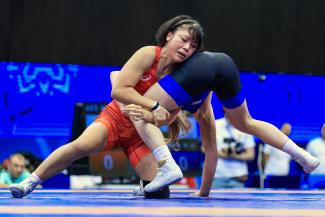
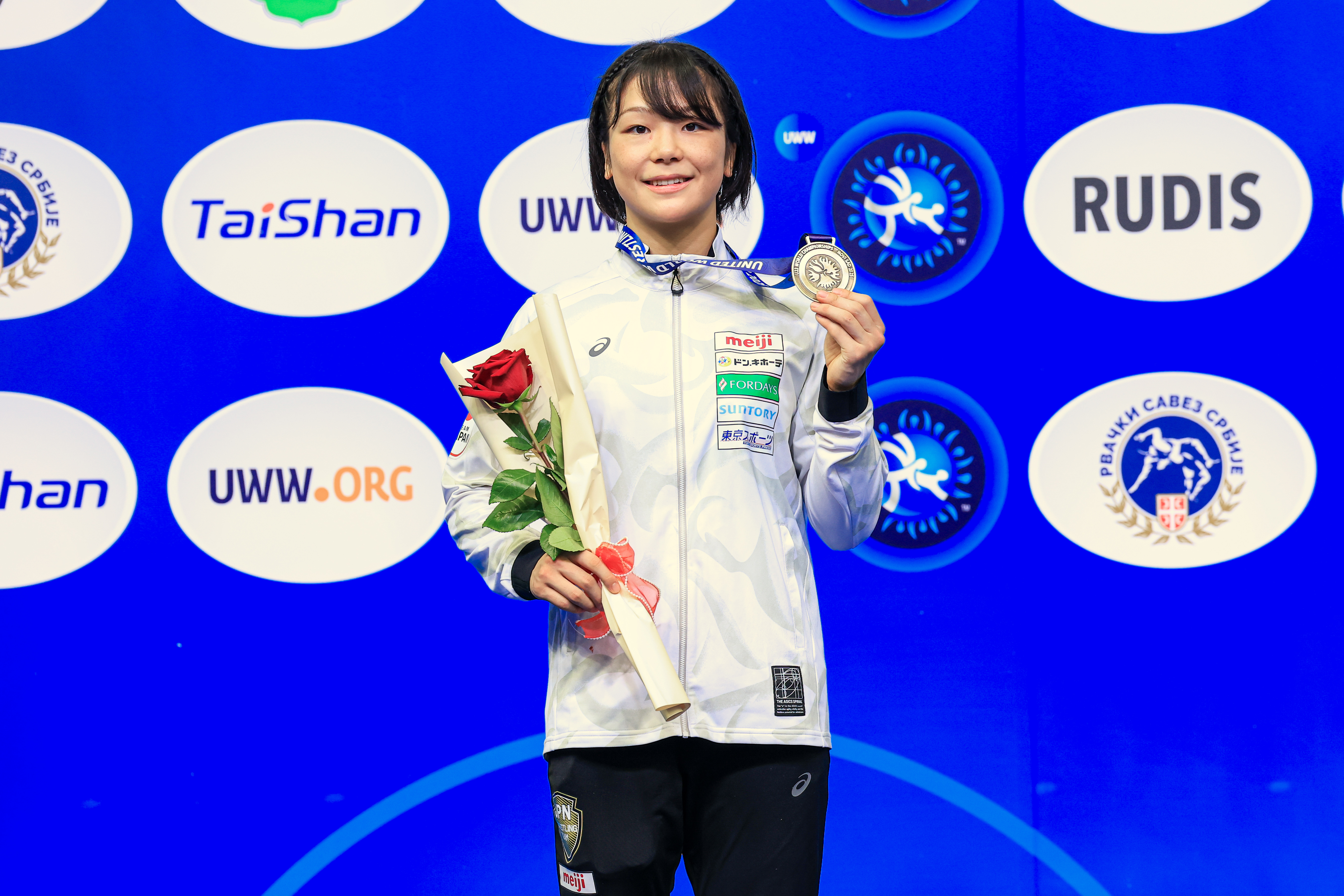 Akari FUJINAMI (JPN) won the gold medal at 57kg at the U23 World Championships. (Photo: United World Wrestling / Amirreza Aliasgari)
Share your thoughts.
Comments