

UWW-ISF Partnership Empowers Physical Education Teachers through Wrestling
Tuesday, July 21, 2026 - 11:09 By United World Wrestling Press
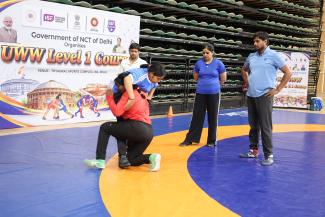
NEW DELHI, India (July 20) -- United World Wrestling partnered with International School Sports Federation (ISF) to pilot a new training programme for physical education teachers.
This pilot programme was organized in New Delhi, India by the School Games Federation of India (SGFI) in collaboration with the Directorate of Education (Sports Branch), Government of the National Capital Territory of Delhi (GNCTD). The goal of the programme was to introduce educational wrestling methodologies to physical education teachers in hopes to develop wrestling at the grassroots level. This course was delivered by certified UWW Educator, Mr. Ahmed KHEDHRI (TUN).
The pilot programme consisted of four separate four-day sessions that were attended by a total of 88 participants from diverse sporting backgrounds. Many of them were physical education teachers and some were educators in various sport disciplines that included boxing, judo, cricket, hockey, football kabaddi, swimming, basketball, and athletics.
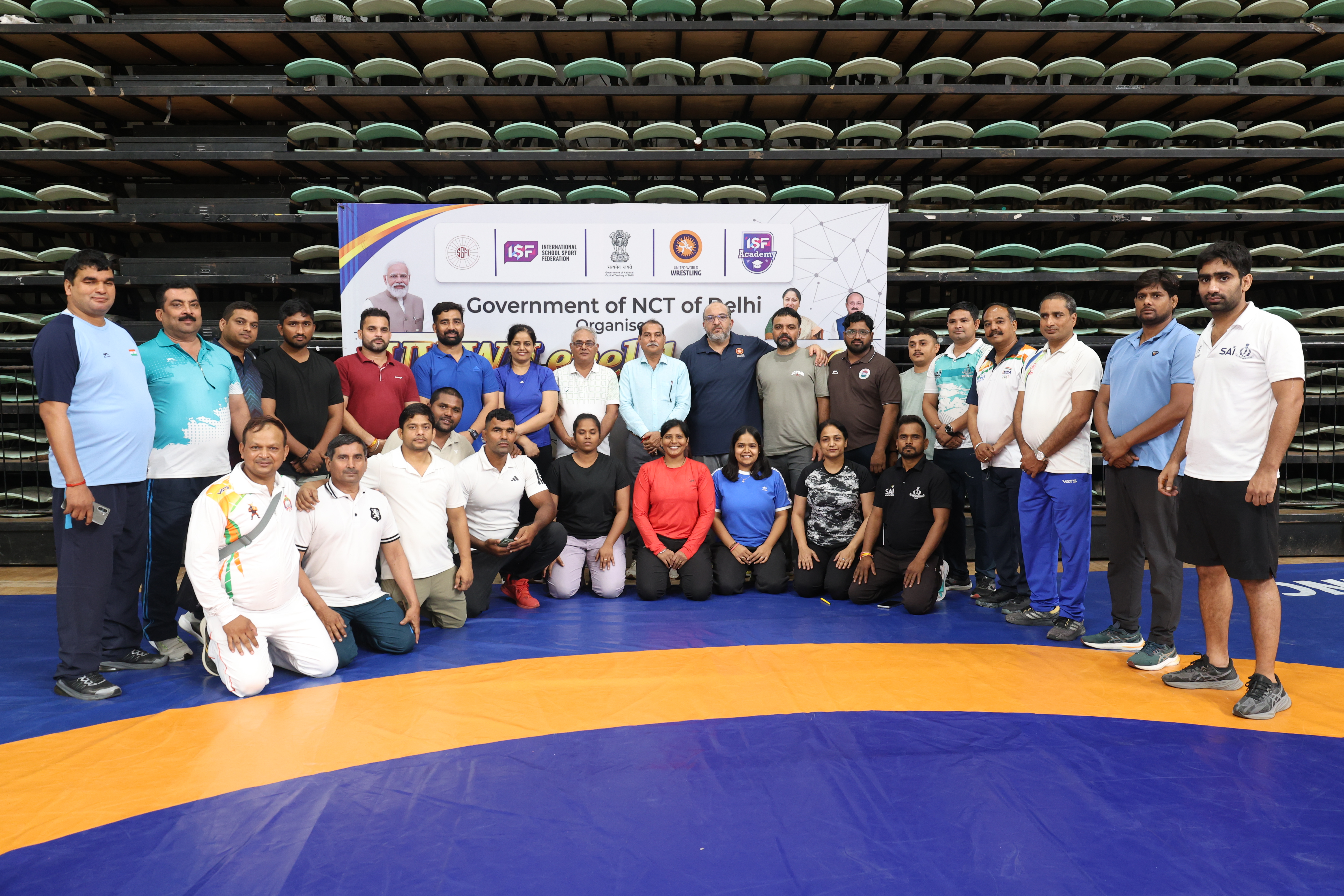
These educators completed the ISF-UWW Level 1 Coaching Course for Physical Education Teachers. Each four-day course had theoretical and practical sessions.
The theoretical sessions focused on wrestling in physical education, roles and responsibilities of a coach, characteristics of effective coaching, learning and teaching methodologies, implementing the Wrestle4Fun programme, and youth development strategies.
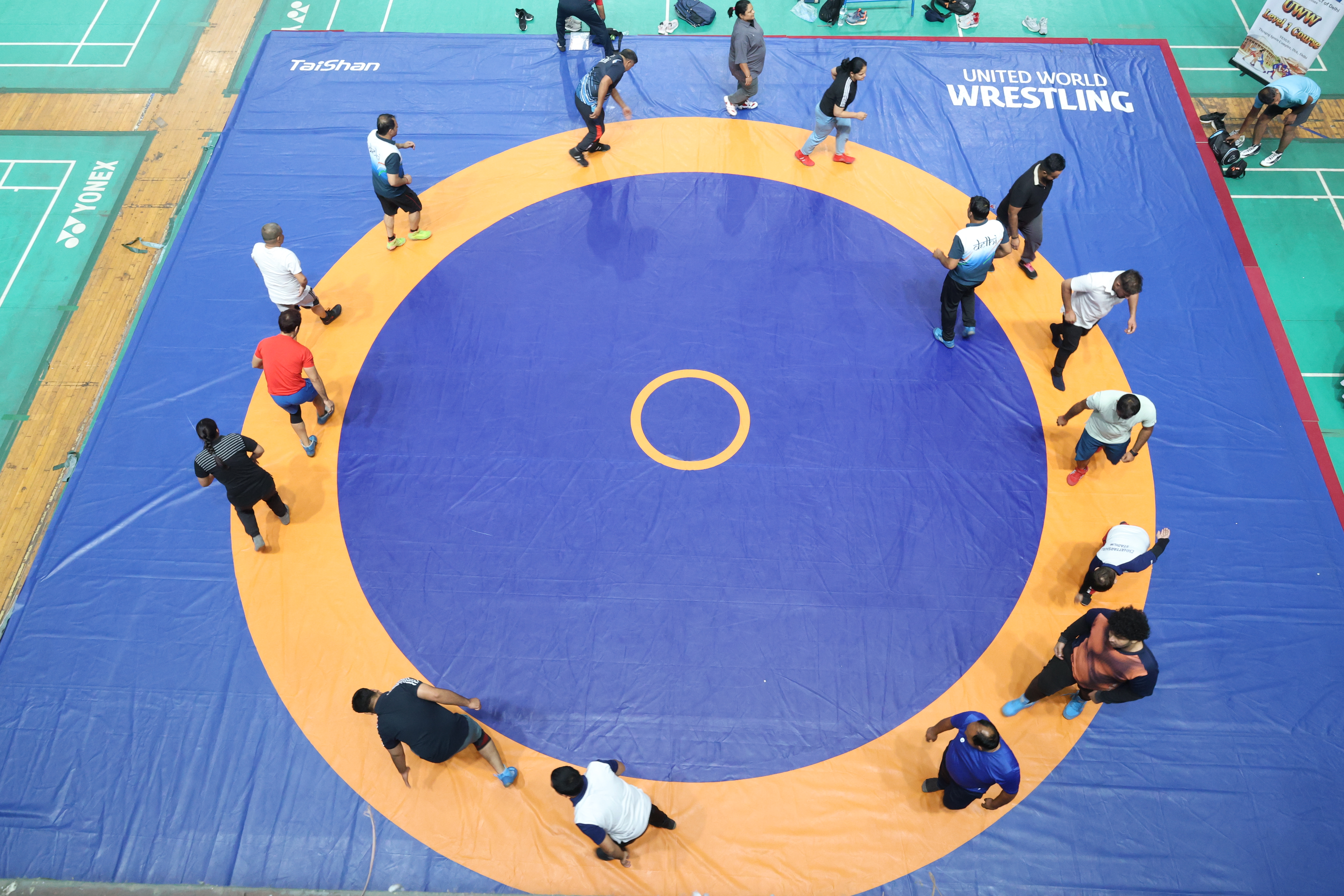
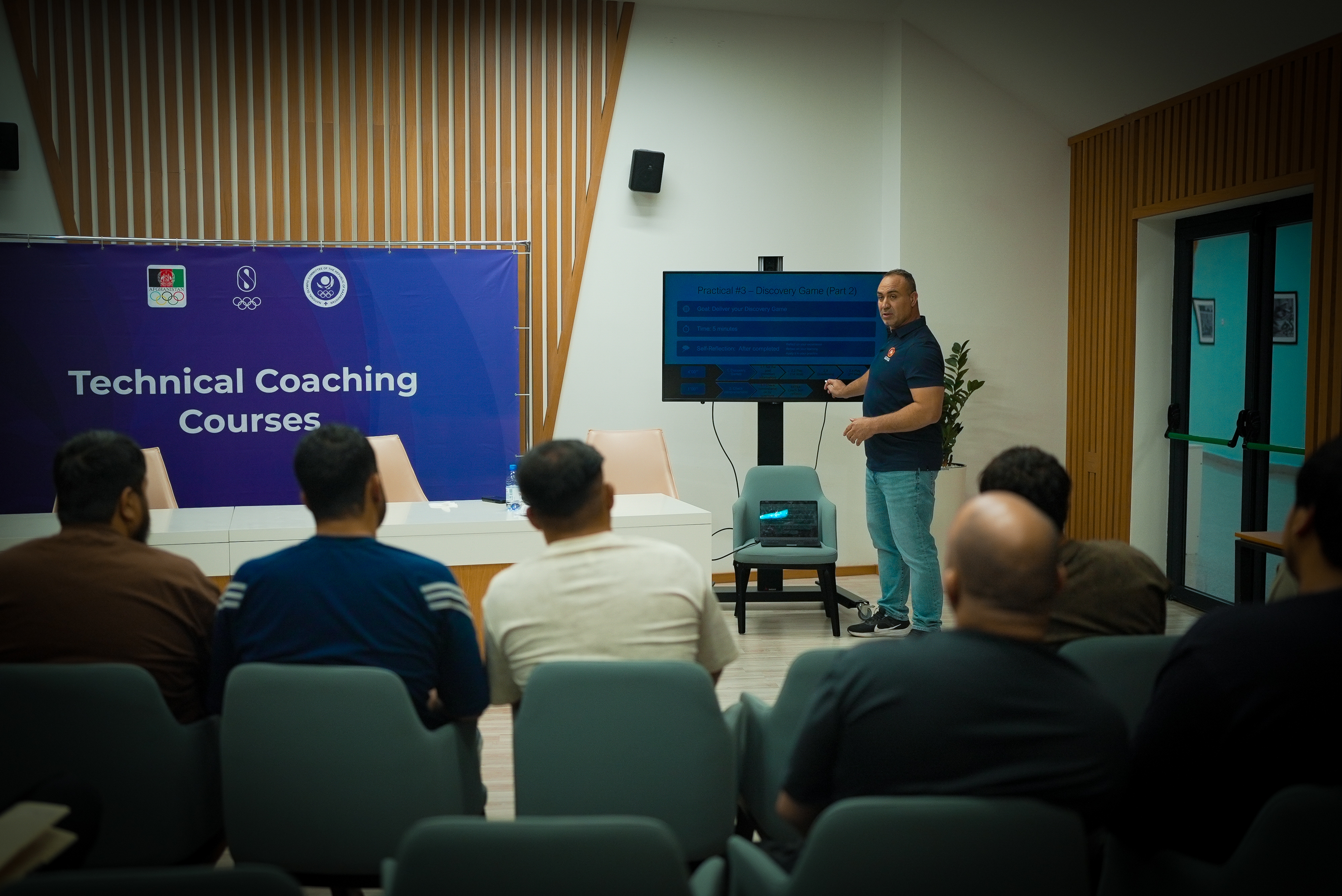
The participants then applied their knowledge in the practical sessions. In those sessions, they delivered discovery games, implemented Wrestle4Fun activities, learned the seven basic skills of wrestling, and participated in skill demonstrations techniques.
"Throughout the courses, the participants demonstrated a high level of motivation, commitment, and active engagement," Khedhri said. “One of the most significant outcomes of the course was its ability to bring together participants from diverse backgrounds and equip them with the knowledge and skills required to teach and coach wrestling.”
Wrestling participant Ramashish YADAV said that the course will help him both in PE and wrestling coaching.
“It helped me significantly improve my personal skills as both a coach and a physical education teacher in wrestling," Yadav said.
Shipra SRIVASTAVA, a PE teacher in hocket, said that she learnt how to increase children's interest in sports.
"The UWW Level 1 Course taught me how Wrestle4Fun and Discovery Games can be used to increase children’s interest in sport and make it easier to teach any skill,” Srivastava said.
Another PE teacher from basketball Gokulesh SHARMA also expressed that the course was helpful to develop interest of children.
“The course was excellent," Sharma said. "The best part was learning how to develop children’s skills through wrestling while keeping it fun, specifically, how to maximize involvement of young children and foster their mental and physical development in an enjoyable way."
Wrestle4Fun is developmentally appropriate for all age levels and designed to support girls’ and boys’ physical literacy journey. It has five stages based on different developmental levels. Each stage has 15 lessons. In total, there are 75 lessons with over 200 games and activities.
The entire Wrestle4Fun programme can be found on the Academy platform. The UWW Academy can found here at UWW Academy.
Share your thoughts.
Comments