

UWW Hosts First Regional Educational Development Tournament
Wednesday, December 8, 2021 - 12:31 By United World Wrestling Press

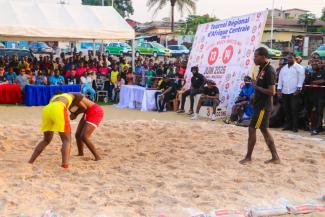
PRETORIA, South Africa (December 7) -- United World Wrestling's Development Department conducted the first-ever Regional Educational Development Tournament (REDT) in South Africa.
This event was hosted in collaboration with the South Africa Wrestling Federation. The REDT is a regional course and tournament centered around training and educating the coaches and referees. At the conclusion of the courses, there is a scheduled tournament to provide opportunities for countries in the region to compete in international competitions.
The INTUTHUKO Development Week in South Africa was conducted from November 26 to December 1. This event included participants from South Africa, Mauritius, Zimbabwe, Namibia, and Angola.
“It was a great experience seeing many coaches and referees attending the Level 2 clinic," SAWF President Sakkie Bosse said. "The UWW instructors were very professional in the way they conducted the clinic and every assignment was presented with great expertise and professionalism. The coaches and referees received information which they could apply in their wrestling career."
UWW Development Director Deqa Niamkey added that despite the challenge of COVID-19, the team made sure it becomes a success.
“Despite the current world challenges with the rising of COVID-19 cases, the wrestling family stays strong and is striving to continue the development of the sport. We thank the South African Wrestling and all those who participated. We will renew the event once the situation is cleared as this program showed tremendous success for the developing wrestling nations," Niamkey said.
From November 26-30, a Level 2 Coaching Course was conducted by Vincent Aka and Zach Errett. This course included working with 17 coaches and focused on the development of practice plans.
“Thank you, it was very educational,” said Zumicka Geringer (RSA).
"We promise that we are going to use all that we learn here and show our capacity as a coach trained by the best educators Vincent Aka and Zach Errett,” said Celstino Chicago (ANG).
From November 28-30, Charles Villet and Stanislav Sernek piloted a non-certification referee course (Next Level). This course included 19 referees working to improve their skills and knowledge.
During the final day of both courses, the referees and coaches worked together. Both groups were able to learn from each other and see the value in working together. The referees and coaches also completed training on Athlete Safeguarding, regarding the role that both play in keeping athletes safe and free from abuse.
“The UWW instructors Zach Errett, Vincent Aka and Charles Villet, were very professional and highly skilled in the subjects they presented," Bosse said. "Thank you to the three of them. South African Wrestling Federation appreciates the effort they put into the Level 2 clinic. Thank you to the organizing committee of South African Wrestling Federation for hosting the event in a professional manner."
The INTUTHUKO was scheduled to end with a small regional competition. However, due to COVID-19, the competition had to be canceled at the last minute.
For more information on REDT events in the future, visit www.uww.org.


Share your thoughts.
Comments