

Throwback to 2019 World Championships: Game before the Games
Wednesday, August 16, 2023 - 07:53 By Gaurav Bhatt

BELGRADE, Serbia (August 16) -- As the clock ticks down and the global wrestling community holds its breath, we stand just a month from the 2023 Wrestling World Championships in Belgrade. This year is particularly poignant for the honors at stake and the Olympic dreams intertwined with every bout.
Before we dive into the intense competition that awaits, it's essential to cast a glance back to draw parallels, lessons, and inspiration. The 2019 Wrestling World Championships in Astana set the stage for Tokyo 2020, offering a blend of strategy, skill, and heart-stopping moments. As we gear up for another thrilling chapter, let’s revisit the 2019 drama to appreciate better the spectacle that 2023 promises to be.
The Tokyo Implication: Game Before The Game
In the shadow of the Tokyo 2020 Olympics, every move on the mats of Astana was calculated, every win cherished, and every loss a setback. With only the top-6 finishers in each Olympic weight category ensuring a berth for their nation, the pressure was tangible. Wrestling powerhouses with decades' of traditions faced a unique challenge: Whom to field in these all-important qualifiers? This brought in an element of strategy and playbooks.
 Kyle DAKE (USA) won the world title at 79kg in Astana. (Photo: UWW / Tony Rotundo)
The American Approach
With its depth of talent in wrestling, the United States faced an intriguing challenge. They had to make crucial decisions with categories like 79kg and 92kg not featuring in the Olympics. Would Kyle DAKE (USA) and J'den COX (USA) — world champions at Budapest 2018 — adjust weights to target Olympic glory?
The U.S. trusted their seasoned champions, betting on their adaptability. Both Dake and Cox defended their titles in Astana. Dake went on to earn bronze in Tokyo, while Cox was out of the USA Wrestling Trials before they even began after choosing to bulk up and failing to make weight for the 97kg bracket.
 Deepak PUNIA (IND) won a silver medal at 86kg in Astana. (Photo: UWW / Martin Gabor)
India’s Bet
Contrastingly, India decided to invest in its future. Deepak PUNIA (IND) was their trump card, a young prodigy in the 86kg freestyle category. At 20 years, Punia showcased maturity beyond his years in Astana, clinching a silver medal and securing an Olympic spot. India's gamble was clear: trust the young, hungry talent to rise to the occasion.
In Tokyo, Punia let his lead slip in the final seconds to lose the bronze-medal match.
 Risako KAWAI (JPN) was unstoppable as she won the gold in Astana. (Photo: UWW / Kadir Caliskan)
Japan's Phenoms
Japan was under immense scrutiny and pressure as the host nation for the upcoming Olympics. And they leaned on established, yet young, phenoms like Risako KAWAI (JPN) and Takuto OTOGURO (JPN).
Otoguro, the youngest Japanese male to win a world title in 2018, had a rough go in the 65kg category in Astana. The category featured a murderers' row of wrestlers such as (eventual champion) Gadzhimurad RASHIDOV, three-time world champion Haji ALIYEV (AZE), Olympic gold medalist Vladimir KHINCHEGASHVILI (GEO), two-time world bronze medalist Alejandro TOBIER (CUB), returning silver medalist Bajrang PUNIA (IND) and three-time NCAA champion Zain RETHERFORD (USA) to name a few.
Otoguro missed out on bronze in 2019. However, he later clinched a berth to Tokyo and overcame his nemeses to clinch gold in front of his home crowd.
The Outcome
Astana's mats witnessed a unique blend of experience and exuberance. While some nations leaned heavily on their seasoned warriors, hoping their experience would shine in pressure situations, others bet on their youth's unyielding spirit and vigor. This strategic chess game yielded mixed results, with some bets paying off handsomely and others serving as learning experiences.
Ultimately, the road to Tokyo 2020 was as much about mental fortitude and strategic planning as it was about skill, strength, and technique.
In Greco-Roman, Kenchiro FUMITA (JPN) ended his compatriot Shinobu OTA (JPN) hopes of winning a medal in Tokyo as Fumita won gold at 60kg while Ota won at 63kg, a non-Olympic weight class.
Cuba's show
Rio Olympic champion Ismail BURRERO (CUB) won the gold in Astana at 67kg, two weight classes up. Oscar PINO (CUB), the constant substitute for Mijain LOPEZ (CUB) at 130kg, went on to make it to the final before winning a silver medal.
Running Roughshod, From Astana to Tokyo
Numerous wrestlers who qualified for Tokyo at the 2019 World Championships went on to reaffirm their dominance on the Olympic stage.
Zaur UGUEV (57kg Freestyle)
After successfully defending his title in Astana, Uguev continued his impressive form in Tokyo, winning gold and proving himself to be the undisputed best.
Risako KAWAI (JPN) (57kg Women's Wrestling)
Kawai’s triumph in Nur-Sultan was her third world title in as many divisions (60kg, 59kg, and 57kg). It was also a precursor to her Olympic success. In Tokyo, she clinched the gold medal, defending her Olympic title from Rio and cementing her legacy as one of the premier female wrestlers of her time.
Tamyra MENSAH STOCK (68kg Women's Wrestling)
After her dominant gold in the 2019 World Championships, Mensah captured gold in Tokyo, showcasing her consistent prowess on the international stage. The American also won the world title in Belgrade last year.
Abdulrashid SADULAEV (97kg Freestyle)
The Tank, after defeating Kyle Snyder in what many termed the "Match of the Century" in Astana, continued his dominance by securing the gold medal in Tokyo. He already had an Olympic gold and three world titles before stepping onto the mat in Kazakhstan. Sadulaev's rivalry with Snyder and consistent performance against other competitors solidified his status as one of the best in his category.
Hungary brothers
Tamas LORINCZ (HUN) and Viktor LORINCZ (HUN) ended up winning the gold and silver at 77kg and 87kg respectively. In Tokyo, the brothers would repeat the performance with Tamas becoming an Olympic champion and Viktor ending up with a silver medal to Zhan BELENUIK (UKR). Both brothers retired after the Olympics.
Stacking Up For Paris
As we stand on the cusp of the 2023 World Championships, the memory of Astana serves as both an inspiration and a cautionary tale. The road to Paris will be paved in Astana's legacy.
Wrestlers will be eyeing the world title and the golden ticket to Paris. The Olympic weight classes are set, and while many from 2019 will return, new faces are bound to emerge.
The wrestling community can expect the usual suspects -- U.S., Japan, and Iran -- to be strong contenders across categories. However, nations like India, Georgia, and Turkey, among others, have shown that they can disrupt the status quo.
Japan and the U.S. will likely remain dominant in women's wrestling. But with nations investing more in women's sports, expect more countries to challenge the old guard.
The 2019 World Championships were a masterclass in wrestling, passion, strategy, and heartbreak. They served as a reminder of the beauty of the sport and its ability to surprise and enthrall. As the world of wrestling looks ahead to the 2023 Championships and beyond to Paris, the echoes of Astana will undoubtedly be ringing in their ears.
Every takedown, every pin, and every bout will have the weight of Olympic dreams behind it. Here's to hoping for a championship that matches or even surpasses the spectacle of 2019. Paris awaits!
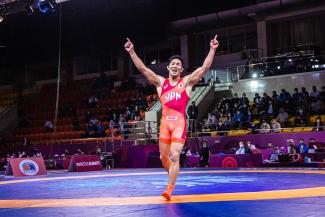
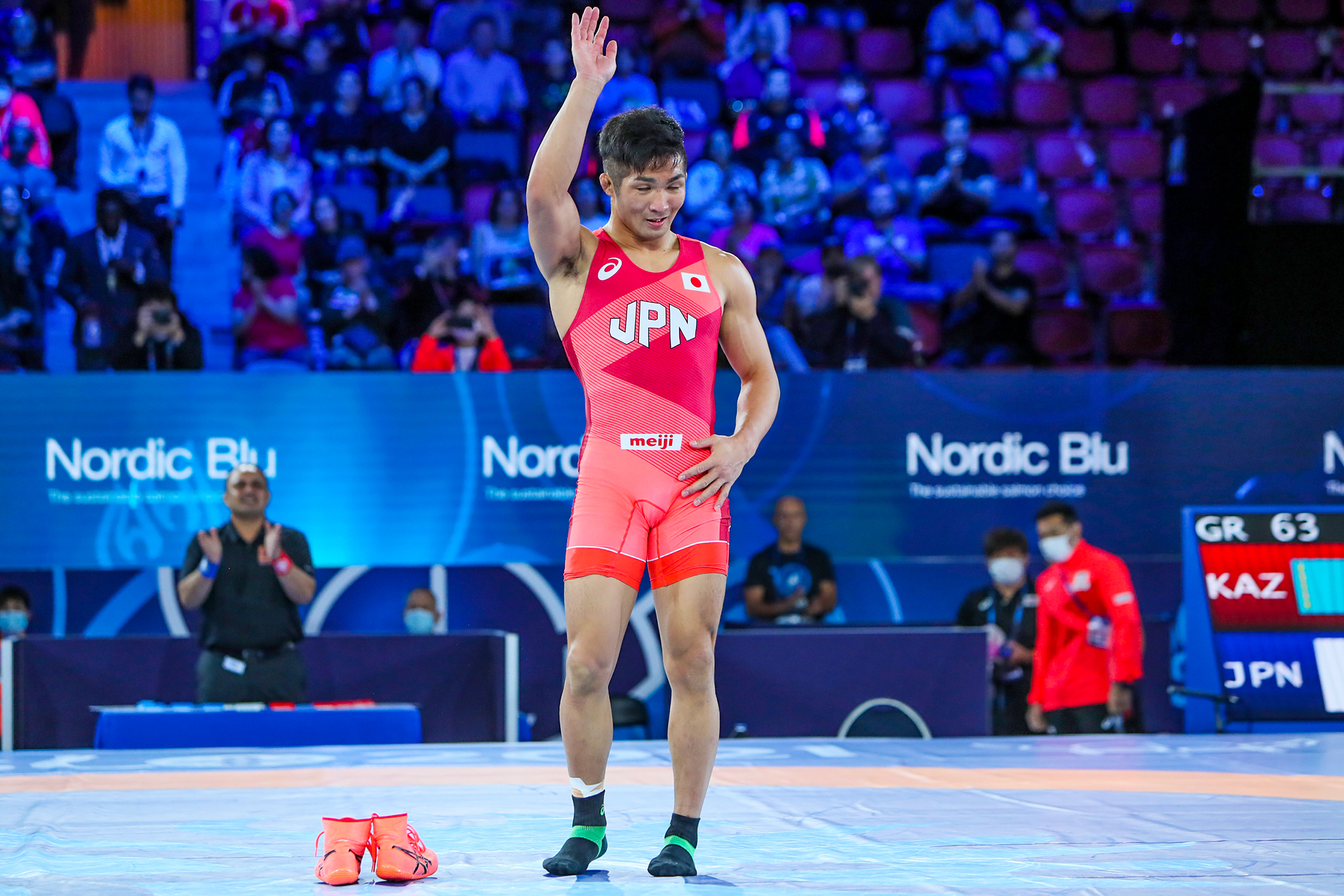 Tsuchika SHIMOYAMADA (AUS) had left his shoes on the mat during the 2021 World Championships to mark his retirement. (Photo: United World Wrestling / Martin Gabor)
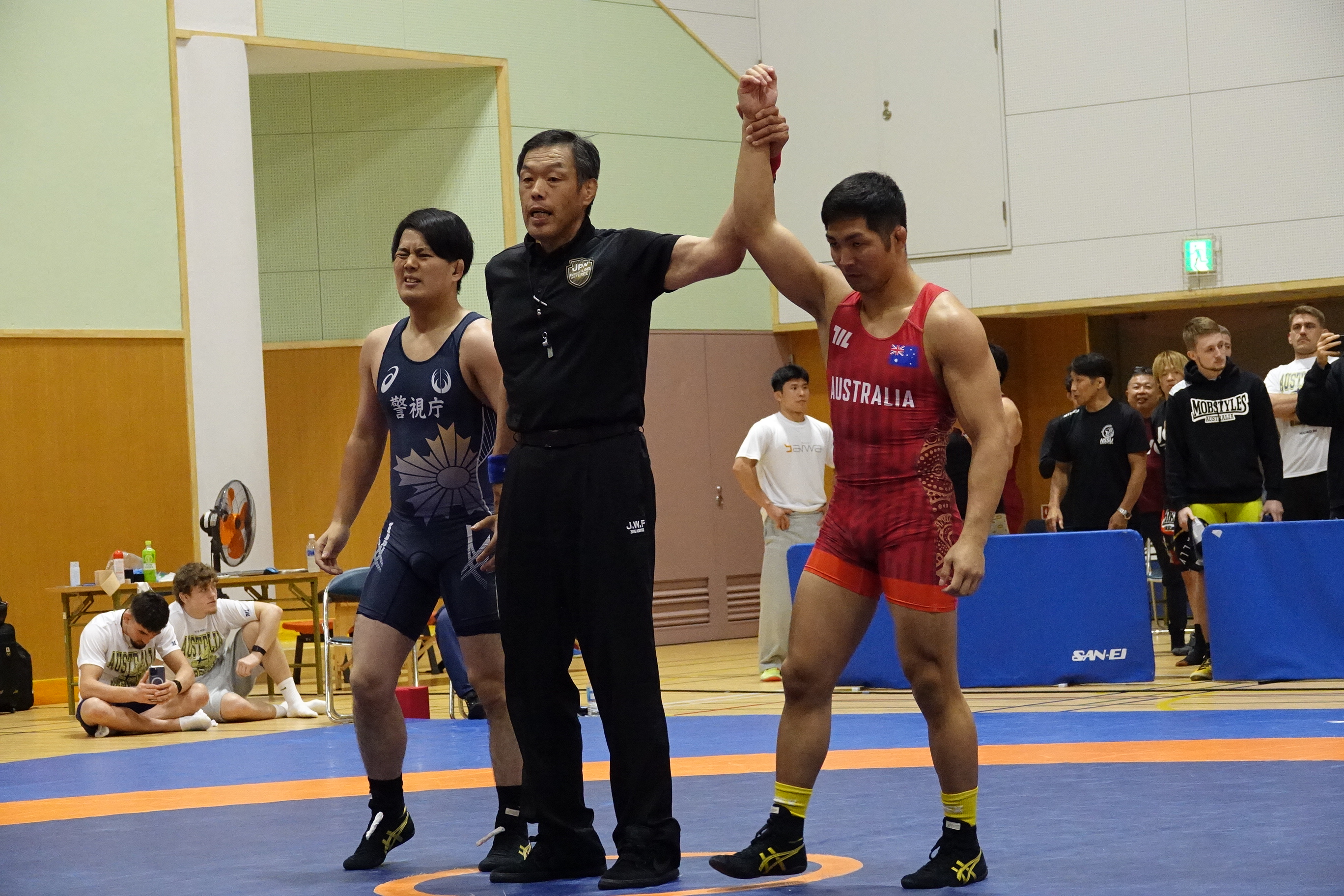 Tsuchika SHIMOYAMADA advances to the semifinals at the All-Japan Non-Student Championships in July with a 52-second win over Kokoro GOTO. (Photo: Koji Fuse / wrestling-spirits.jp)
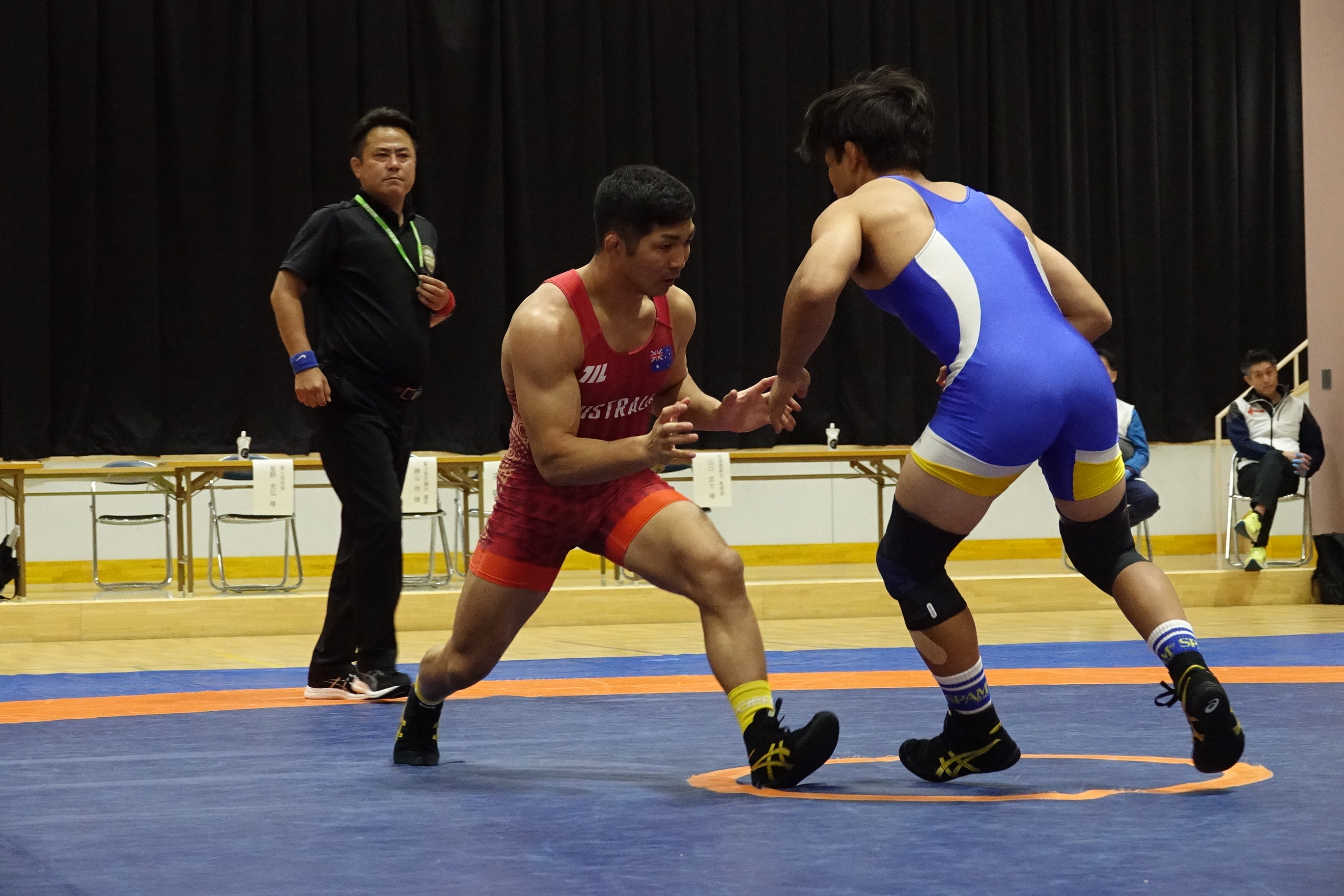 Tsuchika SHIMOYAMA faces Keitaro ONO in his opening match at the All-Japan Non-Student Championships in July. (Photo: Koji Fuse / wrestling-spirits.jp)
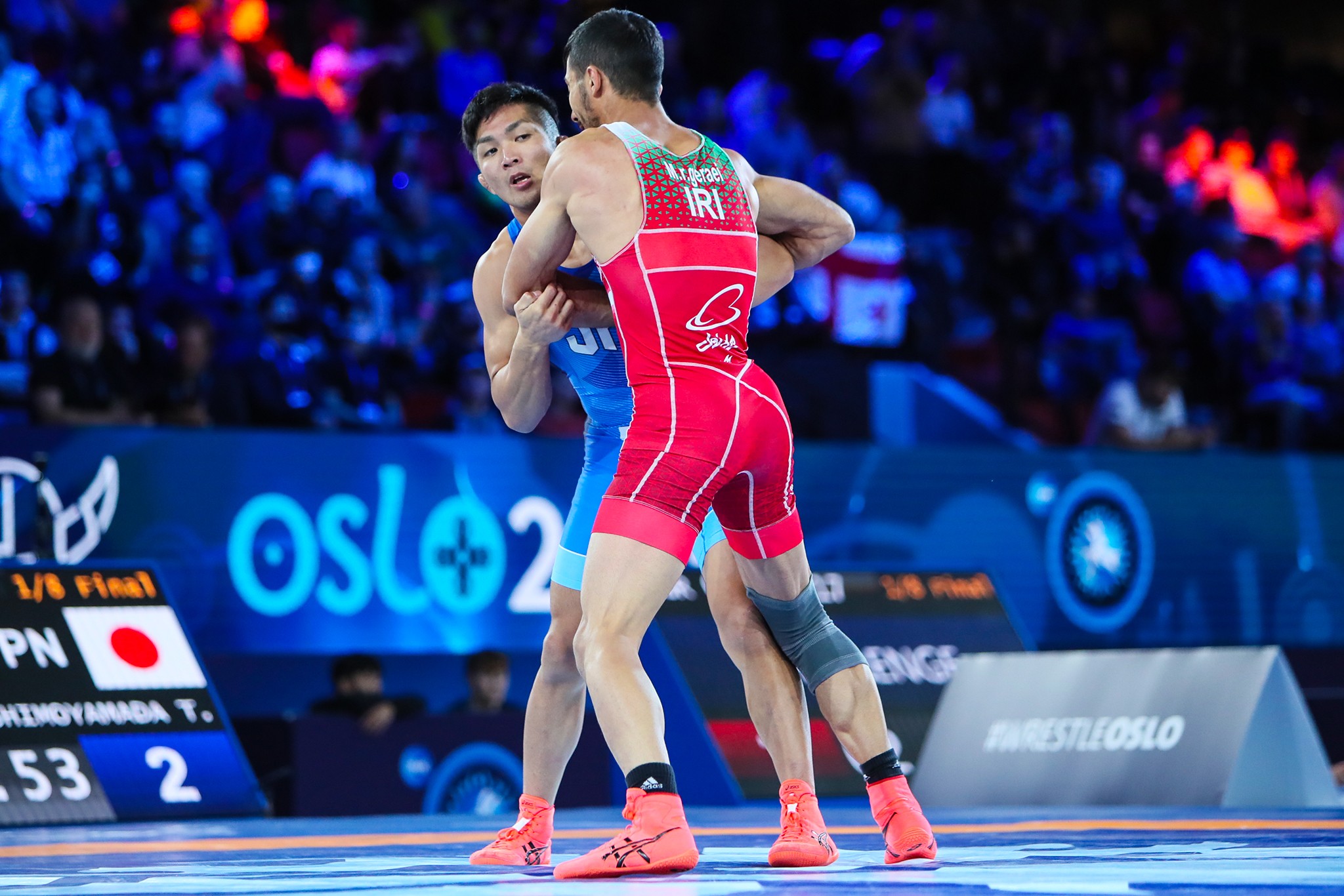 Tsuchika SHIMOYAMADA (AUS) was dominating Mohammadreza GERAEI (IRI) in their match at the 2021 World Championships before being pinned. (Photo: United World Wrestling / Martin Gabor)
Share your thoughts.
Comments