

Top Stories of the Decade

Sushil Kumar Wins World Championship, Awakens Wrestling Powerhouse in India

By Vinay Siwach

CORSIER-SUR-VEVEY, Switzerland (December 24) -- India had never won a gold medal at a global wrestling event. The drought was such no one seemed to put money on any wrestler to even a medal, forget the top one. Indians weren't supposed to dominate world events in any sport.

That was about to change. On September 12, 2010, Sushil KUMAR (IND) broke all barriers to become India's first-ever gold medal winner at the World Championships in Moscow, Russia. In the 66kg weight category, Kumar would put up a commanding performance and beat Alan GOGAEV (RUS) 3-1 in the final in front of a hostile home crowd.

On the back of his bronze medal at the Beijing Olympics in 2008, Kumar arrived in Moscow as a dark-house, like he had in all global competitions. No one gave him a chance in India. But as the day progressed, the 36-year-old raised hopes.

He beat Anastasios AKRITIDIS (GRE), 6-2, in the opening round followed by Martin DAUM (GER), 4-1. Buyanjavyn BATZORIG (MGL) failed to challenge in quarter-final and lost 9-1 before Kumar eked out a close 4-3 win against Jabrayil HASANOV (AZE) in the semifinal.

"2010 was the best year," Kumar said. "Wherever I went, I won gold. Commonwealth Games, Asian Championships, World Championships. I beat a Russian wrestler in Russia."

These things were unheard of in India. Kumar's victory was hailed because no one had heard that an Indian wrestler can go to Russia and defeat their wrestler to win a gold medal. 

And if the world thought Kumar's bronze in Beijing was a fluke, he changed that and gave a new life to Indian wrestling which was struggling with doping scandals, nepotism and inter-federation politics. His medal put wrestling on India's sports map and perhaps the top one too.


Kids thronged to akhadas in villages in Haryana, Delhi and Uttar Pradesh. Not only boys, but parents were ready to break social stigmas and send their girls to akhadas, a place where girls are seldom seen. New wrestling pockets emerged and broke the dominance of traditional powerhouses like Haryana and Maharashtra.

The result was seen three years later when India won three medals at 2013 World Championships and this year in Nur-Sultan, it won five, the best-ever performance.

Kumar added a silver medal at London Olympics to become India's first-ever individual to win multiple medals at the Games. But it was before that India needed a sporting hero. It got one on that September evening in Moscow.

#development

Afghanistan Coaches Build Skills at UWW Level 1 Coaching Course

By United World Wrestling Press

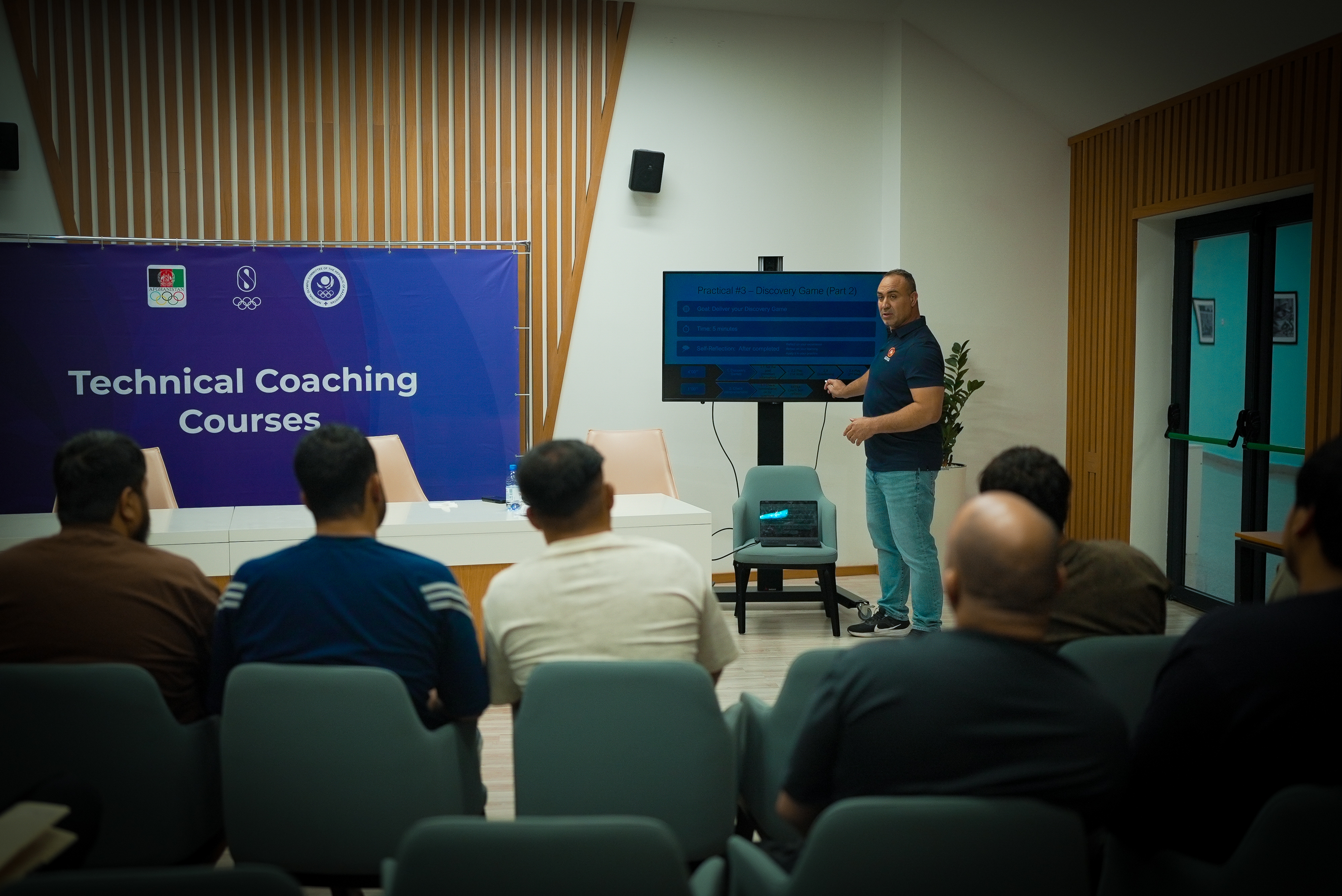
ALMATY, Kazakhstan (June 30) -- Eleven coaches from Afghanistan were among 21 participants who completed a United World Wrestling Level 1 Coaching Course in Almaty, strengthening the country's coaching capacity while building closer ties with neighboring Kazakhstan.

Organized through a partnership between Olympic Solidarity, the Kazakhstan National Olympic Committee, the Afghanistan National Olympic Committee, the Kazakhstan Wrestling Federation, and United World Wrestling, the course focused on developing internationally recognized coaching competencies while fostering collaboration between the two wrestling nations.

Apart from the 11 coaches from Afghanistan, coaches from Kazakhstan also joined for a comprehensive program. The curriculum covered coaching responsibilities, skill development using UWW's Key Factors teaching methodology, athlete-centered learning through discovery games, coaching self-reflection, risk management, and practical coaching assessment.

Afghanistan

UWW Educator and former world champion Mohammed ABDELFATTAH praised the participants for their commitment throughout the program.

"I was very impressed with the overall level of the participants," Abdelfattah said. "The coaches were highly motivated, actively participated in every session, and continuously asked thoughtful questions throughout the course."

Abdelfattah was particularly encouraged by the technical level demonstrated by the Afghan coaches.

"The Afghan coaches demonstrated a strong technical understanding of wrestling." he said. "After speaking with several participants, I learned that traditional wrestling is extremely popular in Afghanistan and shares many technical similarities with Olympic wrestling. This provides coaches with an excellent technical foundation for further development."

The practical sessions proved to be a particular highlight, with coaches working through technical demonstrations, problem-solving exercises, and athlete-centered coaching activities designed to strengthen both technical instruction and coaching methodology.

The Afghanistan Wrestling Federation views the course as an important step in its long-term development strategy. Dr. Yonus POPALZY, an Afghan NOC and Olympic Council of Asia member, was instrumental in the development, organization, and success of the course.

Participants highlighted the practical nature of the course and the opportunity to exchange ideas with coaches from different backgrounds.

"The course exceeded our expectations. The practical sessions and interactive teaching methods gave us new ideas that we can immediately apply in our daily coaching."