

#Trnava2018

Steveson Eyeing Fourth World Title

By Eric Olanowski

TRNAVA, Solvakia (September 16) - Daton FIX (USA) and Gable STEVESON (USA), the duo of American returning champions lead a freestyle #Trnava2018 field that boasts 245 wrestlers from 40 different nations. 

The reigning 55kg champion, Fix, enters the Junior World Championships at 57kg, while Steveson, the 120kg gold-medal winner enters at 125kg. 

Steveson, the reigning three-time world champion will be looking for his fourth age-level world title. Since stepping on the international scene in 2015, Steveson has yet to drop a match on his way to claiming two Cadet World titles, and a Junior World gold medal. 
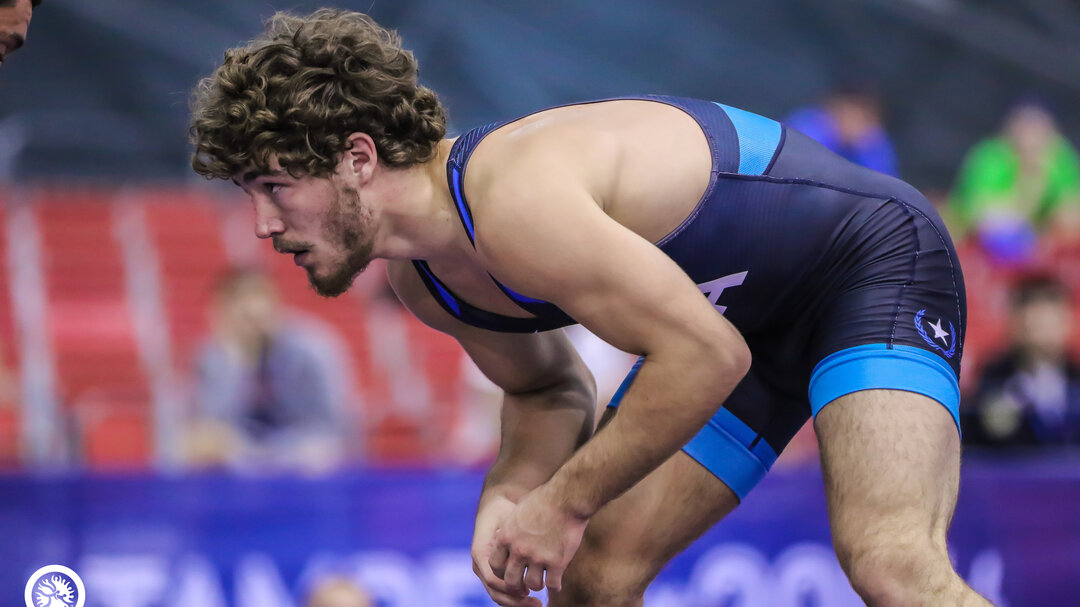
Daton FIX (USA), 2017 Tampere World champion. (Photo by Marion Stein). 

The other reigning champion, Fix, will be competing in his fifth age-level World Championship. Since taking tenth place at the 2014 Cadet World Championships, Fix has rallied to win three world medals. Fix won back-to-back bronzes, before claiming his first World gold at the Tampere World Championships. 

If Fix has hopes of winning back-to-back Junior World titles, he’ll have to go through returning bronze medalist, Arsen HARUTYUNYAN (ARM). 

Harutyunyan, the two-time age-level European champion dropped his 2017 Junior World quarterfinal bout against Ismail GADZHIEV (RUS), 11-9. Gadzhiev went on to take second place, dropping his finals bout to Fix, 12-1. 

The United States’ roster was scheduled to feature two of the three 2017 cadet world champions that were entered, but due to an undisclosed injury to Daniel KERKVLIET JR (USA), Aaron BROOKS (USA) will be the only American cadet world champion that is entered. 
Mehdi ESHGHIVASOUKOLAEI (IRI), 2017 Cadet World champion. (Photo by Martin Gabor) 

Iran’s Mehdi ESHGHIVASOUKOLAEI is the third cadet world champion that will be in action in Trnava where he’s currently entered at 61kg. 

With the absence of Kerkvliet at 97kg, the gold medal favorites are Feyzullah AKTURK (TUR)  and Zyyamuhammet SAPAROV (TKM). 

Akturk is down from 120kg where he grabbed the bronze medal at last years Junior World Champions, while Saparov is down from 100kg where he won a cadet world bronze medal. 


Piotr CARASENI (MDA), 2017 Cadet World bronze medalist. (Photo by Martin Gabor) 

Other previous age-level world medalists to pay attention to are Piotr CARASENI (MDA)(74kg), Abbas Ali FOROUTANRAMI (IRI) (92kg), Khadzhimurad GADZHIYEV (AZE)  (70kg), and Seyedabolfazl HASHEMIJOUYBARI (IRI) (86kg). 

SCHEDULE
Friday 
10:30 - Qualification rounds FS – 57-65-70-79-97kg
17:15 - Semifinal FS – 57-65-70-79-97kg

Saturday 
10:30 - Qualification rounds FS – 61-74-86-92-125kg
10:30 - Repechage FS – 57-65-70-79-97kg
17:15 - Semifinal FS – 61-74-86-92-125kg
18:00 - Finals FS – 57-65-70-79-97kgSunday 

Sunday 
16:00 - Repechage FS – 61-74-86-92-125kg
18:00 - Finals FS – 61-74-86-92-125kg

Development

DNSS Program in Cambodia: Building Foundations for Wrestling Growth

By United World Wrestling Press

PHNOM PENH, Cambodia (December 2) --- From July 18 to November 30, 2024, the Development of the National Sports System (DNSS) program in Cambodia marked a significant milestone for the growth of wrestling in the country. Led by UWW Educator Martin Hauck (USA), this program provided a comprehensive approach to enhancing coaching, athlete development, and refereeing in Cambodia. Through a mix of workshops, camps, and tournaments, the initiative sought to foster collaboration, education, and enthusiasm for wrestling at all levels.

During the program, more educational opportunities were created for coaches, athletes, and referees. A key highlight was a youth national tournament held during the second visit, which connected athletes and coaches from several provinces, promoting competition and collaboration. Plans were made to make this event an annual tradition, further strengthening the sport’s foundation in Cambodia.

The program objectives included observing and assessing the national team during a high-performance camp in July, educating coaches on long-term athlete development, and organizing a one-day seminar in a neighboring province to introduce wrestling games to youth. Meetings with the Cambodia Wrestling Federation leadership helped establish a roadmap for future development and in-person training sessions.

Key deliverables included:

  • Running camps and seminars for coaches and athletes, focusing on practical and theoretical education.
  • Creating a Cambodian Coaches Course Curriculum and teaching topics such as emergency action planning, practice structuring, periodization, talent identification, and connecting traditional Cambodian wrestling with Olympic styles.
  • Organizing a youth national tournament and camp, which saw participation from almost all provinces, showcasing significant growth on and off the mat.
  • Promoting communication, education, and resource-sharing platforms for ongoing development.

The DNSS program not only strengthened technical skills but also built excitement and unity within the Cambodia Wrestling Federation. With a focus on collaboration among referees, coaches, athletes, and stakeholders, this initiative laid the groundwork for sustained development and opportunities in wrestling throughout Cambodia.

The Development of National Sports System (DNSS) program, conducted in Cambodia from July 18 to November 30, 2024, marked a significant step toward developing wrestling in the country. Led by UWW Educator Martin Hauck (USA), the program aimed to address critical gaps in coaching, athlete development, and organizational structure while fostering growth and enthusiasm for the sport nationwide.

CAMOver 100 participants competed in the national youth tournament during the Development of the National Sports System (DNSS) program in Cambodia.

Program Activities and Achievements

The DNSS program implemented a range of initiatives to address these challenges and lay the groundwork for wrestling’s growth:

  1. Youth Development and Competitions:
    The program introduced a national youth tournament, drawing over 100 athletes from nearly all provinces. This event not only provided a platform for competition but also fostered excitement and collaboration among athletes, coaches, referees, parents, and stakeholders.
  2. Coaching Education and Communication:
    Coaches participated in comprehensive seminars covering emergency action planning, athlete development, periodization, video analysis, coaching females, and practice structuring. A centralized communication platform on the Cambodia Wrestling Federation website improved collaboration among coaches and clubs, helping connect rural and urban areas.
  3. Structured Athlete Development:
    New frameworks for athlete progression were introduced, enabling coaches and athletes to engage in long-term development cycles. Practical sessions during national team camps allowed coaches to apply their learning while working with athletes from across the country.
  4. Safety and Inclusivity:
    Emphasis on mental health, recovery practices, and safety protocols improved understanding and implementation of safe wrestling environments.
  5. Stakeholder Engagement:
    Meetings with the Cambodia Wrestling Federation leadership resulted in a shared vision for growth, including plans to strengthen partnerships, increase opportunities, and enhance stakeholder representation.

Key Outcomes

The program’s efforts led to several important outcomes:

  • Improved communication and collaboration within the wrestling community.
  • Significant growth in coaches’ theoretical and practical knowledge.
  • Increased participation and retention among athletes and coaches.
  • The successful execution of Cambodia’s first youth national tournament.
  • The identification of Coach Sotheara as a future leader for the sport.

Path to Success

The success of wrestling in Cambodia will depend on sustained education, participation, and collaboration. With improved communication, increased opportunities, and the emergence of local leaders like Coach Sotheara, the sport is well-positioned for growth. The DNSS program has laid a strong foundation, and with continued effort, wrestling in Cambodia has the potential to thrive at both national and international levels.

By fostering education, inclusivity, and passion, this program has not only addressed immediate needs but also set a vision for wrestling’s bright future in Cambodia.