

South American Games Preview
Tuesday, October 11, 2022 - 15:06 By United World Wrestling Press

ASUNCION, Paraguay (October 11) --- Wrestling at the 2022 South American Games kicks off October 12-14 in Paraguay's capital city, Asuncion.
A total of 12 countries and 112 athletes will be participating in Asuncion.
The South American Games are the most important event for the region and mark the beginning of the Olympic cycle for most participating countries.
Greco-Roman begins October 12 with six returning champions from the 2018 Cochabamba Games looking to defend their titles.
Dicther HANS TORO (COL) is the favorite to grab gold at 60kg after winning the 2022 Bolivarian Games and claiming back-to-back Pan-American titles.
After winning South American silver in 2018, Hans Toro is on a quest to grab his first Games gold. He'll have to get through Joao BENAVIDES (PER) and Raiber RODRIGUEZ (VEN), who were silver and bronze-medal finishers in Valledupar, respectively.
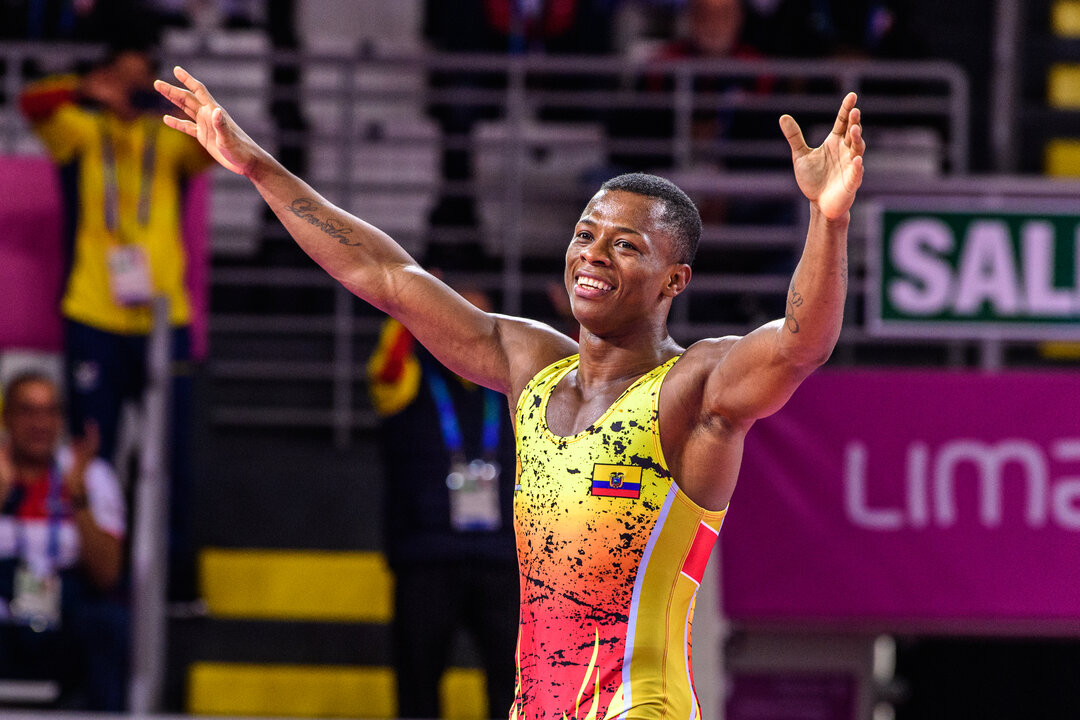 Andres MONTAÑO (ECU), a two-time South American Games champion, will move up to 67kg. (Photo: Tony Rotundo)
The most crowded category of the style is 67kg.
Bolivarian Games gold medalist Andres MONTAÑO (ECU) will move to 67kg after spending most of his career down at 63kg.
Montano is a two-time South American Games champion, winning golds at 59kg at the '14 Santiago Games and 60kg at the '18 Cochabamba Games.
Montano will have to face Colombia's reigning Pan-American champion Julian HORTA, Venezuela's Shalon VILLEGAS (VEN) and Nilton SOTO (PER).
At 77kg, there will be a likely clash of South American champions.
Jair Alexis CUERO (COL) comes determined to retain his 77kg South American title obtained four years ago.
Cuero will share the bracket with two formidable challengers in Wuilexis RIVAS (VEN) and Joilson DE BRITO (BRA).
Rivas is the reigning Bolivarian Games champion, while De Brito has medaled at four consecutive Pan-American Championships after winning 67kg gold at the 2018 South American Games.
In the 87kg Noric-style bracket, Bolivarian Games opponents Carlos MUÑOZ (COL) and Luis AVENDAÑO (VEN) will likely meet for gold.
Munoz is the champion of the 2018 South American Games, while Avendano won gold at the 2019 Pan American Games.
GR 97
Luillys PEREZ (VEN) heads into Asuncion determined to repeat as South American Games champion. He comes into Paraguay fresh off winning gold at Valledupar.
Outside of Perez, rising star Igor QUEIROZ (BRA) is another guy to pay attention to at 97kg. Last year, he won the Pan-American Junior Games Cali-Valle.
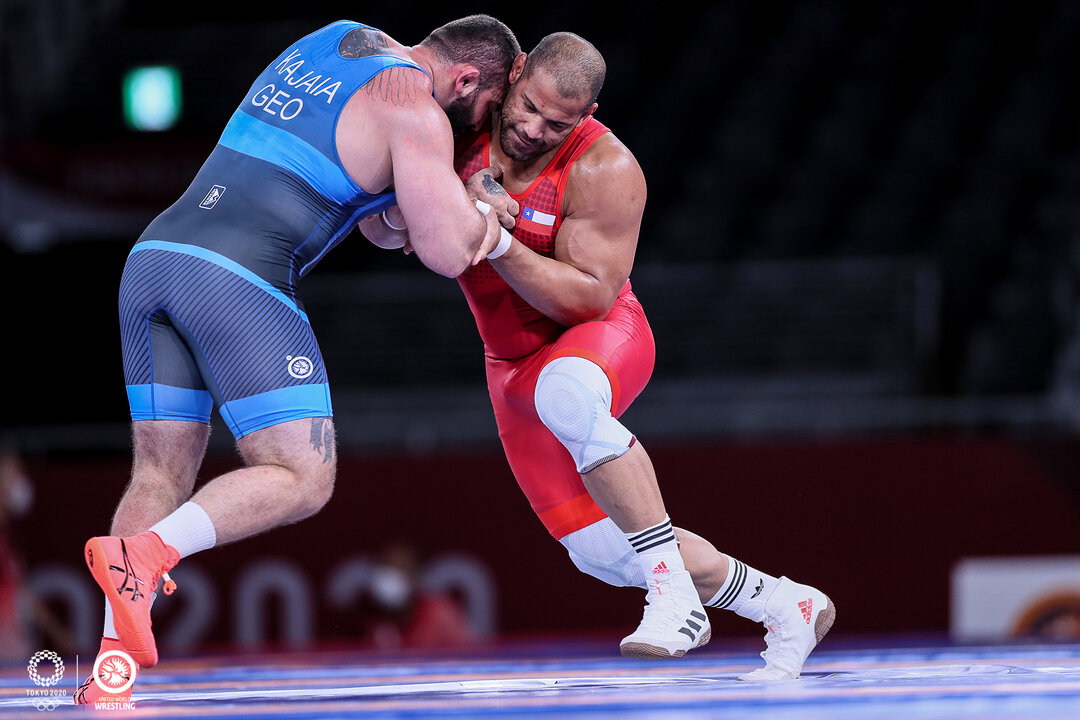 World bronze medalist Yasmani ACOSTA (CHI) is favored to win at 130kg. (Photo: Gabor Martin)
In the heaviest category, the favorite to win the title is the well-known Yasmani ACOSTA (CHI).
Acosta, the Chilean representative of Cuban origin, handed Chile a gold medal in the previous South American Games.
As always, women's wrestling is expected to be electric, with many rivalries and faces that know each other very well. The style will take place on Wednesday, October 13.
Four athletes will compete for the gold medal in the lightest category of the women's style.
The current finalists of the '22 Bolivarian Games Jacqueline MOLLOCANA (ECU) and Mariana ROJAS (VEN) are looking to climb to the top of the podium.
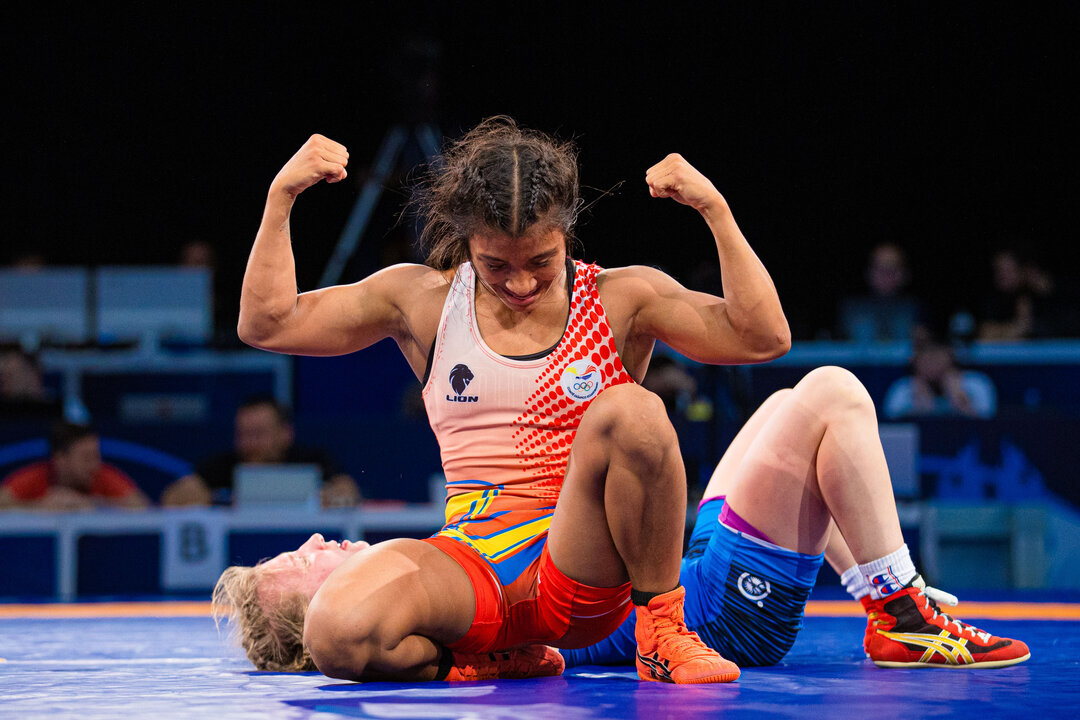 U23 world champion Lucia YEPEZ (ECU) headlines the wome's wrestling entries. (Photo: Kadir Caliskan)
The favorite to win the gold at 53kg is "La Tigra," Lucia YEPEZ (ECU).
Yepez comes to these Games after reaching the top of the podium at the '21 U23 World Championships and finishing in fifth place at the 2022 Senior World Championships.
On the way to the gold, Yepez will have to face Betzabeth ARGUELLO (VEN) and Thalia MALLQUI (PER), who will move back up to 53kg for the first time since the 2020 Individual World Cup.
The most crowded category in women's wrestling is 57kg.
Brazil's two-time Pan-American champion Giullia PENALBER is looking to defend her Games title, but she'll have to take out Luisa VALVERDE (ECU) to do so.
This is Valverde's second appearance at 57kg. The first was in Valledupar where she won the gold medal.
This category also brings us young athletes with great possibilities to dispute medals, including Camila AMARILLA (ARG), Tatiana HURTADO (COL) and Antonia VALDES (CHI).
At 62kg, the favorites to meet for top spot are Lais NUNES (BRA) and Nathaly GRIMAN (VEN).
Nunes participated in three Ranking Series events and won a pair of medals. She also won gold at the Romanian Open and bronze at the Pan-American Championships in Acapulco.
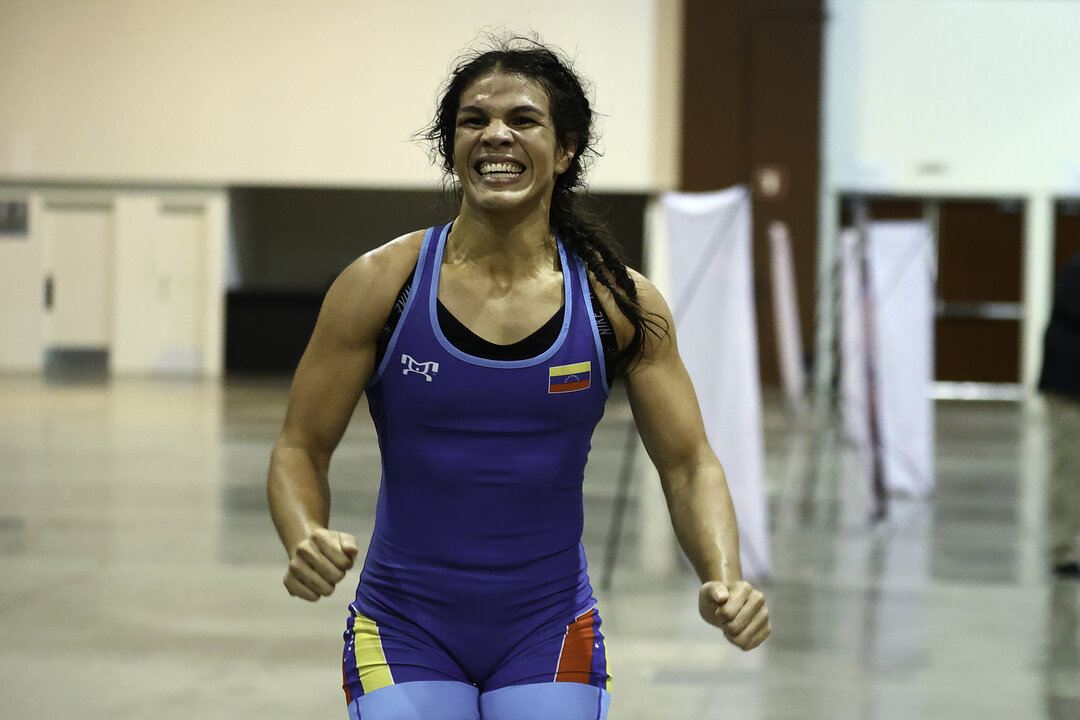 Reigning Pan-Amerian champion Soleymi CARABALLO (VEN) headlines the 68kg field. (Photo: Osvaldo Aguilar)
In the 68kg bracket, 2018 South American finals opponents Soleymi CARABALLO (VEN) and the reigning Pan-American champion Yanet SOVERO (PER) are expected to clash for the title.
Their last meeting came at the Bolivarian Games, where Caraballo took the victory.
Valledupar medalists Tatiana RENTERIA (COL) (gold), Genesis REASCO (ECU) (silver) and Maria ACOSTA (VEN) (bronze) are all entered at 76kg.
Tatiana and Genesis will be the favorites to compete for the gold, while a dark hose to keep an eye on is Linda MACHUCA (ARG), a silver medalist at the 2022 Junior Pan-American Games.
The freestyle competition at the South American Games will take place on October 14 with six gold medals on offer. The competition will see 42 wrestlers in action.
The 57kg weight class will see Oscar TIGREROS (COL) who has had a great year winning gold at the Bolivarian Games and bronze at the Pan American Championship. He will be the favorite to take the gold although he will have to face the defending champion of the previous South American Games, Pedro MEJIAS (VEN) in 2018. In addition, two promising stars will also be competing for the top medal -- the U20 Pan-Am champion David ALMENDRA (ARG) and Enrique HERRERA (PER).
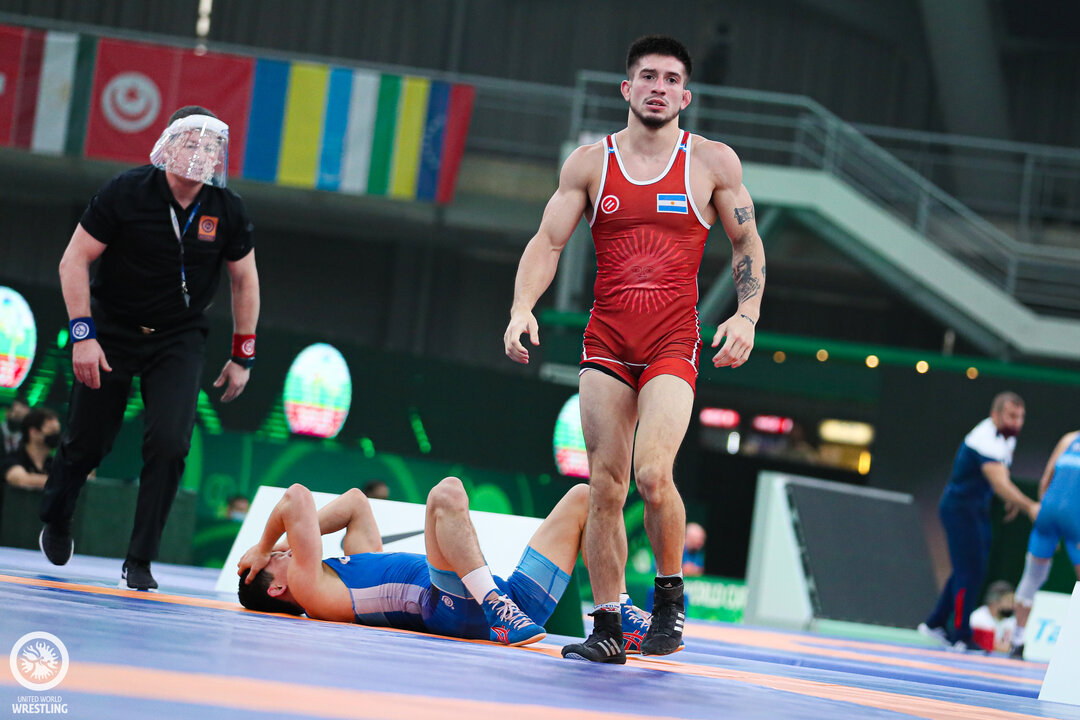 Tokyo Olympian Agustin DESTRIBATS (ARG) highlights the freestyle entries. (Photo: Kadir Caliskan)
At 65kg, Agustin DESTRIBATS (ARG) arrives as the favorite to win the title, seeking revenge after finishing second four years ago. He will have a chance to avenge the 2018 champion Wilfredo RODRIGUEZ. Also wrestling will be the always dangerous Uber CUERO (COL) and Sixto AUCCAPINA (PER).
The defending champion at 74kg Anthony MONTERO (VEN) will be returning for the gold. He has added the gold from the Bolivarian Games to his resume as well. To win the gold, he will have to face the young Brazilian Cesar ALVAN (BRA), who surprised a few by winning the bronze in Acapulco. The experienced Mauricio SANCHEZ (ECU), after taking the silver in Valledupar in the 65kg, moves up a category to look for another medal as he won bronze in 2018.
Pedro CEBALLOS (VEN) will be chasing history as the veteran arrives determined to take the gold medal, looking to become a three-time champion at the South American Games. He finished as the runner-up at the 2019 Pan-American Games in Lima and champion in the last edition of the Bolivarian Games.
Colombia will be represented by Carlos ANGULO who replaces Carlos IZQUIERDO.
Other athletes with a great chance to get on the podium are Ivan LLANO (ARG) who has silver at the previous edition at 74kg. Bronze medalist from 2018 Eduardo GAJARDO (CHI) and Jorge ANDY (ECU) are also in the fray.
The 97kg weight class will see the Nelson bracket with five wrestlers eyeing the top medal. Despite his five-year absence at the international level, Cristian SARCO (VEN) made his comeback at the Bolivarian Games, showing great form to take gold in Valledupar. He arrives in Asuncion looking to repeat his gold-medal performance. He will have to watch out for Ricardo BAEZ (ARG) and Chilean URIBE (CHI).
At 125kg, following the Nelson bracket, Jose DIAZ (VEN) is looking to position himself in the 125kg after taking bronze in this year's Pan-American Championships. In the Bolivarian Games, He won the silver medal in the Greco-Roman style.
Catriel MURIEL (ARG), who has been living for years in Makhachkala, Russia, arrived determined to stand in the way of Diaz's gold medal. Muriel also won the bronze medal at the last Pan-American Championship.
Entry list
GR 60kg
Erivan Constantino Rocha (BRA)
Pedro Maximiliano Gutierrez Urrutia (CHI)
Dicther Hans Toro Castañeda (COL)
Jeremy Renzo Peralta Gonzalez (ECU)
Nelson Daniel Ferreira (PAR)
Joao Marco Benavides Rochabrun (PER)
Raiber Rodriguez Orozco (VEN)
GR 67kg
Mauricio Alejandro Lovera (ARG)
Juan Carlos Villarroel Joffre (BOL)
Kenedy Anderson Moraes Pedrosa (BRA)
Cristóbal Alonso Torres Nuñez (CHI)
Julian Stiven Horta Acevedo (COL)
Andres Roberto Montaño Arroyo (ECU)
Lisandro Cabrera (PAR)
Nilton Gonzalo Marcos Soto Garcia (PER)
Shalon Villegas (VEN)
GR 77kg
Joilson De Brito Ramos Junior (BRA)
Jair Alexis Cuero Muñoz (COL)
Raymin Mir Hosseini (PAR)
Carlos Moises Espinoza Castro (PER)
Wuileixis Rivas Espinoza (VEN)
GR 87kg
Ronisson Brandao Santiago (BRA)
Carlos Andres Muñoz Jaramillo (COL)
Rene Rodriguez (PAR)
Luis Avendaño Rojas (VEN)
Pool Edinson Ambrocio Greifo (PER)
GR 97kg
Igor Fernando Alves De Queiroz (BRA)
Haner Armando Ramirez (COL)
Luis Fernando Gonzalez Cabrera (PAR)
Luillys Perez Mora (VEN)
GR 130kg
Marcos Paulo Barbosa Da Silva (BRA)
Yasmani Acosta Fernandez (CHI)
Rodolfo Waithe (PAN)
Pedro Tadeo Aguiar Campos (PAR)
Brayan Loyo Gonzalez (VEN)
WW 50kg
Katherine Avalos (PAR)
Nathaly Marilu Herrera Huacre (PER)
Mariana Rojas Diaz (VEN)
Jacqueline Del Rocio Mollocana Eleno (ECU)
WW 53kg
Gracyenne Helena Leite Alves (BRA)
Javiera Belen Ortega Fernandez (CHI)
Sandy Yalixa Parra (COL)
Lucia Yamileth Yepez Guzman (ECU)
Veronica Grenno (PAR)
Thalia Jihann Mallqui Peche (PER)
Betzabeth Arguello Villegas (VEN)
WW 57kg
Camila Agustina Amarilla (ARG)
Giullia Rodrigues Penalber De Oliveira (BRA)
Antonia Alejandra Valdes Arriagada (CHI)
Tatiana Hurtado Lerma (COL)
Luisa Elizabeth Valverde Melendres (ECU)
Samira Lezcano (PAR)
Yohelyn Valera Fernandez (VEN)
Veralucia Susano Justiniano (BOL)
WW 62kg
Andrea Yurani Gonzalez Gongora (COL)
Leonela Aleyda Ayovi Parraga (ECU)
Lourdes Mariana Velilla Cabrera (PAR)
Nathaly Griman Herrera (VEN)
Lais Nunes De Oliveira (BRA)
Veralucia Susano Justiniano (BOL)
WW 68kg
Thamires Martins Machado (BRA)
Chaneth Yorleny Simmonds Campos (PAN)
Pamela Boveda (PAR)
Yanet Ursula Sovero Niño (PER)
Mahealani Alexandra Ramirez Nobre (URU)
Soleymi Caraballo Hernandez (VEN)
WW 76kg
Linda Marilina Machuca (ARG)
Ruthy Hellen Pinhal Dos Santos (BRA)
Tatiana Renteria Renteria (COL)
Genesis Rosangela Reasco Valdez (ECU)
Maria Acosta Acosta (VEN)
FS 57kg
Hernan David Almendra (ARG)
Oscar Eduardo Tigreros Urbano (COL)
Richard Antonio García Andrade (PAN)
Enrique Armando Herrera Huacre (PER)
Pedro Mejias Rodriguez (VEN)
FS 65kg
Agustin Alejandro Destribats (ARG)
Marvin Chavez Claros (BOL)
Uber Euclides Cuero Muñoz (COL)
Wilfredo Steven López López (PAN)
Sebastian Maldonado (PAR)
Sixto Miguel Auccapiña Pedragas (PER)
Stephan Brunings (SUR)
Julian Andres Perez Conde (URU)
Wilfredo Rodriguez Bocaney (VEN)
FS 74kg
Lautaro Agustin Seghesso (ARG)
Cesar Bordeaux Rego Alvan (BRA)
Leon Juan Carlos Peralta Lanas (CHI)
Juan David Sanchez Cardona (COL)
Mauricio Javier Sánchez Saltos (ECU)
Ángel Eduardo Cortés Bonilla (PAN)
Pablo Vera (PAR)
Micha Willems (SUR)
Anthony Montero Chirinos (VEN)
FS 86kg
Jorge Ivan Llano (ARG)
Giovanni De Oliveira Gaion Piazza (BRA)
Eduardo Ivan Gajardo Meneses (CHI)
Carlos Hernan Angulo Murillo (COL)
Jorge Klever Andy Tiwi (ECU)
Ansony Torales (PAR)
Brisd Jahzeel Walttuony Rojas (PER)
Pedro Ceballos Fuentes (VEN)
FS 97kg
Ricardo Adrian Baez (ARG)
Matias Ignacio Uribe Sepulveda (CHI)
Miller Mondragon Arboleda (COL)
Max Linchevsky (PAR)
Cristian Sarco Colmenarez (VEN)
FS 125kg
Catriel Pehuen Muriel (ARG)
Guilherme Pradella Lima (BRA)
Marco Montiel (PAR)
Jose Diaz Robertti (VEN)
Orlando Arispe Jotty (PAN)


 Future Olympic champion Yui SUSAKI and Beijing Olympic silver medalist Kenichi YUMOTO pose with two proud participants at the 2017 Waku-waku Waseda Cup. (Photo: Japan Wrestling Federation)
 A club member does a double-leg takedown drill as the others watch. (Photo: Japanese Wrestling Federation)
Share your thoughts.
Comments