DA NANG, Vietnam (June 11) -- When 20-year-old Saeid ESMAEILI (IRI) returned to Iran after winning Olympic gold in Greco-Roman 67kg at the Paris Games, he came home with more than just a medal around his neck. He returned with proof that wrestling could change lives.
Raised in poverty in Dezful, Khuzestan Province, Esmaeili's improbable run to Olympic gold transformed him overnight into a national sensation. He was showered with gifts, cash awards and job offers.
The ripples of that triumph are still being felt. Last month, two of Esmaeili's own cousins, Ali ESMAEILI (IRI) and Vahid ASHIRI (IRI), won gold medals at the U17 Asian Championships in Da Nang after taking up wrestling only two years ago, inspired by his Olympic success and the hero's welcome he received back home.
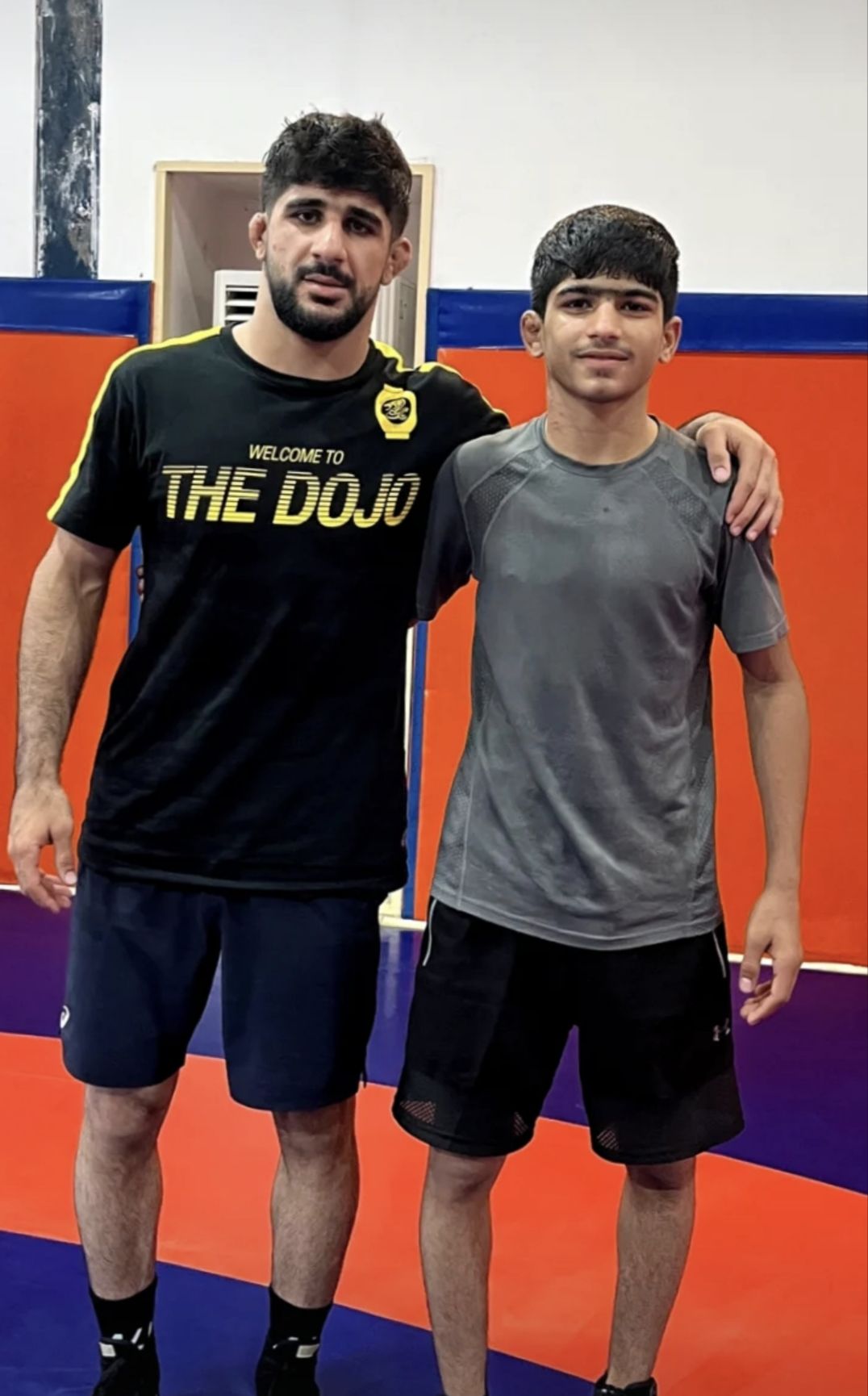
Paris Olympic champion Saeid ESMAEILI (IRI), left, with his cousin Ali who won 48kg gold medal at the U17 Asian Championships.
Ali, whose father is Esmaeili's uncle, competed in Greco-Roman 48kg and won three bouts to capture the gold medal. He outscored his opponents 22-2 including two technical superiority wins.
Another cousin from his mother's side, Ashiri, competed in the Greco-Roman 55kg weight class and was crowned champion after four victories. He defeated wrestlers from India, Jordan, China and Kyrgyzstan with scores of 6-1, 5-2, 11-1, and 3-1 to capture the Asian title.
While they were winning gold medals in Vietnam, Olympic champion Esmaeili was watching from Iran.
"I watched their Asian finals and I always follow their training," Esmaeili told United World Wrestling. "We are from the same club and both are talented."
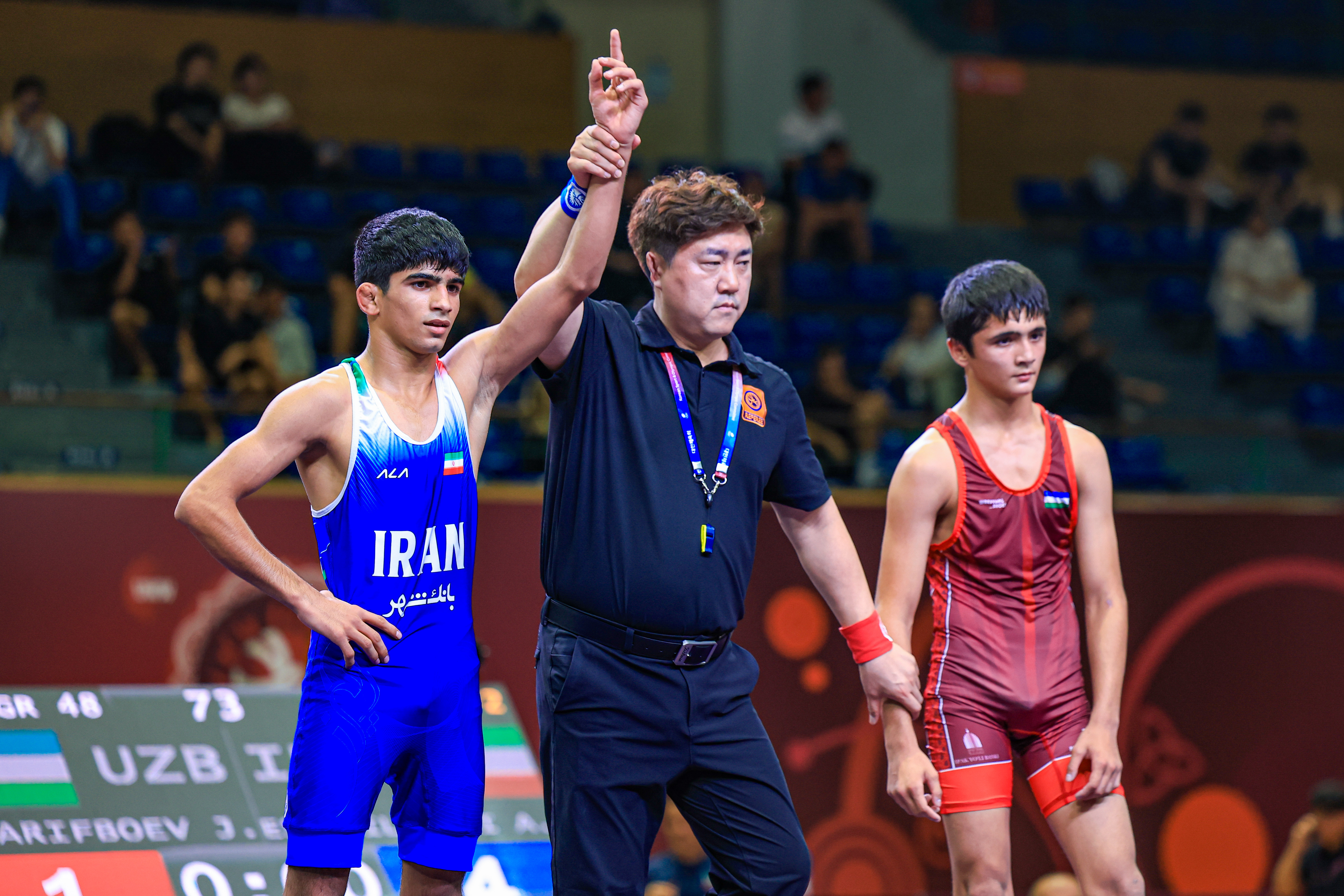 Ali ESMAEILI (IRI) became the U17 Asian champion at 48kg in Greco-Roman. (Photo: United World Wrestling / Amirreza Aliasgari)
The two took up wrestling at the age of 14 and quickly rose through the province before making it to the Iran team for the U17 Asian Championships. Ali Esmaeili feels that Saeid's presence motivates him to work harder to achieve medals in wrestling.
"I got into wrestling after watching Saeid's Olympic final. In 2 years, with his help, I managed to become the Asian champion. Every time I see Saeid, I feel really good and I am proud of him."
Though Esmaeili trains at the national camp in Tehran, he does not miss a chance to train the youngsters when he returns home and practices in Dezful.
"I tried to answer every question they asked me about wrestling carefully and I also taught them some of my techniques," he said.
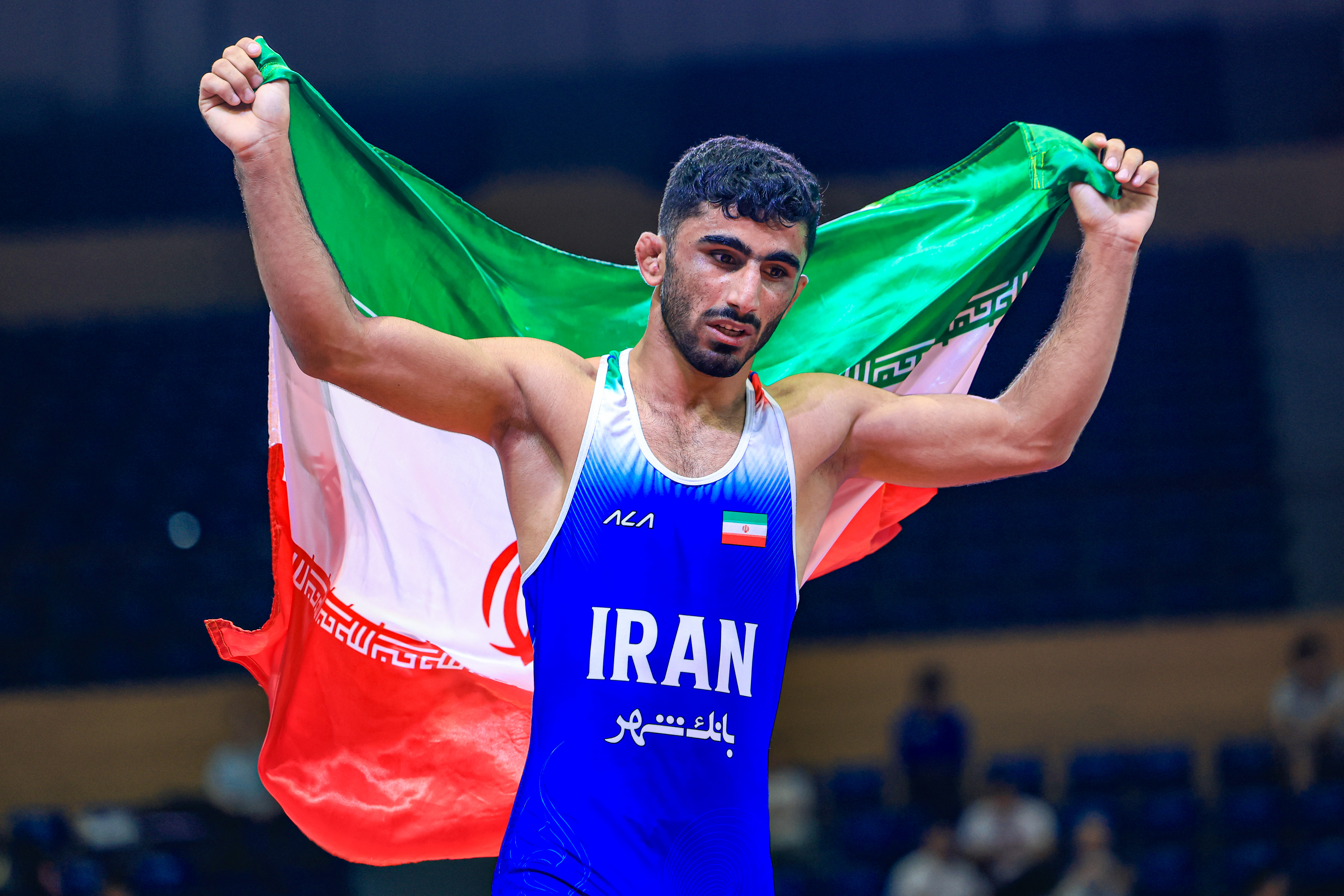 Vahid ASHIRI (IRI) claimed the 55kg gold medal. (Photo: United World Wrestling / Amirreza Aliasgari)
Ashiri also stepped foot in the club after watching Esmaeili's thrilling Paris campaign. Two years later, he is proud to represent both the Esmaeili family and the club.
"After Saeid won the gold medal, I went to the club where he trains and whenever I had any questions, he explained them to me carefully," Ashiri said. "I am truly proud to be a member of the club and a family with such a personality."
The next stop for both Ali and Ashiri will be the U17 World Championships in Baku, Azerbaijan from July 28 to August 2.
"Just like the Asian Championships, I want to repeat the success at the World Championships," Ali said.
RESULTS
48kg
Final: Ali ESMAEILI (IRI) df. Javokhir SHARIFBOEV (UZB), 4-2
Semifinal: Ali ESMAEILI (IRI) df. Umarali BERDALIEV (KGZ), 9-0
Quarterfinal: Ali ESMAEILI (IRI) df. Liaotan LAN (CHN), 9-0
55kg
Final: Vahid ASHIRI (IRI) df. Syimyk ASKAROV (KGZ), 3-1
Semifinal: Vahid ASHIRI (IRI) df. Zihao ZHANG (CHN), 11-1
Quarterfinal: Vahid ASHIRI (IRI) df. Adam ABU FARE (JOR), 5-2
Qualification: Vahid ASHIRI (IRI) df. HARION (IND), 6-1



Share your thoughts.
Comments