

Schedule Announced for Women's Wrestling World Cup
Wednesday, November 6, 2019 - 07:22 By Eric Olanowski

NARITA, Japan (October 23) -- United World Wrestling has announced the schedule for the 18th Annual Women's Wrestling World Cup, which will take place at the Nakadai Sports & Recreation Park Gymnasium in Narita, Japan, from November 16-17.
United World Wrestling extended invitations to the top-eight teams from the Nur-Sultan World Championships to attend the 2019 Women's Wrestling World Cup, but this year's dual meet showcase will only feature six teams after No. 6 Kazakhstan and No. 8 Azerbaijan withdrew from the competition.
Earlier this year, the UWW executive board determined that all World Cup competitions should follow the same competition format for placement of teams in their respective pools, or groups. With the new system, the No. 1 team will be paired with the No. 4, No. 5 and No. 8, and the No. 2 team will be paired with the No. 3, No. 6, and No. 7 teams from the World Championships.
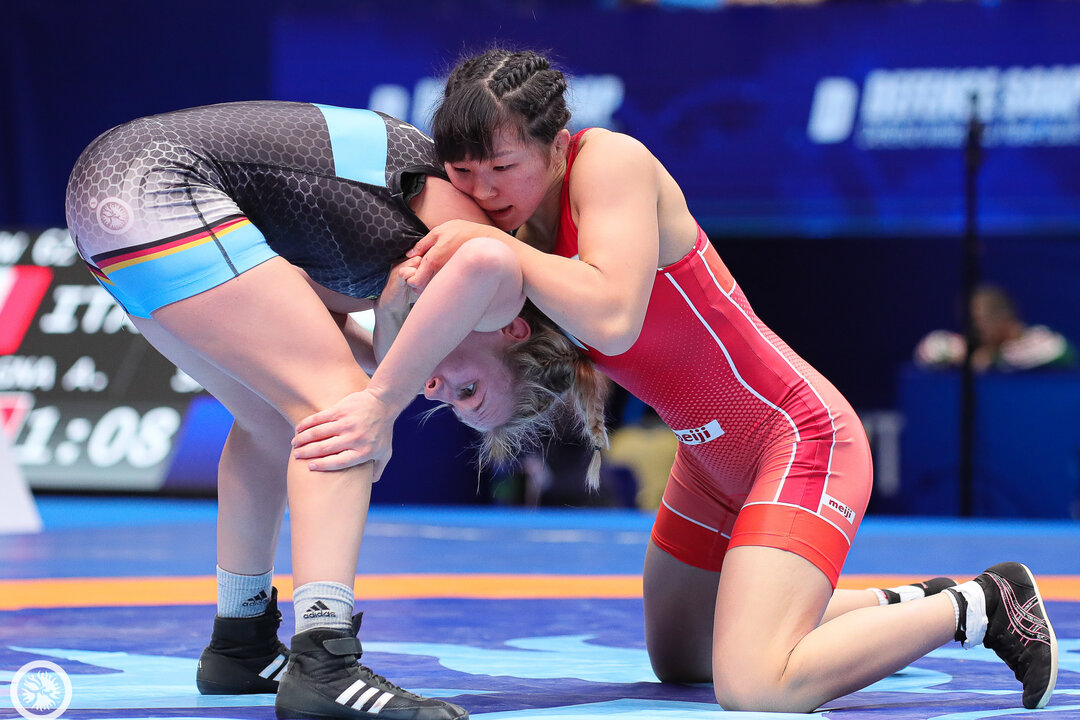 Yukako KAWAI (JPN) will join her sister, Risako, on Japan's Women's World Cup roster. The Nur-Sultan bronze medalist will compete at 62kg. (Photo: Kadir Caliskan)
Japan, the four-time defending World Cup champions, headlines a loaded Group A that'll also feature China and Ukraine.
Sisters Risako and Yukako KAWAI will lead a 20-wrestler Japanese squad chasing its fifth consecutive Women's Wrestling World Cup team title. Arguably the best pound-for-pound women's wrestler in the world, Risako Kawai, has won four consecutive world titles dating back to the 2016 Olympic Games in Rio de Janeiro.
Yukako is a 2018 world runner-up and finished the 2019 World Championships with a bronze medal. Both sisters have qualified their weight for the 2020 Olympic Games and are expected to be Japan’s representative in their respective categories.
Former world champions Yui SUSAKI (JPN) and Haruna OKUNO (JPN) headline the host country’s entries at 50kg and 53kg respectively. Susaki steps in for Yuki IRIE who failed to qualify 50kg -- the only women’s weight Japan has yet to qualify for Tokyo 2020.
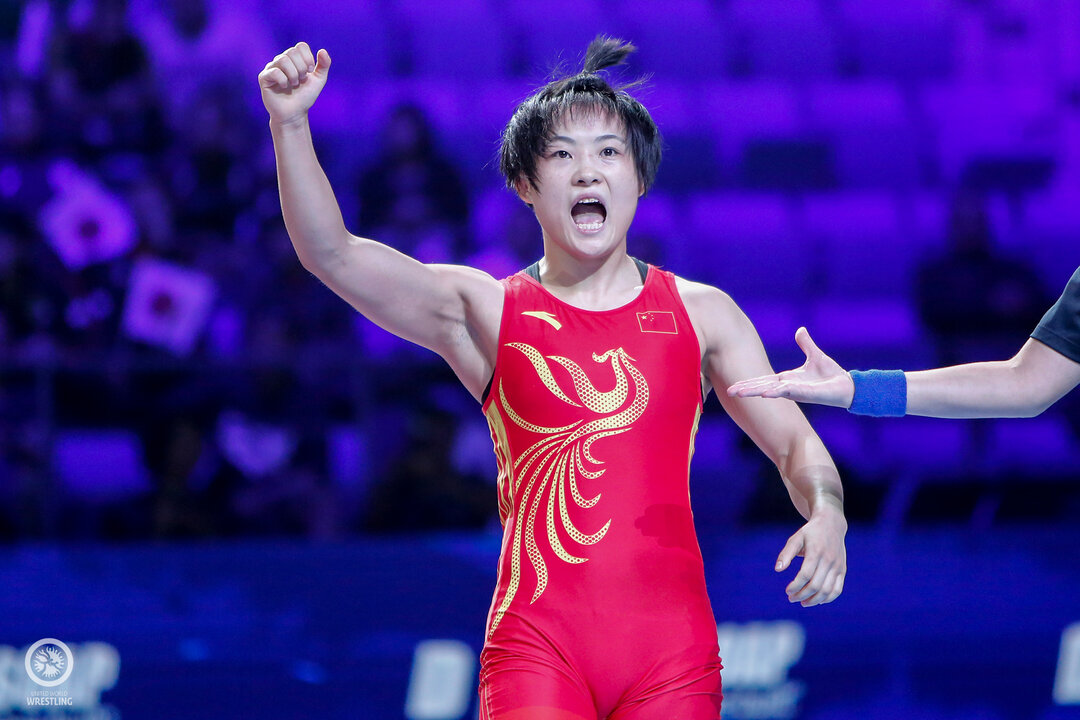 Ningning RONG (CHN) could meet her world finals opponent Risako KAWAI (JPN) on Satruday night when Japan and China square off.(Photo: Gabor Martin)
China will also bring a healthy squad of world medalists to Narita, with six medalists representing the fourth-place finishers from Nur-Sultan. The team will be led by 2018 world champion Ningning RONG (CHN) who fell to Risako Kawai, 9-6, at this year’s world championships. With Kawai and Rong both entered at 57kg at the World Cup, there could be a colossal world finals rematch on Saturday night when Japan takes on China.
Sun, a 2014 world gold medalist, is the second senior world champion entered on China's team. She’s finished in third place at the Rio Olympic Games and the 2018 World Championships since her world title run back in 2014.
Depending on who Japan sends out at 50kg, Sun could have a shot at taking on one of her biggest rivals if the host nation decides to roll out Yui Susaki. Sun has dropped the pairs last two matches. She fell to Susaki for the first time at the 2017 Asian Championships, then again at the 2017 Women’s Wrestling World Cup.
A Ukrainan squad that’s in search of their first World Cup team title rounds out Group A.
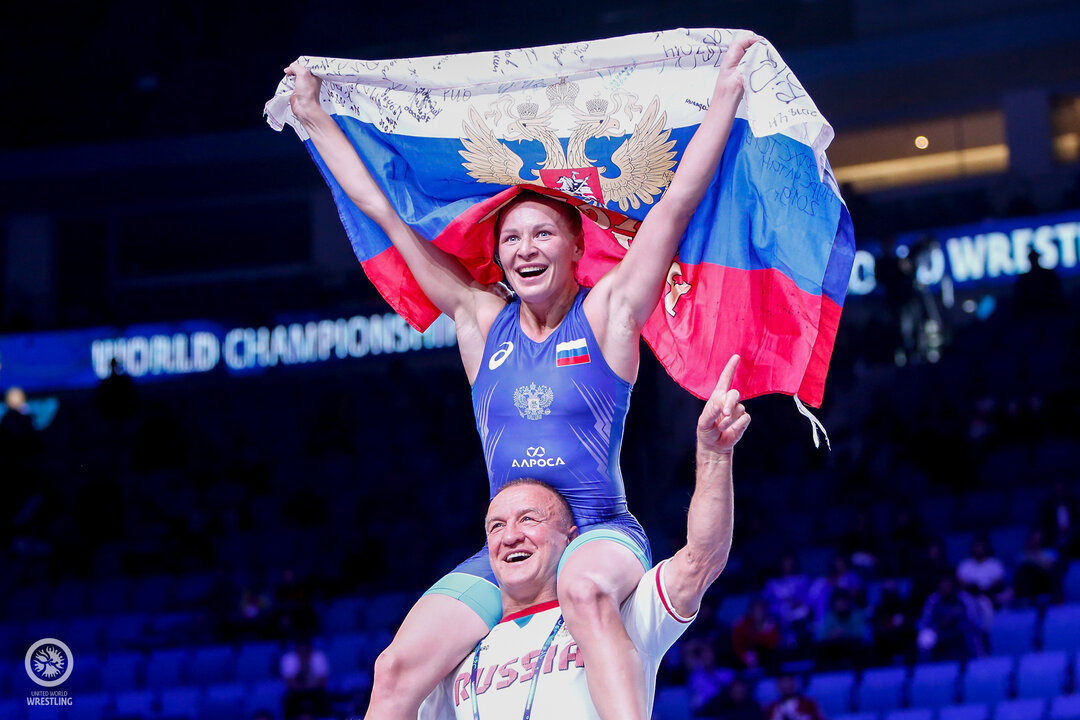 Reigning world champion Inna TRAZHUKOVA (RUS) headlines Russia's ten-woman roster. (Photo: Kadir Caliskan)
The Russian Federation, who finished in second place at the 2019 World Championships, is the hallmark team in Group B. Russia will be coupled with USA and Mongolia, who finished in third and seventh, respectively.
Inna TRAZHUKOVA (RUS) tops a Russian team that’s set to feature four podium-finishers from Nur-Sultan. Trazhukova will be accompanied by world runner-up Liubov OVCHAROVA (RUS) and the pair of bronze-medal finishers, Ekaterina POLESHCHUK (RUS) and Olga KHOROSHAVTSEVA (RUS).
Ovcharova will compete at 59kg, while Poleshchuk and Khoroshavtseva are entered at their world-medal winning weights of 50kg and 55kg, respectively.
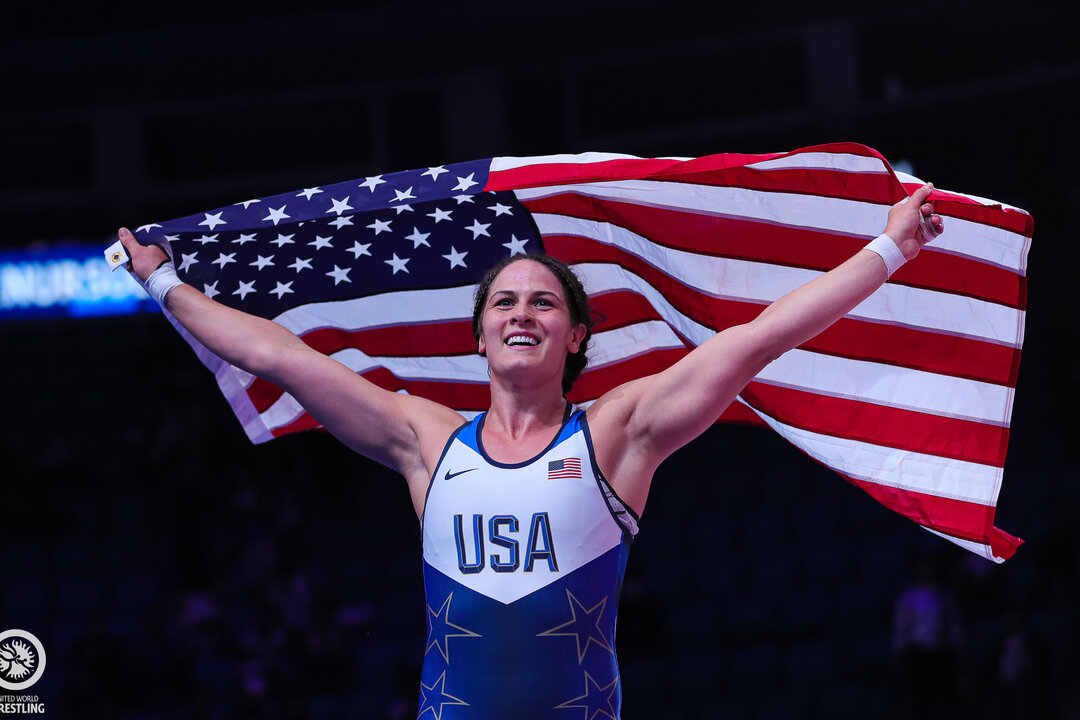 Adeline GRAY (USA) is one of three world champions that'll compete on USA's squad. (Photo: Kadir Caliskan)
The United States has entered a star-studded ten-woman roster into the World Cup, with three of those ten wrestlers coming off title-winning performances in Nur-Sultan. Adeline GRAY (USA), Jacarra WINCHESTER (USA) and Tamyra MENSAH-STOCK (USA) are the trio of world champions that the USA will lean on to try to win their second World Cup team title and first since 2003.
Although Gray is looked at as a titan in women’s wrestling, she’ll certainly have her hands full in getting the USA back to title-winning glory. The newly-crowned five-time world champion’s biggest group stage test will come against Rio Olympic bronze medalist Ekaterina BUKINA (RUS) when the Stars and Stripes goes toe-to-toe with the Russian Federation on Saturday afternoon.
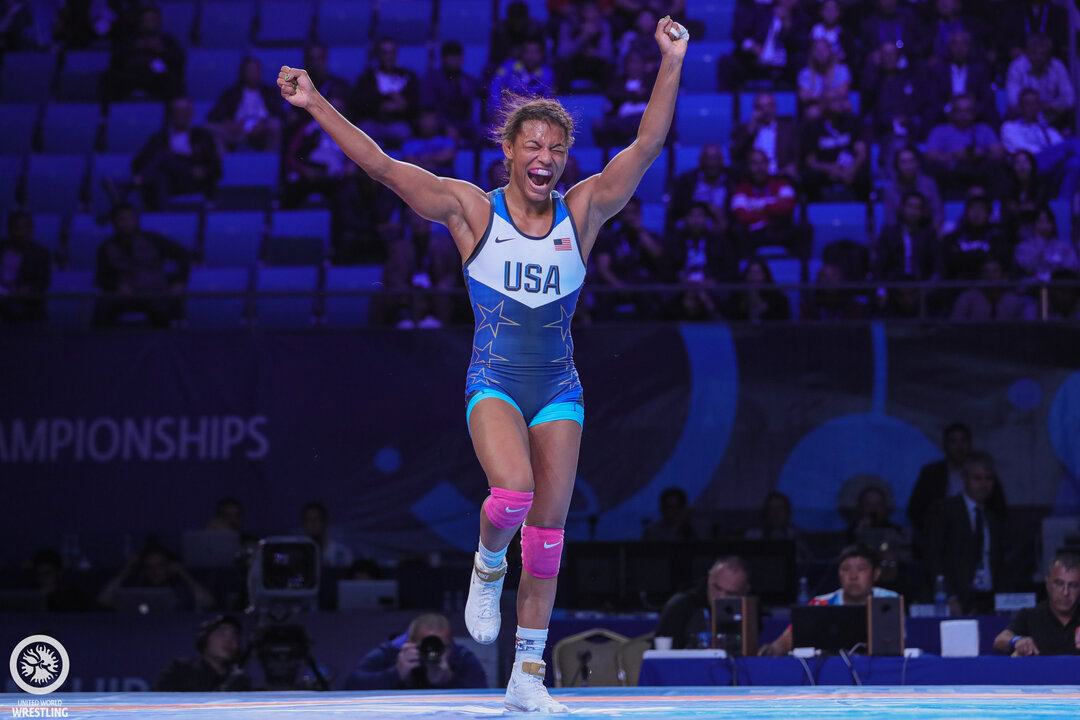 The Women's World Cup will be Jacarra WINCHESTER'S (USA) first competition since winning her first world title. (Photo: Kadir Caliskan)
Reigning 55kg world champ Winchester will have a tough road in staying unbeaten in her pair of Group B matches. She'll square off against a world bronze medalist in each of her two matches. Winchester’s first challenge will come against Russia's Olga KHOROSHAVTSEVA. The American will then wrestle her Nur-Sultan semifinals opponent, BAT OCHIR Bolortuya (MGL), who she beat 13-2 to insert herself into the world finals when the Americans wrestle the Mongolians on Saturday night.
Mensah-Stock is the third American world champion that'll compete at the Women's Wrestling World Cup. Like Winchester, Mensah-Stock’s toughest test at 68kg in group play is likely to also come when the United States wrestles Mongolia on Saturday night.
Mensah-Stock will either wrestle OCHIRBAT Nasanburmaa (MGL) or ENKHSAIKHAN Delgermaa (MGL). Ochirbat is a four-time senior-level world medalist, while Enkhsaikan was a junior world silver medalist last year.
Sarah HILDEBRANDT (USA) and Allison RAGAN (USA) are also listed on USA's roster. Both wrestlers have world finals experience under their belt, but each fell short of their gold-medal goal in those matches. Hildebrandt (53kg) finished in second place at the 2018 World Championships, while Ragan (59kg) dropped her 2017 world finals match.
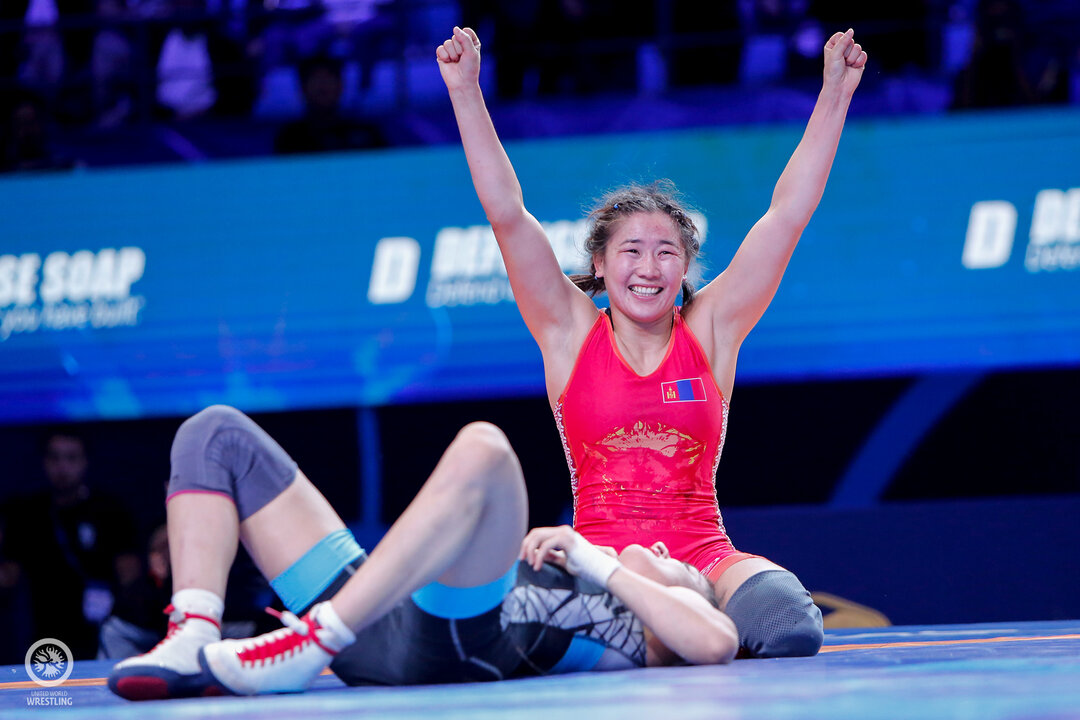 BAT OCHIR Bolortuya (MGL) is one of two world bronze medalists entered on Mongolia's Womens World Cup team. (Photo: Gabor Martin)
Mongolia, the seventh-place finishers in Nur-Sultan, round out the three teams in Group B.
Mongolia will follow the lead of 2019 world bronze medalists BAT OCHIR Bolortuya (MGL) and BAATARJAV Shoovdor (MGL). Bat Ochir and Baatarjav are registered at 55kg and 59kg, respectively.
Wrestling at the 2019 Women’s Wrestling World Cup begins on November 16 and can be followed live on www.unitedworldwrestling.org.
The groups for the 2019 Women's Wrestling World Cup:
Group A - No. 1 JPN, No. 4 CHN, No. 5 UKR
Group B - No. 2 RUS, No. 3 USA, No. 7 MGL
SCHEDULE
Saturday (November 16)
10:30 – Mat A: JPN vs. UKR / Mat B: RUS vs. MGL
12: 00 – Mat A: RUS vs. USA / Mat B: CHN vs. UKR
16:30 – Opening Ceremony
17:00 – Mat A: JPN vs. CHN / Mat B: USA vs. MGL
Sunday (November 17)
8:00 – Medical Examination & Weigh-in
10:30 – Finals 5/6
13:00 – Finals 3/4
14:30 – Finals 1/2
16:00 – Award Ceremonies

 Ji-Woo Lee holds the highest Category IS License. (photo by Japan Wrestling Federation)
 Lee faces Saori YOSHIDA at the 2004 Asian Championships in Tokyo. (photo by Takeo Yabuki / Japan Wrestling Federation)
 Lee made her Olympic refereeing debut at the Tokyo Games in 2021. (Photo by Japan Wrestling Federation)
 Lee was on the whistle when Nonoka OZAKI defeated Ami ISHII in a vital 68kg match with Olympic implications. (photo by Takeo Yabuki / Japan Wrestling Federation)
 Lee poses with the three Japanese female referees at the All-Japan Championships, from right, Mariko SHIMIZU, Airi FURUSATO and Honoka SAITO. (photo courtesy of Airi FURUSATO)
 World champion Akari FUJINAMI tries her hand as a referee at a men's collegiate event last May. ((photo by Ikuo Higuchi / Japan Wrestling Federation)
Share your thoughts.
Comments