

Rising Star Fujinami Earns Ticket to Oslo Worlds for Senior International Debut
Thursday, May 27, 2021 - 16:01 By Ken Marantz

TOKYO (May 27) --- Watch out world, Akari FUJINAMI is ready to take you on. And take you down.
Fujinami, a highly touted future star in the boundless constellation of Japanese women's wrestling, has set a date for her highly anticipated senior international debut. It will come at the World Championships in Oslo in October --- one month before her 18th birthday.
"Just imagining that makes me excited, the thought of me competing there," Fujinami said. "My image is that the world level gets higher year after year, and I want to keep getting better so that it makes people think, 'that Fujinami is strong.'"
There was no doubt about that on Thurday, when the 2018 world cadet champion secured her ticket to Oslo in the women's 53kg class by winning the title at the Meiji Cup All-Japan Invitational Championships in Tokyo, beating two world medalists along the way.
The victory followed up Fujinami's one last December at the Emperor's Cup All-Japan Championships, which marked her first tournament on the senior level. The two tournaments serve as qualifiers for the World Championships, with playoffs for weight classes in which the winners are different.
Fujinami earned the spot on the Japanese team outright with a 10-0 technical fall victory in the final over Nanami IRIE, the 2019 world silver medalist at 55kg, in a repeat of the gold-medal match at the Emperor's Cup.
"It gives me some boost of confidence, but looking at the world, I feel I need to get much stronger," Fujinami said. "Many issues that need to be addressed came out, and heading to the World Championships, I will have to practice harder."
Fujinami advanced to the final with an 11-2 victory over two-time former world champion Haruna OKUNO, who has been trying to work out of a slump after losing out on the Olympic spot at 53kg to Mayu MUKAIDA.
Fujinami also beat Okuno at the Emperor's Cup, but Okuno was suffering from a strained leg muscle at the time. Okuno said she was physically fine this time, but was just overmatched by the high schooler.
"When it comes to level, at this point its not right to even compare me with Fujinami," Okuno said. "Having strong opponents in my weight class stimulates me. And Fujinami's presence means something to me and gives me something to aim for."
Fujinami has not lost since June 2017, when she was defeated in the final of the national junior high school championships to Umi ITO, who placed second on Thursday at 50kg. She has now won 19 consecutive tournaments and 75 straight matches, including the cadet 53kg title at the 2020 Klippan Lady Open and the 2018 world and Asian cadet golds.
At 1.63 meters, Fujinami is relatively tall for a Japanese, and she uses her added reach to keep opponents from getting a clear shot at a takedown. That's if they get a chance, because she is almost always on the offensive as a whirlwind of motion, much like another native of Mie Prefecture in central Japan, Saori YOSHIDA.
Fujinami swept through her three Meiji Cup matches relying mostly on a single-leg takedown that she says she polished after having some trouble at the Emperor's Cup.

Akari FUJINAMI looks to set up a shot on two-time former world champion Haruna OKUNO. She won the match, 11-2. (Photo: Japan Wrestling Federation)
"At that time, I realized that I had a problem finishing up my tackles," she said. "This time, I kept in mind working for the point as soon as I grabbed the leg. There were times it was good and other times I got anxious, and I need to still work on that."
The lone high schooler in her weight class, Fujinami displayed amazing composure and confidence. Asked if she felt pressure, she replied, "I kept telling myself, just go as usual, just go as usual. Because of that, I was able to go into my matches in a calm manner."
Among those impressed with Fujinami is two-time world champion Yui SUSAKI, who will attempt to win the 50kg gold medal in her Olympic debut this summer. She even said she could learn a thing or two from the teenager.
"She's really strong," said Susaki, who is not entered in the tournament but is there to support her Waseda University teammates. "She has good technique when tying up, and has good speed. There are things that I can learn from her."
Like Susaki, the 11 other wrestlers who have qualified for the Tokyo Olympics have skipped the four-day tournament at Tokyo's Komazawa Gym. Also missing are fans, friends and family members, as strict coronavirus protocols are in place due to Tokyo's declaration of a third state of emergency amid a recent surge.
"I was able to follow up the Emperor's Cup and win here which was the main thing, but I'm also grateful that under these circumstances a tournament was able to be held," Fujinami said in a sign of maturity.
Fujinami did have a family member with her -- her father, Toshikazu, who is her coach at Inabe Gakuen High School. He also heads the kids wrestling club where she started the sport at age 3, following in the wrestling shoes of older brother Yuhi FUJINAMI, a 2017 world bronze medalist in freestyle 70kg.
"At first she didn't show much interest," Toshikazu recalled. "It took about a year before she started doing it for real. I brought her to the wrestling club, but she didn't care. She came along with her older brother. I thought it would never happen if she kept on like this."
But Akari stuck with it, and started to give a show of things to come.
"She really got serious about her third year of elementary school," Toshikazu said. "Up to then, she didn't win very much. In her third year, she won her first national title. That lit a fire and she really took off."
Asked what kind of child Akari was, her father didn't hesitate in pointing out what is also behind her success: "She was the type who hated losing. If you played a game with her and she lost, she would get really down, and knock over things just to see what would happen."
Fujinami's father said he first realized his daughter's potential for success on the highest level when she won her first national junior high school championship in her third year, after falling short the previous two years.
"From there, she started to pull away," he said. "In her first and second years, she lost to wrestlers who were older and are now here at the nationals. After she won in her third year, she really started progressing.
"Another turning point was the qualifying for the world cadet [in 2018] where she won a close match in the final over an older opponent," he added, referring to the 2018 Junior Queens Cup, where as a junior high schooler she beat high schooler Rina KATAOKA 4-2 in the final.
"By winning that, you could see she had really changed and improved. At that point, I felt she could make a challenge on the world level, and she won the Asian cadet and world cadet. That match was the turning point."
Recognizing her potential, the Japan federation invited Fujinami to a recent national team camp, where word is she more than held her own in sparring with Mukaida. Fujinami used it as opportunity to absorb as much as she could from the nation's elite.
Fujinami, who was too young to enter the qualifying process for the Tokyo Olympics, has her sites set firmly on Paris in 2024.
"In two more years, I want to be in the thick of things with the Olympics, and become an Olympian and win the title," she said. "To make my dream come true, I want to take in everything I can from today's wrestlers all the way up to Paris."

Nonoka OZAKI laces her way to a 6-0 shutout win over Yui SAKANO. (Photo: Japan Wrestling Federation)
Ozaki also gains ticket to Oslo
In other action, another former world cadet champion from 2018 will be joining Fujinami on the flight to Oslo for her senior international debut, as Nonoka OZAKI captured the 62kg title with a 6-0 victory over Yui SAKANO.
"Last year I won the Emperor's Cup, and that gave me the right to enter the Meiji Cup," Ozaki said. "I trained with the goal of winning the title and getting to appear at the World Championships. I was relieved to achieve that, and I am determined to be ready for the World Championships."
Ozaki repeated as world cadet champion in 2019, and won three consecutive cadet titles at the Klippan Lady Open from 2018 to 2020.
"I have experience of winning the world cadet title, and it will be my first senior tournament [overseas]," Ozaki said. "I'm really excited. I've been watching as senior wrestlers have won world titles, and I've always thought I definitely want to stand on that stage."
Ozaki is a graduate of the same elite JOC Academy that produced Susaki, but she veered from the usual path by entering Keio University, a school known for its academics and not for wrestling. She will continue to train at the Academy while pursuing her studies in the Faculty of Environment and Information Studies.
Also bound for Oslo for their first senior World Championships are 2019 world junior champions Sae NANJO at 57kg and Miwa MORIKAWA at 65kg.
Nanjo, who also won the world U-23 title in 2019, chalked up three straight technical falls without giving up a point, capped by an 11-0 victory in the final over Sakura MOTOKI.
Morikawa had just one match, but it was tough one as she forged out a 4-2 victory over 2020 Asian champion Naomi RUIKE.
In Greco-Roman, newly crowned Asian champion Tsuchika SHIMOYAMADA earned a second trip to the World Championships when he took the 67kg gold with a 9-5 victory over teenager Kyotaro SOGABE.


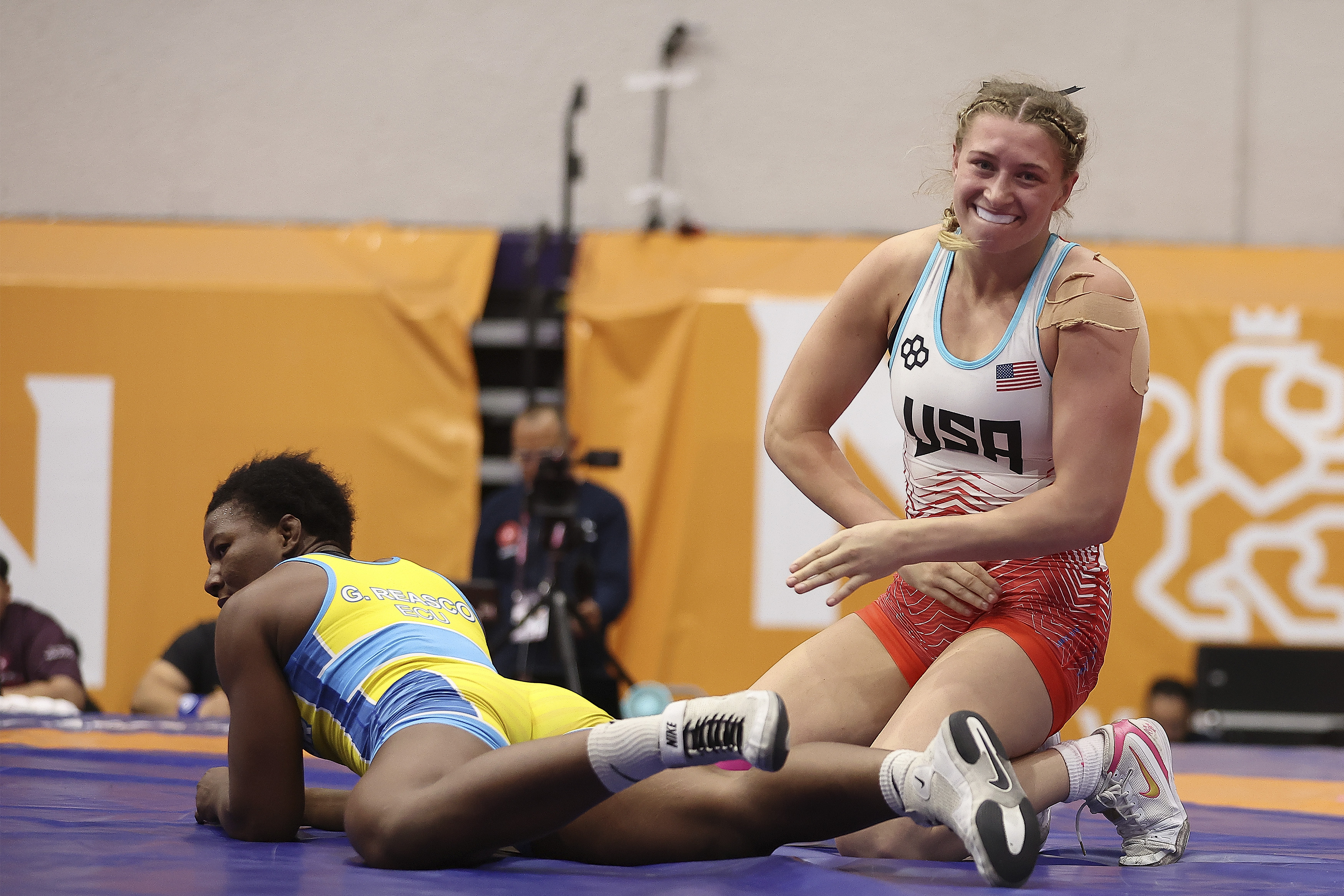 Defending champion Kylie WELKER (USA) and world champion Genesis REASCO (ECU) are expected to meet in the 76kg final. (Photo: United World Wrestling / Osvaldo Aguilar)
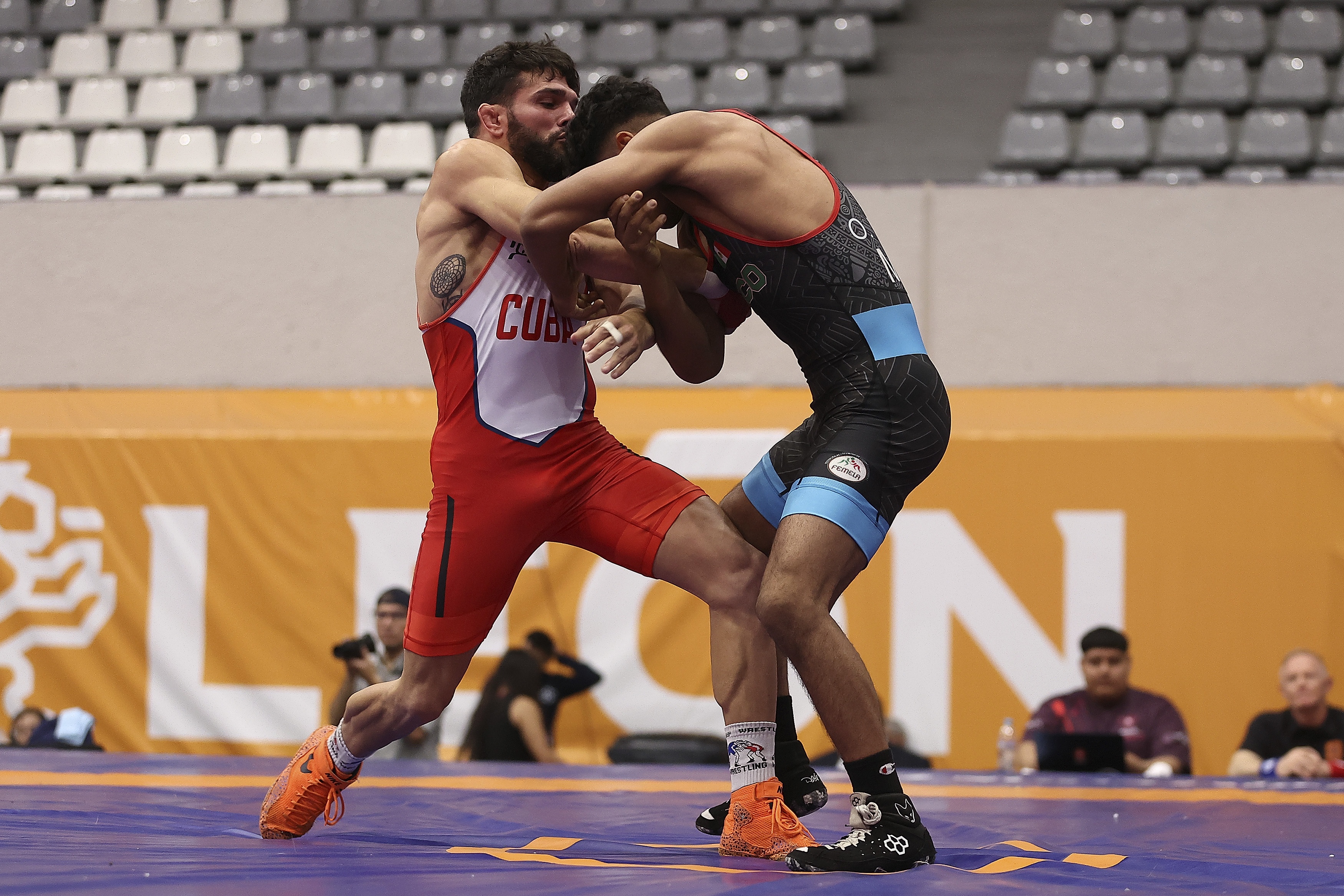 Luis ORTA (CUB) is a three-time Pan-American champion. (Photo: United World Wrestling / Osvaldo Aguilar)
Share your thoughts.
Comments