ULAANBAATAR, Mongolia (June 6) -- Magomed RAMAZANOV (BUL) had been sidelined from wrestling action for more than a year. He did not wrestle after winning the European Championships in April 2025.
The absence, however, was forced as Ramazanov was nursing an injury and also got operated. He missed the World Championships last year and the European Championships this year.
On Saturday, the Paris Olympic champion marked his return to action at the Ulaanbaatar Open at 86kg and won a silver medal. Not that he lost the final, but Ramazanov injury defaulted the final against Mohammad NOKHODI (IRI).
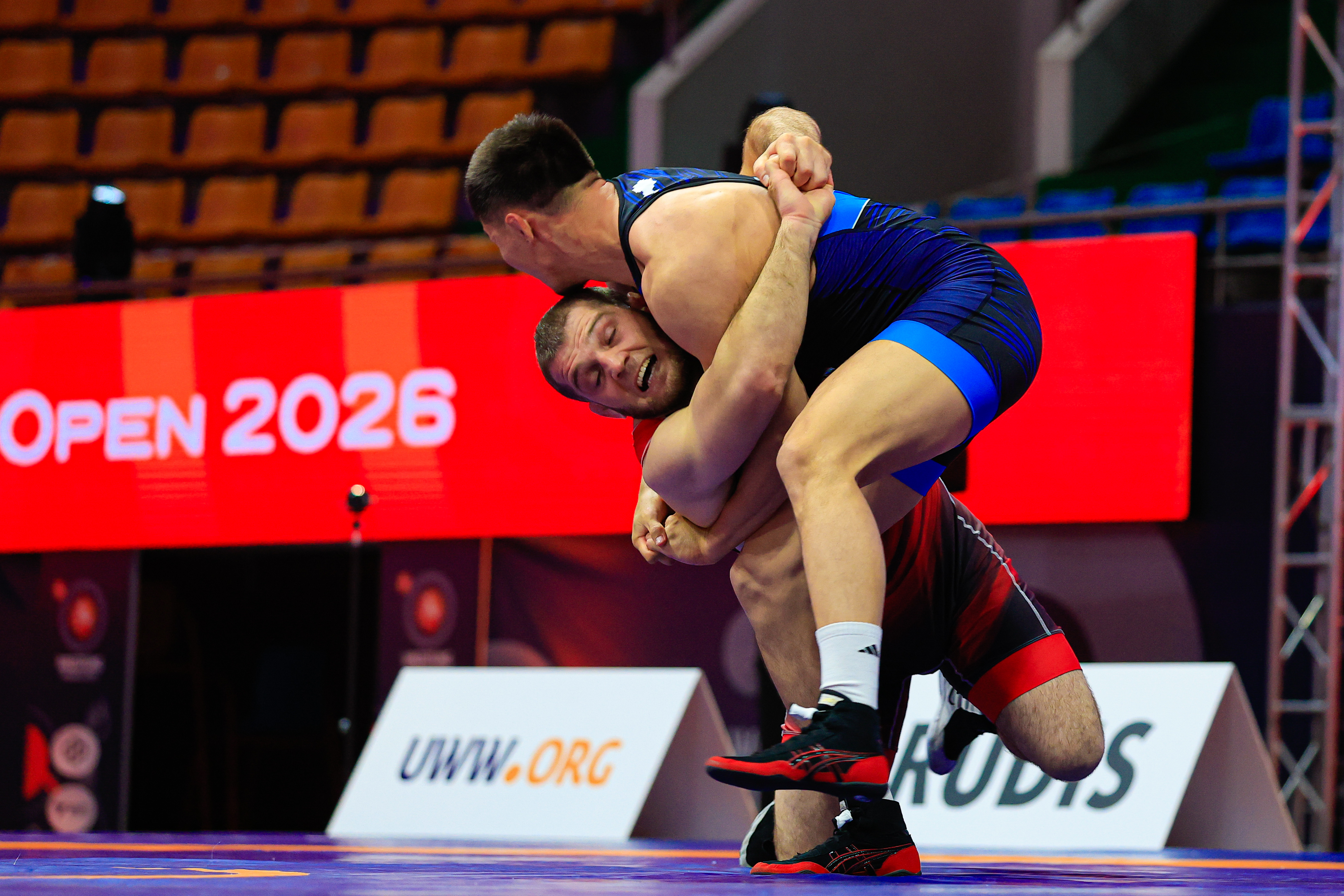 Magomed RAMAZANOV (BUL) tries to bodylock Bolat SAKAYEV (KAZ) in the opening round bout at 86kg. (Photo: United World Wrestling / Kostadin Andonov)
The 86kg weight class has seen quite a few changes since Paris 2024 but with the return of Ramazanov, without any signs of rust, it will be a tough-to-predict weight come the World Championships in October.
Before he forfeited his final, Ramazanov controlled all his bouts. He began with an 8-2 win over Bolat SAKAYEV (KAZ) which included a four-point throw. He then won 5-0 against Abdulmuslim ABULMUSLIMOV (RUS) in the quarterfinals, displaying his well-known upper body offence. The semifinal was a much easier affair as he blanked Batbilguun NAADAMBAT (MGL), 10-0.
Ramazanov's offence worked smoothly including his duckunders which he used multiple times on Saturday. He even kept his opponents quiet when he wanted to defend the lead.
A final against Nokhodi would have presented more insights into his form but Ramazanov, perhaps satisfied with his run, decided to skip the final.
Nokhodi is the latest entrant in the growing list of new stars at 86kg. He made a late move from 79kg to 86kg at Ulaanbaatar Open but had no trouble reaching the final. He began with two wins via technical superiority and one 10-5 win over Malik SHAVAEV (KGZ) in the semifinals.
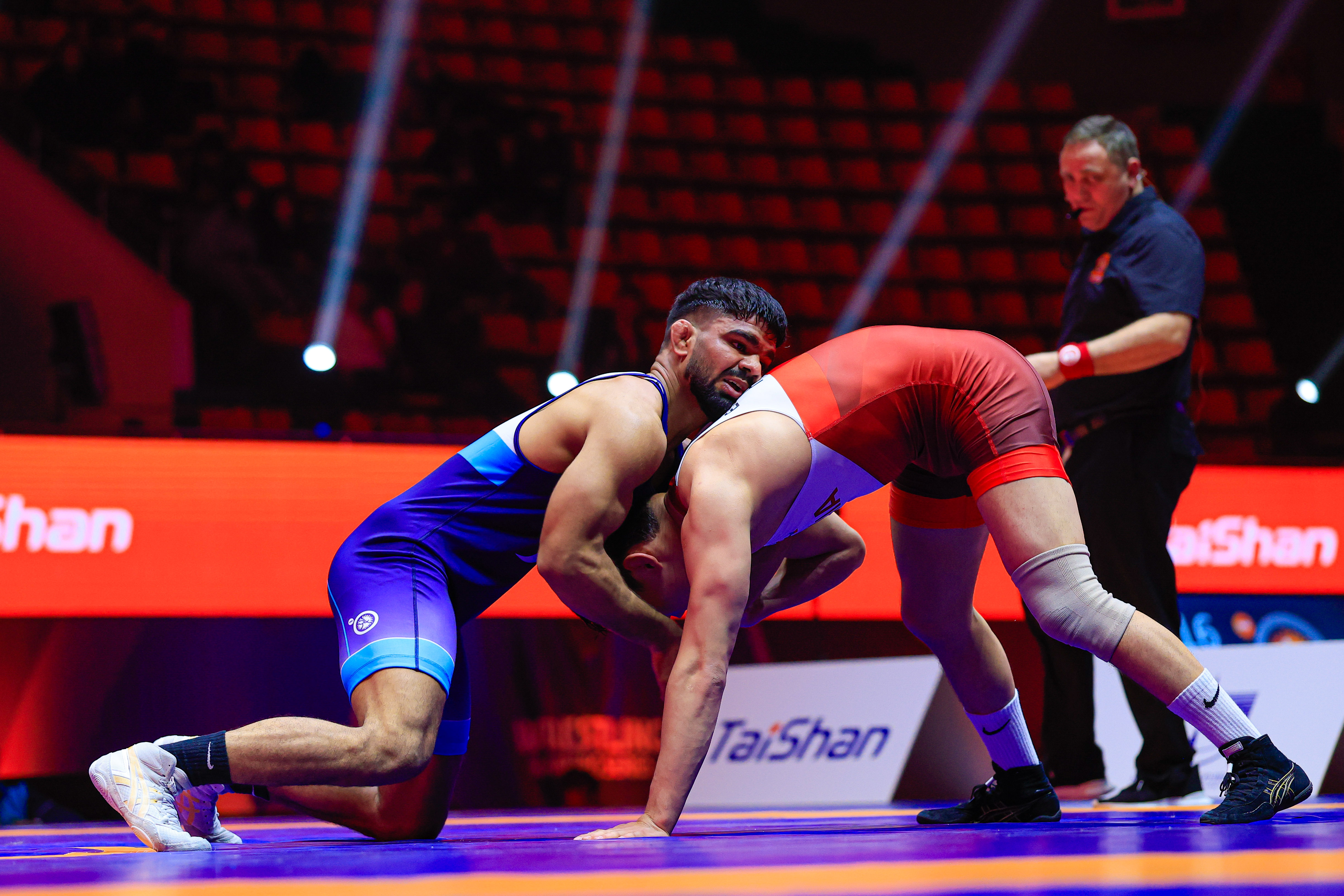 Sagar JAGLAN (IND) won gold medal at 74kg. (Photo: United World Wrestling / Kostadin Andonov)
In other Freestyle action, Sagar JAGLAN (IND), a former U17 world champion and U20 world silver medalist, also found home in a weight class.
Jaglan moved around weight classes in 2025, competing at 79kg and 86kg. In 2023, he won multiple medals at 79kg before a shoulder injury ruled him out for more than a year. In the only tournament he competed internationally in 2025, Jaglan finished fifth at the U23 Asian Championships at 86kg.
In his first tournament in over a year, Jaglan began returned to 74kg and excelled at the Ulaanbaatar Open, winning gold. While JAIDEEP (IND) has been at 74kg for India for sometime, Jaglan knocked him off in the quarterfinals and later won semifinals via technical superiority.
Up against Tamir ESHINIMAEV (RUS) in the gold-medal bout, Jaglan was called passive in the first period as Eshinimaev went up 1-0. Jaglan took the lead when he pushed the Russian out of bounds for two points. Russia challenge the decision but lost it to add one more point to Jaglan's score.
Eshinimaev did well to get to Jaglan's legs late in the final and he elevated the Indian's one leg. A two-point takedown would have given Eshinimaev the criteria lead but Jaglan hopped around defending any attempts of takedown. Eshinimaev managed to score a stepout with only seven seconds left on the clock.
Jaglan defended his 3-2 lead with ease to win his first-ever Ranking Series gold medal.
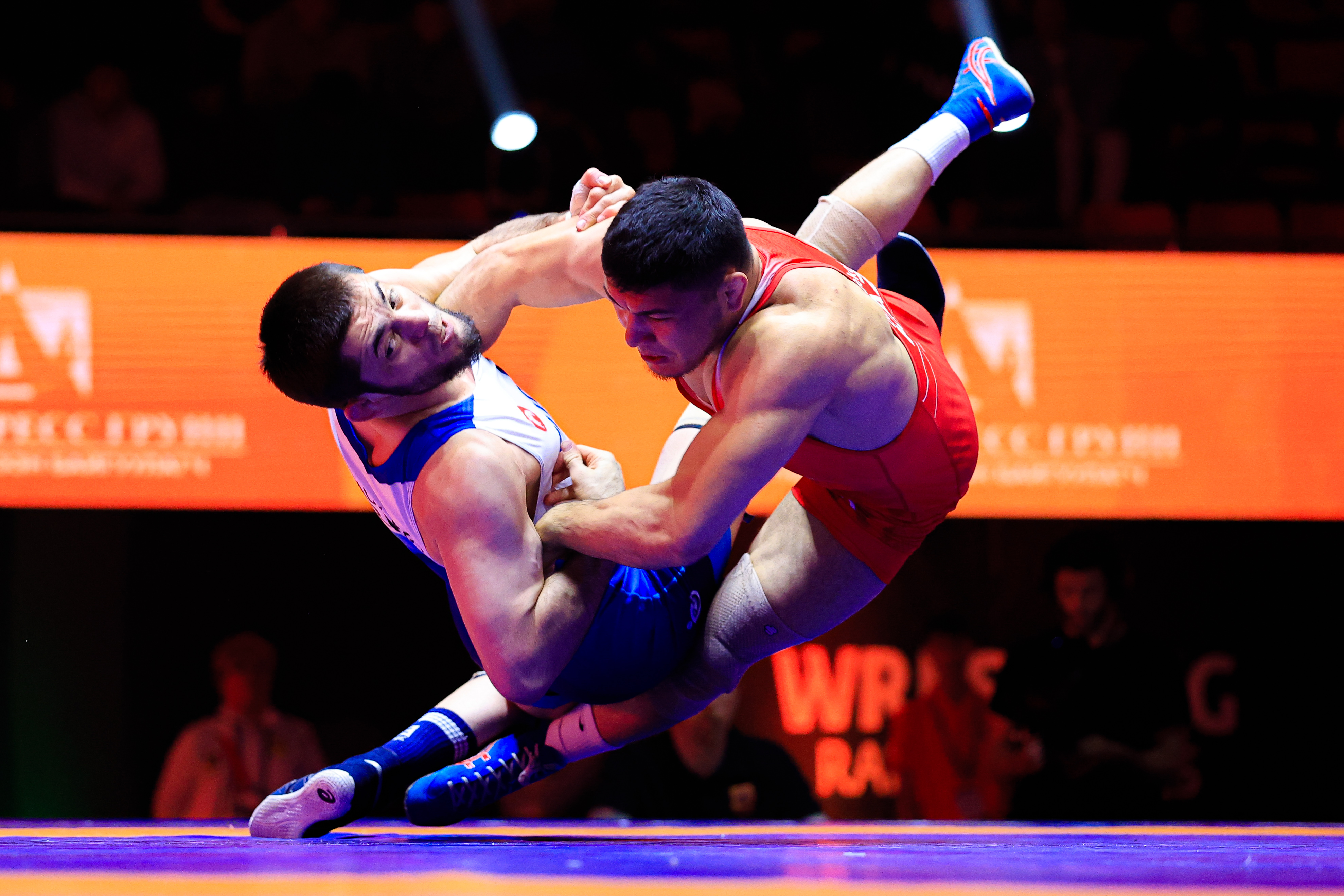 Askhab SAADULAEV (RUS) defeated Azamat DAULETBEKOV (KAZ), 6-3, in the 92kg final. (Photo: United World Wrestling / Kostadin Andonov)
At 92kg, defending champion Askhab SAADULAEV (RUS) managed to defend his gold medal against Azamat DAULETBEKOV (KAZ), thanks to the clock which saved him from being pinned.
Saadulaev had a comfortable 5-1 lead with 20 seconds left when Dauletbekov managed a cradle for two points and then held Saadulaev on the mat. The referees called the fall but it was only after the clock had expired. Kazakhstan challenged asking for two more points but Saadulaev was exposed only once and did not come in neutral before Dauletbekov went for the fall.
The lost challenge of Kazakhstan added one more point to Saadulaev's score as he won 6-3.
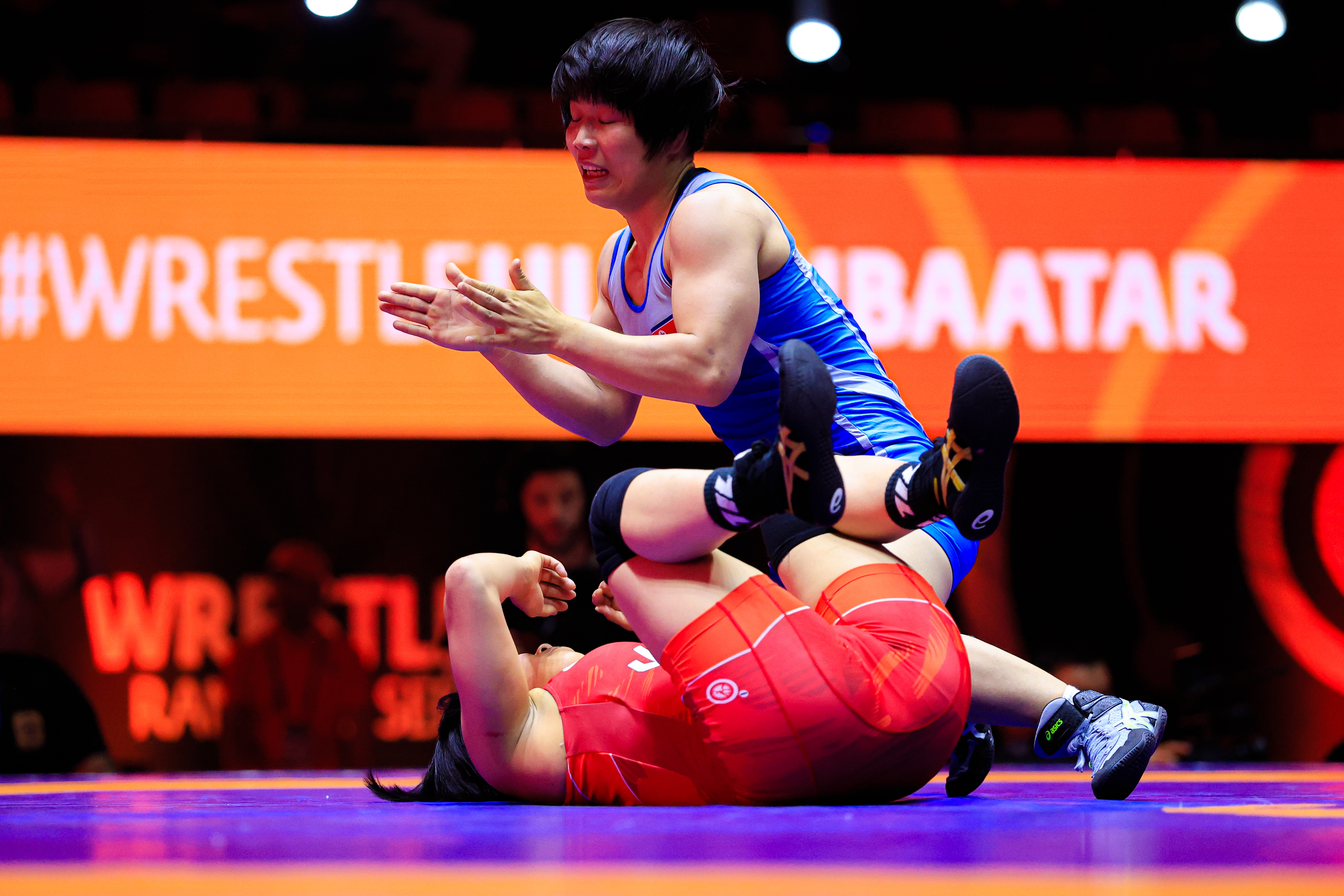 Hyo Gyong CHOE (PRK) celebrates after pinning Natsumi MASUDA (JPN) in the 55kg final. (Photo: United World Wrestling / Kostadin Andonov)
DPR Korea Wins 3 Golds
The first of the three gold medals was won by Hyo Gyong CHOE (PRK) who pinned Natsumi MASUDA (JPN) in the 55kg final. Choe, a Paris 2024 bronze medalist, began with a sweep single for two points and then turned Masuda for two more and lead 4-0. Choe scored another takedown for two more points and then pancaked Masuda for a fall.
World silver medalist Ok Ju KIM (PRK) then dominated Bilyana DUDOVA (BUL), 10-0, to capture the gold medal at 62kg. Kim used her strong slideby to score the takedown and after some effort, she managed to turn Dudova for a 4-0 lead. Before the break, Kim also managed to score a step while defending anything that Dudova threw at her.
Dudova pressured Kim in the second period and she pushed her to the zone. But Kim flung Dudova for a four-pointer to extend her lead to 9-0. Bulgaria challenged the call but on review, it was clear that Dudova did not score any points. The lost challenge gave the winning point to Kim.
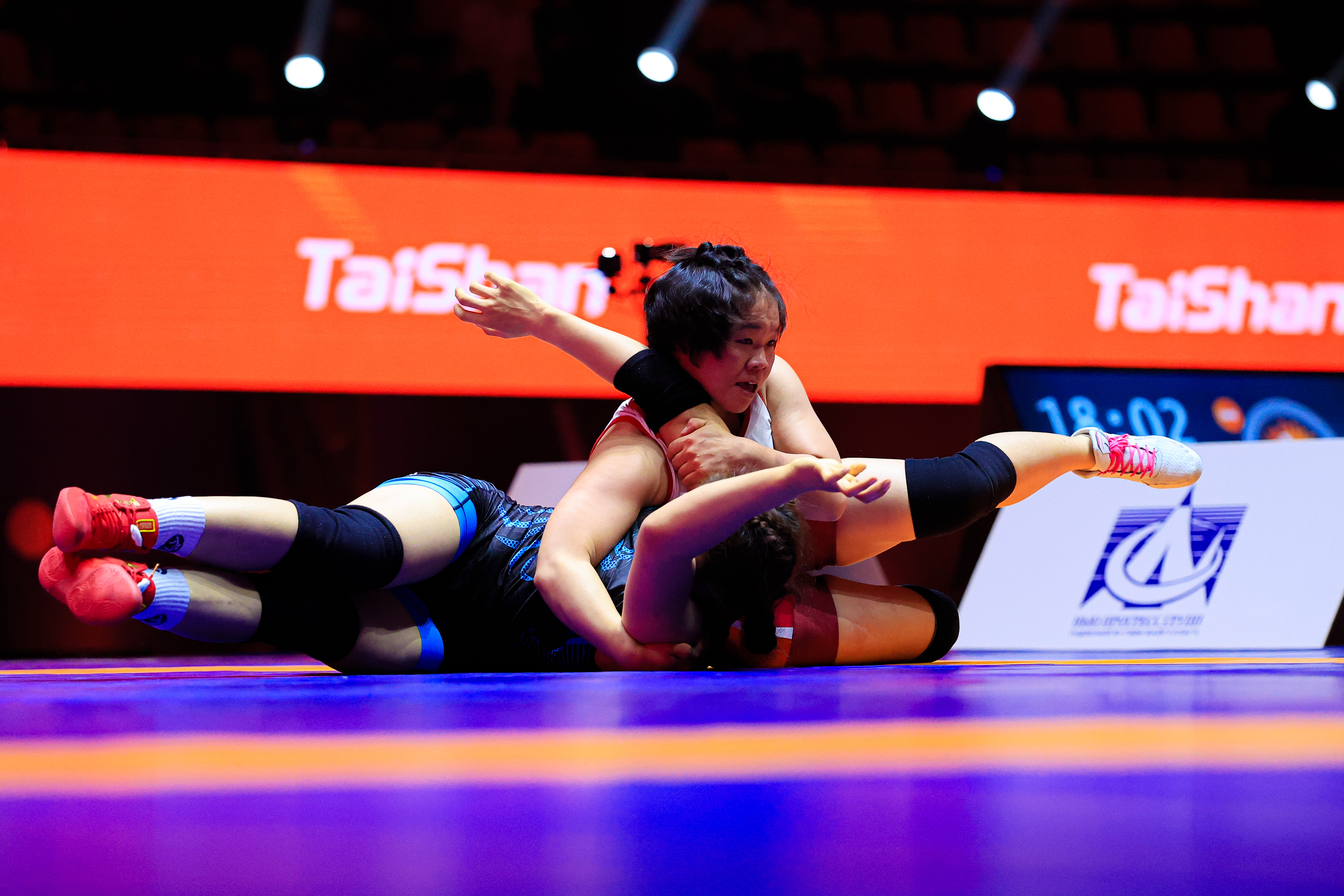 Hyon Gyong Mun (PRK) scores the final two points on Shuai ZHANG (CHN). (Photo: United World Wrestling / Kostadin Andonov)
A hat-trick of gold was completed by Hyon Gyong MUN (PRK) who claimed the 65kg title with a 14-2 technical superiority win over Shuai ZHANG (CHN).
Mun began with a four-pointer using an over-under grip but Zhang caught Mun's arm and scored two points as well. However, Mun reversed the position but she got the point only after a challenge to lead 5-2. A stepout further extended her lead to 6-2 with a stepout before the break.
Mun's strength was little too much for Zhang as she opened the second period also with a takedown and then a huge throw for four points. Zhang tried to roll out of the grip but ended up giving two more points as Mun confirmed her win.
Host Mongolia claimed a gold medal through former world silver medalist Delgermaa ENKHSAIKHAN (MGL) who won the 68kg final 8-2 against Elizaveta PETLIAKOVA (RUS). After the first takedown, Enkhsaikhan hit a double-leg blast for four points to lead 6-0 but gave up two points when setting up the next takedown.
The second period went scoreless for 2:50 but Enkhsaikhan hit another double-leg for two points to confirm her win in the final.
KAJAL (IND) added another gold for India, which won two golds on Friday, by claiming the 76kg gold over Damola OJO (NGR). Kajal opened the final with a takedown to lead 2-0 and then a stepout to make it 3-0. Ojo was called passive in the second period which gave one more point to Kajal who scored two different takedowns to win 8-0.

RESULTS
Women's Wrestling
55kg
GOLD: Hyogyong CHOE (PRK) df. Natsumi MASUDA (JPN), via fall (6-0)
BRONZE: Hansika LAMBA (IND) df. Ariunzaya ODONCHIMEG (MGL), 11-0
BRONZE: Tuba DEMIR (TUR) df. Laura ALMAGANBETOVA (KAZ), 8-4
62kg
GOLD: Ok Ju KIM (PRK) df. Bilyana DUDOVA (BUL), 10-0
BRONZE: Esther KOLAWOLE (NGR) df. Huan YANG (CHN), 10-0
BRONZE: MANSI (IND) df. NITIKA (IND), 10-0
65kg
GOLD: Hyon Gyong MUN (PRK) df. Shuai ZHANG (CHN), 14-2
BRONZE: Enkhjin TUVSHINJARGAL (MGL) df. PULKIT (IND), 6-3
68kg
GOLD: Delgermaa ENKHSAIKHAN (MGL) df. Elizaveta PETLIAKOVA (RUS), 6-2
BRONZE: Nesrin BAS (TUR) df. Gantsetseg BATSUKH (MGL), via fall (4-4)
BRONZE: Kateryna ZELENYKH (ROU) df. Sol Gum PAK (PRK), via fall (6-0)
76kg
GOLD: KAJAL (IND) df. Damola OJO (NGR), 8-0
BRONZE: PRIYA (IND) df. Tuvshinjargal TARAV (MGL), 8-0
BRONZE: Elmira SYZDYKOVA (KAZ) df. Gulmaral YERKEBAYEVA (KAZ), 7-3
Freestyle
74kg
GOLD: Sagar JAGLAN (IND) df. Tamir ESHINIMAEV (RUS), 3-2
BRONZE: JAIDEEP (IND) df. Tolui MUNKHBAT (MGL), 15-4
BRONZE: Tumen BODIEV (RUS) df. Sangho HAN (KOR), 3-1
86kg
GOLD: Mohammad NOKHODI (IRI) df. Magomed RAMAZANOV (BUL), via inj. def.
BRONZE: Bolat SAKAYEV (KAZ) df. Batbilguun NAADAMBAT (MGL), 10-0
BRONZE: Byambadorj BAT ERDENE (MGL) vs. Malik SHAVAEV (KGZ)
92kg
GOLD: Askhab SAADULAEV (RUS) df. Azamat DAULETBEKOV (KAZ), 6-3
BRONZE: Bat Erdene BYAMBASUREN (MGL) df. Ganbat TSERENPUNTSAG (MGL), 4-1
BRONZE: Abolfazl RAHMANI (IRI) df. Punit KUMAR (IND), via fall (4-0)



 df. Aline FOCKEN (GER) by 3-0 A.jpg) Sara DOSHO (JPN) df. Aline FOCKEN (GER) by 3-0 to win the gold medal at the 2017 World Championship. Photo by Martin Gabor.
Sara DOSHO (JPN) df. Aline FOCKEN (GER) by 3-0 to win the gold medal at the 2017 World Championship. Photo by Martin Gabor.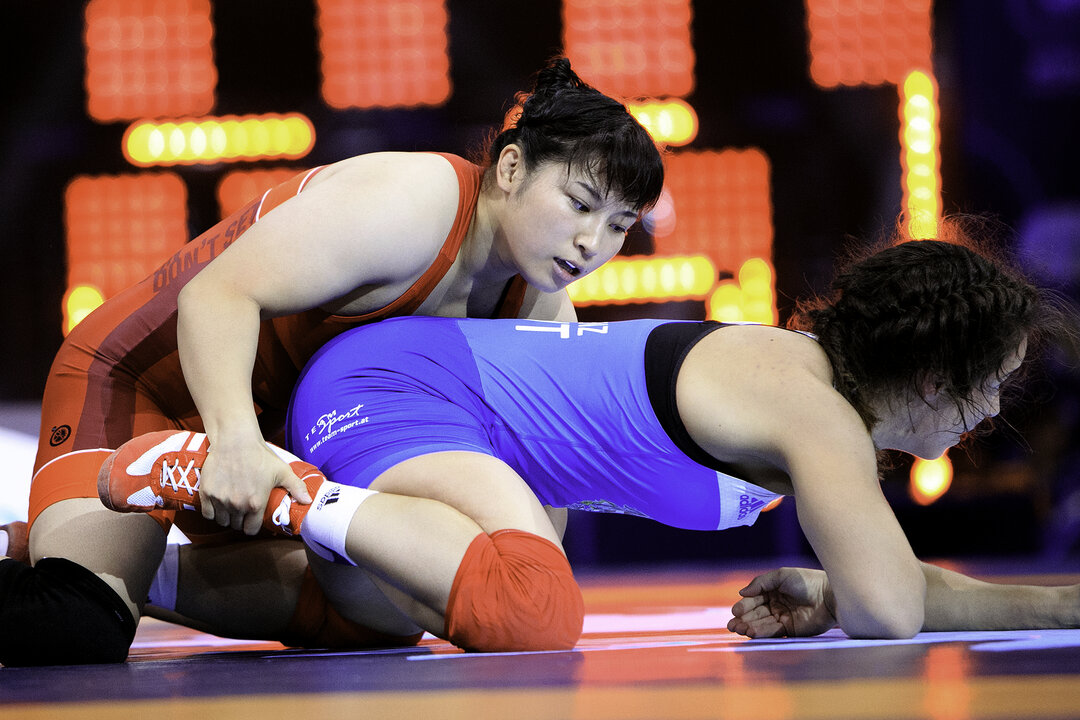 df. Martina KUENZ (AUT) by 6-0 (1).jpg)
Share your thoughts.
Comments