

Petriashvili Looks for Second World Title in 2017
Thursday, November 23, 2017 - 07:35 By Andrew Hipps

The U-23 Wrestling World Championships concludes with freestyle competition on Saturday and Sunday. One of the shining stars of the Paris World Championships, Geno PETRIASHVILI (GEO), is on the freestyle entry list. Petriashvili, an Olympic bronze medalist, stunned Taha AKGUL (TUR) in Paris to claim the world title at 125kg.
Saturday, Nov. 25: 57kg, 61kg, 86kg, 125kg
The 57kg weight class includes three junior world champions: Suleyman ATLI (TUR), Khasankhusein BADRUDINOV (RUS) and Daton FIX (USA). Atli, a 2016 Olympian, won the European U-23 Championships and finished with a bronze in the European Championships on the senior level. He won the Yasar Dogu title in March. Badrudinov won gold, silver and bronze medals at the Junior World Championships. Fix won a junior world title this year after winning a junior world bronze in 2016. Andrii YATSENKO (UKR) won a world bronze medal in Paris this year. Another wrestler to keep an eye on is Ivan ZAMFIROV (MDA).
Iman SADEGHIKOUKANDEH (IRI), a two-time junior world champion, is entered at 61kg. He won the Asian Indoor Games this year. Mitchell MCKEE (USA) reached the junior world finals this year, finishing with a silver. Dimitar IVANOV (BUL) was a junior world bronze medalist in 2015. Rinya NAKAMURA (JPN) was a fifth-place finisher at the World Championships in Paris. Other notable wrestlers in this weight class include Ali RAHIMZADE (AZE), Husein SHAKHBANAU (BLR), Shota PHARTENADZE (GEO), Zanabazar ZANDANBUD (MGL) and Islam DUDAEV (RUS).
The favorite at 86kg is Olympian Alireza KARIMIMACHIANI (IRI). He won a world bronze medal in 2015 at the senior level, and is a past junior world champion. Deepak PUNIA (IND) was a cadet world champion in 2016, and Ivan Kostadinov STEFANOV (BUL) reached the cadet world finals in 2015. Raman CHYTADZE (BLR), Azamat DAULETBEKOV (KAZ) and Sam BROOKS (USA) will look to contend.
The 2017 senior world champion Petriashvili is a strong favorite to win gold at 125kg. He has won four-world level medals, including a bronze medal at the 2016 Olympic Games. Amin TAHERI (IRI) is a two-time junior world silver medalist. Umar ISRAILOV (AZE) won a junior world silver medal in 2016. Magomedamin DIBIROV (RUS) is a two-time European junior champion. Others to watch at 125kg: Vitali PIASNIAK (BLR), Taiki YAMAMOTO (JPN), Lkhagvagerel MUNKHTUR (MGL) and Kamil Tomasz KOSCIOLEK (POL).
Sunday, Nov. 26: 65kg, 70kg, 74kg, 97kg
At 65kg, there are several wrestlers with world and continental medals. Top contenders include Asian champion Bajrang BAJRANG (IND), junior world bronze medalist Yones EMAMICHOGHAEI (IRI), junior world silver medalist Joseph MCKENNA (USA), multiple-time world military champion Nachyn KUULAR (RUS), European silver medalist Haydar YAVUZ (TUR) and European bronze medalist Iveriko JULAKIDZE (GEO).
Gadzhimurad OMAROV (AZE) is among the favorites at 70kg. He was the champion at the European U-23 Championships. Nobuyoshi TAKOJIMA (JPN) placed fifth at the World Championships in 2016. Sumiyabazar ZANDANBUD (MGL) is a past cadet world silever medalist. Mirza SKHULUKHIA (GEO) and Csaba VIDA (HUN) have won European medals. Magoma DIBIRGADZHIEV (RUS) and Ali UMARPASHAEV (BUL) won medals at the Alexander Medved Prizes event.
Junior world champ Gadzhi NABIEV (RUS) is among the entries at 74kg. He was a silver medalist at the Russian Championships. Mohammad MOTTAGHINIA (IRI), a junior world bronze medalist, should contend in this weight class. Alberts JURCENKO (LAT) is a multiple-time cadet world bronze medalist. There are a handful of European medalists in this weight class who could challenge for titles, including Murad SULEYMANOV (AZE), Henri Aleksi SELENIUS (FIN), Avtandil KENTCHADZE (GEO) and Akhsarbek GULAEV (SVK). Yajuro YAMASAKI (JPN) was fifth at the Junior World Championships this year, and is past cadet world bronze medalist.
Multiple-time junior world medalists Gadzhimurad MAGOMEDSAIDOV (AZE) and Dzianis KHRAMIANKOU (BLR) are among the six wrestlers on the entry list at 97kg with junior world medals. Other junior world medalists in the weight class include Givi MATCHARASHVILI (GEO), Erik THIELE (GER), Vasile CARAS (ROU) and Yunus Emre DEDE (TUR). Others to watch at 97kg include Yarygin Grand Prix silver meedalist Rasul MAGOMEDOV (RUS), Golden Grand Prix bronze medalist Mojtaba GOLEIJ (IRI), 2016 Cadet world bronze medalist Viky VIKY (IND) and European junior silver medalist Simone IANNATTONI (ITA).
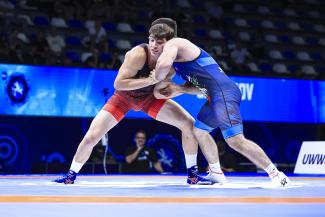
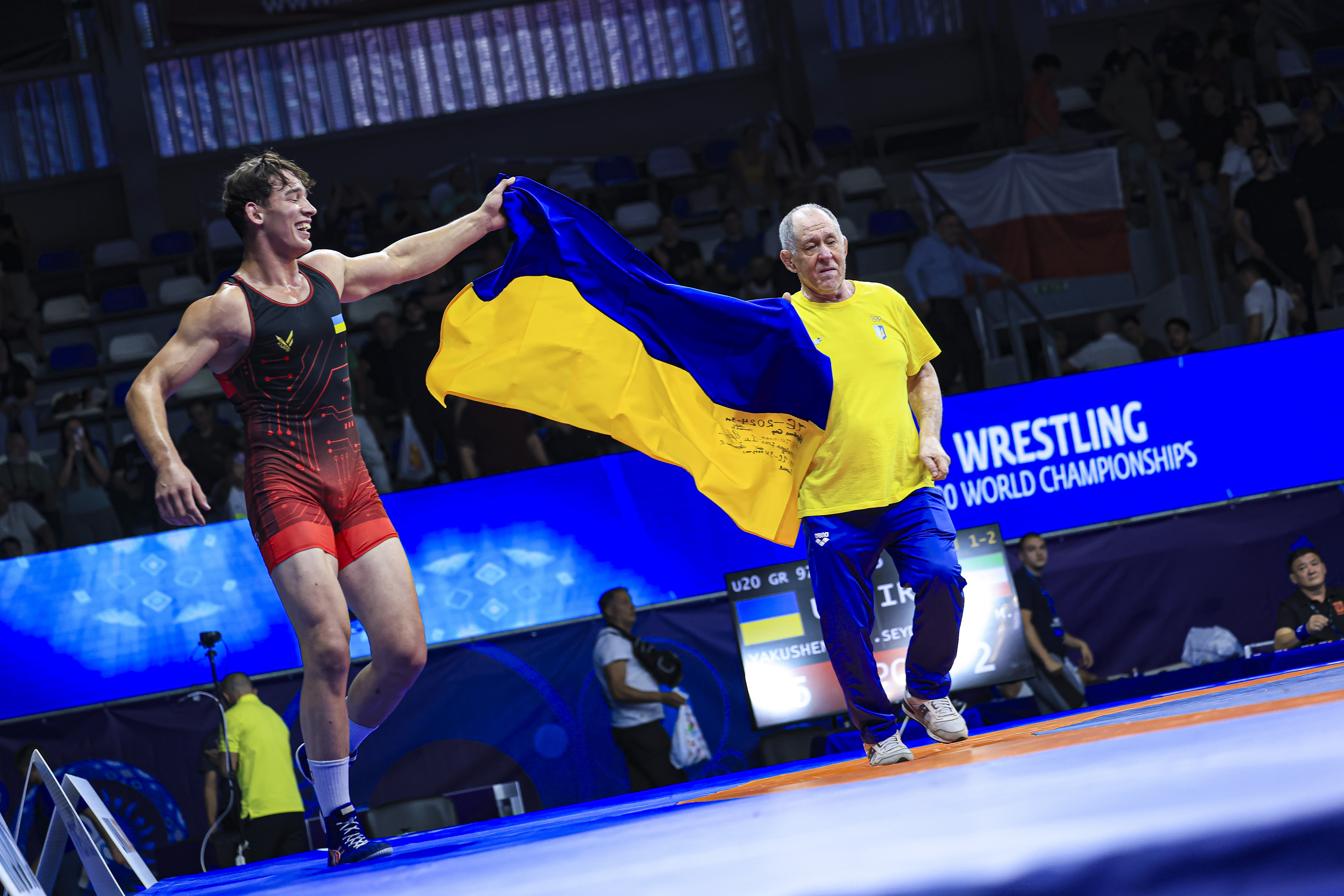 Yehor YAKUSHENKO (UKR) celebrates after becoming the world U20 champion for the second time. (Photo: United World Wrestling / Kadir Caliskan)
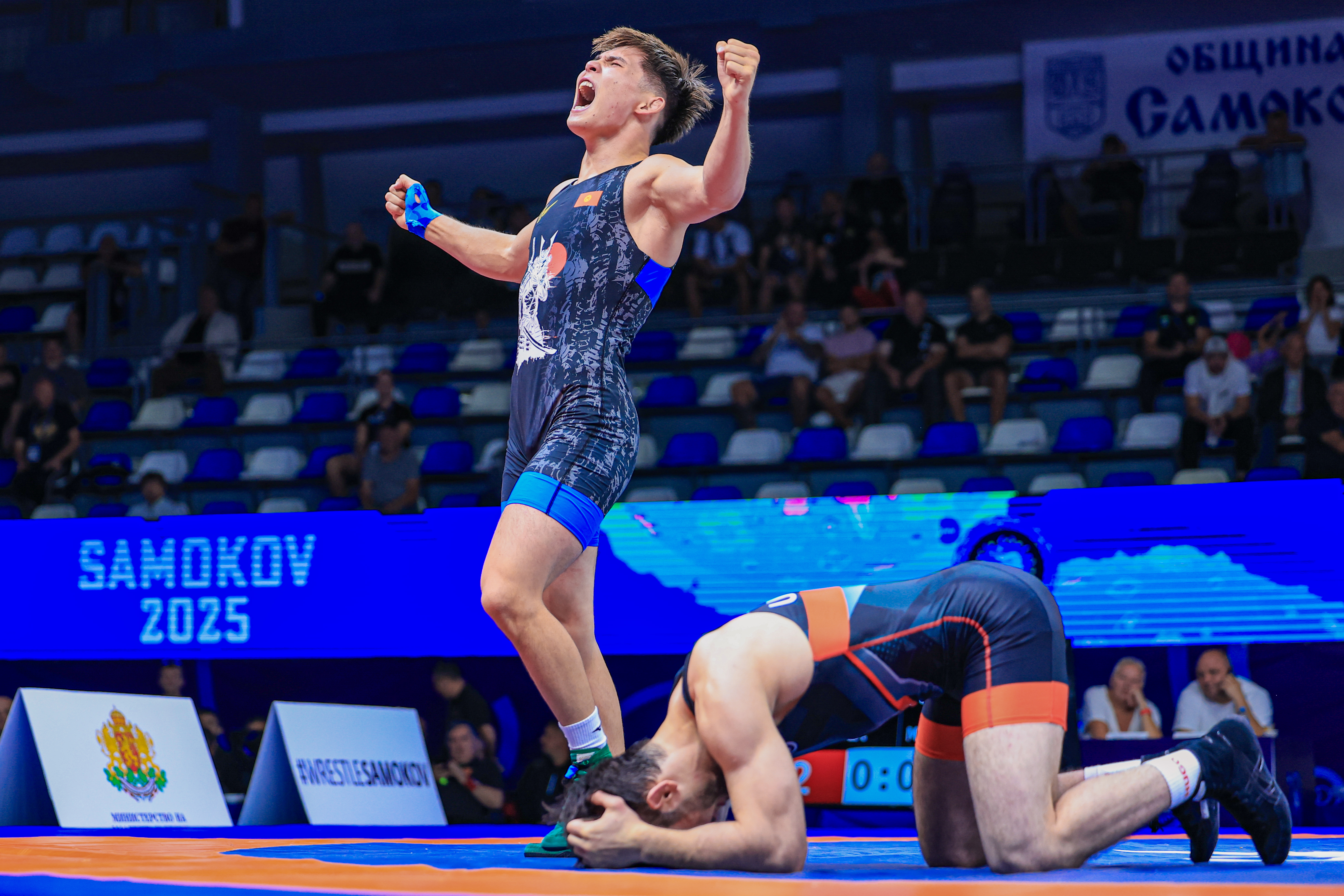 Zhantoro MIRZALIEV (KGZ) celebrates after beating Erzu ZAKRIEV (UWW) in the 67kg final. (Photo: United World Wrestling / Amirreza Aliasgari)
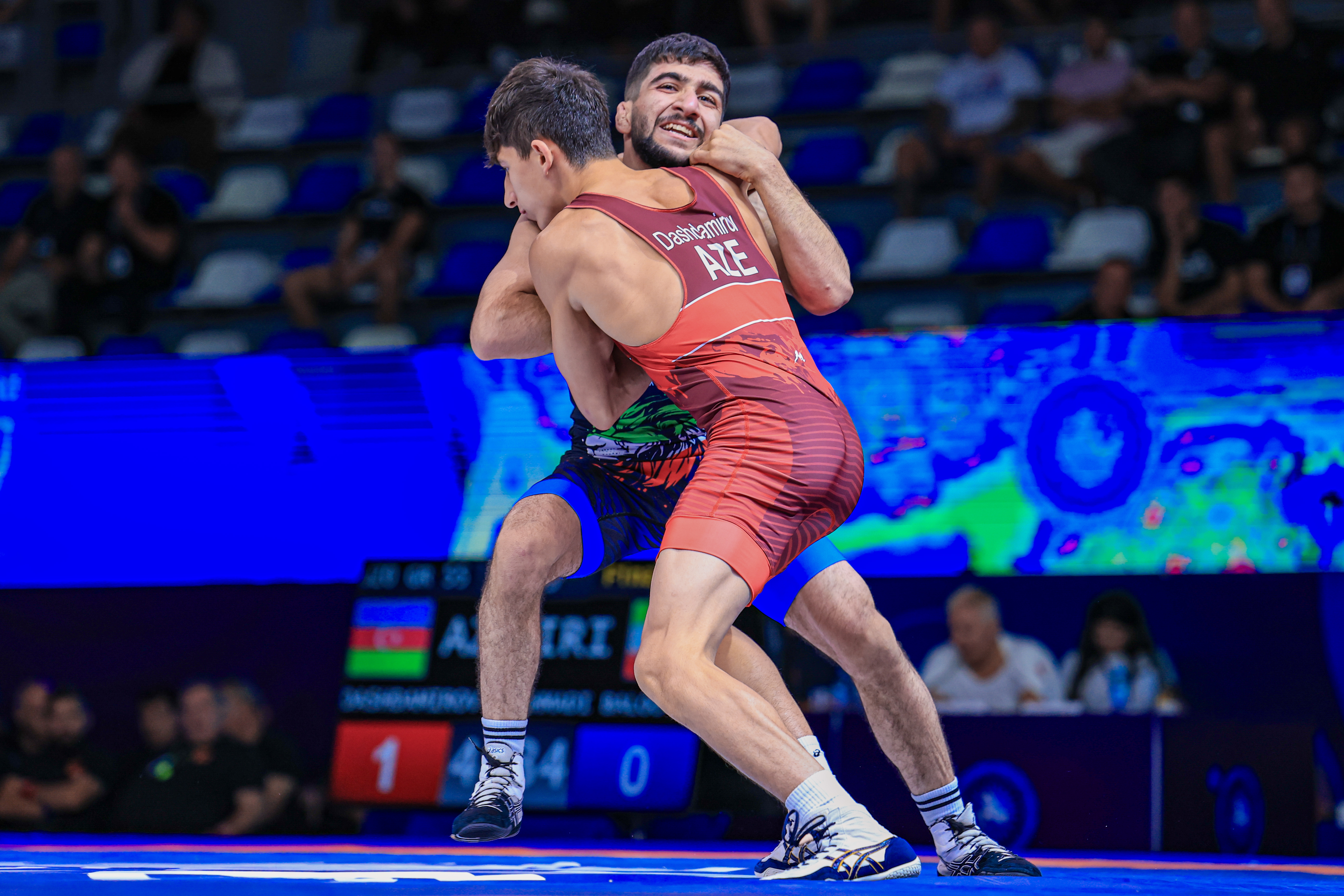 Payam AHMADI (IRI) scores a takedown against Turan DASHDAMIROV (AZE) in the 55kg final. (Photo: United World Wrestling / Amirreza Aliasgari)
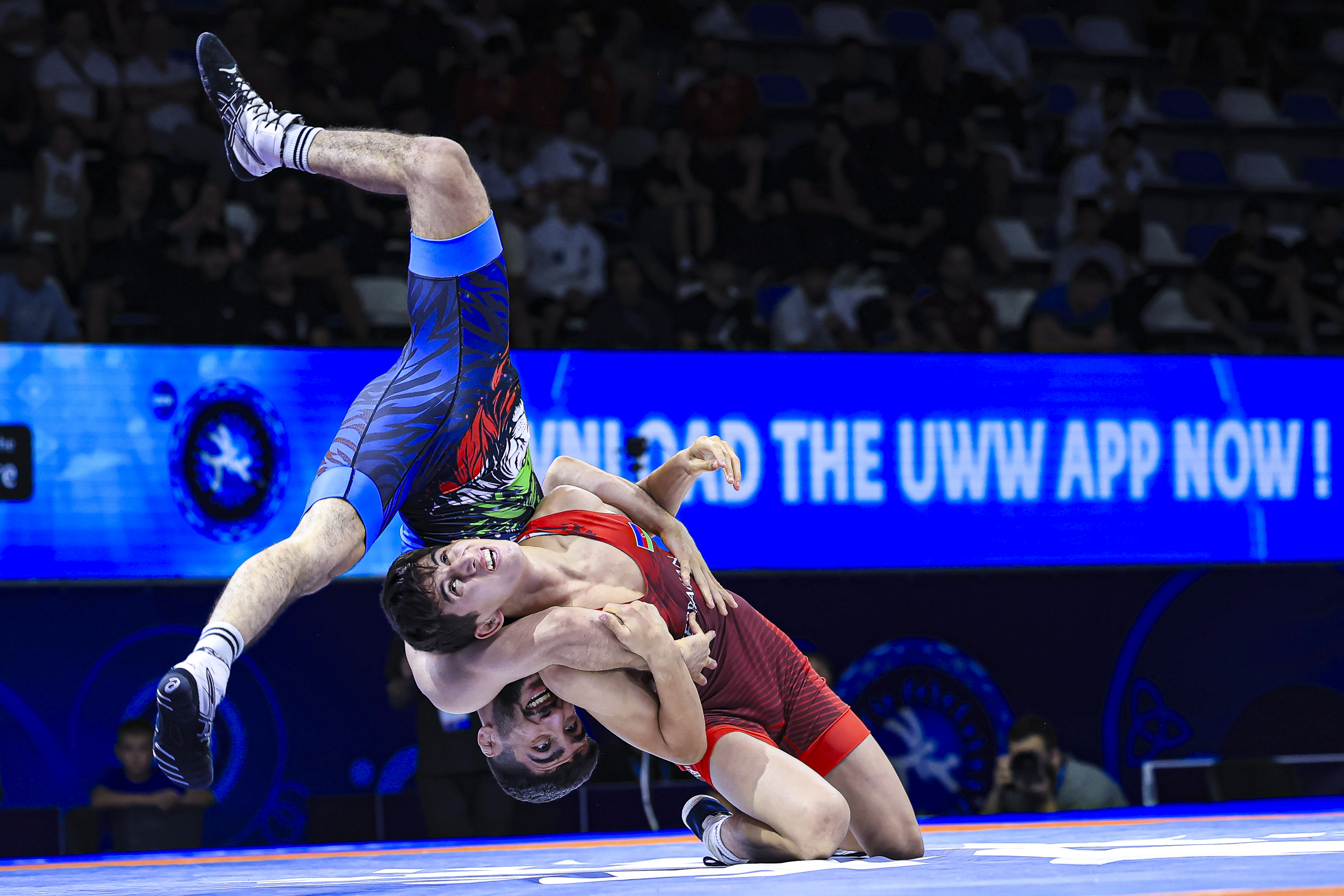 Turan DASHDAMIROV (AZE) hits a fireman carry for no points against Payam AHMADI (IRI) during the 55kg final. (Photo: United World Wrestling / Kadir Caliskan)
Share your thoughts.
Comments