

Ozaki denies Onishi in 62kg semis, sets up clash with Motoki
Saturday, December 20, 2025 - 08:01 By Ken Marantz
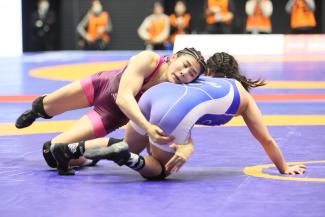
TOKYO (December 20) -- Nonoka OZAKI gave Sakura ONISHI a less-than-cordial welcome to the women’s 62kg weight class.
Ozaki, a two-time former world champion who has hit a wall of late amid Japan’s incredible depth in women’s wrestling, defeated world 59kg champion Onishi 4-1 in the semifinals at 62kg at the Emperor’s Cup All-Japan Championships on Saturday.
That earned Ozaki yet another shot at reigning world and Olympic champion Sakura MOTOKI, who advanced with an 8-2 victory over Yuzuka INAGAKI.
The Olympic weight classes are being contested over two days, and organizers saved a bevy of world and Olympic champions and medalists for the third day of the four-day tournament at Tokyo’s Komazawa Gym.
In other semifinals, a clash of champions from this year’s World Championships in Zagreb was set up at freestyle 74kg, in which reigning champion Kota TAKAHASHI will square off with Yoshinosuke AOYAGI, the victor at 70kg who has moved up to the Olympic division.
Takahashi easily disposed of Toki OGAWA by 11-0 technical fall, while Aoyagi posted a 7-1 victory over Hikaru TAKATA.
Meanwhile, Paris Olympic champions Akari FUJINAMI, Kotaro KIYOOKA and Nao KUSAKA all advanced to their respective finals with varying degrees of ease or difficulty, along with Paris bronze medalist Yui SUSAKI.
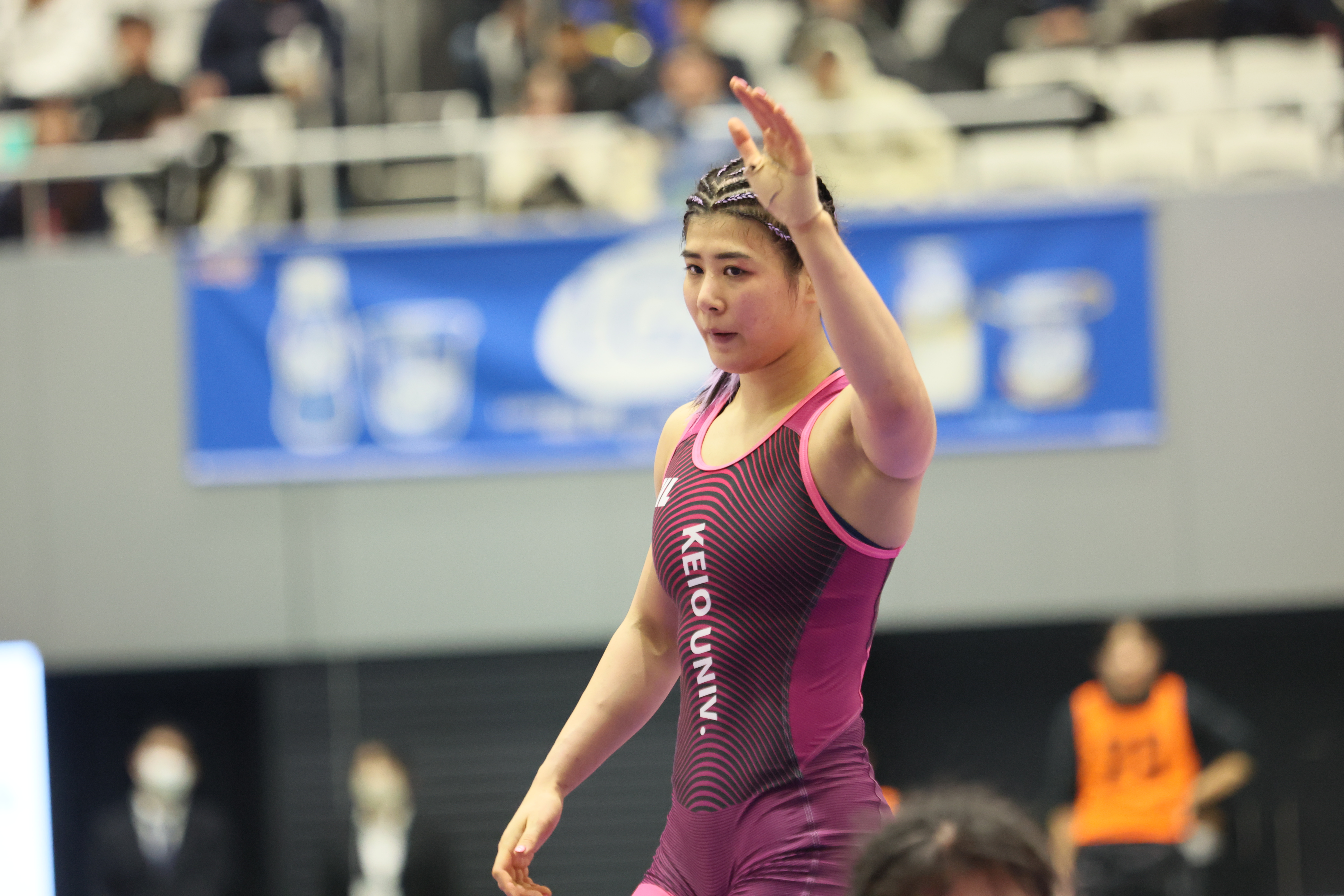 Nonoka OZAKI will wrestle Sakura MOTOKI in the 62kg final. (Photo: Takeo Yabuki / wrestling-spirits.jp)
Ozaki had been forced to watch the World Championships from the sidelines after losing out Motoki at the Meiji Cup All-Japan Invitational Championships, which, along with Emperor’s Cup, serves as a domestic qualifier for major international competitions.
The last thing Ozaki needed was another interloper in the weight class, and she determinedly fended off the challenge from the 19-year-old Onishi.
“It was my first time facing her,” Ozaki said. “She’s a young, upcoming wrestler who hasn’t yet experienced the Olympics, just like I had been. But this is not a weight class that can be taken lightly.”
After giving up an activity point, Ozaki scored a late takedown in the first period, then added another in the second to earn a spot in Sunday’s final.
“There are many videos of her out there that I have watched, so I had an image of how she wrestles in mind,” Ozaki said. “I had to think of what form my wrestling should take.”
Asked if she has come up with a strategy to handle Motoki, Ozaki said, “I’ve faced her twice now, and I watched her at the World Championships. There is a ‘Motoki way’ of wrestling, and that’s implanted in my mind.”
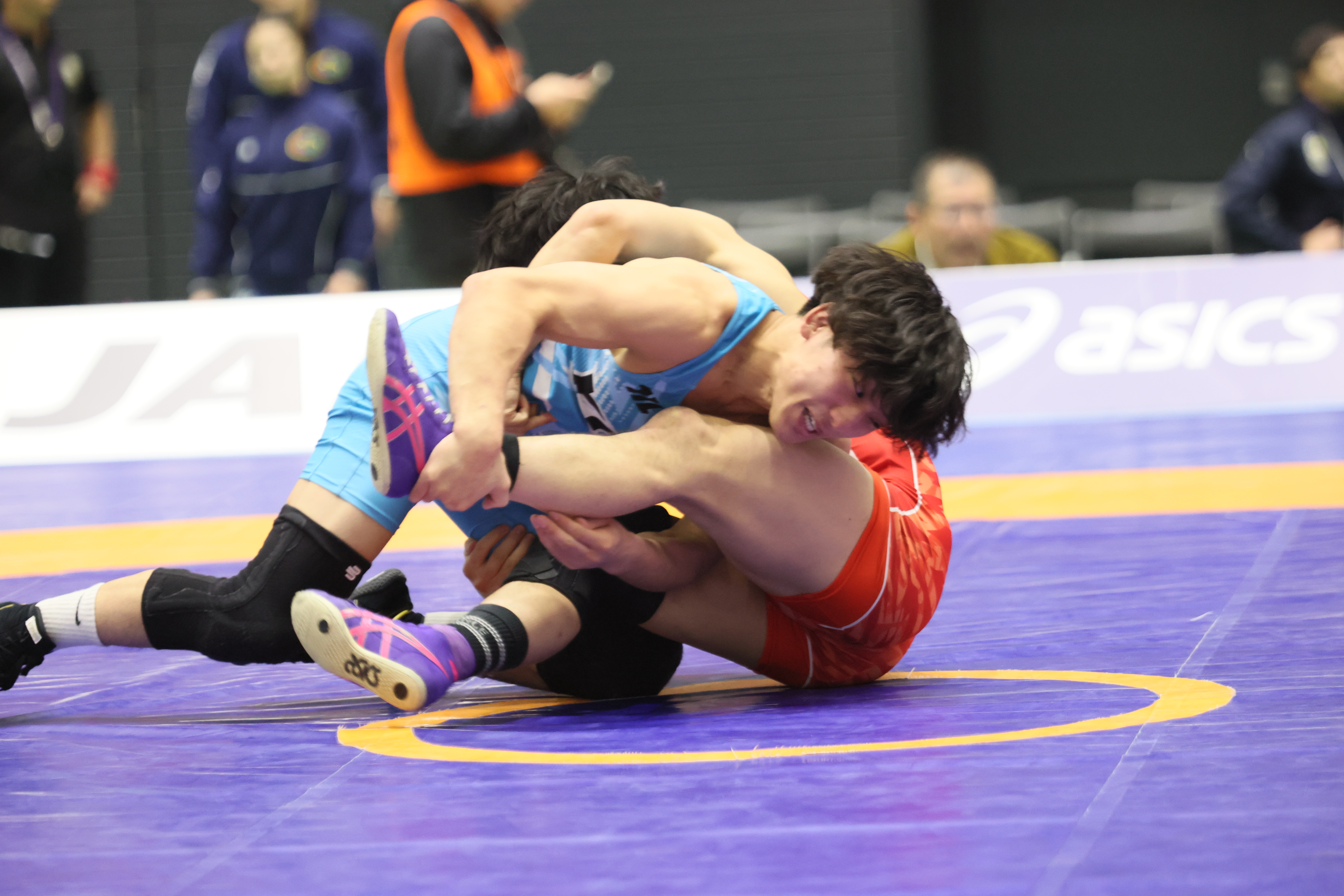 Takara SUDA, left, works for a takedown in the first period against Kaisei TANABE during their 65kg semifinal. (Photo: Takeo Yabuki / wrestling-spirits.jp)
Suda spoils Tanabe’s bid for two-style double
The stacked freestyle 65kg division saw the match of the day, in which Takara SUDA spoiled Kaisei TANABE’s bid for a historic Greco-freestyle title double with dramatic last-second takedown in their semifinal.
Suda had taken the lead with a takedown with 1:10 left, only to see Tanabe come back with a takedown of his own with five seconds left. But Suda shot for all he’s
worth and managed to score in time for a 5-4 victory.
“There was still five seconds left and I just kept calm,” Suda said. “I thought if I kept cool, I could score.”
“I had lost to him twice before, both by technical fall,” Suda said. “This time I just wanted to avoid losing by technical fall. But those matches were two years ago, and I think I’ve gotten better over these two years.”
Suda’s victory earns him a shot at Paris gold medalist Kiyooka, who managed to hold on for a 3-2 victory over Kaiji OGINO that ended with a wild scramble in
the final 15 seconds.
“He’s an opponent on another level,” Suda said of Kiyooka. “I’ll have to keep moving and give everything I got."
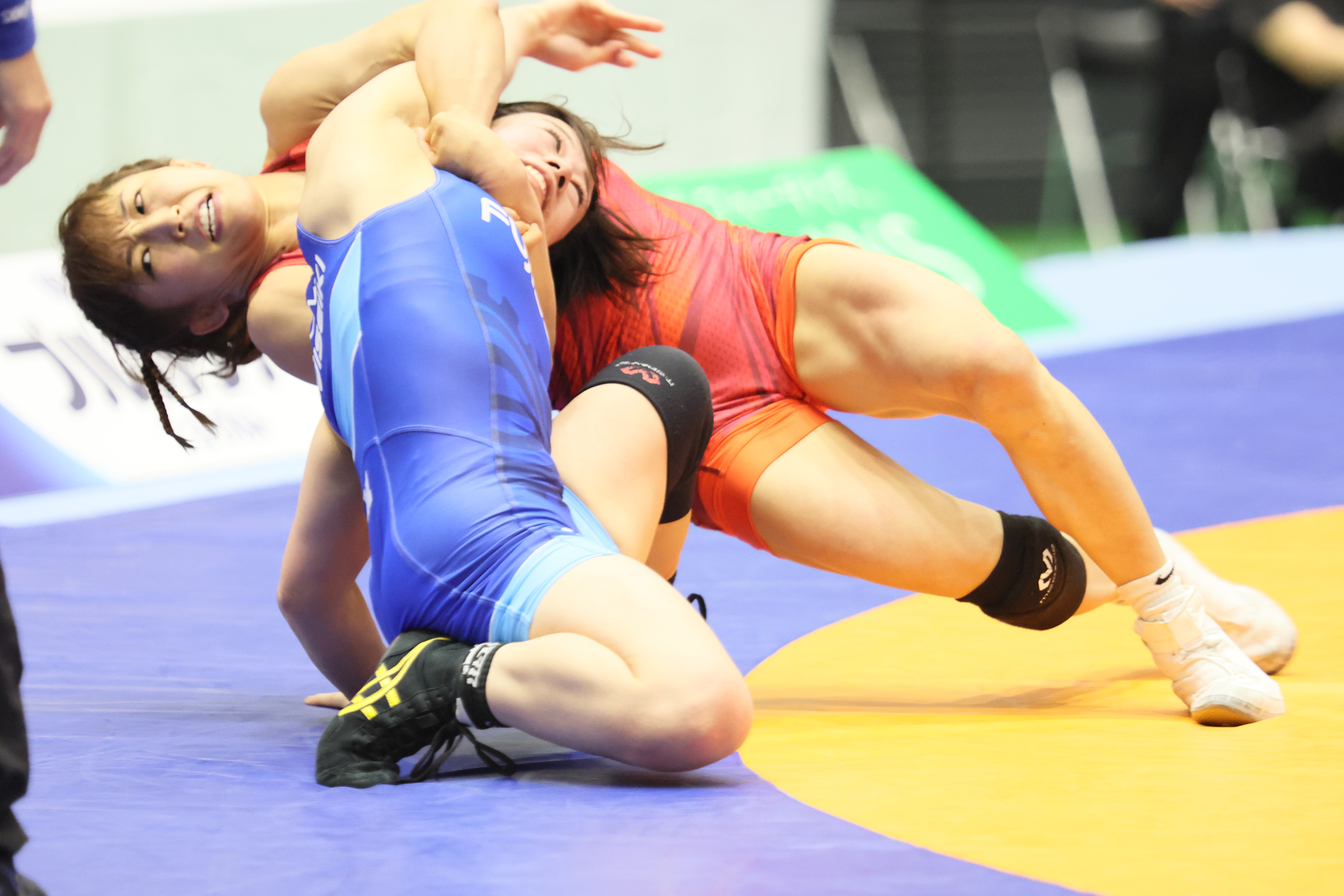 Yui SUSAKI throws Mako ONO en route to a technical fall in their 50kg semifinal. (Photo: Takeo Yabuki / wrestling-spirits.jp)
Susaki stormed into the women’s 50kg final with three straight technical falls without surrendering a point, the last one a 10-0 rout of Mako ONO. In the final, she will face world U23 53kg champion Haruna MORIKAWA.
Susaki’s path to a fourth national title and first since 2022 was made slightly easier by the absence of rival Remina YOSHIMOTO and the late withdrawal of
Umi ITO.
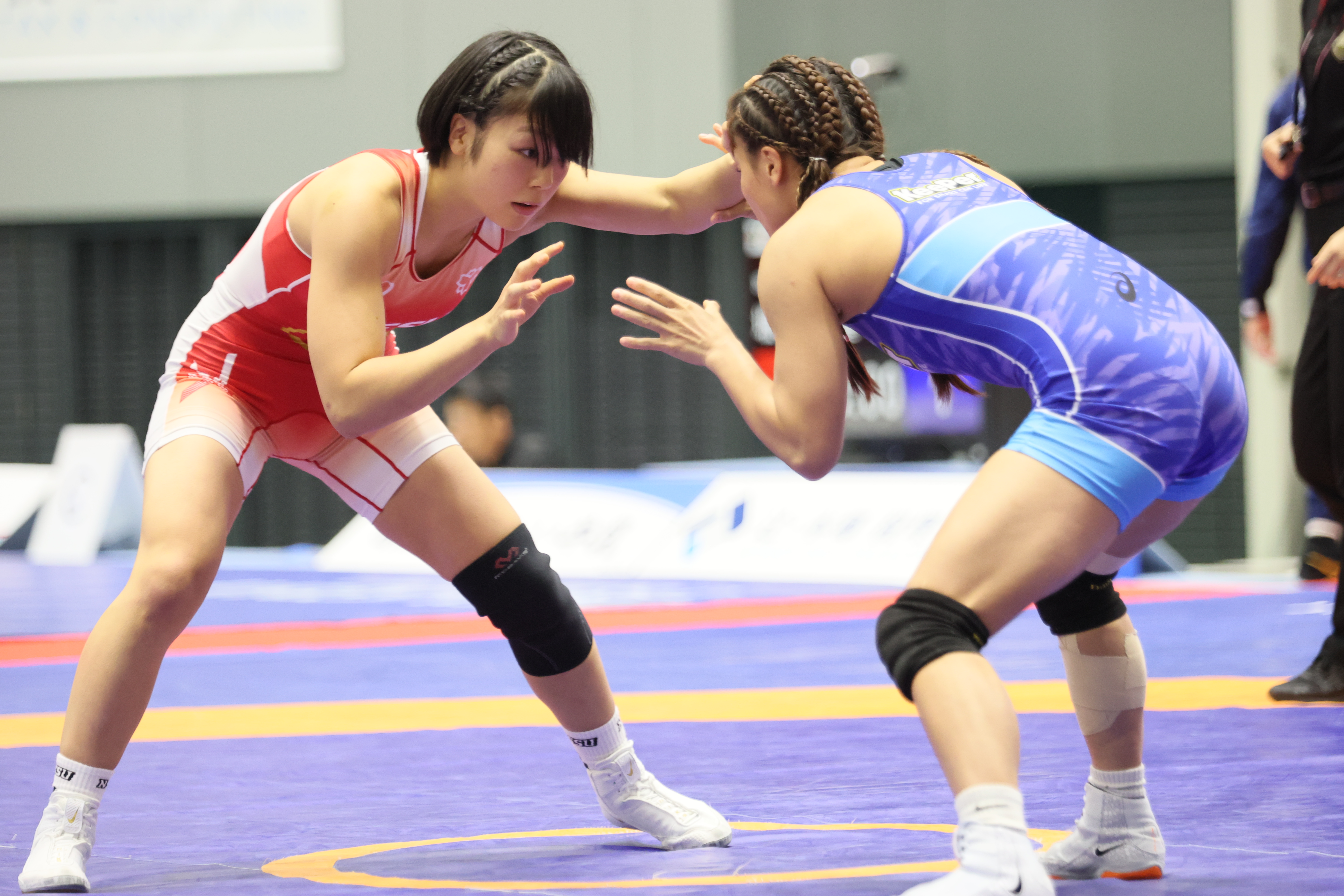 Akari FUJINAMI, left, squares off with Sara NATAMI in the 57kg semifinals. (Photo: Takeo Yabuki / wrestling-spirits.jp)
Fujinami, the Paris champion at 53kg, continued her transition to 57kg with solid victories, although with all of her points being scored from her feet, save
for an activity point.
In the semifinal, she built up a 7-0 lead over defending champion Sara NATAMI before her opponent twice countered single-leg attempts to score exposures, leaving Fujinami with a 7-4 victory. She will face Himeka TOKUHARA in the final.
Kusaka was clearly the most dominant of the Olympians on the day, winning his two matches by 11-0 scores -- both topped off with 4-point throws. He will face
Isami HORIKITA in the final.

Share your thoughts.
Comments