

Olympic legend Icho returns to Athens to lead Japan’s next generation
Sunday, August 3, 2025 - 09:59 By Vinay Siwach
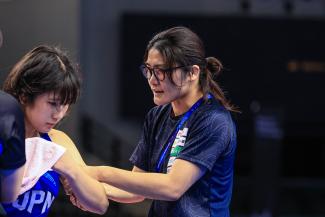
ATHENS, Greece (August 2) -- In Athens, home of the Olympics, Kaori ICHO (JPN) is already one of the pantheon of greats.
Having once made history as an athlete here -- winning the first of four Olympic gold medals at the 2004 Olympics -- Icho now sets out to carve a new legacy, this time as coach to the next generation of Japanese talent.
In Athens, she is making her international debut as coach of the Japanese women's team at the World U17 Championships as she returns to the Ano Liossia Olympic Sports Hall, the same venue she won the Olympic gold.
"I have returned to this arena for the first time in 21 years," Icho told United World Wrestling. "I won an [Olympic] gold medal in this arena for the first time."
Icho, who ended her wrestling career in 2019, started coaching after the Tokyo Olympics. She has coached Miwa MORIKAWA (JPN) domestically as both Morikawa and Icho are recruited with ALSOK.
Japan managed to win only one gold medal in Women's Wrestling at the World Championships and finished third in the team race. While Japan is not used to finishing at that position in Women's Wrestling, the third-place highlighted that even Japan's second-tier team poses a significant challenge to the world.
The presence of Icho definitely helped the wrestlers, who were not only helped by her experience but the presence of the four-time Olympic champion motivated them.
Japan's world champion in Athens, Hanano OYA (JPN), said that watching Icho win her record fourth gold medal in Rio 2016 inspired her to take up wrestling.
"The reason I started wrestling was because of the 2016 Rio de Janeiro Olympics," Oya said. "It was when Kaori achieved her fourth consecutive victory, and I saw it on TV. I started wrestling myself, so I was very happy when she accompanied me and acted as my second coach, and I felt that I had to live up to her expectations."
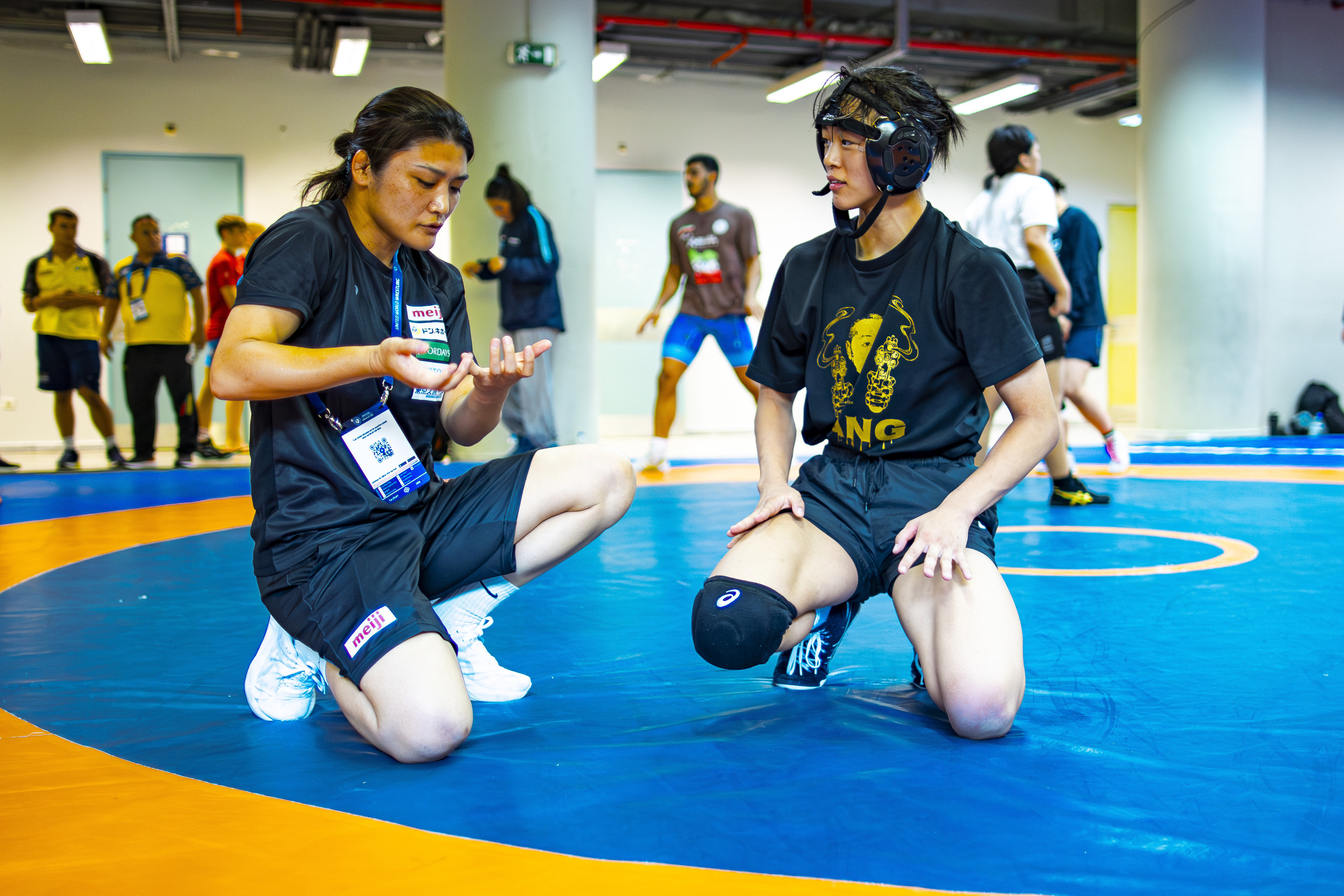 Kaori ICHO (JPN) coaches one of the members of the Japanese team. (Photo: United World Wrestling / Kadir Caliskan)
For Icho, not being on the mat and coaching from the corner was a different experience.
"I feel really strange being able to come back here as a coach," she said. "This tournament is the World Championships for those under 17 years old. I also became an Olympic gold medalist at this venue when I was 20 and I hope that the young athletes will work hard towards their Olympic dreams."
Back in 2004, the first Olympics when Women's Wrestling became part of it, Icho remembered the nervous and the excitement. The enjoyment, however, came only after she had won the gold.
"It was my first Olympics," she said. "I was very nervous and excited. I was here for about two weeks, from the opening ceremony to the closing ceremony. After winning, I went swimming in the Aegean Sea. It was a very enjoyable Olympics."
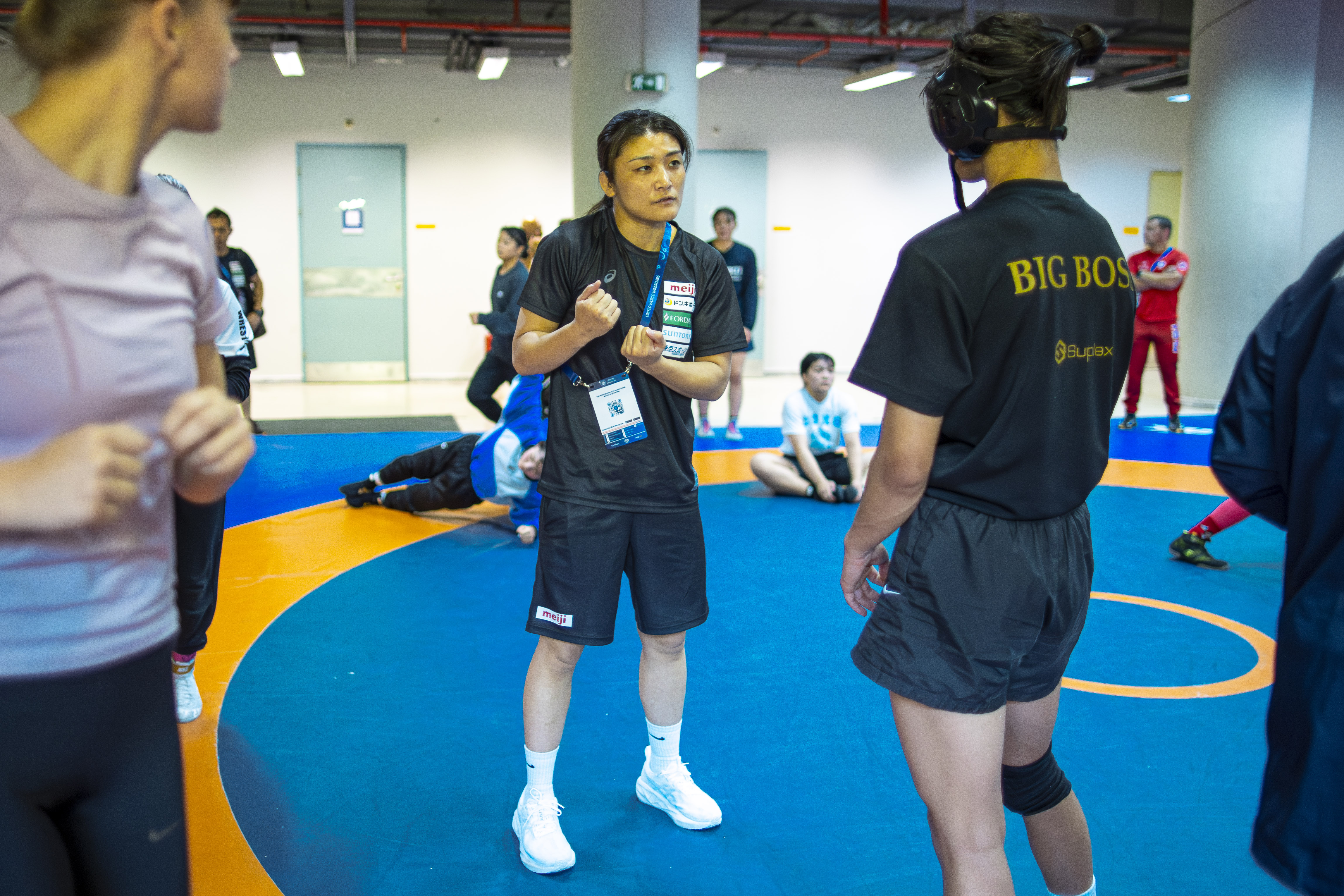 Kaori ICHO (JPN) during a warm-up session of the Japanese team in Athens. (Photo: United World Wrestling / Kadir Caliskan)
When she landed at the airport in Athens on Monday, memories from the past came rushing back.
"I don't particularly feel it at the airport, but I wondered if it was this hot," she said. "I wondered what the venue will be like. I was reminiscing about 21 years ago."
Once at the venue, Icho was requested for photos from wrestlers and coaches which she obliged. With her first tournament as coach behind her, Icho is determined to work even harder as she prepares the senior Japan team for the World Championships in Zagreb, Croatia, this September.
"Coaches and players asked me to take pictures with them," she said. "I felt stronger coming here. I want to work harder as a coach."
Share your thoughts.
Comments