

#GC2018

Olympic Champ Wiebe Eyes Back-To-Back Commonwealth Games Golds

By Eric Olanowski

GOLD COAST, Australia (April 11) - Over 100 wrestlers from 19 nations are set to compete in the Commonwealth Games, a multi-sport event that takes place every four years between athletes from the Commonwealth of Nations. Freestyle and women's wrestling action at the 21st Commonwealth Games kicks off at Carrara Sports Arena 1 on April 12-14 in Gold Coast, Australia.

In women's wrestling, Canada, Nigeria, and India dominated the field at the 2014 Commonwealth Games in Glasgow, Scotland winning all seven of the gold medals.This year, six of the seven champions including Olympic champion No. 8 Erica WIEBE (CAN) return to the Commonwealth Games with hopes of repeating as gold medalists. 

Returning champion and Asian silver medalist Vinesh VINESH of India is currently ranked No. 2 in the world and is expected to compete for the gold medal at 50kg. 

The trio of African champions hailing from Nigeria are among the top contenders at the next three weight classes. 

At 53kg, 2018 African champion Bose SAMUEL (NGR) is currently ranked No. 6 in the world and is the frontrunner to win the gold medal. But first, she’ll have to get through a returning champion Babita KUMARI (IND) and a pair of 2017 world team representatives in Carissa Jane HOLLAND (AUS) and Diana WEICKER (CAN). 
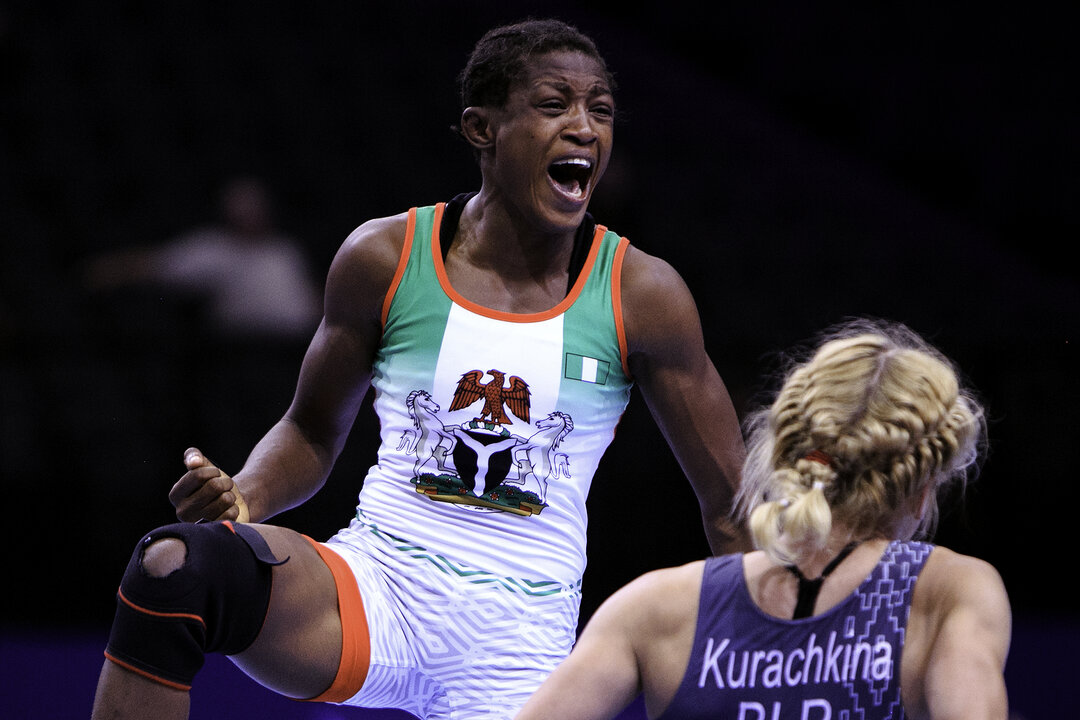
Photo: 2018 African champion No. 7 Odunayo ADEKUOROYE (NGR)

The duo of returning champions in No. 7 Odunayo ADEKUOROYE (NGR) and No. 9 Aminat Oluwafunmilayo ADENIYI (NGR) will look to pick up where they left off at the 2018 African Championships where they were crowned champions. 

Current world No. 2 Danielle Suzanne LAPPAGE (CAN) and No. 4 Blessing OBORUDUDU (NGR) will most likely battle in the 68kg gold-medal bout. Lappage, a 2016 Olympian is the returning champion at this weight class. This will be Oborududu’s third time wrestling at the Commonwealth Games. She's finished with a medal twice, but never one that was gold. 

Freestyle
At the 20th Commonwealth Games, Canada won four freestyle gold medals and India secured the remaining three. 
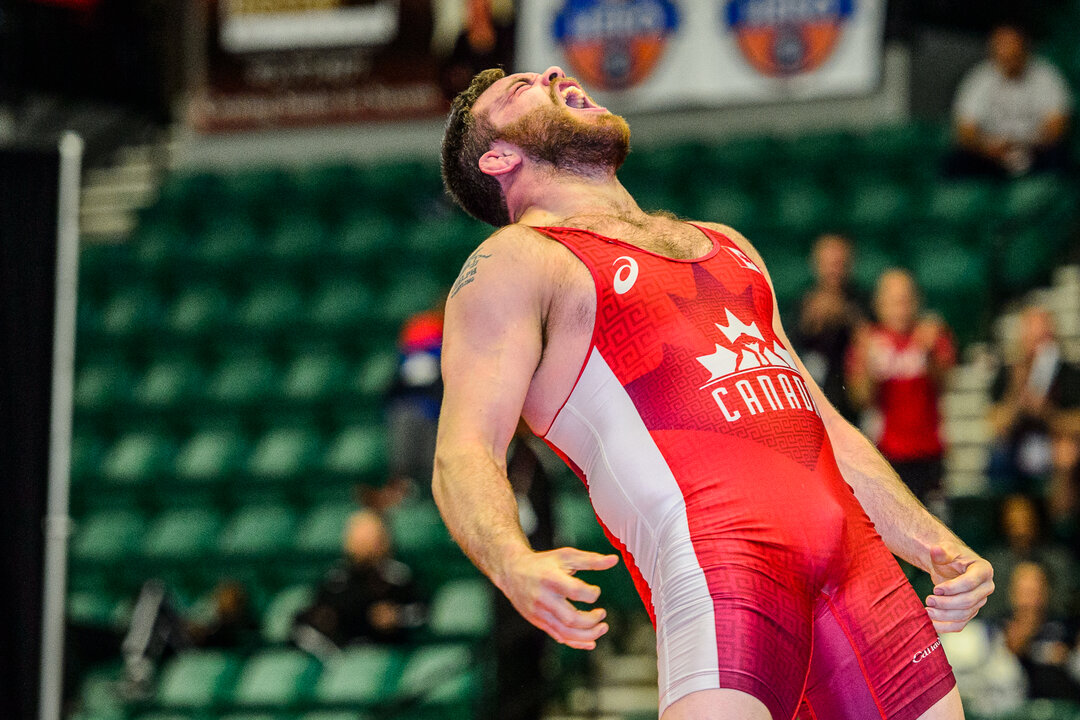
Photo: Korey JARVIS (CAN)

Korey JARVIS (CAN), the 2016 Olympian and 125kg favorite is one of two champions who return from the 2014 Games. Also returning is 74kg favorite and two-time champion, Kumar SUSHIL (IND). Although three other finalists in Bajrang BAJRANG (IND), Jevon BALFOUR (CAN), and Ebikewenimo WELSON (NGR) come back with hopes of bettering their performance from four years ago. 

At 57kg, the veteran and two-time finalist No. 10 Ebikewenimo WELSON (NGR) returns to his third Commonwealth Games with hopes of avenging his loss in the African finals against No. 6 Jan Louwrens COMBRINCK (RSA). 

A potential top-five match-up could be brewing at 65kg with 2014 runner-up and this year’s Asian bronze medalist, No. 4 Bajrang and No. 5 Amas DANIEL (NGR), 2018 African champion.
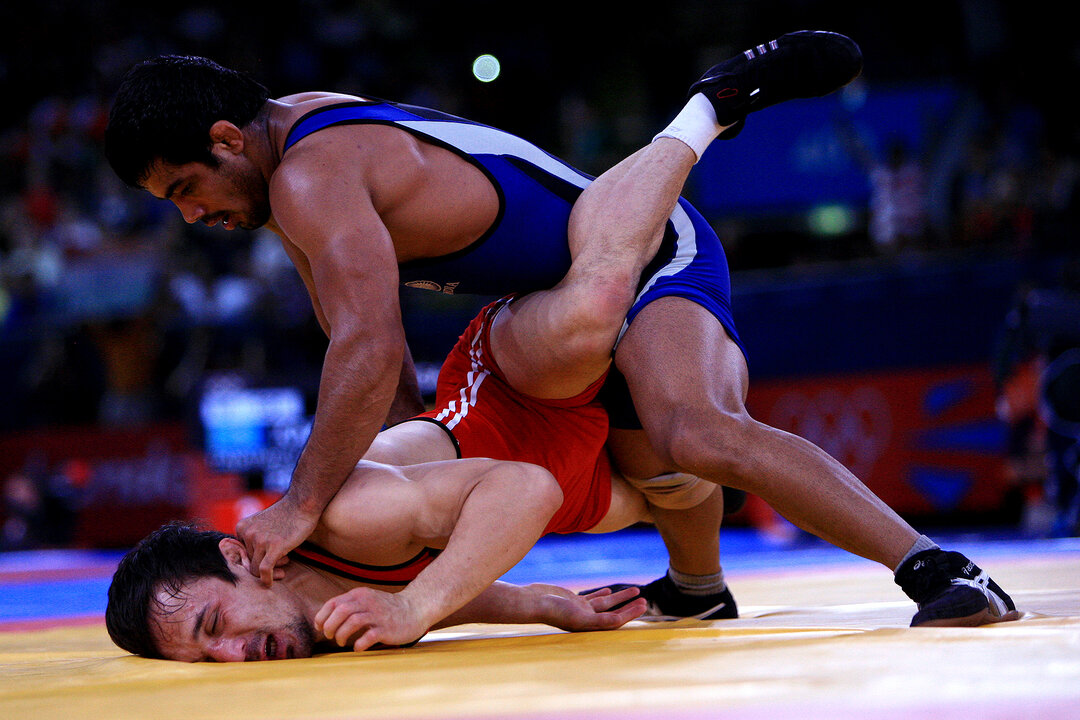
Photo: Three-time Olympian Kumar SUSHIL (IND). 

If 2014 finalist Jevon Balfour expects a medal upgrade, he'll have to navigate through the 74kg favorite, two-time Olympic medalist Kumar Sushil.  

Headlining 86kg is Nigeria’s Melvin BIBO who is currently ranked No. 2 in the world. This is Bibo’s second appearance at the Commonwealth Games. In his first appearance, he finished as a bronze medalist at 74kg.  

Three top-15 wrestlers from African nations are set to clash at 97kg. No. 5 Martin ERASMUS (RSA), No. 9 Soso TAMARAU (NGR) and No.13 Cedric Yvan NYAMSI TCHOUGA (CMR) capped off the African Championships with gold, silver and bronze medal performances respectfully. Of these three, Olympian Soso Tamarau is the only wrestler with prior experience. Bibo did not medal at the 2014 Commonwealth Games as he finished in fifth-place. 

FULL ROSTERS

SCHEDULE
April 12 (10:30 LOCAL TIME) 
Freestyle - 57kg and 74kg 
Women's Wrestling - 53kg and 76kg 

April 13 (10:30 LOCAL TIME) 
Freestyle - 65kg and 97kg 
Women's Wrestling - 57kg and 68kg 

April 14 (10:30 LOCAL TIME) 
Freestyle - 86kg and 125kg 
Women's Wrestling - 50kg and 62kg

#development

Wrestling training, activities return to Oceania

By United World Wrestling Press

CANBERRA, Australia (August 10) -- United World Wrestling, in partnership with Olympic Solidarity and Wrestling Australia, hosted educational courses and an athlete training camp prior to the Oceania Championships in Canberra, Australia.

After several years of inactivity due to COVID-19, the Oceania region spent eight days (July 30 July to August 6) developing wrestlers, coaches, and referees.

“This training was very important for all the participants," Zach ERRETT, UWW Education Manager, said. "This gave them an opportunity to grow and improve together as a region,"

The training camp was supported by the Sports Development Unit of Olympic Solidarity and led by Gary MAYABB (USA) and Carissa HOLLARD (AUS).

There were over 40 participants in attendance from six different countries namely Australia, New Zealand, Palau, Nauru, Samoa and Tonga. The wrestlers worked on developing basic skills that would help improve their primary and secondary scoring attacks. They also learned proper position and how to defend against leg attacks.

“I learned and grew a lot both as a coach and athlete through this course," Cristian NICOLESCU (PLW) said. "I am grateful to take part in this coaching course and training camp."

The coaches that attended the camp also participated for eight days. The course was supported by the Entourage Unit of Olympic Solidarity. The first part of the course focused on the Level 1 Coaching Course (Introduction to Coaching and Safety) which explained how to introduce techniques and coaching skills. The coaches were able to directly apply what they were learning during the camp.

The second part of the course included the Level 2 Course (Introduction to Practice Planning). This part focused on performance analysis and the development of effective practice plans.

During the week, the coaches pulled double time as they had a two-hour educational session prior to the training camp sessions.

“The group of coaches did an awesome job all week," Errett said. "It is not easy having to spend four hours of training each day in addition to coaching at the training camp. To their credit, they [participants] stepped up and really showed tremendous growth."

The wrestlers and coaches also participated in Anti-Doping and Athlete Safeguarding training which was conducted by Sport Integrity Australia. The Athlete Safeguarding training, completed by UWW, detailed the types of harm and fostered a discussion on what to do if a situation occurs.

“The Olympic Solidarity Youth Athlete Development program, along with the UWW Level 1 & 2 Coaches development and UWW Referees course, has proven to be a truly remarkable opportunity for fostering unity within the Oceania region," Holland said. "This collective endeavor, held in a world-class environment at the AIS, has undeniably contributed to the strengthening of wrestling in our region. Witnessing the positive impact on all participants has been heartening, and I firmly believe that these courses and camps will leave a lasting impression on the growth and progress of wrestling in Oceania. With such empowering experiences, I am confident that our future generations will be inspired to carry the torch forward, propelling the Oceania region towards even greater heights in the realm of wrestling."

AUSParticipants of the Referee Course go through in-match scoring situations. (Photo: United World Wrestling) 

During the second half of the week, the referees also held an Introduction to Refereeing course. This was conducted over the final four days of the camp. This course was conducted by Stefan RUDEVICS Rudevics (AUS), a IS referee.

During this course, the referees learned the basics of what it takes to be a good referee by improving positioning, scoring, and referee mechanics. This was imparted during the practical sessions in which they could referee simulated matches.

“Participants engaged to learn the techniques and philosophies of refereeing, criteria for scoring points, attack-counter attack situations, as well as critical scoring situations," Rudevics said. "By the end of the course, participants confidently refereed tough matches, in all referee positions, and with good accuracy."

On the final day of the two courses, the referees and coaches held a joint session. This session allowed them to work together to better understand each other and the rules of wrestling. The session allows the two groups to create open communication which will help improve their relationship in the future.

“The Oceania Training Camp was enhanced by the infusion of the coaches from the region who took part in both Level I and II Education Courses while working every session of the camp for their athletes," Mayabb said. "Wrestling Australia and United World Wrestling were outstanding hosts for all participants, making for eight great days of effort from athletes, coaches and referees.

"Every time we connect these stakeholders, we improve and advance our sport. Errett, Rudevics and Holland did an outstanding job blending the talents, skills and efforts of everyone in the Camp."

AUSAttendees go through a drill session during one of the training sessions in Australia. (Photo: United World Wrestling)

The participants in different courses expressed themselves after the courses.

Charlize CHANDRA (NZL)

"I really enjoyed meeting and training with different wrestlers from various countries and learning tips from them to make me a better wrestler. The coaches were absolutely amazing and pushed us to get out of our comfort zones so we could expand our wrestling skills. Overall, the training camp was such an enjoyable experience, and I loved every moment of it."

Josh ALOFIPO (SAM)

“I enjoyed the fellowship and exchanging new knowledge on wrestling. We’ve repeated our primary and secondary movements in order to correct our flow. We also made so much progress and gained new experiences every day as time went by. It has helped us understand wrestling a lot more and that is something we can take home."

William RIDDIFORD (AUS)

"I have liked all the cool wrestling techniques we have learned while training at this camp and the food and activities at the Australian Institute of Sports."

Tianna FERNANDEZ (PLW)

“I appreciate being able to come out to Australia for this wrestling camp. I have learned so much from coaches Gary, Zach, Carissa, and others. They reminded me of the importance of the basics and positioning and how much of a difference it really makes.”

Alex RADDY (NZL)

"It’s been a great learning opportunity with awesome people from Oceania and some amazing coaches that have really helped me understand the basics and given me the ability to take my wrestling to the next level."

Blesam TARKONG (PLW Coach)

“The course has been enlightening. Showing things that I have not considered to teach my athletes and myself. Nothing but positive feedback from me. Thank you!”

Gaku AKAZAWA (SAM Coach)

“I would like to thank my coach for giving me the lecture. This time I took a coaching course and my coaching skills improved. I would like to continue to improve as a coach.”