ZAGREB, Croatia (September 13) -- The World Championships are underway in Zagreb. The competition kicks off with four weight classes in 61kg, 70kg, 86kg and 125kg.
WATCH LIVE | LIVE MATCH ORDER | FREESTYLE PREVIEW
14:35: European champion Giorgi MESHVILDISHVILI (AZE) given no chance to Vlagyiszlav BAJCAJEV (HUN) and wins his quarterfinal at 125kg 7-0.
14:34: Robert BARAN (POL), a four-time European medalist, moves closer to his first world medal with a dramatic 6-3 come-from-behind victory over Mohsen SIYAR (GER) in their 125kg quarterfinal. Siyar scored a first-period takedown and added a stepout early in the second to lead 3-0. But with :33 to go, Baran gets behind for a takedown, then goes ahead with another at the :13 mark. He adds a gut wrench in the final seconds to cap an amazing win.
14:27: Asian bronze medalist Shamil SHARIPOV (BRN) uses a well-time counter lift to roll back and put Abdulla KURBANOV (UWW) directly onto his back. After a short fight, Sharipov secures the fall at the 2:00 mark to advance to the 125kg semifinals.
14:30: A technical superiority win and into the semifinals is world champion Amir Hossein ZARE (IRI) at 125kg. He scores two takedowns in the first period before a takedown and turn in the second for a 10-0 win over Solomon MANASHVILI (GEO).
14:23: Ahmad JAVAN (IRI) is in the semifinals at 61kg with an 8-4 victory over Kamil KERYMOV (UKR). Javan looks in control of his opponents throughout the bout as he showed today.
14:20: Teen phenom Jax FORREST (USA) continues his amazing run in Zagreb, scoring a pair of 4-point takedowns before holding off a late surge from Taiyrbek ZHUMASHBEK UULU (KGZ) to win 13-8 and advance to the 61kg semifinals.
14:18: Zavur UGUEV (UWW) was down 2-1 against Assylzhan YESSENGELDI (KAZ) but launches a gut-wrench and storms to a 13-2 victory at 61kg. He looks pretty determined to win that gold after six years.
14:13: Kum Hyok KIM (PRK) gets the takedown, puts his head between the legs of Leomid COLESNIC (MDA) and rolls four times for a 10-0 victory in 1:32 and a place in the 61kg semifinals.
14:11: Former world U20 champion Hayato ISHIGURO (JPN) with a big win over Arsenii DZHIOEV (AZE) in the 86kg quarterfinals. Ishiguro built a 6-2 lead before he got a counter for four and gave up two on exposure and led 10-4. But Azerbaijan challenged the call only to lose it and Ishiguro got one more points. Dzhioev scored two takedowns but they were not enough. Ishiguro won 11-8.
14:08: No last second heartbreaks for Kamran GHASEMPOUR (IRI) as he stuns Ibragim KADIEV (UWW) in the 86kg quarterfinals. Ghasempour led 1-0 after Kadiev was called passive but Kadiev scored a takedown to make it 2-1. Both wrestlers locked each other in chestwraps and threw. It was scored four for Kadiev and two for Ghasempour. Iran challenged the call and it was assessed that there was no danger in the throws. Kadiev got the takedown so he kept his two points to lead 4-1 with 1:28 left.
Ghasempour then waited to set Kadiev up. He faked a shot and Kadiev jumped for his legs. But Ghasempour, who was waiting for it, jumped over and to score the takedown and a turn to lead 5-4. He defended his lead for the last 20 seconds and enter the semifinals.
13:58: If Azamat DAULETBEKOV (KAZ) leaves Zagreb with a medal, it will have to be his third world bronze after he was decimated by Rakhim MAGAMADOV (FRA) in their 86kg quarter. Down 1-0, Magamadov secured a high lace lock and muscled Dauletbekov over five times for a 12-1 win in 1:04.
13:54: Zahid VALENCIA (USA) rolls to his third straight 10-0 victory, and this time he ended all in one swoop to advance to the 86kg semifinals. Valencia gets the takedown, then reels off four gut wrenches and that's all for Ivars SAMUSONOK (LAT) in just 35 seconds.
13:51: Arman ANDREASYAN (ARM) pulls off another close victory in advancing at 70kg, scoring a late takedown for an 8-6 victory over Kanan HEYBATOV (AZE). Heybatov led 6-3, scoring three takedowns to Andreasyan's three stepouts. But the Armenian closed the gap with a two stepouts before taking the lead for the first time with a takedown. An unsuccessful challenge added the final point.
13:50: A heat bout between Yoshinosuke AOYAGI (JPN) and Iszmail MUSZUKAJEV (HUN) at 70kg. Muszukajev was complaining of a hit from Aoyagi who himself was complaining of a punch from Muszukajev. But all said and done, Aoyagi is back in the semifinals with an 11-0 win over Muszukajev.
13:49: American-born Austin GOMEZ (MEX), looking to give Mexico its first-ever world medal, storms out to a 6-0 lead in his 70kg quarterfinal with reigning world champion Nurkozha KAIPANOV (KAZ). But Kaipanov gets a takedown before the break, then a takedown and exposure after it to go ahead 6-6 on criteria. Gomez isn't finished and gets a takedown with 1:04 left, but Kaipanov breaks Mexican hearts with a takedown with :24 left, then defends against a last-ditch attempt to win 10-8.
13:40: Tulga TUMUR OCHIR (MGL) with a technical superiority win over Akaki KEMERTELIDZE (GEO) in the quarterfinals at 70kg. Tumur Ochir with a takedown and four turns to win 11-0.
Quarterfinals begin at the same time in all the weight classes
13:10: Former world bronze medalist Azamat DAULETBEKOV (KAZ) absolutely dominates Mahamedkhabib KADZIMAHAMEDAU (UWW) in the 86kg 1/8 finals. He scored a takedown and two gut-wrench turns in his 8-1 victory.
13:09: European silver medalist Solomon MANASHVILI (GEO) makes short work of Gyeongmin KIM (KOR), scoring a quick 10-0 victory to earn a probable quarterfinal clash with Amir ZARE (IRI) at 125kg.
13:08: Leomid COLESNIC (MDA) pulls an upset at 61kg, building a 6-1 lead in the first period and holding on for a 7-4 victory over former world champion Zelimkhan ABAKAROV (ALB) to secure a spot in the quarterfinals.
13:02: Suprise on Mat D as Iranian-born Mohsen SIYAR (GER) knocks off two-time world medalist Lkhagvagerel MUNKHTUR (MGL) 5-2 for a place in the 125kg quarterfinals. Munkhtur gets an activity point for the lone score of the first period. In the second, the Mongolian is on the activity clock when Siyar scores a snapdown, go-behind takedown. A Munkhtur stepout cuts the lead to 3-2, but Siyar uses a counter lift for 2 to seal the deal.
12:52: Takara SUDA (JPN) cannot handle the pressure from Jaxen FORREST (USA) in their 61kg bout and drops his bout 7-2. Suda was put on the clock first and did not score as Forrest got a 1-0 lead. In the second period, Suda was more active but Forrest had unbelievable positioning to keep his lead. He managed to score a takedown on Suda for a 3-0 lead. He added another for a 5-0 lead before Suda got 2 points for exposure with less than a minute left. He failed to score any and got countered for two points as Forrest won 7-2
12:44: Kamran GHASEMPOUR (IRI) stayed on track to add to his two world golds at 92kg by advancing to the 86kg quarterfinals with a one-sided 10-0 victory over Batbilguun NAADAMBAT (MGL). Ghasempour had four takedowns, including a 4-pointer.
12:35: World U20 champion PJ DUKE (USA) gave it all he had against world champion Nurkozha KAIPANOV (KAZ) but the Kazakhstan wrestler finishes with a 11-7 victory at 70kg. Duke blasted two takedowns and led 4-0 before Kaipanov came back in the second period. He made it 4-4 before a gut-wrench gave him a 6-4 lead. Kaipanov led 9-7 when Duke tried a chest wrap but Kaipanov blocked it and scored the match closing takedown.
12:34: Former world U20 champion Hayato ISHIGURO (JPN) launches a big 4-point throw then finishes up a 10-0 win over Mukhammed ALIIEV (UKR) in just 1:25 to advance to the 86kg quarterfinals.
12:33: Iszmail MUSZUKAJEV (HUN) left it late, but kept alive his bid for a second career world title with a 4-2 victory over Saiyn KAZYRYK (UWW) to make the 70kg quarterfinals. After giving up a stepout and activity point in the first period, Muszukajev comes back with a pair of stepouts, the second one coming with :51 left to go ahead on criteria. He picks up a takedown to finish the job.
12:32: Zahid VALENCIA (USA) storms into the 86kg quarterfinals with his second straight victory by 10-0 technical superiority. This time he takes out Fateh BENFERDJALLAH (ALG) with a similar combination of single-leg takedowns and lace locks as in his earlier win.
12:30: Returning silver medalist Yoshinosuke AOYAGI (JPN) humbles Asian champion Ernazar AKMATALIEV (KGZ) at 70kg with a leg-lace. 11-0 victory for Aoyagi
12:26: Tulga TUMUR OCHIR (MGL), nursing a 3-1 lead, ties up the arms of Mihail GEORGIEV (BUL) and pancakes him to the mat for a fall at 4:30 and he's into the 70kg quarterfinals.
12:16: Arman ANDREASYAN (ARM) continues to take a cautious approach, but it works for him in posting a 4-1 victory over Viktor VOINOVIC (SRB) to advance to the quarterfinals at 70kg. Andreasyan scores a stepout and activity point in the first period, then two stepouts in the second. Voinovic, trying to get something going, gets the Armenian's leg in the air, but all he can settle for is a stepout.
11:48: Ahmad JAVAN (IRI) with a 13-2 technical superiority Joshua KRAMER (ECU) at 61kg. Great counters from Javan to score takedowns.
11:47: In a classic battle between recent world U23 champions at 125kg, Abdulla KURBANOV (UWW) gets the big points in key situations to score a 14-4 victory over Wyatt HENDRICKSON (USA). Kurbanov comes out with single-leg takedown to the back for 4. Hendrickson replies with a stepout, but gives up a 2-point exposure when he tries to get behind. In the second period, Kurbanov gets a counter lift for 2 while giving up 1 for a reversal, making it 8-2. Hendrickson then counter lifts for 2 to pull within four. But Kurbanov stuffs an attempted lift for 2, then adds a gut wrench to finish up the match in the final minute.
11:36: Former world champion Zelimkhan ABAKAROV (ALB) scores a second-period takedown while on the activity clock and that's enough to give him a 3-0 victory over Emrah ORMANOGLU (TUR) at 61kg.
11:35: Jaxen FORREST (USA) keeps the unbeaten run of the United States going with a technical superiority win over Sangboum HAN (KOR) at 61kg
11:22: Two-time world bronze medalist Azamat DAULETBEKOV (KAZ) overwhelms Paulius LESCAUSKAS (LTU) 10-0 in his opening match at 86kg. Dauletbekov scores a takedown, then rolls Lescauskas back and forth three times to go up 8-0. He ends the match by countering a takedown attempt by locking the Lithuanian in a cradle and turning him over.
11:09: Zahid VALENCIA (USA), a 2023 world bronze medalist at 92kg, gets his campaign at 86kg off to an impressive start with a 10-0 victory over Mukul DAHIYA (IND). Valencia comes out like gangbusters, scoring a takedown and reeling off two lace locks for a quick 6-0 lead. He adds another takedown, but can't turn over Dahiya to go up 8-0. Despite Dahiya's stiff defense, Valencia finally gets behind to end the match.
11:02: Begijon KULDASHEV (UZB) gives up the go-ahead takedown to ROHIT (IND) in their 70kg qualification bout, but comes back with a takedown with :40 left to walk off a 5-4 winner. Next up is second seed Akaki KEMERTELIDZE (GEO).
10:57: Ibragim KADIEV (UWW), a two-time world U20 champion, starts 86kg with a 9-2 controlled win over Cezary SADOWSKI (POL) to advance at 86kg.
10:53: Amirmohammad YAZDANI (IRI) held his own for the first period but is totally outsmarted by Kanan HEYBATOV (AZE) in the second period as the Azerbaijan wrestler beats Yazdani 15-4 at 70kg.
10:50: PJ DUKE (USA), coming off a victory at the world U20 a few months ago, got his bid for the senior title at 70kg started with a 11-0 victory over Shuang CHEN (CHN). Duke used a 2-on-1 to score three stepouts, then used it to get behind for a takedown and leveraged Chen over for a 2-point exposure. In the second period, Duke needs just 18 seconds to get behind again, get another exposure and he's into the next round.
10:42: In a fierce opening match on Mat C, European silver medalist Arman ANDREASYAN (ARM) comes away with a nail-biting 5-5 over Asian silver medalist Viktor RASSADIN (TJK) at 70kg. Andreasyan holds a 3-3 criteria lead when Rassadin scores a stepout with a fleeing point added on to go ahead with :35 left. But the Armenian is not done yet, and gets a stepout and fleeing point of his own with 2.4 seconds left to notch the win.
10:37: Olympic medalist Islam DUDAEV (ALB), who moved up to 70kg for the World Championships, drops his first match against world champion Iszmail MUSZUKAJEV (HUN). Dudaev led 1-0 but is put on the activity clock in the second period. He fails to score and Muszukajev wins 1-1 ion criteria.
10:36: Saiyn KAZYRYK (UWW) built an 8-2 lead before securing a fall over Oleksii BORUTA (UKR) in the opening round bout at 70kg.
10:34: Two-time world medalist Ernazar AKMATALIEV (KGZ) makes short work of Jorge GATICA (CHI) in the opening bout on Mat D at 70kg, finishing off a 10-0 win in just a tick over two minutes. With the win, Akmataliev has set up a rematch with top-seeded Yoshinosuke AOYAGI (JPN) of his wild semifinal win at the Asian Championships.
10:30: The World Championships at the Arena Zagreb kicks off today! We have wrestling in 61kg, 70kg, 86kg and 125kg.



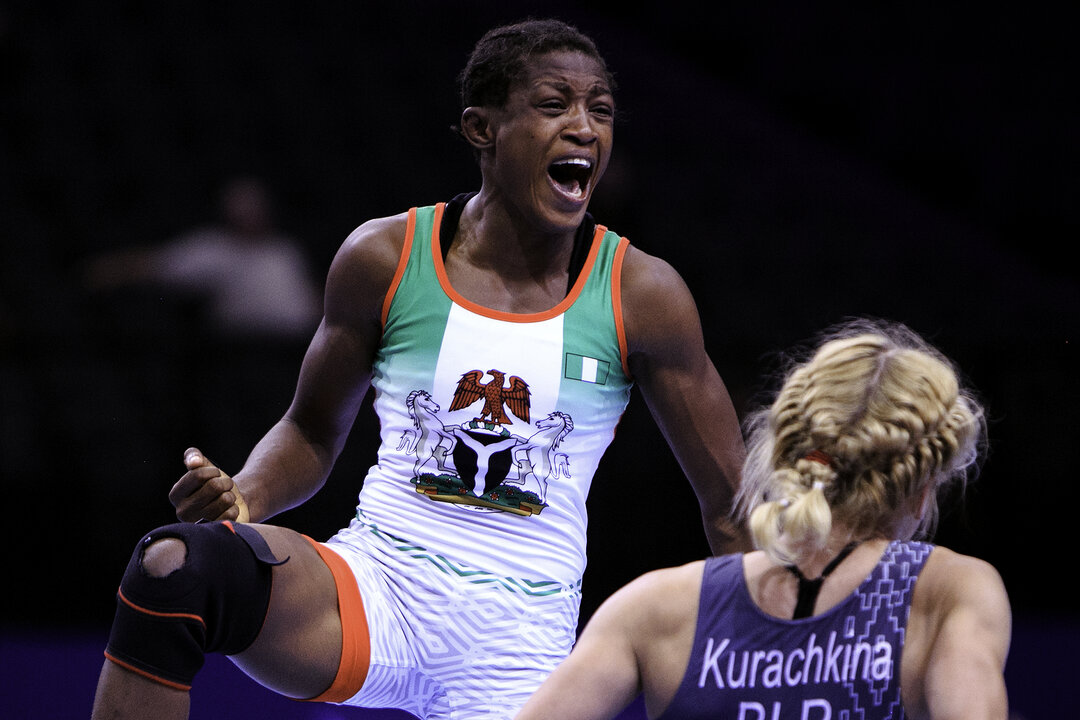 df. Iryna KURACHKINA (BLR) by 10-0 (2).jpg) Photo: 2018 African champion No. 7 Odunayo ADEKUOROYE (NGR)
Photo: 2018 African champion No. 7 Odunayo ADEKUOROYE (NGR)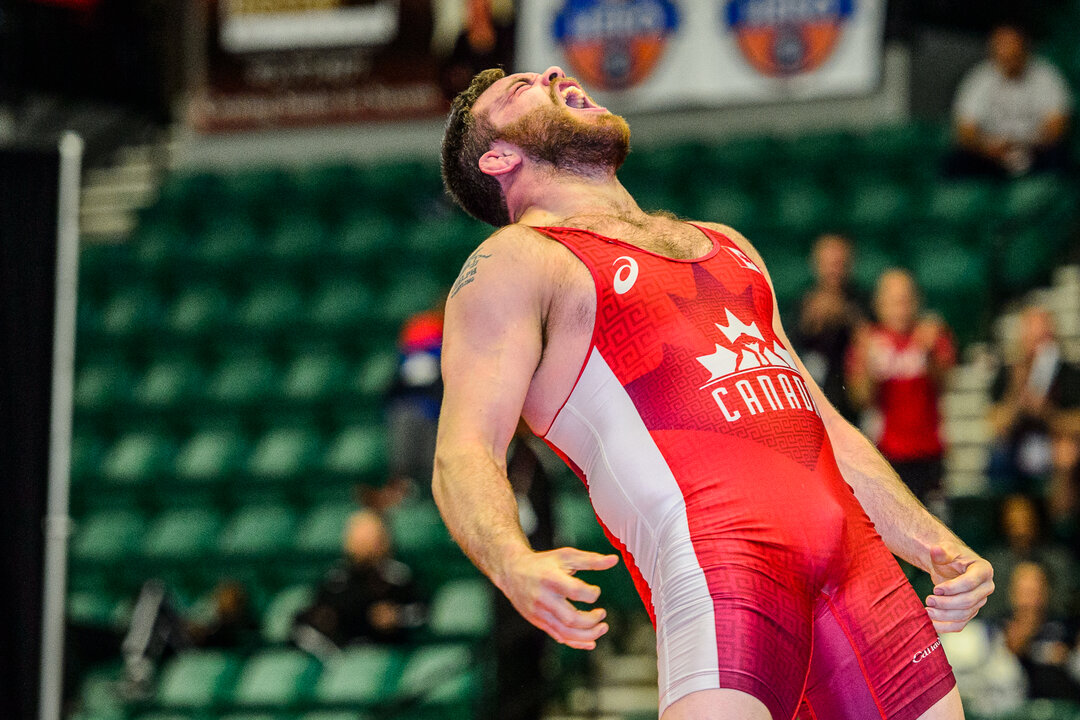 VT Luis Felipe VIVENES URBANEJA, (Venezuela), 5-0 - 3.jpg) Photo: Korey JARVIS (CAN)
Photo: Korey JARVIS (CAN)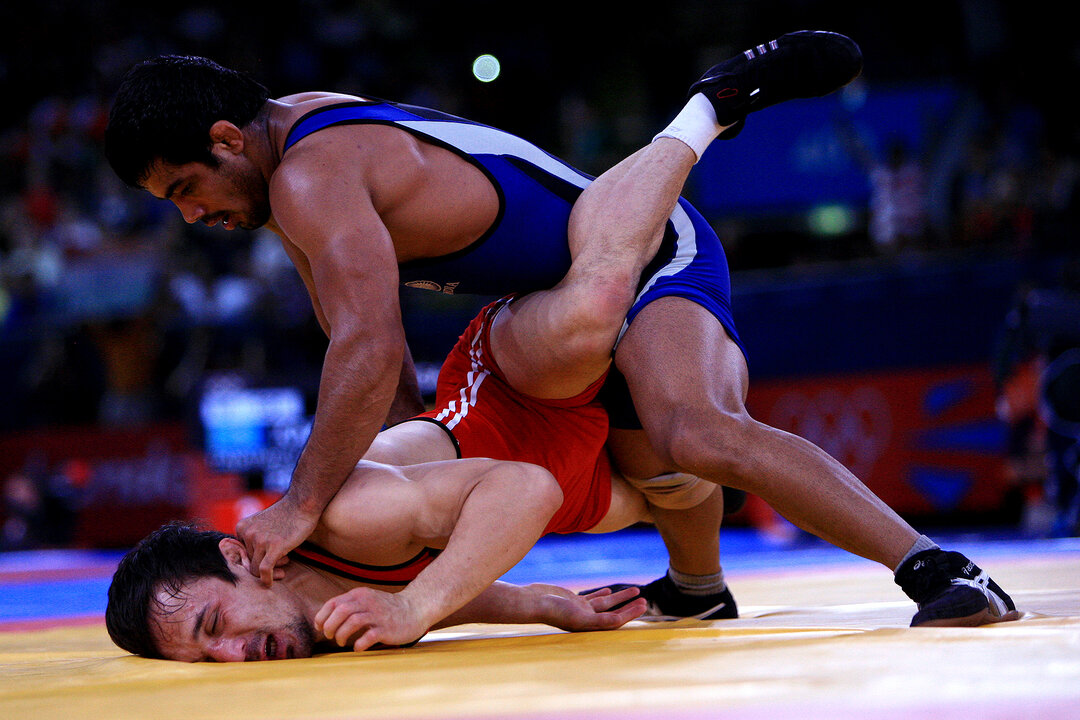 df. Tanatarov, Akzhurek (KAZ).jpg) Photo: Three-time Olympian Kumar SUSHIL (IND).
Photo: Three-time Olympian Kumar SUSHIL (IND). 
Share your thoughts.
Comments