IOC

Lalovic to Join IOC Executive Board

By United World Wrestling Press

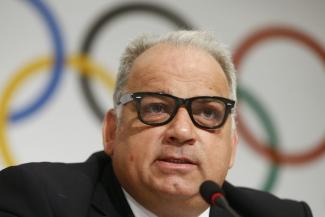
CORSIER-SUR-VEVEY (February 7) – United World Wrestling president Nenad Lalovic has been elected to the IOC Executive Board (EB) as representative for the Association of Summer Olympic International Federations (ASOIF), following a recent vote by the 28 Summer International Federations. The IOC Session confirmed the vote this morning in Pyeongchang.

Lalovic will become the first EB member from the sport of wrestling.

A businessman from Belgrade, the 59-year-old Lalovic has overseen several dramatic and popular changes to one of the Olympic Games’ oldest sports. Lalovic was named the president of United World Wrestling in February 2013 and appointed as a full member of the IOC in August of 2015.

"The Executive Board has tremendous responsibility to assist the Olympic movement," said Lalovic. “I'm humbled to be a member of the board and contribute to its many missions and goals. I take pride in this position as representing all Summer Sports on the EB and will be a strong advocate for all of them.”

The EB consists of the IOC President, four Vice-Presidents and ten other members. Among its many concerns the EB assumes the overall responsibility for the administration of the IOC, approves the IOC's internal organization and is responsible for the management of the IOC's finances and prepares an annual report. The EB also conducts the procedure for acceptance and selection of candidatures for the organization of the Olympic Games and establishes the agenda for the IOC Sessions.

Click Here to learn more about the IOC Executive Board. (
https://www.olympic.org/executive-board)

#development

Guenat presents UWW’s IT success at ASOIF workshop

By United World Wrestling Press

LAUSANNE, Switzerland (May 24) -- ASOIF’s Sport Development and Education Workshop brought together 50 experts from 29 Summer and Winter Olympic International Federations (IFs) earlier this week. Organized by the ASOIF Sport Development and Education Group (ASDEG), the workshop focused on the common challenges and opportunities related to digitalization, the centralization of information, the evaluation of return on investment of IF development programs, new revenue sources for such programs, and sport initiations at multi-sports events.

The event was held on May 16 and 17 in Lausanne, Switzerland, led by the Chair of ASDEG Deqa NIAMKEY, Development Director at United World Wrestling.

Several representatives from ASOIF member federations presented case studies and shared best practices, while a number of external experts provided additional insights into the topics addressed.

UWW IT Director Sébastien GUENAT presented the Athena and Arena system during the workshop explaining how technology can help ease the work of any IF.

“It has been a pleasure to show what we have been working on at UWW for the past 10 years and discover that other IFs are on a similar path with not only questions but also interesting ideas on how to make technological tools more engaging for everybody," Guenat said.

Cynthia Amami and Margaux Kaltenbacher from Olympic Solidarity shared their experience on successful methods and tools to centralize information, whereas Jonas Gredenhag from PGA Tour explained how new ways of data collection have helped to enhance professional golf tournaments.

Katie Brazier from Birmingham City Council and Lilia Barieva from the International University Sports Federation (FISU) then presented successful examples of innovative sports initiations at the Birmingham 2022 Commonwealth Games and the World University Games respectively.

During another session, Elena Portas and Patrick Massey from Portas Consulting discussed social return on investment with the Forum participants.

Development and education are crucial to solid foundations and the healthy future of every sport. It's great to see that each year, our workshop attracts more IF colleagues and the discussions and outcomes are really constructive.

The workshop facilitates a united approach of a large number of IFs in the implementation of their sport development and education projects. This allows efficiencies in terms of human and financial resources, ensures a certain consistency across the sports and thereby maximizes the impact of the related IF activities overall.