

#WrestleXian

Karimimachiani Leads Quartet of Iranians into Finals on Day 2 in Xi’an

By Ken Marantz

XI’AN, China (April 24)— Alireza KARIMIMACHIANI (IRI) won his clash of world bronze medalists, then became part of an Iranian quartet that advanced to the finals in five freestyle weight classes on the second day of the Asian Championships in Xi’an.

Iran, which won three golds and two bronzes on the Daniyar KAISANOV (KAZ) v Amit DHANKHAR (IND) opening day, has a chance to secure medals in all 10 weight classes, as the West Asian power will also contest a bronze-medal match in the evening session.

Host China will have two chances to give the home crowd a gold medal at the expense of Iran, as world U23 bronze medalist LIU Minghu will face Behnam EHSANPOUR in the 61kg final, and world silver medalist DENG Zhiwei (CHN) will clash with Yadollah MOHEBI (IRI) for the 125kg crown.

India also has two finalists, while Kazakhstan and Kyrgyzstan have one each.
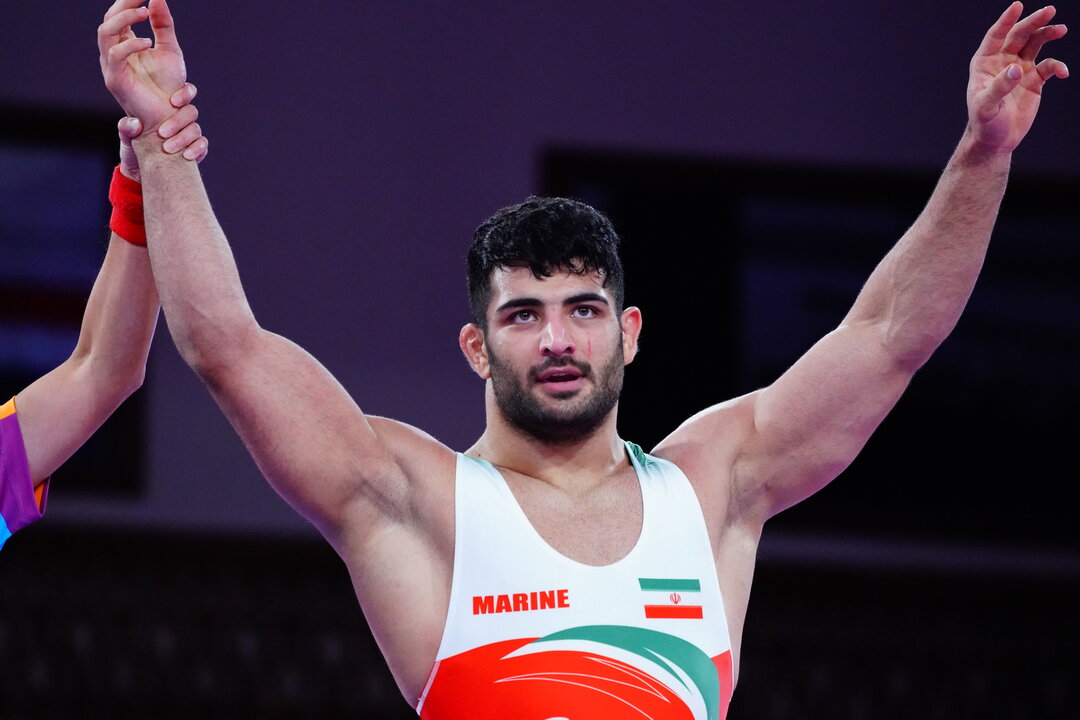

Alireza KARIMIMACHIANI (IRI), the reigning Asian Games champion, will wrestle India's Viky VIKY in the 92kg gold-medal bout. (Photo: Sachiko Hotaka)

Karimimachiani, the Asian Games champion last summer in Jakarta, advanced to the 92kg final against Viky VIKY (IND) by chalking up three consecutive 10-0 technical fall victories.

His second match, in the quarterfinals, pitted him against Atsushi MATSUMOTO (JPN), a fellow bronze medalist at the Budapest 2018 world championships. 

But Karimimachiani made short work of the Japanese, scoring with a 4-point move that he followed up with three straight rolls to end the match in 59 seconds.

“Before I could break the hold, I was being rolled,” said Matsumoto, who made it through the repechage and will compete for a bronze medal.
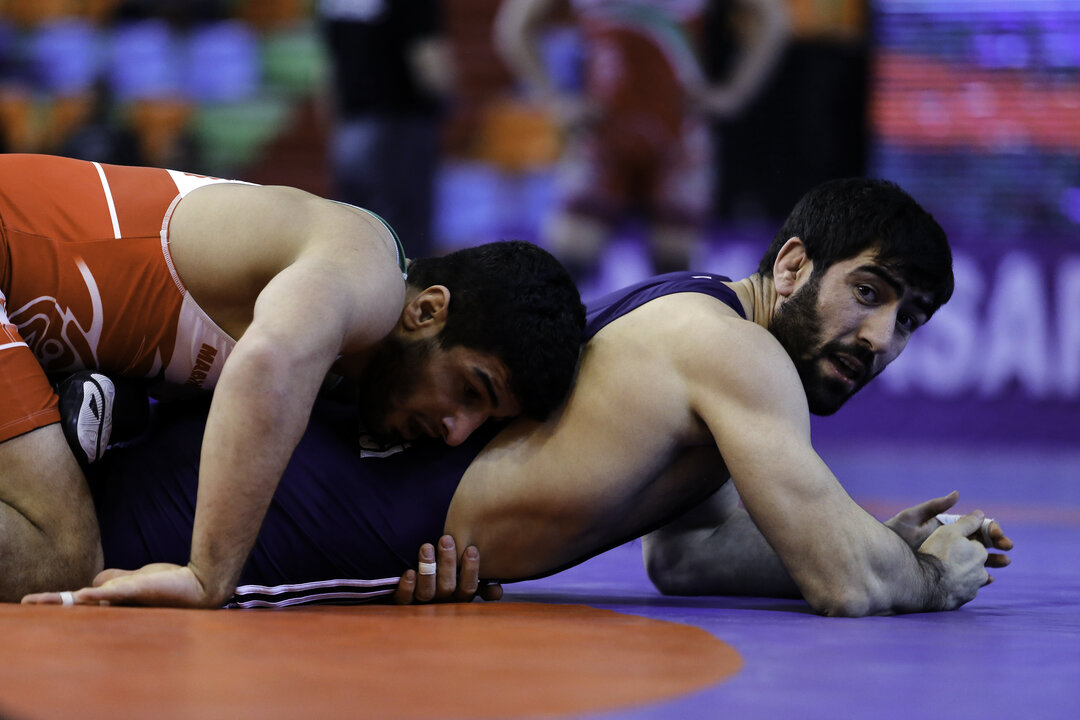

Kamran GHASEMPOUR (IRI) was one of four Iranian wrestlers who made the Day 2 freestyle finals. (Photo: Sachiko Hotaka)

World U23 champion Kamran GHASEMPOUR (IRI) is the other Iranian who gave himself a shot at gold, which he will hope to secure at the expense of Aligarizhi GAMIDGADZHIEV (KGZ) in the 86kg final.   

“We are very happy to have four in the finals,” Iran head coach Gholamreza MOHAMMADI said. “That was our target, to get five medals.”

Mohammadi said the team was dedicating its victories to their compatriots who perished in or are suffering from devastating floods that hit Iran a month ago.
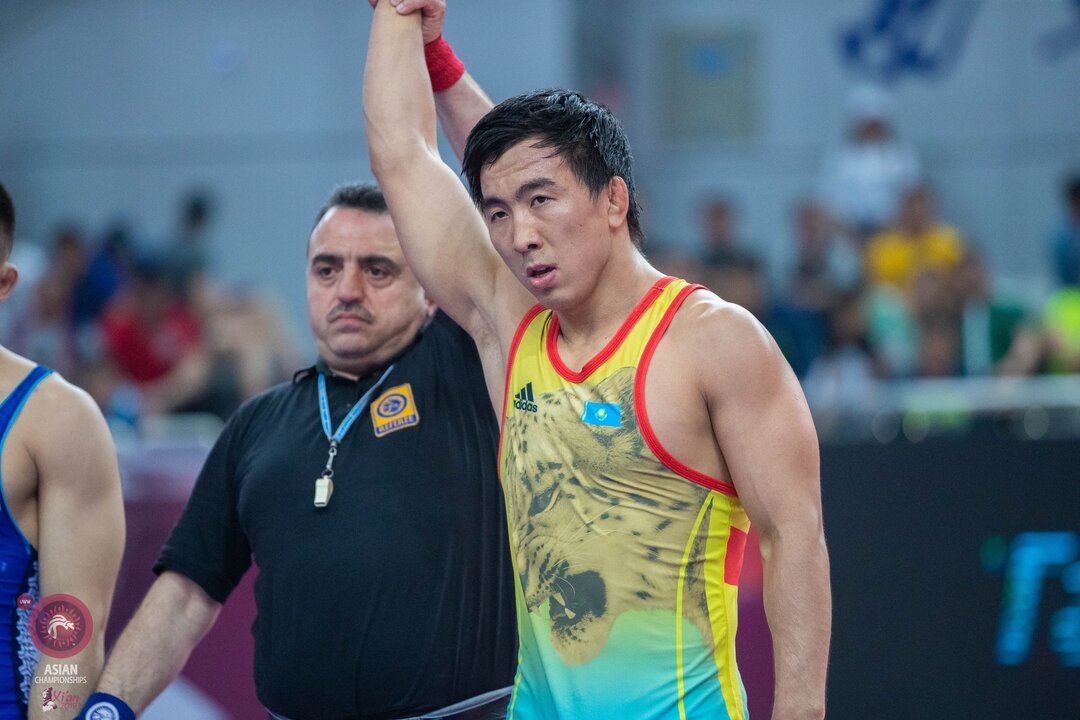

Daniyar KAISANOV (KAZ) is set to face Amit DHANKHAR (IND) for the 74kg title. (Photo: Sachiko Hotaka)

In the other final on tap, Daniyar KAISANOV (KAZ), a bronze medalist in 2018 and the Asian Games silver medalist, will face Amit DHANKHAR (IND) for the 74kg title.

The 74kg class lost two of its favorites to injury. Kaisanov advanced to the final when world silver medalist Adam BATIROV (BRN) defaulted their semifinal match due to an unspecified injury.

Earlier, Yuhi FUJINAMI, the 2017 world bronze medalist at 70kg, reinjured his right knee while holding on to defeat LUO Yin (CHN), 11-7, in their first-round match. 

Fujinami, upon the doctor’s advice and taking into consideration a vital upcoming national tournament, decided to default his quarterfinal match to Dhankhar. 

“I was looking at this tournament as one I could win,” said Fujinami, who originally injured his knee in February. “But after talking to the doctor and thinking ahead, it was best to stop.”

Dhankhar handed Iran its only loss of the qualifying session when he edged Mohammad NOKHODILARIMI, 2-1, in the first round.

Other than that match, no bout involving an Iranian went the distance, as all were won by either fall or technical fall.

Day 2 results

Freestyle

61kg (14 entries)
Gold – LIU Minghu (CHN) v Behnam EHSANPOOR (IRI)
Bronze – Dzhamshed SHARIFOV (TJK) v Yudai FUJITA (JPN)
Bronze – Rahul AWARE (IND) v KIM Jincheol (KOR)

Semifinals
LIU Minghu (CHN) df. Yudai FUJITA (JPN), 9-2
Behnam EHSANPOOR (IRI) df. KIM Jingcheol (KOR) by TF, 12-1, 4:46

74kg (13 entries)
Gold – Daniyar KAISANOV (KAZ) v Amit DHANKHAR (IND)
Bronze – Mohammad NOKHODILARIMI (IRI) v Ilgiz DZHAKYUPBEKOV (KGZ)
Bronze – Olgenbayar BATSUURI (MGL) v Adam BATIROV (BRN)

Semifinals
Daniyar KAISANOV (KAZ) df. Adam BATISOV (BRN) by Default
Amit DHANKHAR (IND) df. Ilgiz DZHAKYUPBEKOV (KGZ), 5-0

86kg (15 entries)
Gold – Kamran GHASEMPOUR (IRI) v Aligarizhi GAMIDGADZHIEV (KGZ)
Bronze – Gankhuyag GANBAATAR (MGL) v Abdurasul VAKHOBOV (UZB)
Bronze – Bakhodur KODIROV (TJK) v Deepak PUNIA (IND)

Semifinals
Kamran GHASEMPOUR (IRI) df. Deepak PUNIA (IND) by TF, 10-0, :40
Aligarizhi GAMIDGADZHIEV (KGZ) df. Abdurasul VAKHOBOV (UZB), 10-7

92kg (11 entries)
Gold – Viky VIKY (IND) v Alireza KARIMIMACHIANI (IRI)
Bronze – Atsushi MATSUMOTO (JPN) v Azizbek SOLIEV (UZB)
Bronze – Muhammad INAM (PAK) v SUN Xiao (CHN)

Semifinals
Viky VIKY (IND) df. SUN Xiao (CHN), 3-2
Alireza KARIMIMACHIANI (IRI) df. Azizbek SOLIEV (UZB) by TF, 10-0, 2:46

125kg (11 entries)
Gold – DENG Zhiwei (CHN) v Yadollah MOHEBI (IRI)
Bronze – KIM Donghwan (KOR) v Khasanboy RAKHIMOV (UZB) 
Bronze – Sumit SUMIT (IND) v Farkhod ANAKULOV (TJK)

Semifinals
DENG Zhiwei (CHN) df. Farkhod ANAKULOV (TJK) by TF, 10-0, :42
Yadollah MOHEBI (IRI) df. Khasanboy RAKHIMOV (UZB) by TF, 11-0, 2:50 

Development

DNSS Program in Cambodia: Building Foundations for Wrestling Growth

By United World Wrestling Press

PHNOM PENH, Cambodia (December 2) --- From July 18 to November 30, 2024, the Development of the National Sports System (DNSS) program in Cambodia marked a significant milestone for the growth of wrestling in the country. Led by UWW Educator Martin Hauck (USA), this program provided a comprehensive approach to enhancing coaching, athlete development, and refereeing in Cambodia. Through a mix of workshops, camps, and tournaments, the initiative sought to foster collaboration, education, and enthusiasm for wrestling at all levels.

During the program, more educational opportunities were created for coaches, athletes, and referees. A key highlight was a youth national tournament held during the second visit, which connected athletes and coaches from several provinces, promoting competition and collaboration. Plans were made to make this event an annual tradition, further strengthening the sport’s foundation in Cambodia.

The program objectives included observing and assessing the national team during a high-performance camp in July, educating coaches on long-term athlete development, and organizing a one-day seminar in a neighboring province to introduce wrestling games to youth. Meetings with the Cambodia Wrestling Federation leadership helped establish a roadmap for future development and in-person training sessions.

Key deliverables included:

  • Running camps and seminars for coaches and athletes, focusing on practical and theoretical education.
  • Creating a Cambodian Coaches Course Curriculum and teaching topics such as emergency action planning, practice structuring, periodization, talent identification, and connecting traditional Cambodian wrestling with Olympic styles.
  • Organizing a youth national tournament and camp, which saw participation from almost all provinces, showcasing significant growth on and off the mat.
  • Promoting communication, education, and resource-sharing platforms for ongoing development.

The DNSS program not only strengthened technical skills but also built excitement and unity within the Cambodia Wrestling Federation. With a focus on collaboration among referees, coaches, athletes, and stakeholders, this initiative laid the groundwork for sustained development and opportunities in wrestling throughout Cambodia.

The Development of National Sports System (DNSS) program, conducted in Cambodia from July 18 to November 30, 2024, marked a significant step toward developing wrestling in the country. Led by UWW Educator Martin Hauck (USA), the program aimed to address critical gaps in coaching, athlete development, and organizational structure while fostering growth and enthusiasm for the sport nationwide.

CAMOver 100 participants competed in the national youth tournament during the Development of the National Sports System (DNSS) program in Cambodia.

Program Activities and Achievements

The DNSS program implemented a range of initiatives to address these challenges and lay the groundwork for wrestling’s growth:

  1. Youth Development and Competitions:
    The program introduced a national youth tournament, drawing over 100 athletes from nearly all provinces. This event not only provided a platform for competition but also fostered excitement and collaboration among athletes, coaches, referees, parents, and stakeholders.
  2. Coaching Education and Communication:
    Coaches participated in comprehensive seminars covering emergency action planning, athlete development, periodization, video analysis, coaching females, and practice structuring. A centralized communication platform on the Cambodia Wrestling Federation website improved collaboration among coaches and clubs, helping connect rural and urban areas.
  3. Structured Athlete Development:
    New frameworks for athlete progression were introduced, enabling coaches and athletes to engage in long-term development cycles. Practical sessions during national team camps allowed coaches to apply their learning while working with athletes from across the country.
  4. Safety and Inclusivity:
    Emphasis on mental health, recovery practices, and safety protocols improved understanding and implementation of safe wrestling environments.
  5. Stakeholder Engagement:
    Meetings with the Cambodia Wrestling Federation leadership resulted in a shared vision for growth, including plans to strengthen partnerships, increase opportunities, and enhance stakeholder representation.

Key Outcomes

The program’s efforts led to several important outcomes:

  • Improved communication and collaboration within the wrestling community.
  • Significant growth in coaches’ theoretical and practical knowledge.
  • Increased participation and retention among athletes and coaches.
  • The successful execution of Cambodia’s first youth national tournament.
  • The identification of Coach Sotheara as a future leader for the sport.

Path to Success

The success of wrestling in Cambodia will depend on sustained education, participation, and collaboration. With improved communication, increased opportunities, and the emergence of local leaders like Coach Sotheara, the sport is well-positioned for growth. The DNSS program has laid a strong foundation, and with continued effort, wrestling in Cambodia has the potential to thrive at both national and international levels.

By fostering education, inclusivity, and passion, this program has not only addressed immediate needs but also set a vision for wrestling’s bright future in Cambodia.