

Iran Fills Remaining Freestyle Spots in Tokyo as Uzbekistan Grabs 4
Sunday, April 11, 2021 - 10:42 By Ken Marantz
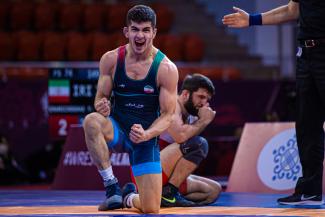
ALMATY, Kazakhstan (April 11) --- Iran went into the Asian Olympic qualifying tournament with three holes in its freestyle lineup for the Tokyo Olympics. On Sunday, Amir Mohammad YAZDANI (IRI), Yones EMAMICHOGHAEI (IRI) and Mohammadhossein MOHAMMADIAN (IRI) had little trouble filling the gap.
Yazdani secured a ticket to Tokyo for the Middle East powerhouse by easily advancing to the final at 65kg, while Emamichoghaei and Mohammadian did likewise at 74kg and 97kg, respectively, on the final day of the three-day tournament in Almaty that decided two qualifiers in each weight class.
The big winner of the day was Uzbekistan, which, led by Rio 2016 Olympic bronze medalist Magomed IBRAGIMOV (UZB) at 97kg, picked up four berths in Tokyo -- after having been shut out at the 2019 World Championships in Nursultan, where six spots per weight class were allocated.
China secured two places, while host Kazakhstan, which had four spots to begin with, grabbed one along with Kyrgyzstan and Mongolia. India, which had earned three places in Nursultan, failed to add to its tally, despite putting three wrestlers into the semifinals.
But it was Japan that had the most disastrous day. The Olympic host began the day by seeing Rio Olympic silver medalist Rei HIGUCHI (JPN) fail to make weight at 57kg, then had two-time Olympian Sohsuke TAKATANI (JPN) miss out by suffering a heartbreaking, last-second loss in his semifinal. Japan came looking to add to its two freestyle spots from Nursultan, but will leave empty-handed.
Yazdani, a distant cousin of superstar and 86kg Olympic favorite Hassan YAZDANI (IRI), certainly made the family proud with a dominant performance that he capped with a 10-0 technical fall in 5:21 over a tenacious Haji ALI (BRN).
"All my bouts were good," Yazdani said. "But the semifinal was the best because I won 10-0. That bout the most important."
For Iranians, earning the Olympic place is only the start. Now they have to go through a difficult national trial process to fill the spots.
"I will go back to Iran and the coaches will decide the team," Yazdani said. "I have to be the best."
In the final to be held later in the night session, Yazdani will face Ernazar AKMATALIEV (KGZ), who pulled off a stunning victory by fall over Ilyas BEKBULATOV (UZB), the 2020 Asian champion at 70kg.
Bekbulatov had stormed to an 8-0 lead when Akmataliev clamped on a headlock and threw the Uzbek to his back. Akmataliev then secured a ticket to Tokyo by securing a fall with 8 seconds left in the first period.
"I wasn’t thinking anything when I was down," said Akmataliev, a fifth-place finisher at the 2019 world U-23. "All I had to do was beat him to qualify. He is the best wrestler but I want to win as well. This feeling, there are no words to explain this. I was just confident to do it. Olympics here I come."
Emamichoghaei, a world and Asian bronze medalist in 2019 at 70kg, had no trouble moving up to the Olympic weight of 74kg, chalking up three straight technical falls without surrendering a point. In the semifinals, he needed just 2:13 to put away Sandeep MANN (INDIA).
In the other 74kg semifinal, 2018 world bronze medalist Bekzod ABDURAKHMONOV (UZB) earned a second trip to the Olympics by scoring a takedown with :54 left for a 4-2 victory over Elaman DOGDURBEK UULU (KGZ).
"Before I came here, I had injured my knee and I was not training 100%, but it was a good day to qualify," said Abdurakhmanov, a two-time Asian champion who placed fifth at the Rio 2016 Olympics. "In the semifinal, he was coming very hard at me so I had to keep him away."
Abdurakhmanov said he feels ready to make the Olympic podium this time. "I was so close to a medal in Rio, so I think I can medal now," he said. "The problem was that before Rio, I was a regular 70kg guy and 74 was big for me. Now my weight is good for 74. My weight training is top class.
"Hopefully I train harder, smarter because that's how I will medal in Tokyo."
At 97kg, Ibragimov and Mohammadian were both totally dominant in setting up a showdown in the final. Ibragimov advanced with an 11-1 technical fall over Symbat SULAIMANOV (KGZ) that he capped with six points off a lace lock, while Mohammadian followed a takedown against Satywart KADIAN (IND) with four straight gut wrenches to end the match in 30 seconds.
Mohammadian also knows he has opened the door to the Olympics, but is not through yet.
"I have to go back to Iran and have a trial and there are two very good wrestlers in Iran," he said. "The coaches will decide the team to Tokyo. I definitely want to go there."
While getting to the Olympics is the objective, Mohammadian relishes the chance of challenging world and Olympic champion Abdulrashid SADULAEV (RUS).
"I wanted to wrestle Sadulaev before, but I have not gotten a chance," Mohammadian said. "He is good wrestler obviously. We analyze him a lot. In Tokyo, I don't care if I win a medal or not, but I want to beat Sadulaev. That's my target."
Japan's worst nightmare on the mat came true in the 86kg semifinals, where two-time Olympian Takatani lost 8-7 to unheralded Zushen LIN (CHN), who capped a comeback from a 6-1 deficit by scoring the winning takedown with :23 left.
Lin's biggest move came on a 4-point counter lift in the first period off a Takatani takedown attempt, as that put him ahead on criteria when he tied the score at 7-7. In the final seconds, Takatani came close to scoring a takedown, but couldn't get Lin's knee down for the points. An unsuccessful challenge gave Lin his final point.
"I was ready for this competition," Lin said. "I am 27 years old and I am going to the Olympics for the first time. I was there in Nursultan but failed to qualify so this was my chance."
Lin has come a long way, considering that at the 2014 World Championships, he finished 22nd at 74kg -- the weight class in which Takatani won the silver medal.
In Sunday's final, Lin will face Javrail SHAPIEV (UZB), who denied Kazakhstan a sixth Olympic place by defeating 2018 Asian bronze medalist Azamat DAULETBEKOV (KAZ) by fall at the buzzer while leading 5-2.
"The Uzbek team qualified a lot here because we have good trainers and the federation helps a lot," Shapiev said. "You can see this in the results today."
Uzbekistan secured its first Olympic spot at 57kg, when Gulomjon ABDULLAEV (UZB) defeated Bekbolot MYRZANAZAR UULU (KGZ) 8-4 in the semifinals. Opposing him in the final will be Minghu LIU (CHN), a 6-3 winner over Muhammad IKROMOV (TJK).
Japan had one final chance to secure a berth in an unlikely weight class when Tetsuya TANAKA (JPN) made it to the semifinals at 130kg. But his Olympic hopes were dashed when he was overpowered by Lkhagvagerel MUNKHTUR (MGL), who scored six of his points in a 9-0 victory on stepouts.
Yusup BATIRMURZAEV (KAZ) grabbed the other Olympic berth at 130kg with a 2-0 win over Sumit SUMIT (IND). Both of his points came on stepouts.
Tanaka had been aiming to become the first Japanese wrestler in freestyle to qualify for the Olympics in the heaviest freestyle class since Tamon HONDA (JPN) made it to the Barcelona Games in 1992 at 130kg.
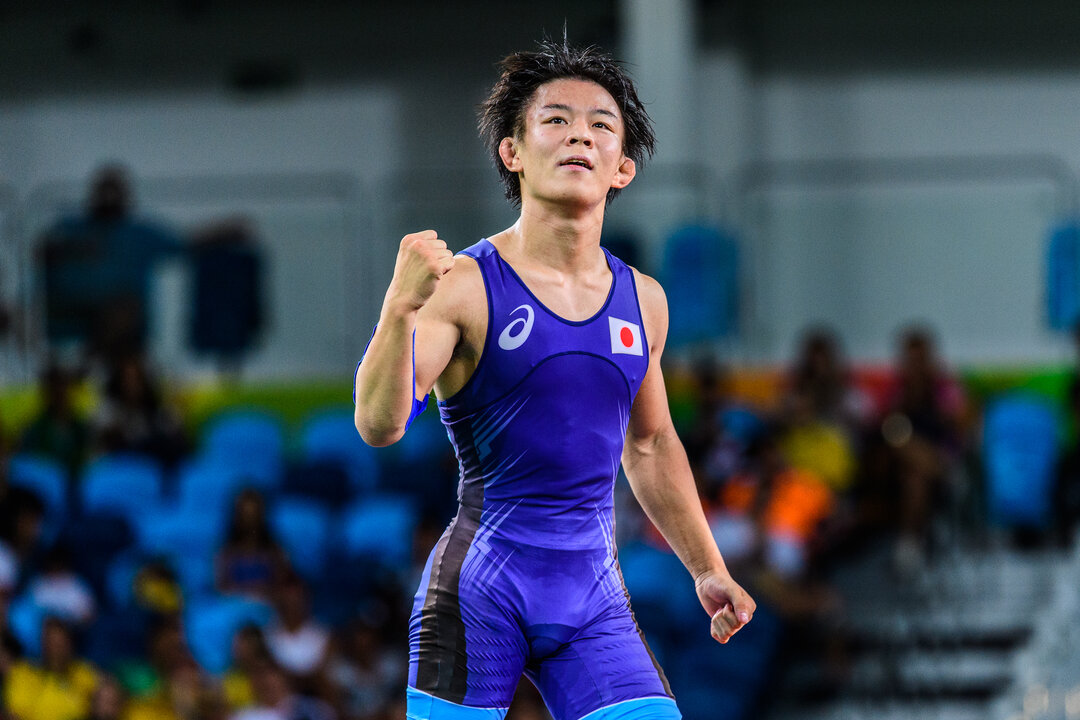 Rio Olympic silver medalist Rei HIGUCHI (JPN) missed weight on Sunday at the Asian Olympic Qualifier. (Photo: Tony Rotundo)
Heavy heartbreak for Higuchi
One of the biggest shocks of the day occurred before the action started when Japan's Higuchi failed to make weight in his bid to return to the Olympics at 57kg.
"When we left the hotel for the weigh-in location in the morning, the mood was that we had some leeway," explained Shigeki NISHIGUCHI, the Japan Wrestling Federation general manager.
"After arriving at the weigh-ins, he was 250 grams over. He tried to lose the weight within the alloted 30 minutes, but came up 50 grams short. 'We regret that we didn't support him enough. We could have done more."
After winning the silver at Rio, Higuchi moved up to 61kg and remained at that weight class through 2017. The following year, he moved up to the Olympic weight of 65kg in an attempt to make the Tokyo Games. He won the 2018 world U-23 gold medal, but eventually failing to unseat world senior champion Takuto OTOGURO (JPN) on the team to Nursultan.
Having never been fully satisfied with his Olympic silver medal, and despite the fact that at one point his weight had ballooned up to 68 kilograms, Higuchi went on a crash diet with the aim of qualifying again at 57kg and going for the gold.
Subsisting on an all-vegetable diet, he dropped the weight, then gained the right to enter the Asian Olympic qualifying tournament by beating former world champion Yuki TAKAHASHI (JPN) at the All-Japan Championships in December 2019. The year's postponement of both the Olympics and qualifying tournament did not work out in his favor.
"I took care of everything, including diet, exercise, and caloric intake," Higuchi said in a statement released by the federation. "I've done everything without compromise. But I didn't lose (the last 50 grams) in extreme conditions. It can't be helped. I have no choice but to accept reality. This is the result, it cannot be overturned. I want to engrave it in my heart."
Freestyle
Semifinal Results
57kg
Gulomjon ABDULLAEV (UZB) df. Bekbolot MYRZANAZAR UULU (KGZ), 8-4
Minghu LIU (CHN) df. Muhammad IKROMOV (TJK), 6-3
65kg
Amir Mohammad YAZDANI (IRI) df. Haji ALI (BRN) by TF, 10-0, 5:21
Ernazar AKMATALIEV (KGZ) df. Ilyas BEKBULATOV (UZB) by Fall, 2:52 (4-8)
74kg
Bekzod ABDURAKHMONOV (UZB) df. Elaman DOGDURBEK UULU (KGZ), 4-2
Yones EMAMICHOGHAEI (IRI) df. Sandeep MANN (INDIA) by TF, 10-0, 3:46
86kg
Zushen LIN (CHN) df. Sohsuke TAKATANI (JPN), 8-7
Javrail SHAPIEV (UZB) df. Azamat DAULETBEKOV (KAZ) by Fall, 6:00 (5-2)
97kg
Magomed IBRAGIMOV (UZB) df. Symbat SULAIMANOV (KGZ) by TF, 11-1, 3:59
Mohammadhossein MOHAMMADIAN (IRI) df. Satywart KADIAN (IND) by TF, 10-0, :30
125kg
Yusup BATIRMURZAEV (KAZ) df. Sumit SUMIT (IND), 2-0
Lkhagvagerel MUNKHTUR (MGL) df. Tetsuya TANAKA (JPN), 9-0
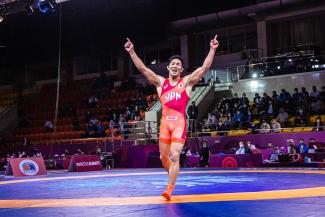
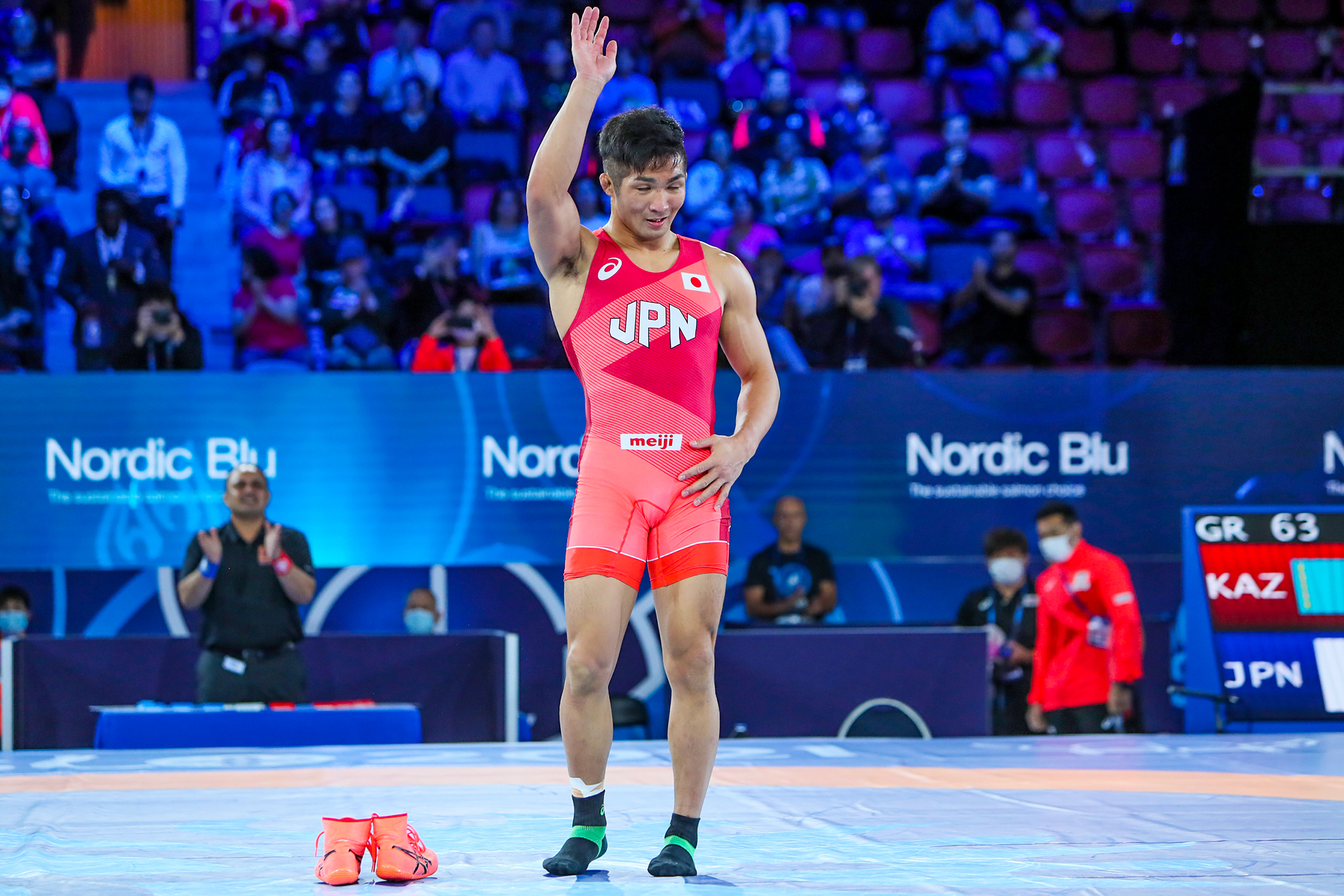 Tsuchika SHIMOYAMADA (AUS) had left his shoes on the mat during the 2021 World Championships to mark his retirement. (Photo: United World Wrestling / Martin Gabor)
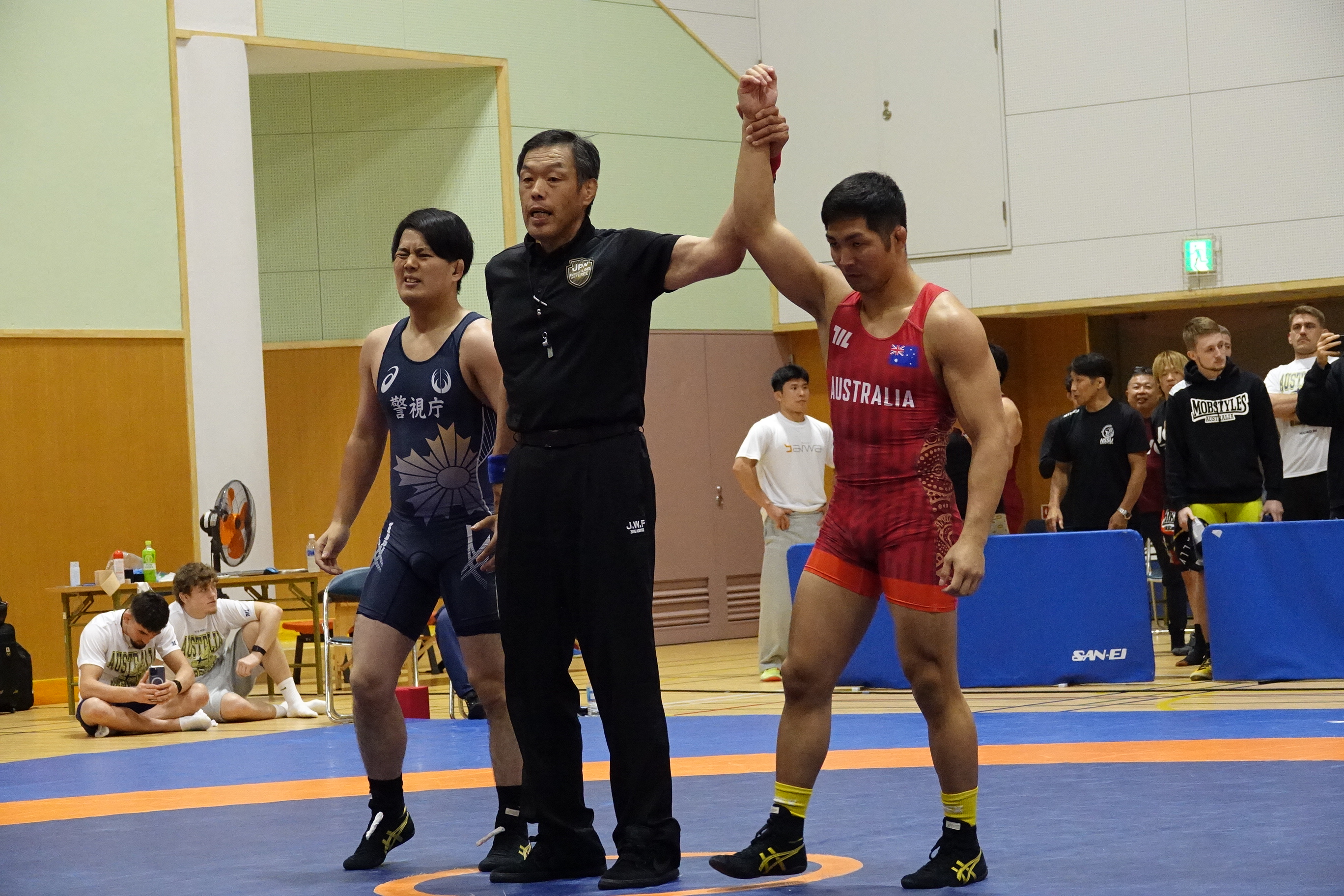 Tsuchika SHIMOYAMADA advances to the semifinals at the All-Japan Non-Student Championships in July with a 52-second win over Kokoro GOTO. (Photo: Koji Fuse / wrestling-spirits.jp)
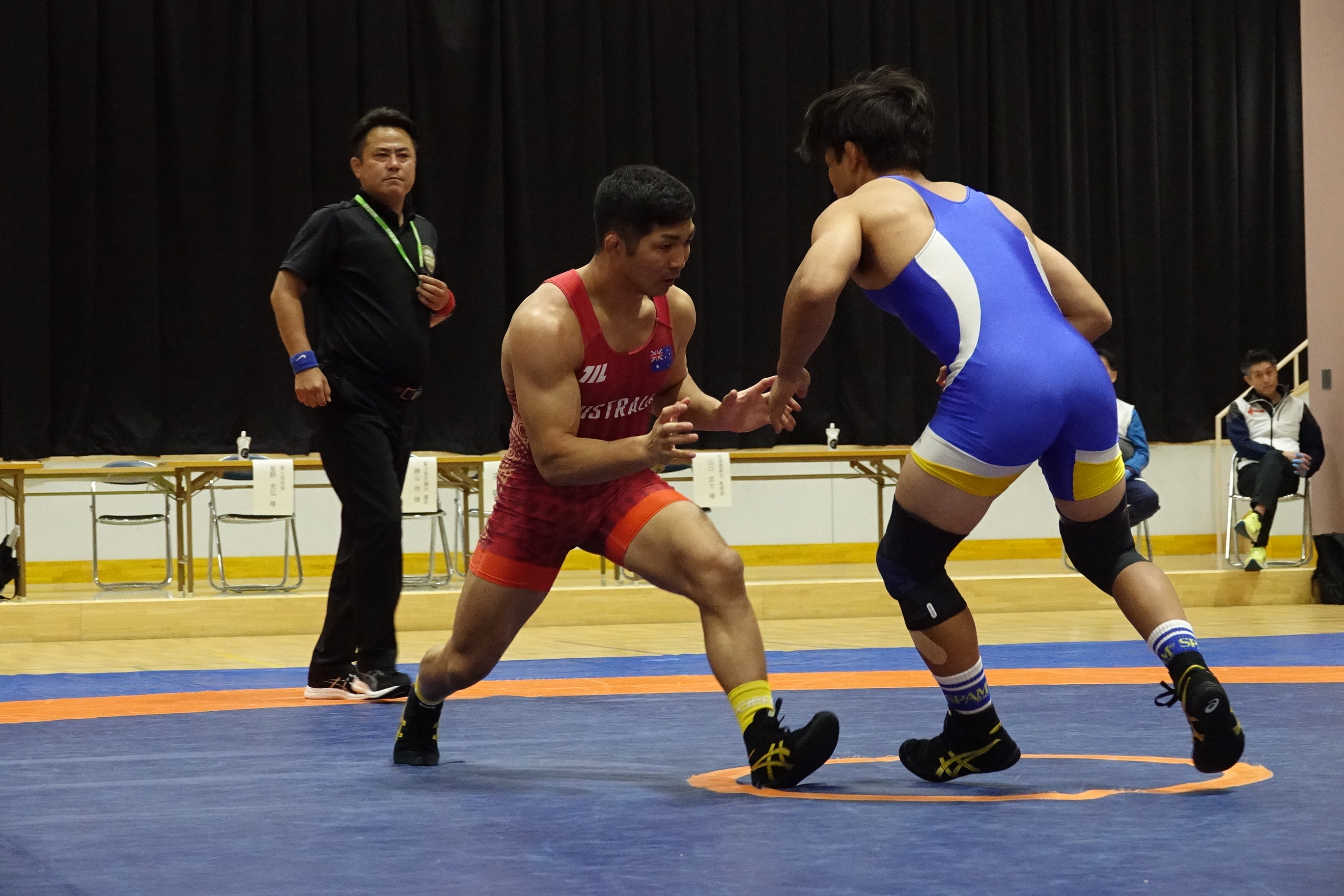 Tsuchika SHIMOYAMA faces Keitaro ONO in his opening match at the All-Japan Non-Student Championships in July. (Photo: Koji Fuse / wrestling-spirits.jp)
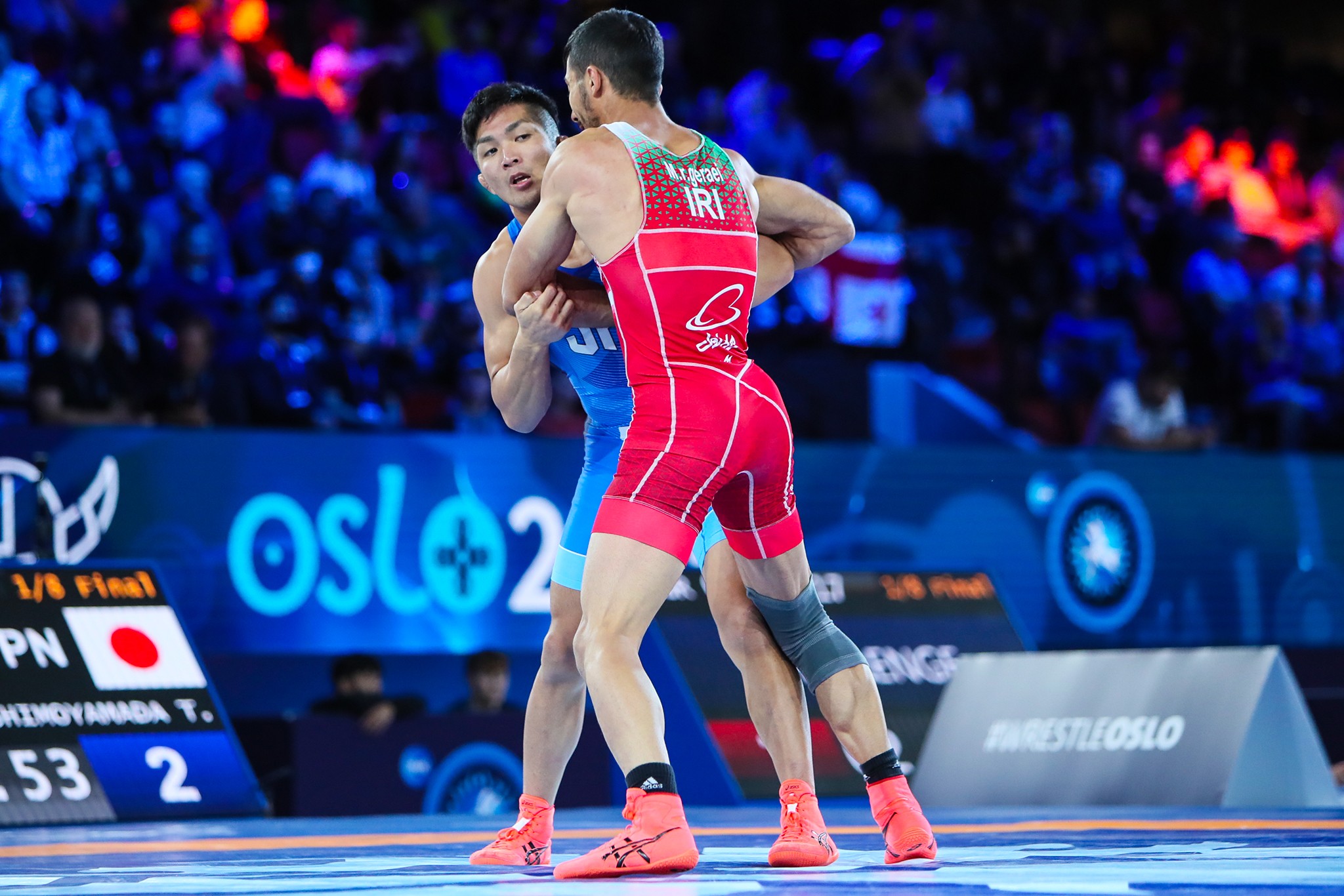 Tsuchika SHIMOYAMADA (AUS) was dominating Mohammadreza GERAEI (IRI) in their match at the 2021 World Championships before being pinned. (Photo: United World Wrestling / Martin Gabor)
Share your thoughts.
Comments