

Junior Asian Championships

Iran Adds 4 Golds at Junior Asian C'ships to Cap Off Dominant Greco Performance

By United World Wrestling Press

CHON BURI, Thailand (July 10) - Iran capped off a dominant performance in Greco-Roman at the Junior Asian Championships on Wednesday by claiming four more gold medals, bringing their total gold-medal haul in Greco-Roman to seven over two days. 

Iran finished the Greco-Roman competition with 218 points, which was enough to win the team title by 72 points over runner-up Kazakhstan. India finished third in the team standings, one point behind Kazakhstan. 

Bahram MAROUFKHANI IMCHEH (67kg), Mohammadreza ROSTAMI (72kg), Hosein FOROUZANDEH GHOJEHBEIGLOU (82kg) and Hamed ABDOVALI (97kg) won gold medals for Iran on the final day of the Greco-Roman competition in Chon Buri, Thailand.
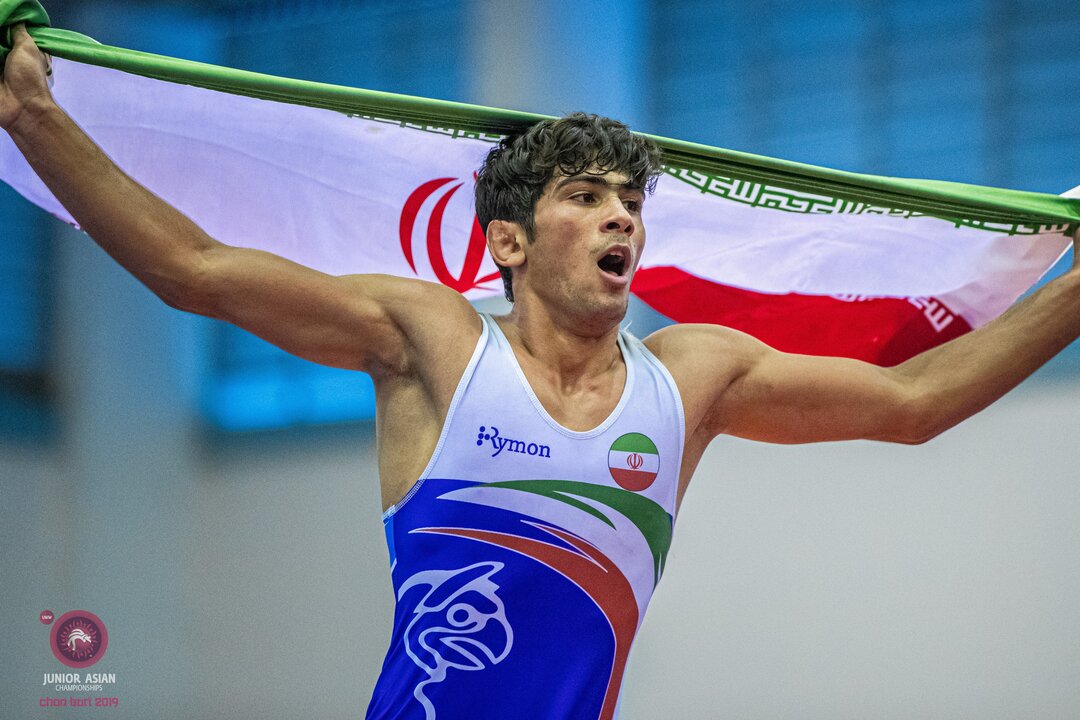
Maroufkhani Imcheh, a Takhti Cup silver medalist, earned his second straight gold at the Junior Asian Championships by shutting out Nurzhigit KENESHBEK UULU (KGZ) 6-0 in the finals at 67kg. The Iranian went up 4-0 in the first 35 seconds of the match after a takedown and throw. He would add another takedown 10 seconds into the final period. 
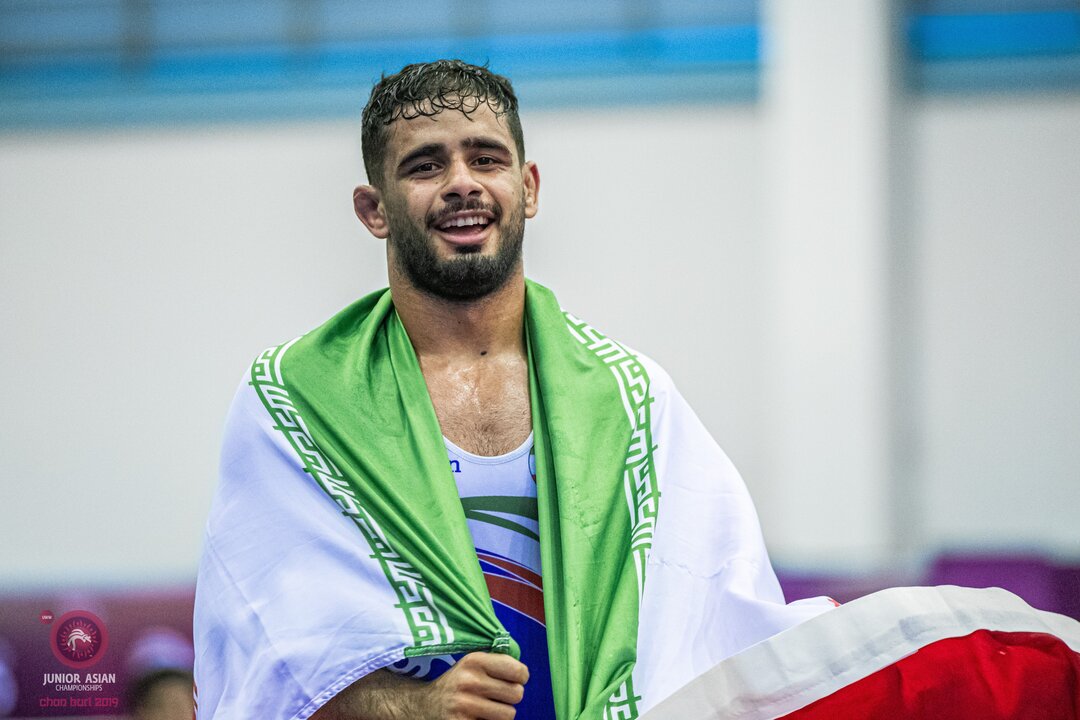
Rostami, a multiple-time medalist at the Cadet Asian Championships, lit up the scoreboard in his finals match against Alijon KHUSEYNOV (UZB), scoring 12 first-period points on his way to a 13-5 technical superiority to earn gold at 72kg. After going up 6-0 on the strength of a takedown and two gut wrenches, Rostami nearly ended the match early with another gut wrench, but Khuseynov defended, reversed the action and then scored with a gut wrench of his own, which made the score 8-5 in favor of the Iranian. Rostami controlled the action the rest of the way, scoring five straight step-out points to earn the technical superiority in the second period. 
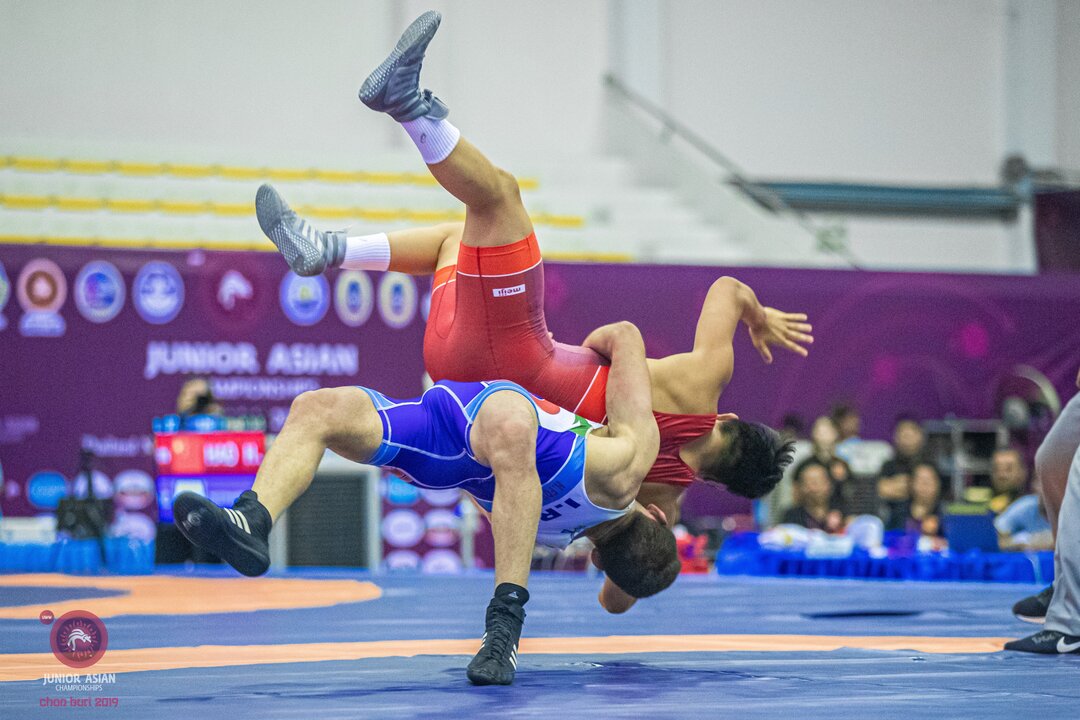
Forouzandeh Ghojehbeiglou, like Maroufkhani Imcheh, won his second consecutive gold medal at the Junior Asian Championships. He was dominant in the 82kg finals, picking up a 10-0 technical superiority over Tesshin HIGUCHI (JPN). Forouzandeh Ghojehbeiglou scored first with a step out before using a four-point throw to build his lead to 6-0. He closed out the victory with a four-point, feet-to-back takedown late in the first period. 

Abdovali topped Jeongyul KWON (KOR) 4-2 to win the gold medal at 97kg. The Iranian scored with a gut wrench in the first period and added a takedown early in the second period. Kwon scored two points late in the match, but Abdovali held on for the win. 
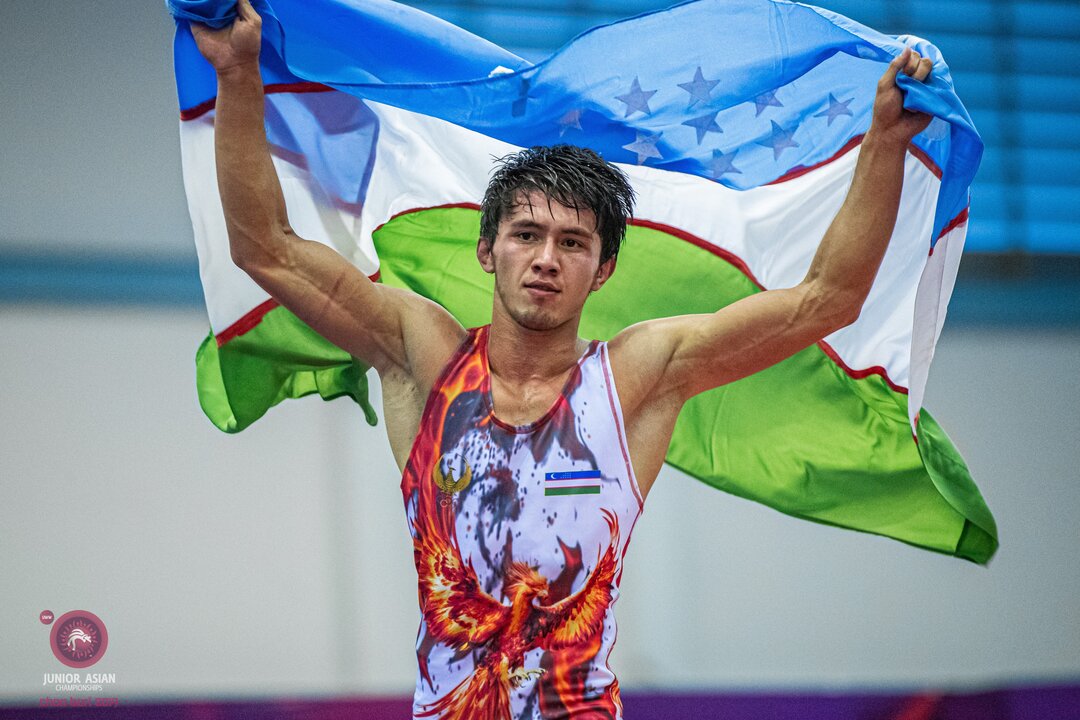
At 60kg, Mukhammadkodir YUSUPOV (UZB) captured the gold medal with a 3-2 victory over Sachin RANA (IND). Yusupov scored all three of his points in the opening period. After going down 1-0, he picked up a reversal and then scored with a gut wrench. Rana scored a late step out, but it was too little, too late. 

The women's wrestling competition at the Junior Asian Championships begins on Thursday. Action is set to begin at 10 a.m. local time.

RESULTS

Final Greco-Roman Team Scores 
GOLD - Iran (218 points)
SILVER - Kazakhstan (146 points)
BRONZE - India (145 points)
Fourth - Uzbekistan (137 points)
Fifth - Japan (101 points)

60kg
GOLD - Mukhammadkodir YUSUPOV (UZB) df. Sachin RANA (IND), 3-2
BRONZE - Olzhas SULTAN (KAZ) df. Alamusi ALAMUSI (CHN), 11-0
BRONZE - Milad Ali REZANEZHAD (IRI) df. Yun Bin SHIN (KOR), 11-2

67kg
GOLD - Bahram MAROUFKHANI IMCHEH (IRI) df. Nurzhigit KENESHBEK UULU (KGZ), 6-0
BRONZE - Saurabh SAURABH (IND) df. Guotao ZHANG (CHN), 2-1
BRONZE - Umidjon AKHROROV (UZB) df. Minseong PARK (KOR), 8-0

72kg
GOLD - Mohammadreza ROSTAMI (IRI) df. Alijon KHUSEYNOV (UZB), 13-5
BRONZE - Rahul RAHUL (IND) df. Xin HUANG (CHN), 7-7
BRONZE - Daler REZA ZADE (TJK) df. Almazbek BEGALIEV (KGZ), 5-0

82kg
GOLD - Hosein FOROUZANDEH GHOJEHBEIGLOU (IRI) df. Tesshin HIGUCHI (JPN), 10-0
BRONZE - Eli MAGOMADOV (KAZ) df. Sanjeet SANJEET (IND), 8-0
BRONZE - Toyly ORAZOV (TKM) df. Danuson ARRICHUAI (THA), 8-0

97kg
GOLD - Hamed ABDOVALI (IRI) df. Jeongyul KWON (KOR), 4-2
BRONZE - Deepanshu DEEPANSHU (IND) df. Houzhi HAO (CHN), 5-4
BRONZE - Aday KURMANSEITOV (KAZ) df. Daniiar SHERIMBEKOV (KGZ), 3-0
 

Japan Wrestling

Shozo Sasahara, 1956 Olympic champion and former Japan federation president, dies at 93

By Ken Marantz

TOKYO (March 6) --- Hall of Famer Shozo SASAHARA, a gold medalist at the 1956 Melbourne Olympics who went on to become president of the Japan Wrestling Federation and an executive of FILA, the predecessor of UWW, has died of natural causes, the Japan federation announced on Monday. He was 93.

Sasahara, who had suffered a stroke in 2014, won the gold medal in the featherweight class (62kg) of freestyle at the Melbourne Games, where he  served as flag-bearer for Japan in the opening ceremony. Two years earlier, he had won the gold at the World Championships held in Tokyo.

Sasahara became renowned for his pioneering use of legs in what is today referred to as a grapevine, but was reverently termed by the English-speaking press in his prime as "Sasahara's Leg Scissors."

Those would be his lone international triumphs, as he was a late bloomer who only started wrestling after entering Chuo University in Tokyo, having previously competed in judo. He retired after the Melbourne Olympics and would have a long career in business and sports governing.

"He was always a leader in the sports world with ideas and actions that were ahead of the times," current JWF President Hideaki TOMIYAMA said in a statement. "As a wrestler, he was adored by many people from around the world as a pioneer of techniques. It is sad not only for wrestling, but the sports world. I would like to express my sincere condolences."

Sasahara was the national team performance enchancement director when Japan won five gold medals at the 1964 Tokyo Olympics and four at the 1968 Mexico City Olympics. He served as JWF president from 1989 to 2003, and was a director at FILA from 1972 to 1993, during which time he also served as a vice-president.

Sasahara also held the post of vice-president of the Japanese Olympic Committee, and was awarded the Olympic Silver Order by the International Olympic Committee in 1995.

Sasahara was born on July 28, 1929, in Yamagata, the capital city of Yamagata Prefecture in the cold-weather Tohoku region of northern Japan.

According to an account he penned himself in 2005 for a Japan Olympic Committee website series titled "Japanese Olympian Spirits," he said he was in the sixth year of elementary school when World War II broke out, and that inspired him to want a career in international trade, so he enrolled in Yamagata Commercial School for his junior and high school years.

His home was in the north part of the city and the school was four kilometers away in the south. In his third year, he started working at an aircraft factory, which was also four kilometers from his home, so every day for five years until graduation, he had an eight-kilometer round-trip walk. As he needed to learn English, he would carry flash cards and study them as he walked.

At school, judo, kendo (Japanese fencing), and swordsmanship were regular parts of the curriculum, and there was also military training, such as throwing grenades. After the war ended, he would visit a nearby U.S. military base, where he was able to practice his English on a native speaker for the first time, and eventually got a part-time job there.

While at school, Sasahara joined the town's judo club. There, an older teammate said that the university he went to did not have a judo club, so he had switched to wrestling. The friend said Sasahara was perfect for the sport and urged him to try it. Using money he saved from the job on the U.S. base -- and without telling his parents -- he went down to Tokyo to take the entrance exam for Chuo.

As a freshman in the spring of 1950, he started his wrestling career. His first impression of wrestling at Chuo was not good. Blood was splattered on the canvas mat and it smelled of sweat. The mat was hard and wrestlers would sometimes be knocked out. Anyone who skipped practice would be found and beaten. As he had not yet learned the techniques and wasn't physically strong, he thought many times of quitting.

But he didn't give up, and instead drove himself to become better and better. In his second year, he made the finals of several collegiate tournaments, which further encouraged him to  put his full energy into the sport. He would sneak into the other powerhouses of the day, Waseda and Meiji universities, to observe the practices and techniques, and read books written by U.S. coaches. Wrestling became a 24-hour-a-day obsession.

In 1953, he won his first title at the All-Japan Championships, as well as the national collegiate title. After graduating, he captured the world title in May 1954, beating 1952 Helsinki Olympic champion Bayram SIT (TUR), then successfully defended his All-Japan crown.

Sasahara went to Melbourne confident of victory. Japan had only been let back into the Olympics four years earlier in Helsinki, but FILA had been among the first of the individual sports organizations to readmit the nation, in 1949.

International exchanges resumed in 1951. Japanese wrestling was still in the developmental stage, but federation chief Ichiro HATTA saw the exchanges as the optimal path to getting stronger.  Among those who went on a wrestling tour to the United States was Shohachi ISHII, who became Japan's first-ever Olympic wrestling gold medalist in Helsinki. His success, and the speedy moves he brought back from America, served to inspire Sasahara and the others. "If he could do it, we can, too," Sasahara thought.

The team also did tours of the other wrestling powers -- Russia, Iran, Turkey, Bulgaria, Romania -- and Sasahara absorbed it all, which would pay off in gold in Melbourne.

After his triumph, Sasahara, then 27, decided to retire, as he felt he had reached his limit. He noted that it was also a clean way to go out -- from his first All-Japan title to that point, he had won exactly 200 straight matches. He pursued his career in international trade, spending time in America and later importing sporting goods. He was the first to import sports drinks into Japan.

He also got involved in sports organization. He put Japan wrestling's flop at the 1960 Rome Olympics down to poor training and nutrition, which would lead to him to help establish a government-back organization in 1976 to improve the general health and conditioning of athletes.

In one of his last public appearances, Sasahara donated his Olympic gold medal to his high school alma mater in October 2018.