

India Continues to Deepen Development of Coaches
Wednesday, April 15, 2026 - 08:53 By United World Wrestling Press
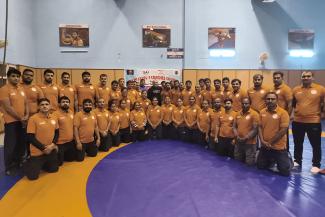
NEW DELHI, India (April 15) -- The Wrestling Federation of India organized a Level 1 Coaching Course late last year. The course was led by UWW Certified Educator Ahmed KHEDHRI (TUN).
During the four days of training, the 45 participants implemented an integrated framework combining theoretical instruction and practical application, with the aim of developing participants’ coaching competencies.
The theoretical component addressed a comprehensive range of topics, including risk assessment and safety management, discovery-based learning, communication and coaching methods, effective strategies for teaching new techniques, and the roles and responsibilities of the coach.
The practical component included performance assessments and field-based training sessions designed to reinforce the knowledge acquired and apply it within realistic training environments, ensuring effective integration between theoretical understanding and practical execution.
“The participants demonstrated a consistently high level of engagement and professional commitment throughout the course," said Khedhri. "Their active involvement, openness to correcting existing concepts and acquiring new knowledge, as well as constructive exchanges of experience, contributed significantly to enhancing the learning process."
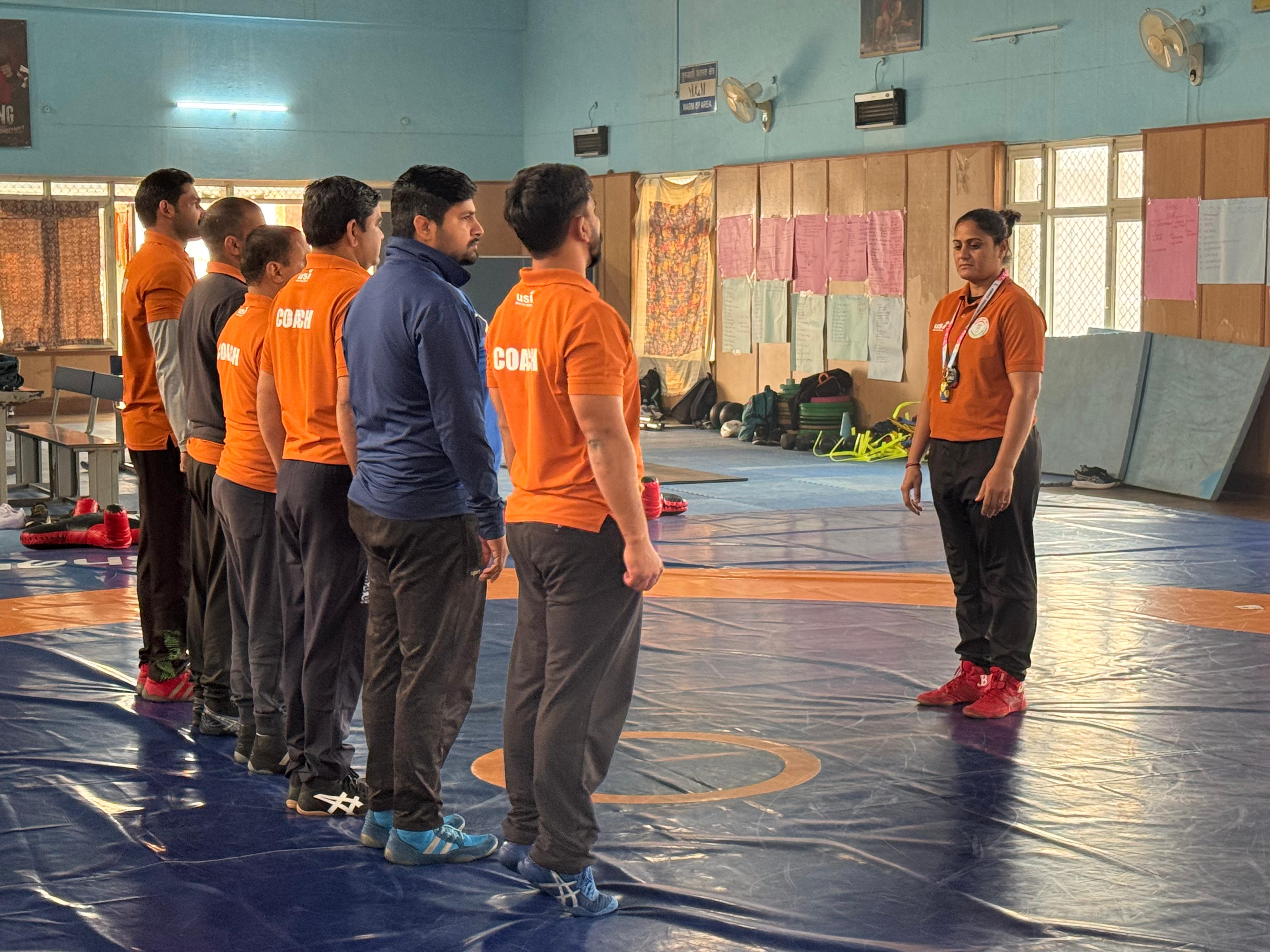
Coaches at the Level 1 Coaching Course go through on the mat training in Delhi. (Photo: United World Wrestling)
Comments from the participants:
“I am truly grateful for the opportunity to attend the UWW Level 1 Coaches Course,2025 at Najafgarh Stadium, Delhi. It was an enriching classroom and practical learning experience.”
- Kamal Sehrawat
“The wrestling coaching course was informative and practical. It provided valuable knowledge about wrestling techniques, rules, training methods, fitness, and injury prevention. The Educator was highly knowledgeable, supportive, and motivating, and explained each technique clearly. The practical sessions improved skills and confidence. Overall, the course was very useful and inspiring for better performance in the future.”
- Rajender Kumar
“This program has truly enhanced my coaching knowledge and confidence. The scientific approach, practical sessions and valuable guidance from our instructors made this journey incredible. I feel inspired to implement these learnings with my athletes. Thank you to the entire teaching team and organizers for this wonderful opportunity.+
- Indu Choudhary
Share your thoughts.
Comments