

Women's World Cup

Host Japan Favored at Women's World Cup

By Ken Marantz

For world and Olympic champion Risako KAWAI, the upcoming Women's World Cup not only gives her a chance to help host Japan win a fourth consecutive title but share the experience with her sister Yukako KAWAI.

"I went to the world championships with my sister, but she didn't do well. This time, we want to do well together," Kawai said at a press conference last month to announce the Japanese team, which will be the prohibitive favorite in the tournament in Takasaki, about 100 kilometers northwest of Tokyo.

Risako, who won the Rio 2016 Olympic gold at 63kg and Paris 2017 world title at 60kg, captured her third straight Japan crown in the newly created 62kg class. Earlier, Yukako earned her first national title at 59kg, making the two the first sisters to win golds at the same Japan championships since Chiharu and Kaori ICHO in 2007.

Risako said she likes the rare chance to compete for a team in what is generally an individual sport.

"When you win as a team, you're twice as happy," she said. "If you lose, but the team wins, it helps make it easier to take. That's the appeal."

For a few on the Japan team, it will not only be a team event, but a family affair. In addition to the Kawais, there are two other pairs of sisters who will take the mat.
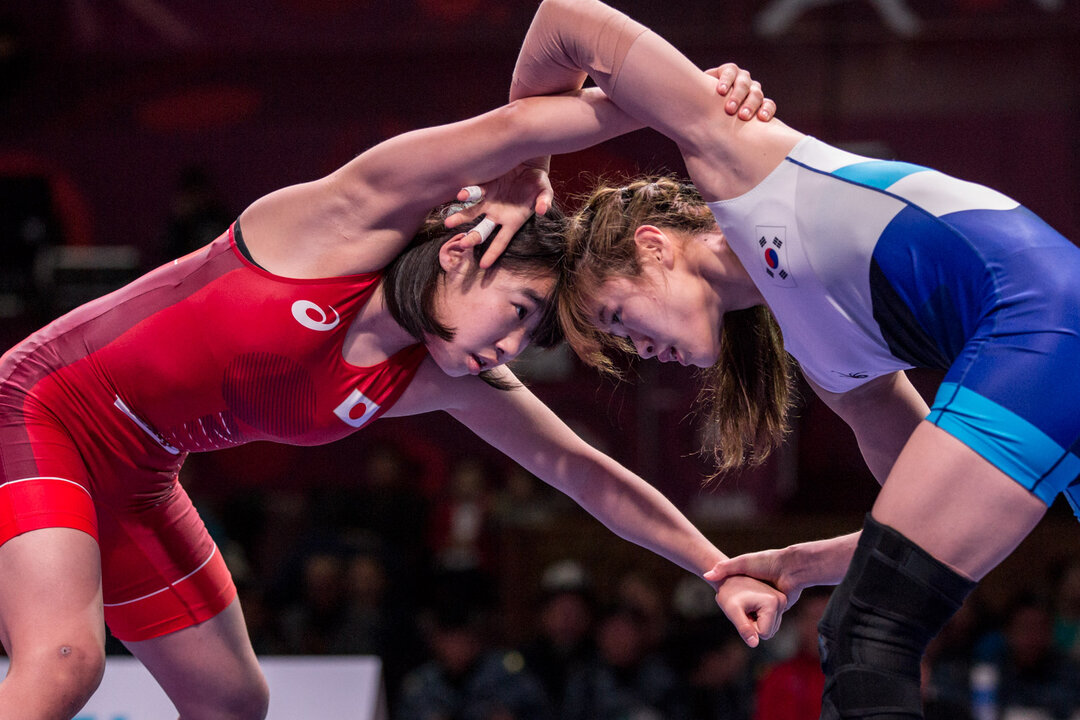
2018 Asian champion Saki IGARASHI. Photo by Max Rose-Fyne. 

Newly crowned Asian champion Saki IGARASHI (55kg) made the team along with older sister Miho IGARASHI (50kg), while the upper weights include high school twins Naruha MATSUYUKI (72kg) and Yasuha MATSUYUKI (76kg).

While they will all likely see action sometime during the preliminary group stage, for the major matches, Japan will rely on its big guns that, along with Risako Kawai, include Paris 2017 champions Haruna OKUNO (53kg) and Sara DOSHO (68kg, also a Rio 2016 gold medalist), runner-up Mayu MUKAIDA (55kg) and bronze medalist Hiroe MINAGAWA (76kg).

Attesting to Japan's depth in the lightweights is the fact that world champion Yui SUSAKI did not make the team, as she lost in the semifinals at the national championships at 50kg to eventual winner Yuki IRIE. Only the top two finishers in each weight class made the cut.

Due to a scheduling quirk, it was just three months ago in Cheboksary, Russia, that Japan won its three straight World Cup and ninth out of 16 since the competition started in 2001. Japan captured the title despite sending a weaker team that just barely beat the United States in the group stage, then eked out a victory over China in the final.

"In Russia, we sent our No. 2 wrestlers and only barely beat China," Japan Wrestling Federation managing director Hideaki TOMIYAMA said. "This time, we are the home team.  But now there are 10 weight classes, so we can't say what's going to happen."

This year, Japan was once again grouped with the United States, with Canada and Sweden filling out the other spots in Pool A. Pool B consists of China, Mongolia, Belarus and Romania.
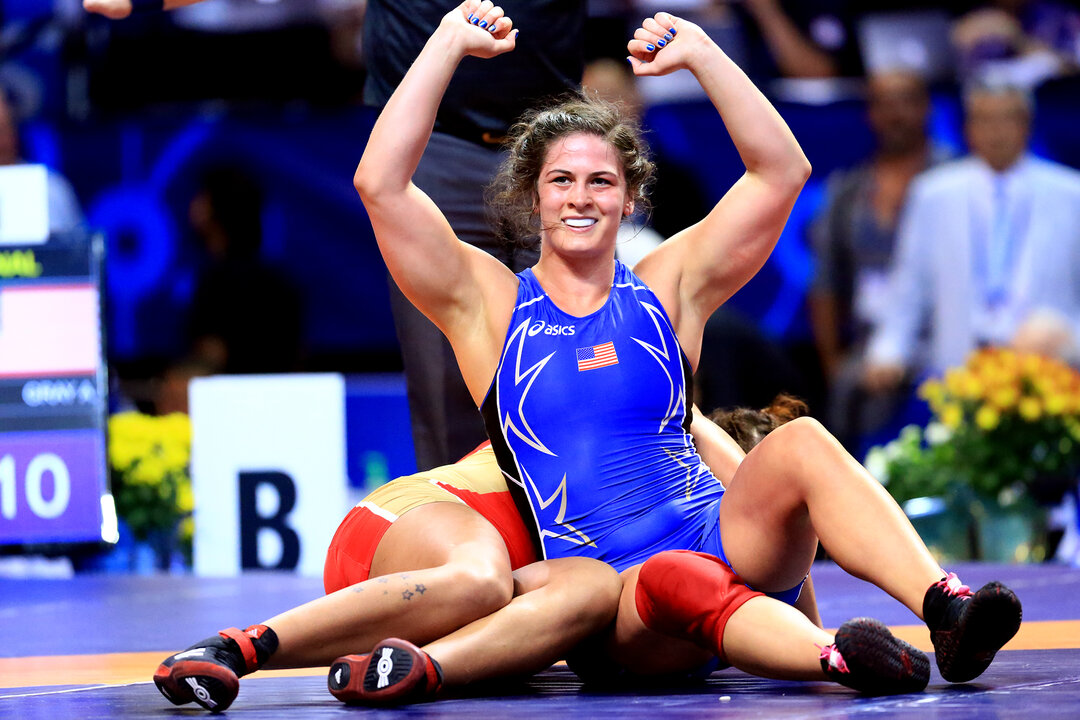
Three-time world champion Adeline GRAY (USA). 

According to preliminary reports, the United States, which won its lone title in 2003 in Tokyo, will field a strong team led by three-time world champion Adeline GRAY (76kg). Also on the team are Paris 2017 world silver medalist Alli RAGAN (57kg) and bronze medalist Becka LEATHERS (55kg), and two-time junior world champion Victoria ANTHONY (50kg).

U.S. national team coach Terry Steiner says that when the U.S. faces Japan in the competition is irrelevant, as winning the championship is the only consideration.

“Japan has been the team to beat," Steiner told the USA Wrestling website. "They have set the standard in the sport.

 "We just need to be ready to compete....We are not going to Japan to be a part of the mix; we are going to Japan to come out of there with a World Cup title and be the best we can be. We have to focus on ourselves and what we need to do as we prepare ourselves to go in there with the best results possible.”

The Canadian team features Paris 2017 world bronze medalists Michelle FAZZARI (62kg) and Justina DI STASIO (76kg), who are also among five winners from the 2017 Pan American Championships on the squad.
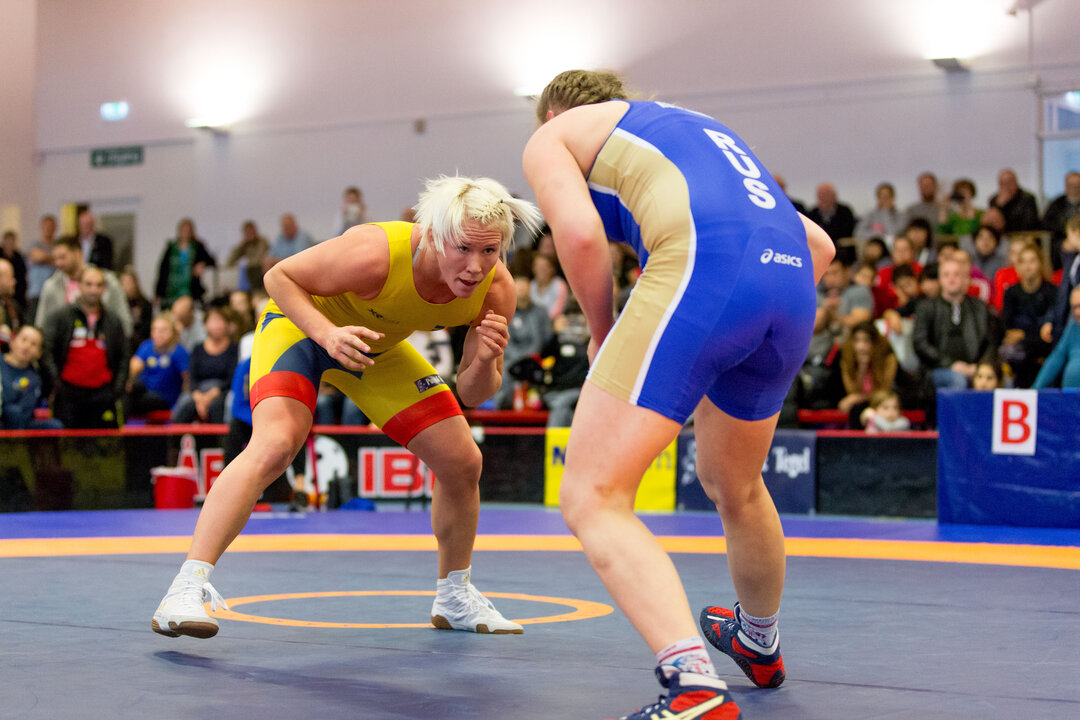
 2016 Olympic bronze medalist Jenny FRANSSON (SWE). Photo ​​​​​by Max Rose-Fyne. 

Sweden, which was added to the field when Turkey withdrew, will be led by former world champion and Rio 2016 bronze medalist Jenny FRANSSON (72kg), but otherwise is expected to send a young team.

The other group is expected to be a shootout between China, which won the last of its six titles in 2013, and Mongolia, the third-place finisher in the past two World Cups.

At the recent Asian Championships in Bishkek, to which Japan sent a mainly second-string team, the Chinese women came away with five golds, one silver and a bronze. Four of those champions are slated to make the trip to Takasaki---PEI Xingru (57kg), RONG Ningning (59kg), ZHOU Feng (68kg) and ZHOU Qian (76kg).
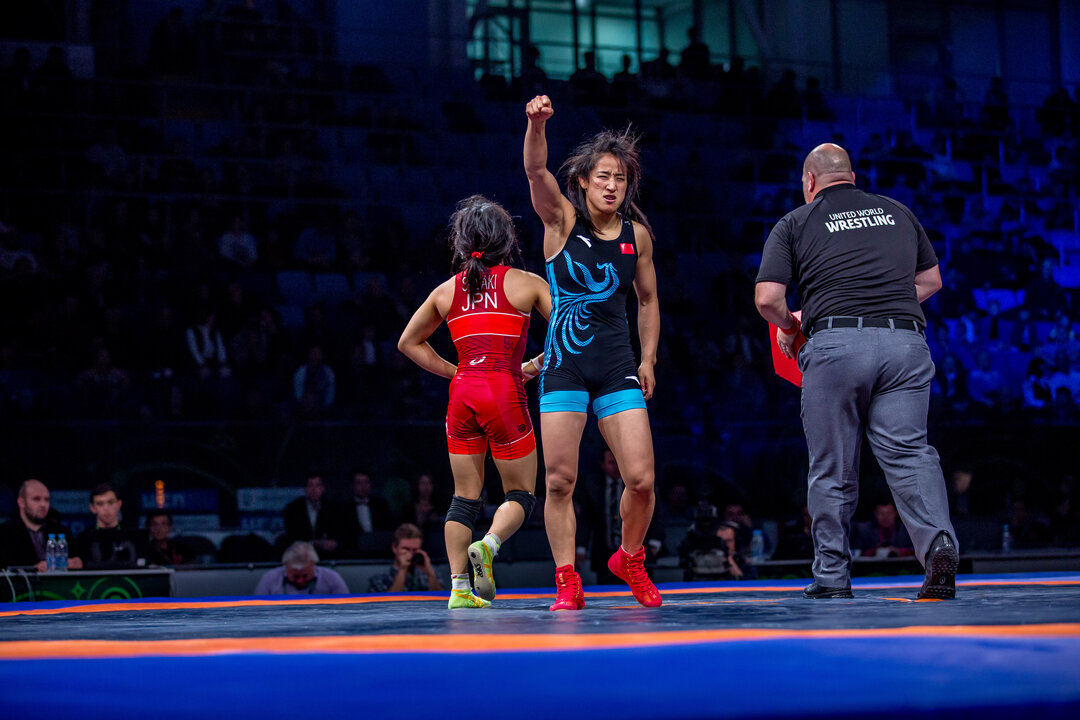
SUN Yanan (CHN) competing against Yui SUSAKI (JPN) in the 2017 Women's World Cup. 

Add to that group Rio 2016 bronze medalist SUN Yanan (50kg), Bishkek 2018 silver medalist LUO Xiaojuan and Paris 2017 bronze medalist HAN Yue (72kg), and you have quite a formidable lineup.

Mongolia, the runner-up to China when it hosted the event in 2013, will aim for a place in the final behind world champion Orkhon PUREVDORJ (62kg), who added the Asian gold in Bishkek, and Asian runner-up Tumentsetseg SHARKHUU (68kg). 

Purevdorj holds the unique distinction of having handed a rare loss on four-time Olympic champion Kaori ICHO, a technical fall victory in the final at the 2016 Ivan Yarygin Grand Prix.

Belarus, making its first appearance since 2013, will field three world medalists, but it remains to be seen if the European side has the depth to overcome the Asians.

2017 world champion Vanesa KALADZINSKAYA (BLR). 

Vanesa KALADZINSKAYA (53kg) is well known to Japanese wrestling fans, as her miracle comeback for an 8-6 win in the final in Paris denied Japan's Mukaida a world title. Five years earlier, she stunned future Olympic and world champion Eri TOSAKA in the 48kg final.

Joining Kaladzinskaya will be Paris 2017 bronze medalist Irina KURACHKINA (55kg) and silver medalist Vasilisa MARZALIUK (76kg).

Romania, making its World Cup debut, features Paris 2017 silver medalist Alina VUC (50kg).

For Japan's Kawai, who has not lost an international match since 2015 (a loss in the world 63kg final to Mongolia's Battsegseg SORONZOBOLD, who is slated to wrestle at 57kg in Takasaki), the tournament is also serving as a stepping stone toward defense of her Olympic title at Tokyo 2020.

"It's my first World Cup with a new weight class [for me] and the new system for weigh-in," Kawai said. "Aiming to win our fourth title in a row, I want each one of us to feel the responsibility so that it becomes a building block toward the Tokyo Olympics."

SCHEDULE
Saturday, March 17 (Local Time)

9:00 am: Canada v. United States (Mat A) // Mongolia v. China (Mat B)
10:15 am: Japan v. Sweden  (Mat A) // Belarus  v. Romania (Mat B)
11:30 am: Sweden v. United States  (Mat A) // Romania v. China (Mat B)
12:45 pm: Japan v. Canada (Mat A) // Belarus  v. Mongolia (Mat B)
4:30 pm: Opening Ceremonies
5:00 pm: Sweden v. Canada (Mat A) // Romania v. Belarus  (Mat B)
6:15 pm: Japan v. United States (Mat A) // Belarus v. China (Mat B)

Sunday, March 18 (Local Time)
9:00 am: Seventh Place Match
10:30 am: Fifth Place Match
1:00 pm: Bronze Medal Match
2:30 pm: Gold Medal Match

#WrestleBelgrade

Olympic champ Orta wins first world title in move up to 67kg

By Ken Marantz

BELGRADE, Serbia (September 24) -- Two years after winning the gold at the Tokyo Olympics in Greco-Roman at 60kg, Luis ORTA (CUB) made a successful jump up to the next Olympic weight and captured his first world title.

Orta rallied in the second period to defeat Hasrat JAFAROV (AZE) 4-3 in the 67kg final and secure a spot at the 2024 Paris Olympics for his country on Sunday, the final day of the World Championships in Belgrade.

"The result of this gold medal is due to hard training and good work of my coaches, and the good preparation we did before coming here, and in the end, we got it," Orta said.

Ali CENGIZ (TUR) survived being on his back for nearly a minute to claim the gold at 87kg, while Leri ABULADZE (GEO) finally struck gold after finishing second the past two years in the non-Olympic weight of 63kg.

Azerbaijan, with three champions and two silver medalists, won the team title for the first time in its history with 120 points, followed by Iran with 102 and Turkiye with 93.

The tournament was also serving as the initial qualifier for the Paris Games, with five berths up for grabs in each of the six Olympic divisions. Iran came away with four in Greco, while Cuba and Armenia secured three each and Kyrgyzstan, Japan, Azerbaijan and Turkey two apiece. Asian countries swept all five spots at 60kg.

Orta transitioned to 67kg by competing at 63kg in 2022, but could only manage a seventh-place finish at last year's World Championships in the same Stark Arena in Belgrade.

"After the Olympic gold in Tokyo, I couldn't step on the podium again so I am so happy that it happened today," Orta said.

He showed he could handle the extra weight at 67kg this year, beating defending champion Mate NEMES (SRB) in a tight semifinal and winning all three of his other matches en route to the final by technical fall.

Orta denied Jafrarov, the losing semifinalist to Nemes last year, of the world title by overcoming a 3-1 deficit in the second period with two stepouts, the second one coming after he opted to stay on his feet after being awarded a second passivity point.

Orta's bypassing ground wrestling was understandable. In the first period, he was put on top in par terre, only to see Jafrarov stop him during a gut wrench for 2, then add a stepout on an attempted throw.

Luis ORTA (CUB)Luis ORTA (CUB) celebrated his gold medal with a somersault. (Photo: UWW / Kadir Caliskan)

"I already beat Jafrarov once, but all finals are different," said Orta, who defeated the Azeri 5-1 in an early round at the Zagreb Open in February. "They can't be compared. We had a tough match. I think he was a very good opponent, and our fight was worthy of a final match for gold."

This year, Orta prepped for Belgrade and the new weight class by entering two of the Ranking Series events, finishing third in both Zagreb and Bishkek.

"After the gold in the Olympics in 2021, we decided to change the weight category. I went from 60 to 63 last year and we did good work. We did this as a step to fighting in the 67 category where there are very tough opponents. Since the weight change, I had to work harder."

Orta said he did not make any changes to his regimen after his Olympic triumph.

"I was training as before and I did not consider winning the gold in the Olympics as something that would change my life," he said. "I don't think about it and I'm focused on what I have to do next to get the same result in Paris next year."

Ali CENGIZ (TUR)Ali CENGIZ (TUR) celebrates after winning the 87kg final. (Photo: UWW / Amirreza Aliasgari)

In a clash between the bronze medalists from a year ago in the 87kg final, all looked lost for Cengiz until he fought off his back and held on for an 8-7 victory over David LOSONCZI (HUN).

In the first period, after Losonczi failed to score off par terre, he was pressing Cengiz at the edge when the Turk hit a front headlock throw for 4. Losonczi had inadvertently grabbed Cengiz's singlet, resulting in another 2 being tacked on for a 6-1 lead.

Cengiz's worst nightmare nearly came true in the second period. Attempting a reverse lift from par terre, Losonczi stepped over and landed chest-to-chest, getting 2 as Cengiz fought to avoid the fall, which the mat referee signaled but got no confirmation.

Ali CENGIZ (TUR)Ali CENGIZ (TUR), red, defends an attempted pin from David LOSONCZI (HUN). (Photo: UWW / Kostadin Andonov)

Losonczi's repositioning to a reverse front headlock gave him 2 more and put Cengiz in danger again. But Cengiz somehow managed to extricate himself from the predicament, although his woes were still far from over.

He was assessed a 2-point caution for a foul, making it 7-7, although he held the criteria advantage due to the 4-pointer. That gave Losonczi one last chance in par terre, but he failed to budge Cengiz, and a late challenge that had no chance of succeeding over a suspected stepout added the final point.

For Losonczi, it will forever be a matter of what might have been. "I knew he would get tired, and he got tired and made a mistake," Losonczi said. "I had the opportunity to finish the match, but I didn't finish it, and that was it."

Still, achieving the objective of earning the Paris spot relieves some of the sting of defeat.

"My dream was to make it to the Paris Olympics," he said. "Being the world's best wrestler was not completed today, but I'm happy. I think I gave my all in this match. There is nothing left in me."

Leri ABULADZE (GEO)Leri ABULADZE (GEO) won the gold medal at 63kg after two silver-medal finishes. (Photo: UWW / Kadir Caliskan)

At 63kg, Abuladze finally made it to the top of the podium, beating Murad MAMMADOV (AZE) 2-2 on last-point criteria to add the world crown to the European title he won earlier this year.

Mammadov received the first passivity point, but Abuladze scored a reversal from par terre, only to see Mammadov gain a stepout to go up 2-1 in the first period.

Abuladze was the recipient of the second passivity point, which put him ahead on criteria. He nearly clinched the deal with a gut wrench that put Mammadov's back at about an 85-degree angle, just shy of the 90 degrees needed. Put on the bottom later, Abuladze held out for the win.

Geraei, Belenuik bag bronzes, Paris places

Two other Olympic champions in action, Mohammadreza GERAEI (IRI) and Zhan BELENIUK (UKR), both made it through the repechage earlier and came away with bronze medals to open the door for them to defend their Olympic crowns in Paris.

At 67kg, Geraei, taking full advantage of the challenge process as he did throughout the tournament, defeated Slavik GALSTYAN (ARM) by a rare disqualification for two leg violations.

After gaining a passivity point and going on top on par terre, Geraei received a 2-point leg penalty on a challenge. That kept him on top, and he then lifted up Galstyan and unleased a 2-point throw. Again Galstyan was flagged for a leg foul, which ended the match at 2:09.

Geraei, the world champion in 2021 and silver medalist last year, posted a wild 11-10 victory over Kyotaro SOGABE (JPN) in the second round. After losing to Jafarov in the quarterfinals, he made it through the repechage earlier Sunday by rallying from four points down to defeat Krisztian VANCZA (HUN) 6-5.

Beleniuk, a two-time former world champion who was competing for just the second time since his triumph in Tokyo, reeled off three rolls in par terre in the first period against Nursultan TURSYNOV (KAZ) and cruised to a 7-2 victory at 87kg.

"It was a very difficult competition," Beleniuk said. "Today this was my second fight, but I kept with it and I got the license for the Olympic Games and a bronze medal for my country, which is very important because now is a very tough situation in Ukraine."

The victory gave the 32-year-old Beleniuk his fifth world medal. In Paris, he will have a chance at a third Olympic medal, having also won a silver in Rio in 2016.

The other 87kg bronze went to European bronze medalist Semen NOVIKOV (BUL), who used some nifty dexterity to turn the tide against Islam ABBASOV (AZE) and come out with a 6-3 victory.

After being rolled in par terre, Novikov responded with a gymnastics-like kip-up over Abbasov to secure a reversal and went right into a 4-point throw to take a 5-3 lead. Novikov received a passivity point in the second period to account for the final score.

The Ukrainian-born Novikov, who transferred to Bulgaria this year because of his inability to displace Beleniuk, lost to Losonczi in the semifinal and Cengiz at the European U23 in 2019.

Regarding his three fellow medalists, he said, "I need three rematches."

Host Serbia came away with two bronze medals on the final night from Nemes at 67kg and Georgij TIBILOV (SRB) at 63kg, much to the delight of the home crowd.

Nemes notched a 3-3 win on last-point criteria that denied Amantur ISMAILOV (KGZ) a second straight world bronze.

Nemes trailed after Ismailov scored with a 2-point lift from par terre in the first period. In the second, Nemes uncorked a gut wrench from par terre to make it 3-3 before running out the clock.

Tibilov, normally a 60kg wrestler, took home a medal in his first senior world appearance when he defeated Hrachya POGHOSYAN (ARM) 4-0. Tibilov, after receiving a passivity point in the first period, stopped a lateral drop attempt for 2 in the second period, then added the icing on the cake with a stepout.

The Serbian came into the tournament with a third-place finish at the European Championships and the Wladyslaw Pytlasinski Cup in Warsaw, both at 60kg.

At 63kg, Enes BASAR (TUR) scored eight points in the first period, then survived a bizarre second period in which he handed Stefan CLEMENT (FRA) five free points to take the other bronze with a 9-6 victory.

Basar, making his senior world debut a decade removed from winning a world junior (U20) silver medal, was put on the bottom of par terre in the first period, but stopped a gut wrench attempt and had Clement on his back and near to a fall.

Clement was also assessed a 2-point penalty for a leg violation, which put Basar on top, and he took advantage with two gut wrenches for an 8-1 lead.

One point from ending the match, Basar instead was twice hit with a 2-point penalty for grabbing the singlet early in the second period, with an unsuccessful challenge of the second one giving Clement a further point to cut the gap to 8-6.

But a caution on Clement gave Basar a point, and the period ended with no technical points scored and the Turk, the bronze medalist at the Grand Prix of Germany, defeating the champion of that tournament in August.

Armenia, Kazakhstan gain last Olympic spots

Galstyan returned to the mat later for the fifth-place playoff for the Olympic berth but didn't stay long as he needed less than a minute to roll to an 8-0 technical fall over Ismailov to gain the spot for Armenia.

The lanky Galstyan grabbed a quick takedown and, wrapping his long arms around Ismailov's waist, put together a series of three gut wrenches to end the match in 59 seconds.

Kazakhstan's Tursynov also earned a ticket to Paris with an 8-0 victory in the first period, helped by a number of penalty points and capped with a gut wrench in defeating Abbasov.

Tursynov opened with a stepout, then, put on top in par terre, he received in succession a 2-point leg penalty, an unsuccessful challenge point, and a fleeing point. In the third start, he uncorked the gut wrench with the final move of the tournament.

g

Day 9 Results

63kg (24 entries)
GOLD: Leri ABULADZE (GEO) df. Murad MAMMADOV (AZE), 2-2

BRONZE: Enes BASAR (TUR) df. Stefan CLEMENT (FRA), 9-6
BRONZE: Georgij TIBILOV (SRB) df. Hrachya POGHOSYAN (ARM), 4-0

67kg (41 entries)
GOLD: Luis ORTA (CUB) df. Hasrat JAFAROV (AZE) 4-3

BRONZE: Mate NEMES (SRB) df. Amantur ISMAILOV (KGZ), 3-3
BRONZE: Mohammadreza GERAEI (IRI) df. Slavik GALSTYAN (ARM) by Disq., 2:09 (8-0)

5th-Place Playoff: Slavik GALSTYAN (ARM) df. Amantur ISMAILOV (KGZ) by TF, 8-0, :59

87kg (42 entries)
GOLD: Ali CENGIZ (TUR) df. David LOSONCZI (HUN), 8-7

BRONZE: Zhan BELENIUK (UKR) df. Nursultan TURSYNOV (KAZ), 7-2
BRONZE: Semen NOVIKOV (BUL) df. Islam ABBASOV (AZE), 6-3

5th-Place Playoff: Nursultan TURSYNOV (KAZ) df. Islam ABBASOV (AZE) by TF, 8-0, 2:14