Women's World Cup

Host Japan Favored at Women's World Cup

By Ken Marantz

For world and Olympic champion Risako KAWAI, the upcoming Women's World Cup not only gives her a chance to help host Japan win a fourth consecutive title but share the experience with her sister Yukako KAWAI.

"I went to the world championships with my sister, but she didn't do well. This time, we want to do well together," Kawai said at a press conference last month to announce the Japanese team, which will be the prohibitive favorite in the tournament in Takasaki, about 100 kilometers northwest of Tokyo.

Risako, who won the Rio 2016 Olympic gold at 63kg and Paris 2017 world title at 60kg, captured her third straight Japan crown in the newly created 62kg class. Earlier, Yukako earned her first national title at 59kg, making the two the first sisters to win golds at the same Japan championships since Chiharu and Kaori ICHO in 2007.

Risako said she likes the rare chance to compete for a team in what is generally an individual sport.

"When you win as a team, you're twice as happy," she said. "If you lose, but the team wins, it helps make it easier to take. That's the appeal."

For a few on the Japan team, it will not only be a team event, but a family affair. In addition to the Kawais, there are two other pairs of sisters who will take the mat.
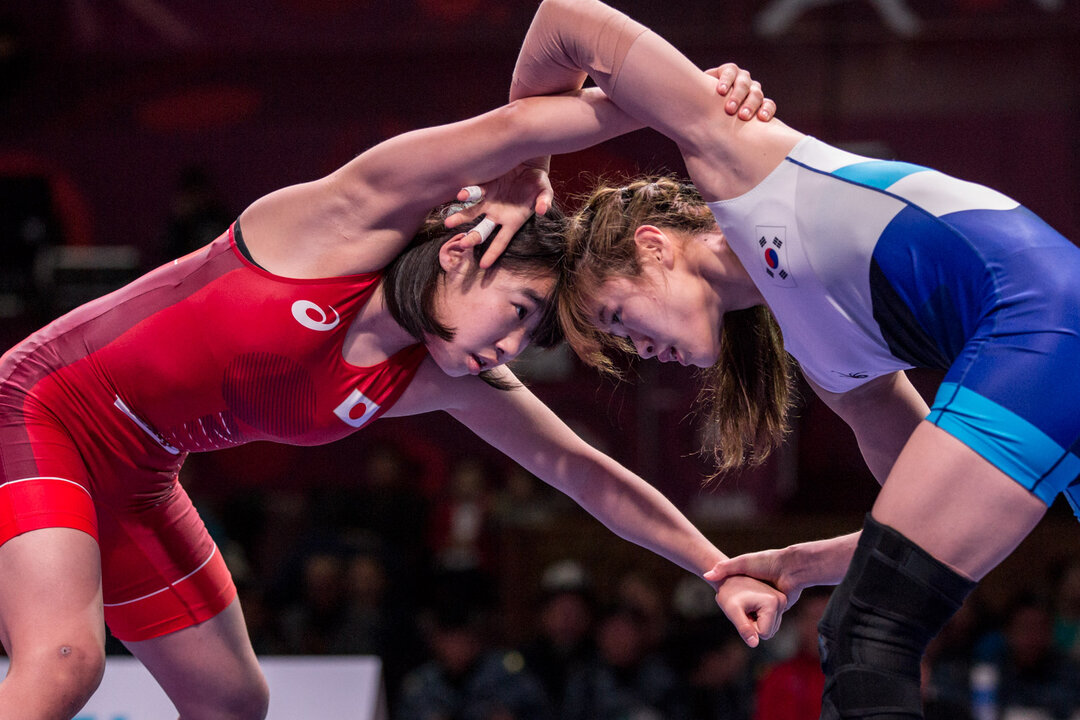
2018 Asian champion Saki IGARASHI. Photo by Max Rose-Fyne. 

Newly crowned Asian champion Saki IGARASHI (55kg) made the team along with older sister Miho IGARASHI (50kg), while the upper weights include high school twins Naruha MATSUYUKI (72kg) and Yasuha MATSUYUKI (76kg).

While they will all likely see action sometime during the preliminary group stage, for the major matches, Japan will rely on its big guns that, along with Risako Kawai, include Paris 2017 champions Haruna OKUNO (53kg) and Sara DOSHO (68kg, also a Rio 2016 gold medalist), runner-up Mayu MUKAIDA (55kg) and bronze medalist Hiroe MINAGAWA (76kg).

Attesting to Japan's depth in the lightweights is the fact that world champion Yui SUSAKI did not make the team, as she lost in the semifinals at the national championships at 50kg to eventual winner Yuki IRIE. Only the top two finishers in each weight class made the cut.

Due to a scheduling quirk, it was just three months ago in Cheboksary, Russia, that Japan won its three straight World Cup and ninth out of 16 since the competition started in 2001. Japan captured the title despite sending a weaker team that just barely beat the United States in the group stage, then eked out a victory over China in the final.

"In Russia, we sent our No. 2 wrestlers and only barely beat China," Japan Wrestling Federation managing director Hideaki TOMIYAMA said. "This time, we are the home team.  But now there are 10 weight classes, so we can't say what's going to happen."

This year, Japan was once again grouped with the United States, with Canada and Sweden filling out the other spots in Pool A. Pool B consists of China, Mongolia, Belarus and Romania.
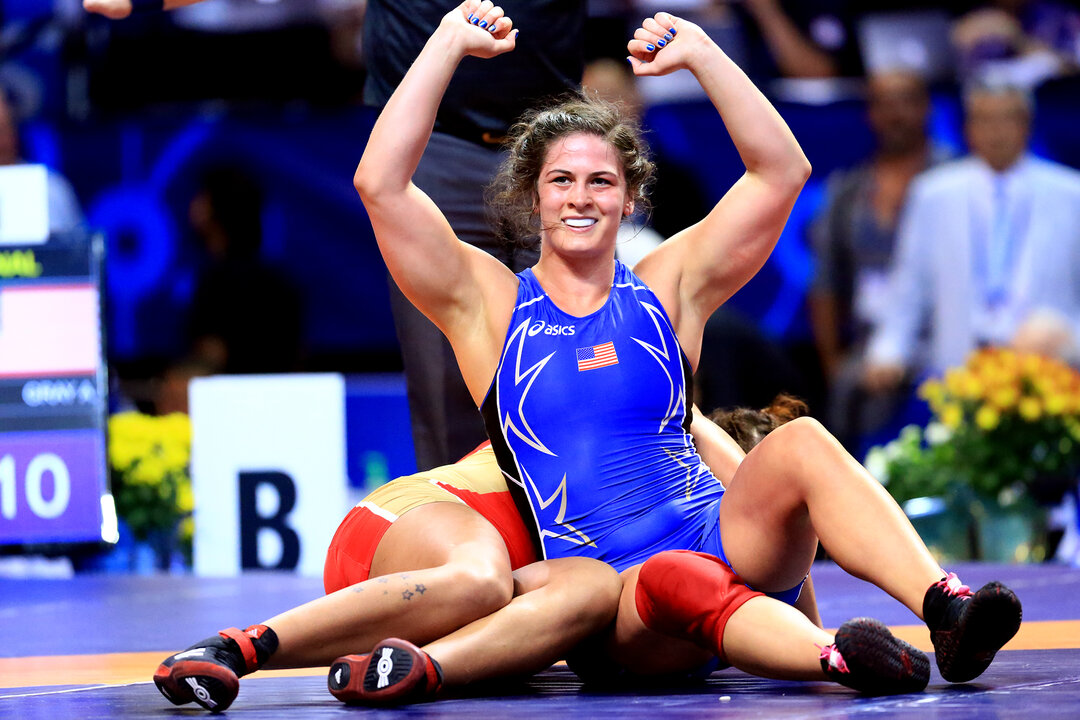
Three-time world champion Adeline GRAY (USA). 

According to preliminary reports, the United States, which won its lone title in 2003 in Tokyo, will field a strong team led by three-time world champion Adeline GRAY (76kg). Also on the team are Paris 2017 world silver medalist Alli RAGAN (57kg) and bronze medalist Becka LEATHERS (55kg), and two-time junior world champion Victoria ANTHONY (50kg).

U.S. national team coach Terry Steiner says that when the U.S. faces Japan in the competition is irrelevant, as winning the championship is the only consideration.

“Japan has been the team to beat," Steiner told the USA Wrestling website. "They have set the standard in the sport.

 "We just need to be ready to compete....We are not going to Japan to be a part of the mix; we are going to Japan to come out of there with a World Cup title and be the best we can be. We have to focus on ourselves and what we need to do as we prepare ourselves to go in there with the best results possible.”

The Canadian team features Paris 2017 world bronze medalists Michelle FAZZARI (62kg) and Justina DI STASIO (76kg), who are also among five winners from the 2017 Pan American Championships on the squad.
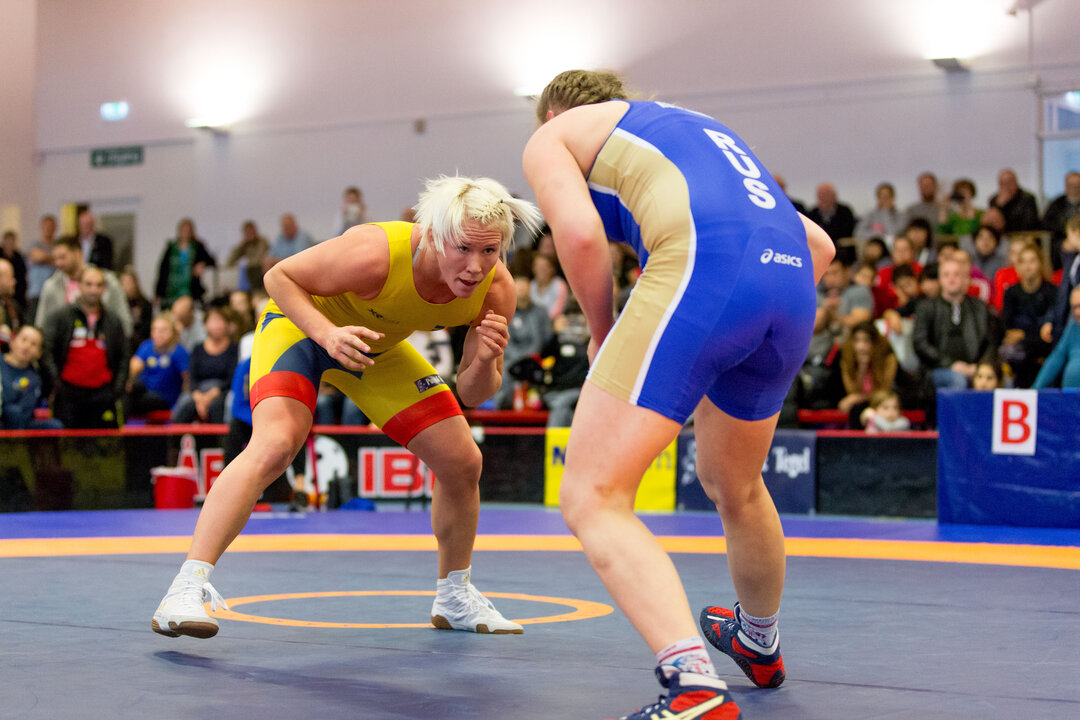
 2016 Olympic bronze medalist Jenny FRANSSON (SWE). Photo ​​​​​by Max Rose-Fyne. 

Sweden, which was added to the field when Turkey withdrew, will be led by former world champion and Rio 2016 bronze medalist Jenny FRANSSON (72kg), but otherwise is expected to send a young team.

The other group is expected to be a shootout between China, which won the last of its six titles in 2013, and Mongolia, the third-place finisher in the past two World Cups.

At the recent Asian Championships in Bishkek, to which Japan sent a mainly second-string team, the Chinese women came away with five golds, one silver and a bronze. Four of those champions are slated to make the trip to Takasaki---PEI Xingru (57kg), RONG Ningning (59kg), ZHOU Feng (68kg) and ZHOU Qian (76kg).
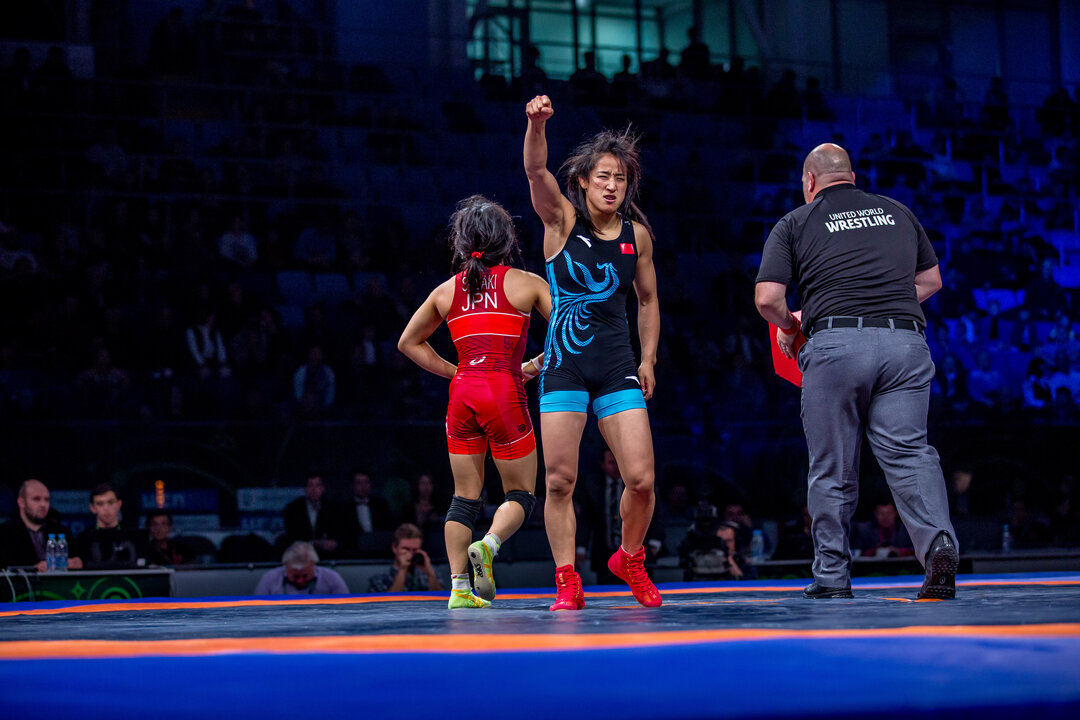
SUN Yanan (CHN) competing against Yui SUSAKI (JPN) in the 2017 Women's World Cup. 

Add to that group Rio 2016 bronze medalist SUN Yanan (50kg), Bishkek 2018 silver medalist LUO Xiaojuan and Paris 2017 bronze medalist HAN Yue (72kg), and you have quite a formidable lineup.

Mongolia, the runner-up to China when it hosted the event in 2013, will aim for a place in the final behind world champion Orkhon PUREVDORJ (62kg), who added the Asian gold in Bishkek, and Asian runner-up Tumentsetseg SHARKHUU (68kg). 

Purevdorj holds the unique distinction of having handed a rare loss on four-time Olympic champion Kaori ICHO, a technical fall victory in the final at the 2016 Ivan Yarygin Grand Prix.

Belarus, making its first appearance since 2013, will field three world medalists, but it remains to be seen if the European side has the depth to overcome the Asians.

2017 world champion Vanesa KALADZINSKAYA (BLR). 

Vanesa KALADZINSKAYA (53kg) is well known to Japanese wrestling fans, as her miracle comeback for an 8-6 win in the final in Paris denied Japan's Mukaida a world title. Five years earlier, she stunned future Olympic and world champion Eri TOSAKA in the 48kg final.

Joining Kaladzinskaya will be Paris 2017 bronze medalist Irina KURACHKINA (55kg) and silver medalist Vasilisa MARZALIUK (76kg).

Romania, making its World Cup debut, features Paris 2017 silver medalist Alina VUC (50kg).

For Japan's Kawai, who has not lost an international match since 2015 (a loss in the world 63kg final to Mongolia's Battsegseg SORONZOBOLD, who is slated to wrestle at 57kg in Takasaki), the tournament is also serving as a stepping stone toward defense of her Olympic title at Tokyo 2020.

"It's my first World Cup with a new weight class [for me] and the new system for weigh-in," Kawai said. "Aiming to win our fourth title in a row, I want each one of us to feel the responsibility so that it becomes a building block toward the Tokyo Olympics."

SCHEDULE
Saturday, March 17 (Local Time)

9:00 am: Canada v. United States (Mat A) // Mongolia v. China (Mat B)
10:15 am: Japan v. Sweden  (Mat A) // Belarus  v. Romania (Mat B)
11:30 am: Sweden v. United States  (Mat A) // Romania v. China (Mat B)
12:45 pm: Japan v. Canada (Mat A) // Belarus  v. Mongolia (Mat B)
4:30 pm: Opening Ceremonies
5:00 pm: Sweden v. Canada (Mat A) // Romania v. Belarus  (Mat B)
6:15 pm: Japan v. United States (Mat A) // Belarus v. China (Mat B)

Sunday, March 18 (Local Time)
9:00 am: Seventh Place Match
10:30 am: Fifth Place Match
1:00 pm: Bronze Medal Match
2:30 pm: Gold Medal Match

#JapanWrestling

Narikuni achieves first Greco-Freestyle double in 52 years

By Ken Marantz

TOKYO (December 20) -- Before stepping down from the mat after his historic victory, Taishi NARIKUNI posed for the cameras with the fingers of one hand spread out in a "5", and the other in a vee for "2".

"I wasn't sure anyone would pick up on what that meant," he acknowledged.

For those who knew, it signified that Narikuni had achieved a seemingly impossible feat, becoming the first wrestler in 52 years to win titles in both freestyle and Greco-Roman at the same Emperor's Cup All-Japan Championships.

Narikuni captured the freestyle 70kg gold on Saturday with a 7-2 victory over Yuma TOMIYAMA, a day after taking the Greco 72kg title.

Both weight classes had among the largest fields in the tournament at Tokyo's Komazawa Gym and, as non-Olympic weights, were competed in a single day. That meant Narikuni had to get through a gauntlet of four matches a day on consecutive days.

"I didn't have any concerns about making weight, but after the first day was over, I had to start again from the beginning the next day," the 28-year-old Narikuni said. "It was difficult to get back into the mode. It wasn't the physical aspect. Mentally, it was a tougher two days than I had thought it would be.

"I won collegiate titles in both styles, and I tried to approach this tournament from the same mentality, but it was completely different. I was a bit naive."

The four-day tournament is also serving as Japan's qualifier for the Asian Championships in April, and as one of two qualifiers for both the World Championships and Asian Games in the fall. The Olympic weights use the same format as the worlds and are contested over two days.

In other finals on Day 3, world bronze medalist Arash YOSHIDA stormed to his third straight title at freestyle 97kg, while veteran Sohsuke TAKATANI turned back the clock and triumphed at freestyle 86kg for his first title since 2022, when he won the last of 12 straight over four weight classes.

Taishi NARIKUNITaishi NARIKUNI shows off his two medals, one in freestyle and other in Greco. (Photo: Takeo Yabuki / wrestling-spirits.jp)

Narikuni's quest for double glory has its roots in his mother, a two-time world champion who runs the kids club in Tokyo where he got his start. To exceed mom, he set a target of also winning two world golds -- but adding a twist by making it one each in freestyle and Greco.

He accomplished half of his goal in 2022, when he captured the freestyle 70kg gold in Belgrade. But his chance to complete the crusade this year fell flat when he lost his first-round match at the worlds in Zagreb.

Narikuni said he will focus on Greco at the second world qualifier, the Meiji Cup All-Japan Invitational Championships in the spring, to assure his place on the team to the 2026 worlds. The world gold in Greco now tops his list of holy grails.

"Of course I am aiming for the Olympics," Narikuni said. "But at this time, my main target is to become a world champion in Greco. This is just a point to be passed along the way. I feel I got over one hurdle."

In the final, Narikuni earned an activity point and steoput to take a 2-0 lead into the break. In the second period, he countered a tackle attempt for a 2-point exposure.

When Tomiyama then got in deep on a double-leg, Narikuni went over the top to grab the legs from the back. Tomiyama rose up and dumped Narikuni to the mat and got behind for 2, but never had solid control and Narikuni quickly reversed, then transitioned immediately into a gut wrench to go up 7-2.

Taishi NARIKUNITaishi NARIKUNI counters a takedown attempt by Yuma TOMIYAMA for a 2-point exposure in the second period of the freestyle 70kg final. (Photo: Takeo Yabuki / wrestling-spirits.jp)

The thought that this might be his last opportunity served as strong motivation for Narikuni, overcoming any doubts and pain.

"I thought that this might be my only chance," he said. "If I had put it off, it might not come again. And that influenced my freestyle wrestling today. Instead of the full-out attack that I rely on, I went into a defensive shell. In the end, the result was good, but it wasn't done very well."

Narikuni became the first wrestler to complete the double since Mitsuo YOSHIDA won the 100kg titles in both styles in 1973. Ironically, Kaisei TANABE also had a chance to achieve the feat this week, but after winning the Greco 63kg title on Thursday, he lost in the semifinals at freestyle 65kg on Saturday.

Narikuni has long been a bit of a maverick in the wrestling world, often opting for weight training over live practice sessions. His desire to compete in both styles may have been an act of defiance against the common wisdom of specializing in one.

"People around me said that I had to specialize in one style, but that didn't sit well with me," Narikuni said. "Maybe I had a strong feeling of wanting to show them it could be done, and that's what makes this result so good."

As with Tanabe, there has been an increase in wrestlers doing both styles even up to the college level, a trend that Narikuni finds quite pleasing.

"That really makes me happy," he said. "When it is first tried, they will hear that it will degrade how people see them or that it won't be easy. Of course it isn't easy. Up to now, there was no format for doing both styles. To take up both with its own rules is something to be proud of, and I'm happy that there are wrestlers trying to emulate me."

Arash YoshidaArash YOSHIDA dumps Noah LEIBOWITZ to his back for a 4-point takedown in the freestyle 97kg final. (Photo: Takeo Yabuki / wrestling-spirits.jp)

At 97kg, Yoshida continues to establish himself as the preeminent Japanese wrestler in the heavy weights, easily dismantling high schooler Noah LEIBOWITZ with an 11-0 technical fall in 1:13. That was a repeat of last spring's Meiji Cup final.

Yoshida showed the power that once gave him a victory over world champion Kyle SNYDER by starting off with four straight stepouts, with a fleeing point tacked onto the last. He then bulled Liebowitz over for a 4-point takedown, then used a lace lock to finish off the victory.

"It's a relief," Yoshida said. "A friend told me to go for crushing victories, and in the end, I won without giving up a point, so I think I cleared the level that my friend wanted. I was able to do what I do best from the start by pushing out, and that was a good way to pile up points."

Snyder avenged his earlier loss to Yoshida in the semifinals in Zagreb en route to the gold medal, but Yoshida views that as a positive. He feels that Snyder was not in prime condition when they met in February in Tirana.

"I lost to this year's world champion, but it was good that I faced him," he said. "I will prepare so that I can win at the Meiji Cup and get back to the World Championships."

Sohsuke TAKATANISohsuke TAKATANI couldn't finish off this takedown against Yudai TAKAHASHI, but it was good enough to run out the clock for victory in the 86kg final. (Photo: Takeo Yabuki / wrestling-spirits.jp)

In the freestyle 86kg final, the 36-year-old Takatani added another gold to his bulging collection with a 2-2 victory over 2023 world U23 bronze medalist Yudai TAKAHASHI.

Takahashi scored a relatively easy takedown off a single-leg early in the first period, which was compounded when Takatani suffered a twisted ankle. But the veteran kept his nerves and when the opening came, he grabbed it. In the second period, he responded to a takedown attempt with well-timed counter roll to go up 2-2 on criteria.

In the final seconds, it was Takatani who went on the attack and got in on a single, even getting Takahashi's leg into the air. Although Takahashi squirmed out, it proved just as effective as a scoring move because time ran out.

"When he got the single leg at the beginning, I twisted my ankle and I couldn't put pressure on it," Takatani said. "After that, the opponent stopped pressing, so I thought as long it was only two points [difference], I could come back and I carried on with the match calmly. That's something that gets acquired with age."

Takatani is currently the head coach at his alma mater of Takushoku University, and is also a graduate student at Tsukuba University working on his doctorate.

He said that before his match, he received a message from the university for confirmation regarding the doctoral dissertation he had submitted.

He said he replied, "I have the final now, I'll check it when it's over." A message in response read: "Definitely win the title," so "I have good news for them."

Takatani, a three-time Olympian and a 2014 world silver medalist at 74kg, said his immediate goal is to get to the Asian Games, a competition that he has never experienced and which will be hosted by Japan.

He was unaware that the victory in the Emperor's Cup earned him a ticket to the Asian Championships, to be held in Kyrgyzstan. "But I have my work, and that's a time when there are a lot of tests. It might be hard to work it in. I will ask around."

Koto GOMIKoto GOMI works to turn Yu SHIOTANI in the Greco 60kg final. (Photo: Takeo Yabuki / wrestling-spirits.jp)

In other finals, world U23 and national collegiate champion Koto GOMI pulled off an impressive 8-0 victory over former world bronze medalist Yu SHIOTANI in the Greco 60kg final.

Gomi opened with a nifty 4-point arm throw, maintained control and added a 2-point exposure, then finished off the match with an arm lock roll in 1:46.

"Up to now, I had won on the collegiate level, but at the All-Japan I never even got close to the final," Gomi said. "I'm really happy to win the title."

Gomi and Shiotani had clashed twice previously this year, with Shiotani winning by technical fall at the Meiji Cup and Gomi turning the table with a victory by fall a month ago at the National Games.

At the All-Japan, the weight class was missing two-time defending champion Kaito INABA and Paris Olympic champion Kenichiro FUMITA, who was entered at 63kg but is expected to eventually return to the Olympic weight in the run-up to the 2028 Los Angeles Games. Both pulled out of the tournament due to injuries.

"Those are rivals I don't think I can beat yet," Gomi said. "It's more than just practicing harder, I have to think hard about how to train so that I can win again at the All-Japan."

For now, Gomi can look forward to making his international debut on the senior level at the Asian Championships.

"Going to that will not change what I have to do," he said. "I will be alright by sticking to my firm attacking style of wrestling."

In the women's 53kg final, Moe KIYOOKA won her fourth straight national championship and second in a row at that weight with a 4-0 victory over Umi IMAI.

Kiyooka, who won back-to-back titles at 55kg in 2022 and 2023 as well as the 2024 world gold, took a 3-0 lead in the first period with a takedown and activity point, then added a stepout in the second.

Day 3 Results

Freestyle

65kg (15 entries)
SF 1: Kotaro KIYOOKA df. Kaiji OGINO, 3-2
SF 2: Takara SUDA df. Kaisei TANABE, 5-4

70kg (21 entries)
GOLD: Taishi NARIKUNI df. Yuma TOMIYAMA, 7-2

BRONZE: Taishin HONNA df. Takeru KOZUKA, 7-6
BRONZE: Ariya YOSHIDA df. Kaito MORITA by Inj. Def.

SF 1: Taishi NARIKUNI df. Taishin HONNA, 10-2
SF 2: Yuma TOMIYAMA df. Kaito MORITA by TF, 10-0, :37

74kg (11 entries)
SF 1: Kota TAKAHASHI df. Toki OGAWA by TF, 11-0, 3:49
SF 2: Yoshinosuke AOYAGI df. Hikaru TAKATA, 7-1

86kg (10 entries)
GOLD: Sohsuke TAKATANI df. Kodai TAKAHASHI, 2-2

BRONZE: Natsura OKAZAWA df. Daichi AKIHO by TF, 11-1, 4:00
BRONZE: Tatsuya SHIRAI df. Ryonosuke KAMIYA, 5-1

97kg (8 entries)
GOLD: Arash YOSHIDA df. Noah LEIBOWITZ by TF, 11-0, 1:13

BRONZE: Toyoki HAMADA, no opponent
BRONZE: Ryusei TAKAHASHI df. Keita KOBAYASHI, 4-0

Greco-Roman

60kg (16 entries)
GOLD: Koto GOMI df. Yu SHIOTANI by TF, 8-0, 1:46

BRONZE: Keijiro SONE df. Takuma NAKASHIMA, 6-4
BRONZE: Ayata SUZUKI df. Maito KAWANA, 9-5

67kg (13 entries)
SF 1: Kyotaro SOGABE df. Kensuke SHIMIZU, 8-1
SF 2: Katsuaki ENDO df. Kojiro HASEGAWA, 4-0

77kg (13 entries)
SF 1: Nao KUSAKA df. Naoki KADODE by TF, 11-0, 1:41
SF 2: Isami HORIKITA df. Kodai SAKURABA, 6-1

82kg (16 entries)
GOLD: Tatsuya FUJII df. Reon KAKEGAWA, 6-6

BRONZE: Tesshin HIGUCHI df. Hisashi KONISHI, 8-6
BRONZE: Daizo TANIZAKI df. Yudai KOBORI by TF, 11-1, 4:51

SF 1: Reon KAKEGAWA df. Tesshin HIGUCHI by TF, 8-0, :28
SF 2: Tatsuya FUJII df. Daizo TANIZAKI by TF, 11-3, 4:43

130kg (9 entries)
GOLD: Yuta NARA df. Shion OBATA, 6-1

BRONZE: Kosei YAMADA df. Ayumu IWASAWA by TF, 9-0, 2:16
BRONZE: Sota OKUMURA df. Kosei MIYAKE by TF, 8-0, 1:47

Women's Wrestling

50kg (17 entries)
SF 1: Yui SUSAKI df. Mako ONO by TF, 10-0, 2:48
SF 2: Haruna MORIKAWA df. Rinka OGAWA by Fall, 4:47 (3-1)

53kg (10 entries)
GOLD: Moe KIYOOKA df. Umi IMAI, 4-0

BRONZE: Mayu SHIDOCHI df. Miwa MAGARA by TF, 10-0, 2:53
BRONZE: Saki YUMIYA df. Futaba UCHINO, 9-0

55kg (17 entries)
GOLD: Sowaka UCHIDA df. Nagisa HARADA, 2-0

BRONZE: Nana KOZUKA df. Natsumi MASUDA, 10-6
BRONZE: Karina HONDA df. Yuna SAWATANI, 6-5

SF 1: Sowaka UCHIDA df. Nana KOZUKA, 11-10
SF 2: Nagisa HARADA df. Yuna SAWATANI, 4-2

57kg (10 entries)
SF 1: Himeka TOKUHARA df. Rin KINOSHITA by TF, 10-0, 1:48
SF 2: Akari FUJINAMI df. Sara NATAMI, 7-4

62kg (9 entries)
SF 1: Sakura MOTOKI df. Yuzuka INAGAKI, 8-2
SF 2: Nonoka OZAKI df. Sakura ONISHI, 4-1