

Geraei Leads Trio of Iranians into Greco Finals
Tuesday, February 27, 2018 - 14:23 By Ken Marantz
Mohommadali GERAEI was among three Iranians to earn spots in the finals of Greco-Roman on the opening day of the Asian Championships. The Paris 2017 world bronze medalist might have felt he's already wrestled a championship-level match.
Geraei opened his bid for a continental gold by having to get past Maxat YEREZHEPOV (KAZ), a gold medalist at last year's tournament in New Delhi and a holder of four Asian medals.
Geraei scored on a step-out in the first period, then added a takedown in the second for a hard-fought 3-0 victory. He then took care of Bakhtovar KHASANOV (TJK) and Shohei YABIKU by technical falls to advance to the final in the night session against New Delhi 2017 bronze medalist YANG Bin.
The two other Iranian finalists on the first day of the six-day championships at the Kozhomkul Sports Palace, Hossein NOURI (87kg) and Behnam MEHDIZADEH (130kg), will be aiming for back-to-back titles.
Well-supported host Krygyzstan, Japan and Uzbekistan all had two wrestlers advance to the finals, while China filled the remaining spot.
Zholaman SHARSENBEKOV (KGZ) advanced to the 55kg gold-medal match against Shota TANOKURA (JPN), who had retired from the sport but returned when the UWW revived the 55kg weight class.
In arguably the most exciting match of the day, Rio 2016 Olympic bronze medalist Elmurat TASMURADOV (UZB) rallied from an 8-3 deficit to defeat Paris 2017 world silver medalist Mirambek AINAGULOV (KAZ) 13-8 in the semifinals at 63kg.
Tasmuradov can expect plenty of noise during the final, when he takes on Urmalbek AMATOV (KGZ), who survived a thrilling semifinal encounter himself by beating Takayuki INOGUCHI (JPN) for an 8-7 win.
At 87kg, Nouri's final hurdle in his bid for consecutive golds will come in the form of Masato SUMI (JPN), who had his first big international success last November with a title at the Dave Schultz Memorial. The 130kg final will pit Mehdizadeh against Muminjon ABDULLAEV (UZB) in a rematch of their semifinal encounter last year in New Delhi won by the Iranian.
Greco-Roman
55kg (10 entries)
Gold - Zholaman SHARSENBEKOV (KGZ) v Shota TANOKURA (JPN)
Bronze – Khroian ZHAKANSHA (KAZ) v CAO Liguo (CHN)
Bronze – Javokhir MIRAKHMEDOV (UZB) v Kumar RAJENDER (IND)
Semifinal – Zholaman SHARSENBEKOV (KGZ) df. CAO Linguo (CHN), by TF, 8-0, 2:21
Semifinal – Shota TANOKURA (JPN) df. Javokhir MIRAKHMEDOV (UZB), 6-0
63kg (9 entries)
Gold - Elmurat TASMURADOV (UZB) v Urmalbek AMATOV (KGZ)
Bronze – Mirambek AINAGULOV (KAZ) v Vikram KURADE (IND)
Bronze – JUNG Dokyung (KOR) v Takayuki INOGUCHI (JPN)
Semifinal – Elmurat TASMURADOV (UZB) df. Mirambek AINAGULOV (KAZ), 13-8
Semifinal – Urmalbek AMATOV (KGZ) df. Takayuki INOGUCHI (JPN) 8-7
77kg (12 entries)
Gold - YANG Bin (CHN) v Mohammadali GERAEI (IRI)
Bronze – Shermet PERMANOV (TKM) v Jalgasbay BERDIMURATOV (UZB)
Bronze – Maxat Yerezhepov (KAZ) v Shohei YABIKU (JPN)
Semifinal – YANG Bin (CHN) df. Jalgasbay BERDIMURATOV (UZB), 5-1
Semifinal – Mohammadali GERAEI (IRI) df. Shohei YABIKU (JPN), by TF, 8-0, 4:23
87 kg (10 entries)
Gold - Hossein NOURI (IRI) v Masato SUMI (JPN)
Bronze – Husham THAALEBI (IRQ) v PENG Fei (CHN)
Bronze – Azai BEISHEBEKOV (KGZ) v Khussein MUTSOLGOV (KAZ)
Semifinal – Hossein NOURI (IRI) df. PENG Fei (CHN)
Semifinal – Masato SUMI (JPN) df. Khussein MUTSOLGOV (KAZ), 4-2
130 kg (10 entries)
Gold - Muminjon ABDULLAEV (UZB) v Behnam MEHDIZADEH (IRI)
Bronze – Murat RAMONOV (KGZ) v Anton SAVENKO (KAZ)
Bronze – Naveen NAVEEN (IND) v NIE Xiaoming (CHN)
Semifinal – Muminjon ABDULLAEV (UZB) df. Anton SAVENKO (KAZ), by TF, 8-0, :58
Semifinal – Behnam MEHDIZADEH (IRI) df. NIE Xiaoming (CHN), 6-4
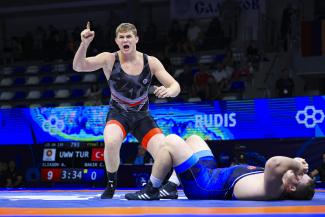
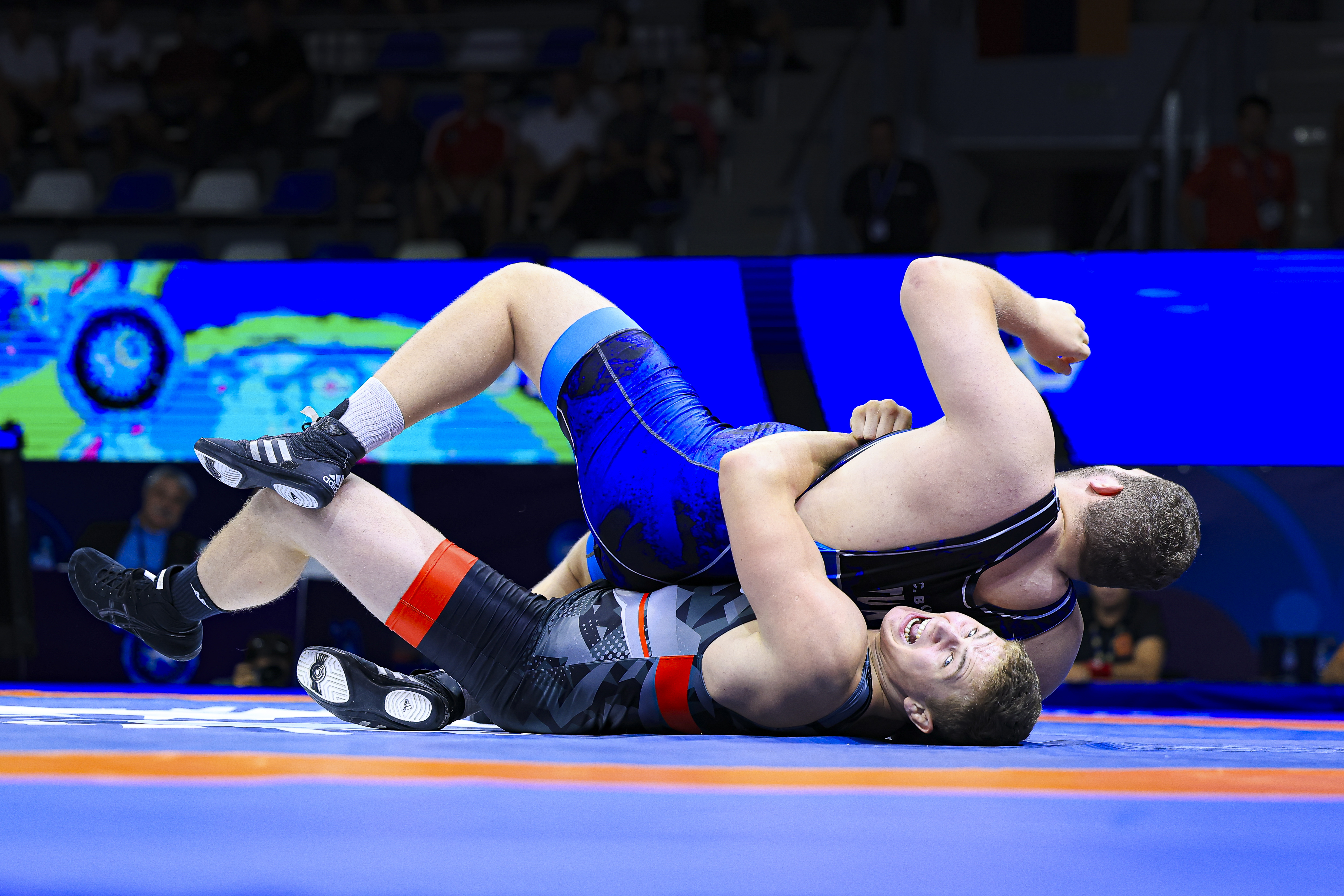 Ali ILIASOV (UWW) turns Yusuf BAKIR (TUR) for two points during the 130kg final at the World U20 Championships. (Photo: United World Wrestling / Kadir Caliskan)
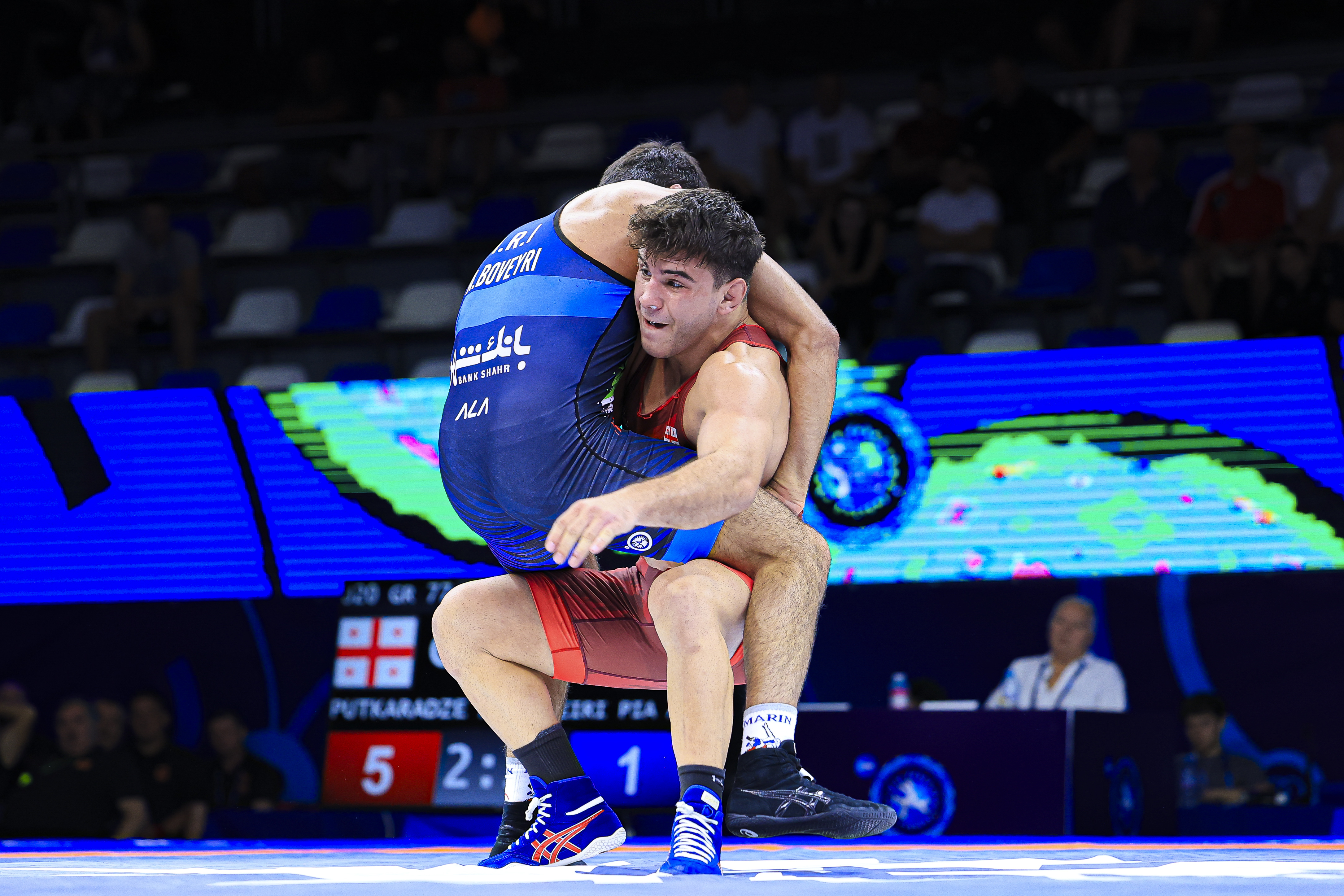 Anri PUTKARADZE (GEO) hits a counter attack against Ahoura BOUVEIRI (IRI) during the 77kg final. (Photo: United World Wrestling / Kadir Caliskan)
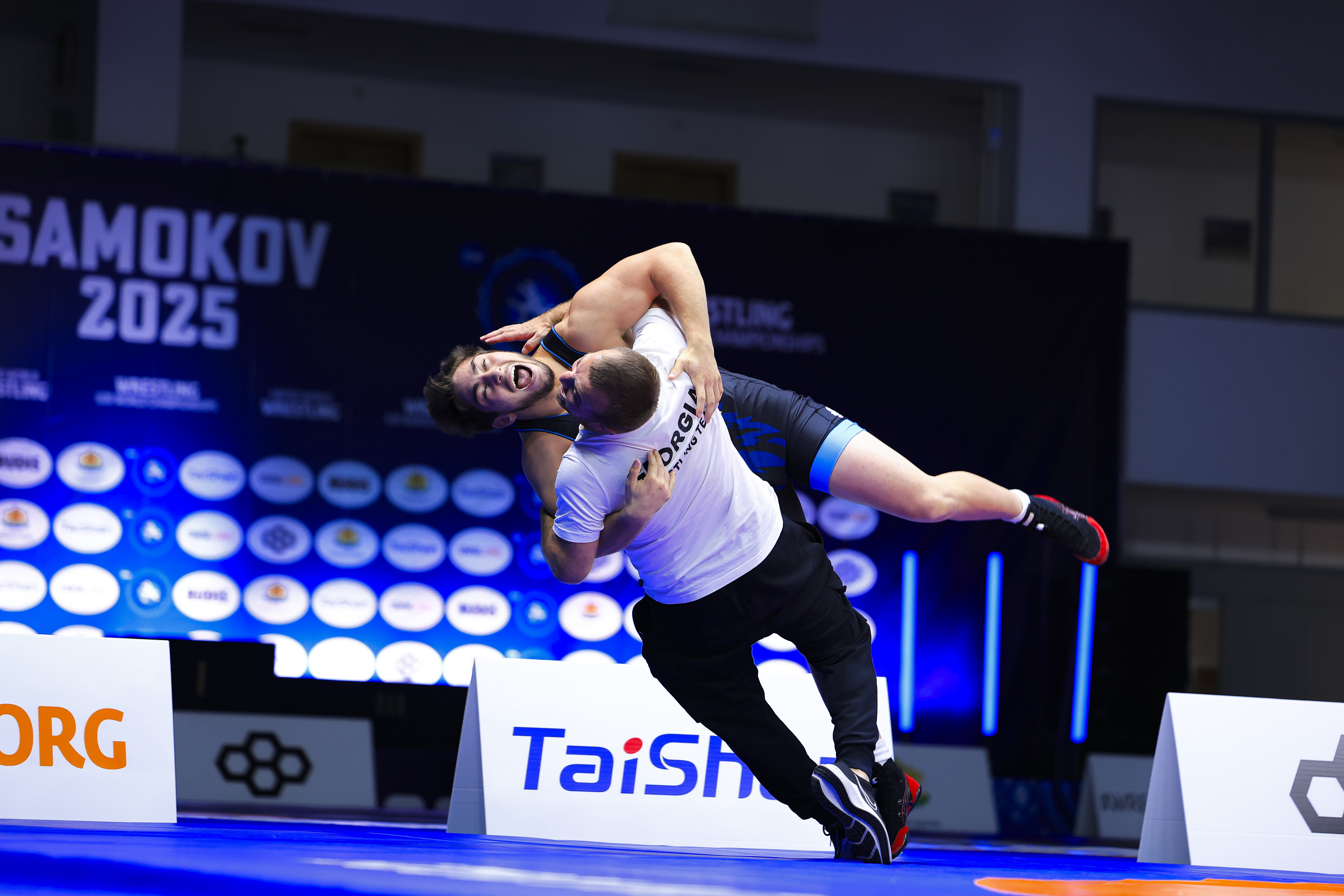 Luka KOCHALIDZE (GEO) celebrates with his coach after winning the 87kg final. (Photo: United World Wrestling / Amirreza Aliasgari)
Share your thoughts.
Comments