

Fujinami's pre-Paris prepping includes victory in rare clash with fellow world champ Sakurai
Sunday, January 21, 2024 - 12:45 By Ken Marantz

TOKYO (January 18) -- It wasn't exactly Rocky and Apollo Creed settling their score in a dank empty boxing gym. But on a winter morning in Tokyo, two reigning women world champions met in a rare clash that would have been a marquee match-up on a global stage but was seen only by a sparse crowd in a nondescript high school gym.
Akari FUJINAMI got the best of fellow world champion Tsugumi SAKURAI when they faced off not for individual glory, but for collegiate pride in the East Japan Women's Collegiate League, a team competition held on Jan. 14.
A crowd of 150 or so was on hand for the clash of titans at Kokugakuin High School in central Tokyo, almost solely teammates, coaches, referees and officials from the organizing Tokyo Wrestling Association. The only sign that something special was at hand were the 30-plus media members there to witness the historic event.
 Nippon Sport Science University's Akari FUJINAMI looks for an opening in her match with fellow world champion Tsugumi SAKURAI of Ikuei University in a collegiate team tournament in Tokyo on Jan. 14. (photo by Ikuo Higuchi / Japan Wrestling Federation)
Fujinami, the reigning world gold medalist at 53kg from Nippon Sports Science University, defeated three-time 57kg titlist Sakurai of Ikuei University 5-0 in a 59kg match as both continue their preparations for the Paris Olympics, where they will both be favorites to strike gold.
Fujinami and Sakurai have practiced together before at national team camps, most recently at the start of the new year, but had not met in an official match since their high school days.
"We have practiced together many times," Fujinami said. "I was nervous in the actual match and it had a different feel. I think things came out that I can work on going into Paris, and I hope the two of us can win gold medals in Paris."
The five-team competition (actually four, with Nihon University a no-show) paired squads of three in the 53kg, 59kg and over-59kg weight classes in a duel meet format. Fujinami's victory was not enough to prevent Sakurai's Ikuei from beating NSSU 2-1, with Paris hopeful Ami ISHII scoring the decisive victory. Ikuei went on to win the title.
Fujinami, however, won her two other matches on the day, running her current winning streak to 133 that dates back to her junior high school days and includes two world senior titles.
So what led such stars to risk injury in an Olympic year in a match that would normally only have occurred had a national team berth been at stake?
"For sure, there were various things I thought of, but I wanted to make some contribution to Nittaidai," Fujinami said, using the common term for NSSU. "I heard that Sakurai would be participating, and I knew Sakurai would be ready, so I wanted to do it. I thought it would be a match that will have a connection to Paris. I entered because I will do everything to get ready for Paris, and I did it for Nittaidai."
Sakurai, at 22, is two years older. The two had met three times previously, most recently in July 2019, when Fujinami won for the first time, notching a 7-4 victory in the final at the Inter High School Championships.
Before that, Sakurai scored technical falls in their first two matches, both in 2016, when Fujinami was still in junior high school. It would be in June the following year that Fujinami would lose 7-2 to Umi ITO in the 44kg final of the All-Japan Junior High School Championships---and has not lost since.
"The last time I faced [Sakurai] I was in my first year of high school, so some time has passed since then," Fujinami said. "Both of us have made progress, and both of us will be putting it all on the line in Paris, so we will practice together again with the aim of making us both better."
 Fujinami gets behind for a first-period takedown. Fujinami's father and coach calls out in the background on the left. (photo by Ikuo Higuchi / Japan Wrestling Federation)
In the match, Sakurai tried to use her strength advantage to tie up Fujinami's arms, which thwarted any attacks but led to a passivity point for Fujinami. At the end of the first period, Fujinami finally broke through with a classic single leg takedown to take a 3-0 lead into the second frame.
Neither wrestler could create a good opening in the second period. At one point, Fujinami shot and was temporarily knocked back off balance, but she quickly recovered, and she later squirmed out of an arm spin. With time running out, Sakurai attempted a last-ditch headlock, but Fujinami fought it off for a takedown at the buzzer.
"At this level, I knew it would be a match in which you couldn't let the chance get away if given even a little opening," Fujinami said. "She's an opponent with a strong defense."
 Hosei University's Narumi NAKAMURA scores a rare 2-point exposure on Fujinami. (photo by Ikuo Higuchi / Japan Wrestling Federation)
Not surprisingly, Fujinami had an easier time in her two other matches, winning by either fall or technical superiority. She did, however, give up a rare 2-point exposure to Hosei University's Narumi NAKAMURA, who normally wrestles at 57kg. Fujinami had scored a takedown and was trying for a turn when her opponent reached down and pulled up Fujinami's leg from the inside. But the action came at the edge and was limited to the exposure.
According to the Japan federation website, it was the 12th time in Japan history that two reigning world champions faced each other, dating back to 1965. The most recent occurred in 2019, when then-women's 55kg champion Mayu MUKAIDA (now SHIDOCHI) defeated 53kg counterpart Haruna OKUNO in a 53kg match at the All-Japan Invitational Championships.
In almost all of the previous cases, the clash of titans came about because of the funneling of top wrestlers into the fewer weight classes used for the Olympics. Champions in non-Olympic weights would shift into Olympic ones, creating marquee match-ups. None drew more attention than the epic battles between reigning Olympic champions Kaori ICHO and Risako KAWAI for the 57kg spot at the Tokyo Olympics.
What made the Fujinami-Sakurai encounter so unique was that it occurred in such an innocuous event. While NSSU and Ikuei have emerged as the collegiate powerhouses in women's wrestling, no major title nor individual glory was on the line, and both schools had an alternate on the roster.
"We're in an era now where the strong wrestlers want to face each other," said NSSU assistant coach and former Olympic medalist Chikara TANABE. "If you avoid each other, you won't get stronger. There was also the pride of representing their university. The tournament organizer thought they wouldn't face each other, but they wanted to do it."
 Sakurai attempts a last-ditch headlock, which Fujinami fights off for a late takedown. (photo by Ikuo Higuchi / Japan Wrestling Federation)
Fujinami agrees that facing tough domestic competition, even if it means risking injury -- she has often expressed indifference about the winning streak -- can only be a positive thing.
"I knew deep down that there was a big risk in the challenge itself, but I felt it was something I could not run away from," Fujinami said. "In the end, I won. Looking back on this competition, I will look for things to work on, all in preparation for Paris."
Sakurai concurred, saying, "I went in with the intention of winning, so there is some disappointment. But it is a good thing to to face a wrestler who is above me. Practicing with wrestlers like her at the national camp should help me in my bid to win at the Olympics. I'm glad that I participated in this."
Fujinami would not reveal what her actual weight was on the day, but 59kg marks the heaviest weight class in which she has ever competed. She had gone up to 55kg twice recently and won both times, at the national collegiate championships in 2022 and the Dan Kolov-Nikola Petrov international tournament in Bulgaria last year.
"I have to lose a lot to get down to 53, so I decided to go at 59," she said.
 Ikuei's Ami ISHII works for a takedown against Kanagawa's Makoto KOMADA. (photo by Ikuo Higuchi / Japan Wrestling Federation)
Ishii preps for playoff with wins
It might have been a small surprise to also see Ishii taking the mat as well, given that she is two weeks away from an all-or-nothing playoff for the women's 68kg spot in Paris coming up against Nonoka OZAKI.
Ishii had secured the 68kg berth by winning the fifth-place playoff in Belgrade, but because she did not medal, as per Japan federation criteria, she did not automatically fill it herself. A victory at the Emperor's Cup All-Japan Championships in December would have clinched it, but she lost in the first round to Ozaki, who went on to win the title. Now the two will go at again in a playoff on Jan. 27.
"I went into the Emperor's Cup with the intention of winning, so I had already committed to entering this before that," Ishii said. "It is a good rehearsal to have a tension-filled match before the playoff."
Ishii all but assured Ikuei the championship when she defeated NSSU's Kokona TAKADA 11-0 in the over-59kg match, then later won again by technical superiority in Ikuei's victory over Kanagawa University. Ishii was selected as the Most Outstanding Wrestler of the tournament.
The 21-year-old Ishii was a silver medalist at 68kg in her senior world debut in 2022. But last year in Belgrade, she lost 11-1 to eventual champion Buse TOSUN (TUR) in the semifinals, then lost a heartbreaking 8-8 decision in the bronze-medal match to Irina RINGACI (ROM). She bounced back to defeat Emma BRUNTIL (USA) 2-0 in the fifth-place playoff.
Ozaki, the 2022 world silver medalist at 62kg, failed to displace Sakura MOTOKI -- Ishii's teammate at Ikuei -- in that weight class, and as a sort of consolation, won the 65kg world title in Belgrade. She then bumped up another weight class at the Emperor's Cup in a last-chance bid to get to Paris.
 The nine Japanese who have already secured tickets to the Paris Olympics pose together after being introduced to the crowd on the final day of the All-Japan Championships in December. (photo by Takeo Yabuki / Japan Wrestling Federation)
Next stop, Bishkek
Next up for both Fujinami and Sakurai will be the Asian Championships on April 11-16 in the Kyrgyzstan capital of Bishkek, where they will look to solidify their UWW rankings and ensure high seeds at the Paris Olympics.
Both won golds at the Asian Games in China last October to follow up their triumphs the previous month at the World Championships. Fujinami will be aiming for her third straight Asian Championships title, while Sakurai will attempt to add to the title she won in 2022.
"We would be concerned if she didn't enter a tournament [before Paris]," said Fujinami's coach and father Shinichi. "At this point the biggest fear is injury. We have to prepare carefully and methodically for Paris."
The Asian Championships is expected to be the last opportunity for the world will get a glimpse of either wrestler before the Paris Olympics, although Shinichi said there is a slight possibility of his daughter appearing at the Ranking Series tournament in Budapest in June.
He noted that the Budapest has a two-kilogram weight allowance, but said at this point the Japan federation will not be dispatching wrestlers, meaning anyone who wants to go would have to do so as an individual.
Of the three other Japanese women who have already clinched tickets to Paris, Yui SUSAKI at 50kg and Sakura MOTOKI at 62kg have not publicly announced their intentions regarding Bishkek, while Yuka KAGAMI at 76kg said she will be there.
Kagami was an Asian champion in 2019 and silver medalist in 2022. Susaki and Motoki just finished competing at the Zagreb Open, where the former captured the gold while the latter lost in the semifinals to rival Aisuluu TYNYBEKOVA (KGZ) and defaulted the bronze-medal match.
As for the four Japanese men who already have tickets to Paris, it appears only Nao KUSAKA at Greco 77kg will be competing in Bishkek, according to his coaches. Kusaka, who won a bronze in Zagreb, will also enter the Wladyslaw Pytlasinski Cup in Warsaw in June. Tokyo Olympic silver medalist Kenichiro FUMITA will bypass an attempt at a third career Asian title at Greco 60kg, but intends to travel to Warsaw in his lone tuneup for Paris.
In freestyle, neither Rei HIGUCHI at 57kg nor Daichi TAKATANI at 74kg will be going to Bishkek. Higuchi is expected to enter the Budapest Ranking Series event, as much to experience getting down to weight as anything else, while a source said that Takatani will head to Paris with only practice under his belt.
While Susaki was keeping her immediate plans under wraps, she recently made a surprisingly forthcoming -- and bold -- statement regarding her post-Paris future.
At the All-Japan Championships in December, Susaki and the other eight wrestlers who had already clinched berths in Paris did not compete, but were in attendance on the final day and were introduced to the crowd.
Later, Susaki met with the Japanese press and said that she is not only aiming to win a second straight Olympic title in Paris, but to also win golds at the Olympics after that in Los Angeles in 2028 and Brisbane in 2032.
Such a feat would equal that of Kaori ICHO, the only woman in Olympic history to win four consecutive golds in one event.
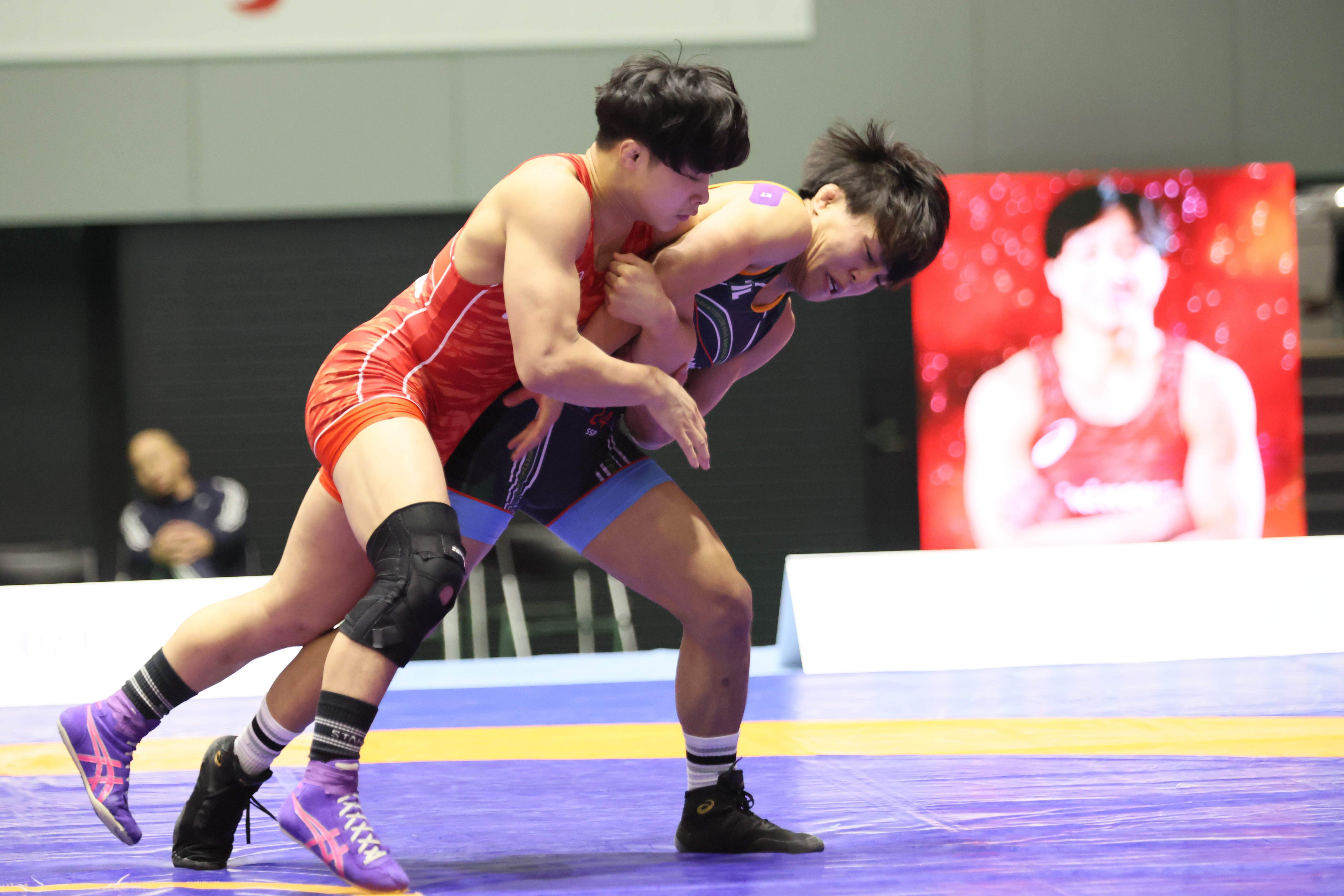 Kaisei TANABE, left, works to get behind Ryota KOSHIBA in the Greco 63kg final. (Photo: Takeo Yabuki / wrestling-spirits.jp)
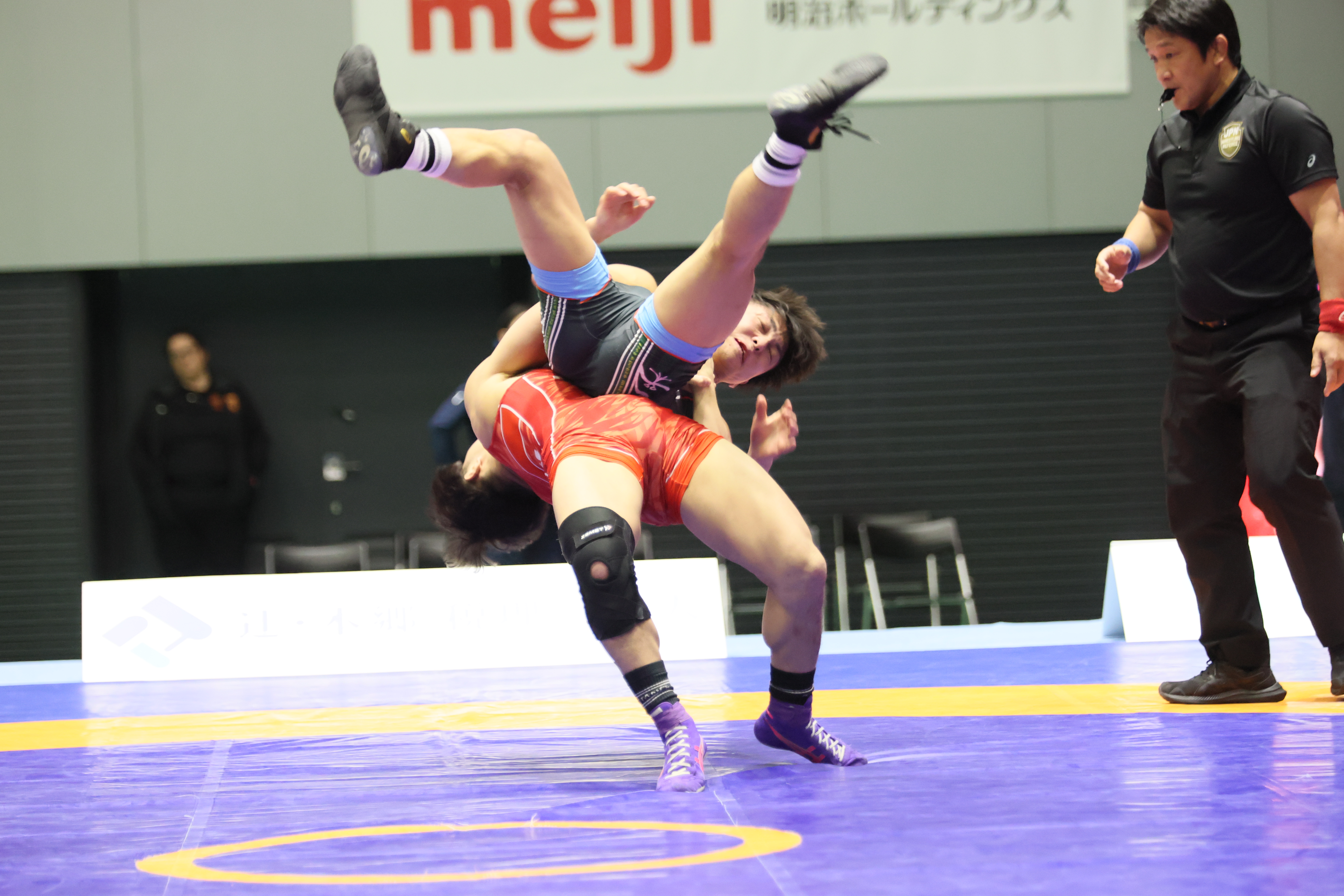 Kaisei TANABE finishes up his victory over Ryota KOSHIBA with a four-point throw in the Greco 63kg final. (Photo: Takeo Yabuki / wrestling-spirits.jp)
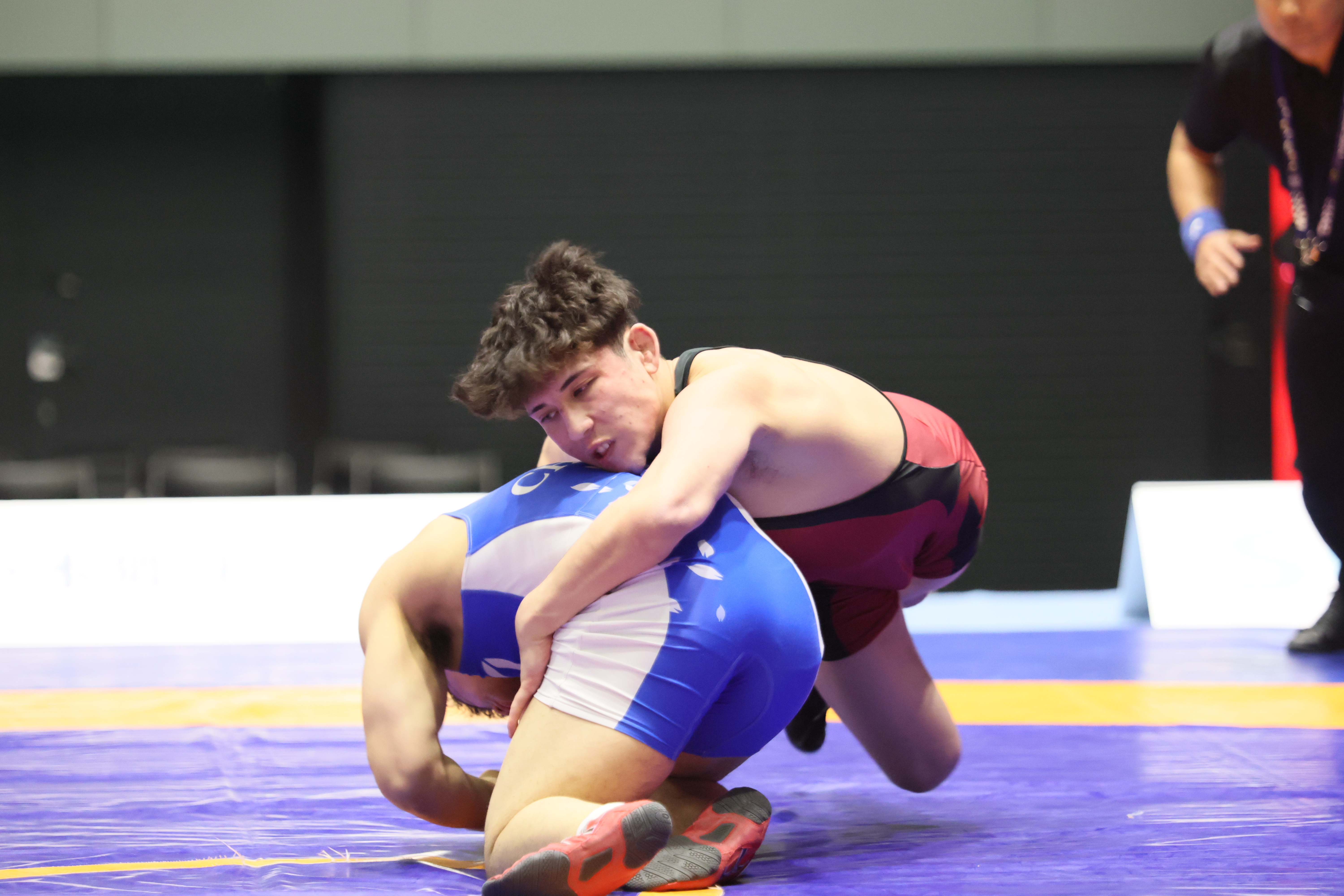 Keyvan GHAREHDAGHI, right, spins behind Kanata YAMAGUCHI in the freestyle 79kg final. (Photo: Takeo Yabuki / wrestling-spirits.jp)
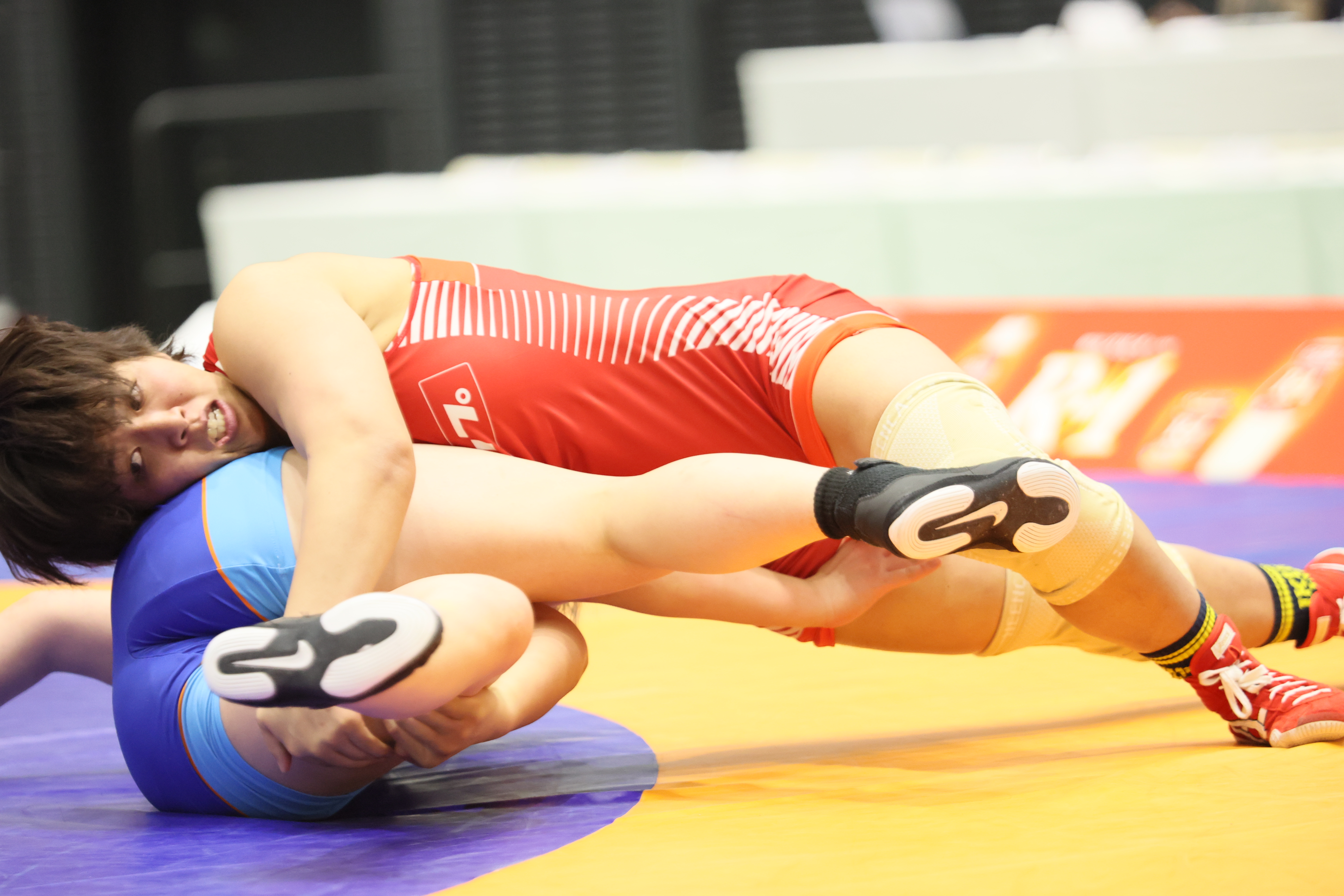 World champion Ami ISHII scores a takedown in the women's 68kg semifinal against Kaede MATSUYAMA. (Photo: Takeo Yabuki / wrestling-spirits.jp)
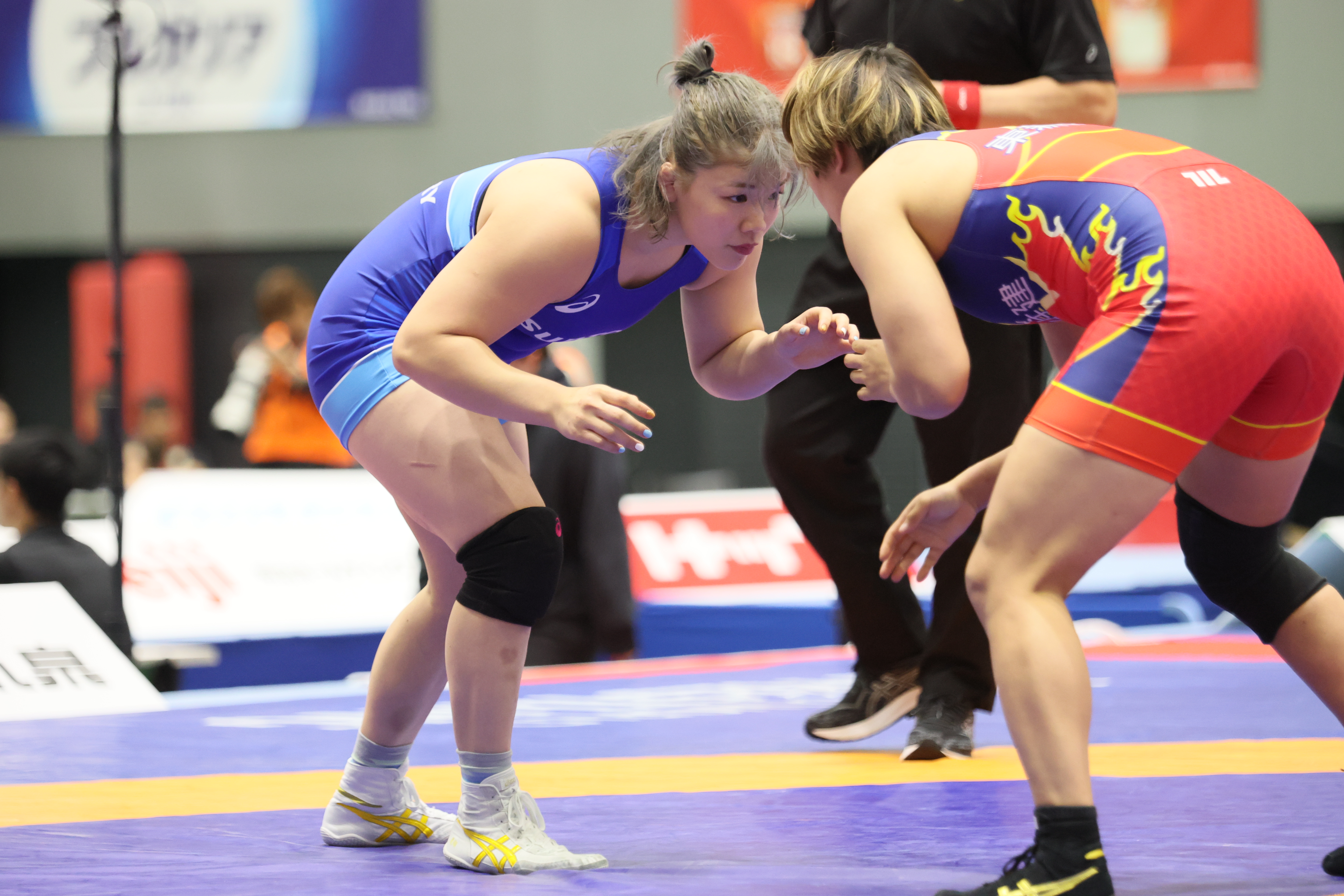 Olympic champion Yuka KAGAMI, left, competes for the first time since her victory in Paris. (Photo: Takeo Yabuki / wrestling-spirits.jp)
Share your thoughts.
Comments