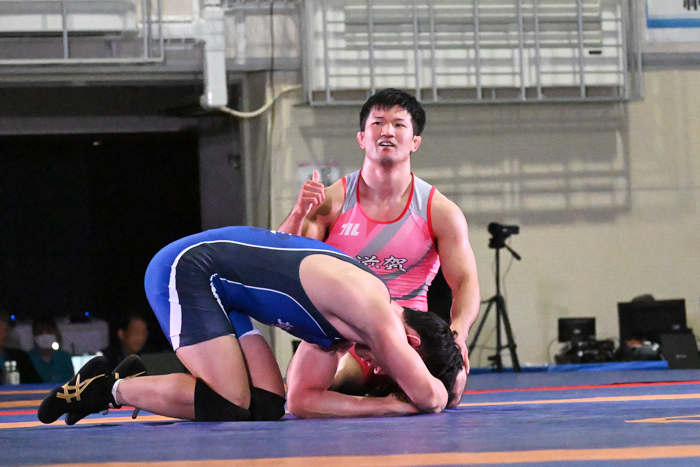
Development

DNSS Program in Cambodia: Building Foundations for Wrestling Growth

By United World Wrestling Press

PHNOM PENH, Cambodia (December 2) --- From July 18 to November 30, 2024, the Development of the National Sports System (DNSS) program in Cambodia marked a significant milestone for the growth of wrestling in the country. Led by UWW Educator Martin Hauck (USA), this program provided a comprehensive approach to enhancing coaching, athlete development, and refereeing in Cambodia. Through a mix of workshops, camps, and tournaments, the initiative sought to foster collaboration, education, and enthusiasm for wrestling at all levels.

During the program, more educational opportunities were created for coaches, athletes, and referees. A key highlight was a youth national tournament held during the second visit, which connected athletes and coaches from several provinces, promoting competition and collaboration. Plans were made to make this event an annual tradition, further strengthening the sport’s foundation in Cambodia.

The program objectives included observing and assessing the national team during a high-performance camp in July, educating coaches on long-term athlete development, and organizing a one-day seminar in a neighboring province to introduce wrestling games to youth. Meetings with the Cambodia Wrestling Federation leadership helped establish a roadmap for future development and in-person training sessions.

Key deliverables included:

  • Running camps and seminars for coaches and athletes, focusing on practical and theoretical education.
  • Creating a Cambodian Coaches Course Curriculum and teaching topics such as emergency action planning, practice structuring, periodization, talent identification, and connecting traditional Cambodian wrestling with Olympic styles.
  • Organizing a youth national tournament and camp, which saw participation from almost all provinces, showcasing significant growth on and off the mat.
  • Promoting communication, education, and resource-sharing platforms for ongoing development.

The DNSS program not only strengthened technical skills but also built excitement and unity within the Cambodia Wrestling Federation. With a focus on collaboration among referees, coaches, athletes, and stakeholders, this initiative laid the groundwork for sustained development and opportunities in wrestling throughout Cambodia.

The Development of National Sports System (DNSS) program, conducted in Cambodia from July 18 to November 30, 2024, marked a significant step toward developing wrestling in the country. Led by UWW Educator Martin Hauck (USA), the program aimed to address critical gaps in coaching, athlete development, and organizational structure while fostering growth and enthusiasm for the sport nationwide.

CAMOver 100 participants competed in the national youth tournament during the Development of the National Sports System (DNSS) program in Cambodia.

Program Activities and Achievements

The DNSS program implemented a range of initiatives to address these challenges and lay the groundwork for wrestling’s growth:

  1. Youth Development and Competitions:
    The program introduced a national youth tournament, drawing over 100 athletes from nearly all provinces. This event not only provided a platform for competition but also fostered excitement and collaboration among athletes, coaches, referees, parents, and stakeholders.
  2. Coaching Education and Communication:
    Coaches participated in comprehensive seminars covering emergency action planning, athlete development, periodization, video analysis, coaching females, and practice structuring. A centralized communication platform on the Cambodia Wrestling Federation website improved collaboration among coaches and clubs, helping connect rural and urban areas.
  3. Structured Athlete Development:
    New frameworks for athlete progression were introduced, enabling coaches and athletes to engage in long-term development cycles. Practical sessions during national team camps allowed coaches to apply their learning while working with athletes from across the country.
  4. Safety and Inclusivity:
    Emphasis on mental health, recovery practices, and safety protocols improved understanding and implementation of safe wrestling environments.
  5. Stakeholder Engagement:
    Meetings with the Cambodia Wrestling Federation leadership resulted in a shared vision for growth, including plans to strengthen partnerships, increase opportunities, and enhance stakeholder representation.

Key Outcomes

The program’s efforts led to several important outcomes:

  • Improved communication and collaboration within the wrestling community.
  • Significant growth in coaches’ theoretical and practical knowledge.
  • Increased participation and retention among athletes and coaches.
  • The successful execution of Cambodia’s first youth national tournament.
  • The identification of Coach Sotheara as a future leader for the sport.

Path to Success

The success of wrestling in Cambodia will depend on sustained education, participation, and collaboration. With improved communication, increased opportunities, and the emergence of local leaders like Coach Sotheara, the sport is well-positioned for growth. The DNSS program has laid a strong foundation, and with continued effort, wrestling in Cambodia has the potential to thrive at both national and international levels.

By fostering education, inclusivity, and passion, this program has not only addressed immediate needs but also set a vision for wrestling’s bright future in Cambodia.
#WrestleAmman

Olympic champs prevail as Iran bounces back with 4 golds

By Ken Marantz

AMMAN, Jordan (March 26) -- With its two Olympic champions in action, it was a pretty sure thing that Iran would do better than its disappointing showing the previous day in Greco-Roman at the Asian Championships.

The wrestling powerhouse sure did, rebounding all the way to the top of four medal podiums. Paris Olympic gold medalists Mohammadhadi SARAVI (IRI) and Saeid ESMAEILI (IRI) defended their Asian titles in leading a quartet of Iranians who captured titles on Wednesday in Amman, a day after Iran came away with just a single gold.

Danial SOHRABI (IRI) and Mohammad NAGHOUSI (IRI) also emerged victorious as Iran stormed to the team title with 201 points, well ahead of the 168 chalked up by second-place Uzbekistan, which claimed three golds on the opening day Tuesday -- all in head-to-head clashes with Iranian opponents. Japan finished third with 131 points.

Olympic bronze medalist Se Ung RI (PRK) won the other gold on offer on Wednesday with a victory at 60kg after taking silvers in 2018 and 2019.

Mohammadhadi SARAVI (IRI)Mohammadhadi SARAVI (IRI) wrestles Yuri NAKAZATO (JPN) in the 97kg final. (Photo: United World Wrestling / Kadir Caliskan)

Saravi, competing for the first time since Paris, showed again why he has been the dominant force at Greco 97kg in recent years when he easily outclassed 2023 world U23 bronze medalist Yuri NAKAZATO (JPN) 8-0 in the final.

"This is my first official appearance after the Olympic Games," Saravi said. "Thank God I was able to put on a good performance and win the gold medal."

Put in par terre, Saravi scored a roll against the gutsy but outmanned Nakazato, then added an arm drag takedown for a 5-0 lead. Just seconds into the second period, Saravi got behind for a takedown during a scramble that landed him out of bounds.

The Japanese side took a risk and challenged the call, even though losing it would give Saravi the winning point. That's just what happened, and Saravi was champion at 3:08 with his third technical fall in three matches without conceding a point.

"After the Olympics, I suffered a knee injury, but thankfully, I’m in much better condition now," Saravi said. "Over the past two or three months, I’ve been able to train at the camp under the supervision of the national team and I’ve reached a decent level of readiness and felt good.

"I hope to reach full readiness by the World Championships and deliver a strong performance there to achieve the best possible result."

The 27-year-old Saravi, who also won a bronze medal at the 2021 Tokyo Olympics, has not lost since falling 3-0 to Gabriel ROSSILO (CUB) in the semifinals of the 2023 World Championships.

Perhaps more impressively, he has finished in the top-three in every competition he has entered since the 2019 worlds, a streak of 18 tournaments that includes a world gold in 2021 and Asian gold in 2020.

Saravi said he looks forward to renewing his rivalry with four-time Olympic medalist Artur ALEKSANYAN (ARM), whom he defeated in the final in Paris.

"Artur Aleksanyan is a great wrestler and someone I have a lot of respect for," Saravi said. "I see it as motivation for myself to face him several times in the coming years.

"I hope Aleksanyan can achieve the best results in the European Championships, and that we can put on a great match together at the World Championships so that the fans can enjoy it."

Saied ESMAEILI (IRI)Saied ESMAEILI (IRI) sets up to throw Razzak BEISHEKEEV (KGZ) during the 67kg final. (Photo: United World Wrestling / Kostadin Andonov)

Earlier, Esmaeili, also making his first appearance since the Olympics, had to work a bit harder than Saravi to prevail 3-0 in the 67kg final over world U23 champion Razzak BEISHEKEEV (KGZ), a repeat of the outcome of last year's final.

"This edition of the Asian Championships had a high level of competition, with renowned wrestlers from Japan, Uzbekistan, and Kyrgyzstan," Esmaeili said. "The Kyrgyz wrestler was the world U23 champion and a strong competitor. The Japanese wrestler was the Asian Games champion and showed a high level of performance."

Esmaeili got a 2-point throw from par terre in the first period, then held his ground to avoid giving up a passivity point in a scoreless second to relegate Beishekeev to the silver medal again.

"In the final, I fought for those six minutes, but my opponent wasn’t really there to wrestle with me," Esmaeili said. "I attacked him during those six minutes, and in the second period, he kept stopping the match to catch his breath. Honestly, the final was the toughest match."

Esmaeili said he had to make the tough transition that comes with the notoriety of becoming an Olympic champion.

"After becoming an Olympic champion, people expect a lot from me, and because of the matches I’ve had, their expectations have increased," he said. "Every competition we enter is more stressful than before because people say, 'He’s an Olympic champion, so he has to perform well.'

"That’s why we have to be careful not to lose. The pressure of competition has become much heavier for us since the Olympics."

The loss was Beishekeev's first since last year's final in Bishkek, after which he won titles at the 2024 World U23 Championships and at this year's Tirana Ranking Series tournament. He also has bronze medals from both the Asian Games and Asian Championships in 2023.

Danial SOHRABI (IRI)Danial SOHRABI (IRI) celebrates after winning the 72kg final against Abdullo ALIEV (UZB) at the Asian Championships. (Photo: United World Wrestling / Kostadin Andonov)

At 72kg, Sohrabi completed a dominant run to the title by putting away 2024 bronze medalist Abdullo ALIEV (UZB) 8-0 in the final for his fourth technical fall in four matches -- all without giving up a point.

Sohrabi, the 2023 world U23 champion, took advantage of the first shot at par terre by scoring consecutive rolls for a 5-0 lead, added a stepout, then finished the match with a takedown at 2:38.

Mohammad NAGHOUSI (IRI)Mohammad NAGHOUSI (IRI) wrestles Omar SATAYEV (KAZ) in the 82kg final at the Asian Championships. (Photo: United World Wrestling / Kostadin Andonov)

World U23 champion Naghousi had his work cut out for him in forging a 3-1 victory over Omar SATAYEV (KAZ) in the 82kg final.

Naghousi used a body lock throw to score from par terre in the first period, then defended well from the bottom in the second period, avoiding giving up points on a rolling throw attempt by Satayev, whose silver marks his first senior-level medal.

Se Ung RI (PRK)Se Ung RI (PRK) celebrates after winning the gold medal at the 60kg weight class. (Photo: United World Wrestling / Kadir Caliskan)

At 60kg, Ri used his agility to step over and gain a 2-point exposure on a takedown attempt by world U23 champion Alisher GANIEV (UZB) in the second period, giving him a 6-4 win and his first victory in three trips to the Asian final.

"I trained really hard to make sure I would win first place here," Ri said. "In the match against the Uzbekistan athlete, since I was stronger overall, I tried my best to overpower him tactically and secure the gold medal."

Ri took the early lead with an arm drag takedown and gut wrench to go up 4-0, but Ganiev came back with a lateral drop for 2, then spun behind after stopping an arm throw to make it 4-4 with the criteria in his favor.

In the second period, Ganiev got in tight on a takedown attempt on the mat, but Ri stepped over the top to wrench Ganiev temporarily onto his back for the 2 that would give him the title.

Ri, who prevented Iran from having finalists in all five weight classes when he defeated Pouya NASERPOUR (IRI) 8-4 in the semifinals, said he prepared well for what he knew would be a tough competition in the Olympic weight class.

"The 60kg category is an Olympic category, that's why I studied all of the opponents carefully, watched a lot of match footage and worked hard to win," Ri said.

Shahin BADAGHIMOFRAD (QAT)Shahin BADAGHIMOFRAD (QAT) edged Mukhammadkodir RASULOV (UZB) 6-5 in the 82kg bronze-medal bout. (Photo: United World Wrestling / Kadir Caliskan)

Qatar gains 2nd-ever Asian medal, with an Iranian tint

In the bronze-medal matches, Qatar picked up just its second-ever medal -- again thanks to the efforts of an import -- when Iranian-born Shahin BADAGHIMOFRAD (QAT) edged two-time bronze medalist Mukhammadkodir RASULOV (UZB) 6-5 at 82kg.

Badaghimofrad, who finished fifth for Iran at the 2023 Asian Championships and made his debut for Qatar earlier this year, had fallen behind 5-4 from a scramble that was started from a nice 4-point fireman's carry by Rasulov. But Badaghimofrad used an arm drag for a takedown to go ahead before the break, then held off Rasulov in a second period that saw no passivity points assessed.

Qatar's only previous medal was a silver won at freestyle 125kg by Georgian-born Giorgi SAKANDELIDZE (QAT) in 2018 in Bishkek. There have been a handful of fifth-place finishes by native Qataris.

In the other 82kg match, Boseong KANG (KOR) pulls a surprise with a 6-6 victory over dethroned defending champion Taizo YOSHIDA (JPN), using an effective arm throw to build a six-point lead before holding off a late charge from the Japanese teen.

At 60kg, Kaito INABA (JPN) added a bronze to the silver he won last year in Bishkek, defeating Iran's Naserpour 1-1 on last-point criteria in a match limited to passivity points.

With Inaba on top in the second period, Naserpour did an amazing job of preventing being thrown, but Inaba clinched the win when he wriggled out of a Naserpour arm spin late in the match.

The second bronze-medal match at 60kg was also decided on last point, as Ziyue XI (CHN) used a high-chest wrap to turn over Akyl SULAIMANOV (KGZ) from par terre and secure a 3-3 victory for the first major medal of his career.

Sulaimanov, who won an Asian U23 bronze here last year, converted a reverse body roll in his turn from par terre in the first period.

At 67kg, Man Gwang SON (PRK) scored a stepout with :43 second left, giving him the criteria advantage and a 2-2 victory over Nozimjon BOYKUZIEV (UZB). Boykuziev had gone ahead with a stepout during a throw in par terre to go up 2-1.

Katsuaki ENDO (JPN)Katsuaki ENDO (JPN) won the 67kg bronze medal. (Photo: United World Wrestling / Kadir Caliskan)

Asian Games champion Katsuaki ENDO (JPN) hit a rolling 4-point throw from par terre in the first period and that was more than enough to defeat NEERAJ (IND) 5-0 in a battle between the 2022 bronze medalists. The loss denied Neeraj a third career Asian bronze.

In a bizarre finish at 72kg, Ji LENG (CHN) was on his way to a victory over Omar AL DARAGHMEH (JOR) when a misguided challenge from the Jordan side gave the Chinese the points he needed for an 11-3 technical fall.

Leng had a pair of stepouts and a takedown-roll combination in the second period to build up a 9-3 lead when Al Daraghmeh attempted a pancake that was stopped and originally scored as 2 for Leng. The call was overturned as a slipped throw, but Jordan challenged anyway -- and "won" the challenge because Al Daraghmeh was instead assessed a 2-point leg foul penalty which ended the match.

Issei HONNA (JPN) earned the other 72kg bronze for his first international medal, ripping off three rolls from par terre en route to a 10-0 victory over Begmyrat NOBATOV (TKM) in 2:13.

At 97kg, NITESH (IND), a two-time Asian U23 medalist, earned his first senior medal with a one-sided 9-0 victory over Amanberdi AGAMAMMEDOV (TKM). Nitesh scored three gut wrenches from par terre, then ended the match with an arm drag takedown with :04 left in the first period.

Youfang ZHANG (CHN) snatched the other 97kg bronze in impressive fashion, reversing Jewoo PARK (KOR) during a gut wrench and securing a fall at 2:00.

Photo

Day 2 Results

Greco-Roman

60kg (12 entries)
GOLD: Se Ung RI (PRK) df. Alisher GANIEV (UZB), 6-4

BRONZE: Kaito INABA (JPN) df. Pouya NASERPOUR (IRI), 1-1
BRONZE: Ziyue XI (CHN) df. Akyl SULAIMANOV (KGZ), 3-3

67kg (13 entries)
GOLD: Saeid ESMAEILI (IRI) df. Razzak BEISHEKEEV (KGZ), 3-0

BRONZE: Man Gwang SON (PRK) df. Nozimjon BOYKUZIEV (UZB), 2-2
BRONZE: Katsuaki ENDO (JPN) df. NEERAJ (IND), 5-0

72kg (14 entries)
GOLD: Danial SOHRABI (IRI) df. Abdullo ALIEV (UZB) by TF, 8-0, 2:38

BRONZE: Ji LENG (CHN) df. Omar AL DARAGHMEH (JOR) by TF, 11-3, 5:14
BRONZE: Issei HONNA (JPN) df. Begmyrat NOBATOV (TKM) by TF, 10-0, 2:13

82kg (11 entries)
GOLD: Mohammad NAGHOUSI (IRI) df. Omar SATAYEV (KAZ), 3-1

BRONZE: Boseong KANG (KOR) df. Taizo YOSHIDA (JPN), 6-6
BRONZE: Shahin BADAGHIMOFRAD (QAT) df. Mukhammadkodir RASULOV (UZB), 6-5

97kg (11 entries)
GOLD: Mohammadhadi SARAVI (IRI) df. Yuri NAKAZATO (JPN) by TF, 8-0, 3:08

BRONZE: NITESH (IND) df. Amanberdi AGAMAMMEDOV (TKM) by TF, 9-0, 2:56
BRONZE: Youfang ZHANG (CHN) df. Jewoo PARK (KOR) by Fall, 2:00 (3-3)