

A decade since wrestling’s grapple back into Olympics
Friday, September 8, 2023 - 06:16 By United World Wrestling Press

From left to right: Jim SCHERR (USA), Daniel IGALI (CAN), Lise LEGRAND (FRA), Carol HUYNH (CAN) and UWW President Nenad LALOVIC at the press conference during the 125th IOC Session in Buenos Aires in 2013. (Photo: IMAGO/AFLOSPORT)
CORSIER-SUR-VEVEY, Switzerland (September 8) -- Wrestling's World Championships enters the 102nd year next week and next year will mark another Olympic Games that will feature wrestling. But 10 years ago, wrestling was removed from the Olympic Programme.
In February 2013, the International Olympic Committee voted to remove wrestling from the 2020 Olympics. It took wrestlers from different nations coming together, led by Serbia's Nenad LALOVIC, to reverse an unthinkable result and to 'Save Olympic Wrestling'.
On September 8, 2013, in Buenos Aires, Argentina, the full IOC membership welcomed the sport back to the programme with a first-round vote that left no doubt that wrestling belonged in the Olympic Games.
Wrestling's journey of finding itself back in the Olympics was marked by twists and turns, and, fittingly, resiliency.
The Decision
One of the original sports in the ancient Olympic Games, wrestling faced the critical assessment of the IOC which had expressed concerns about the growing size of the Summer Games and aimed to cap the number of athletes at approximately 10,500. The IOC also wanted to attract younger viewers to broaden the international television audience. There was also discontent over the lack of gender equality, having only introduced women's freestyle competitions in 2004.
When the decision of wrestling being dropped from the Olympic Gamesheadlined, United World Wrestling, then FILA, put in all efforts to revamp the sport. In a FILA Bureau meetingin Phuket, Thailand, Raphael Martinetti resigned as president and after a vote of the Bureau members. The Bureau nominated Lalovic as acting President.
"The world of wrestling is understandably disappointed by the IOC Executive Board’s recommendation to remove wrestling from the 2020 Olympic Games Programme," Lalovic said. "We see this as an opportunity which could be a positive turning point for our sport. One thing is for certain: it is our responsibility alone to address the issues that led to this situation. We are listening to the IOC’s concerns and learning from their guidance. We must strive to improve our sport’s Olympic offering in order to retain our position on the Olympic Programme and evolve with the times.
The Fight
What followed was an immediate and impassioned campaign that stretched from the United States and Russia to Iran and Japan.
Armen NAZARYAN (ARM) and Sagid MURTAZALIEV returned their gold medals in protest, with Nazaryan also engaging in a hunger strike. London gold-medallist Jordan BURROUGHS (USA) used numerous public speaking appearances, countless interviews, and his Twitter account to promote the cause.
To address the concerns, UWW removed two men's weight classes and introduced two new classes for women starting from the 2016 Rio Olympics. This adjustment led to six weight classes each for Freestyle and Women's Wrestling while maintaining six in Greco-Roman.
Rule changes were also implemented to make the sport more engaging and dynamic. Instead of the previous format of three two-minute rounds, matches now consist of two three-minute rounds. This new structure aims to reward aggressive wrestling; takedowns, for example, are now worth two points instead of one. Additionally, matches are decided based on accumulated points, further encouraging active competition.
Campaigns were held in Russia, Iran, the United States and Japan. The first three countries came to New York City, united and determined to prove to the world that Wrestling belongs in the Olympics. The three competed in the “Rumble on the Rails” in the world-famous Grand Central Station.
While in New York, Lalovic attended a press conference at the United Nations. “We are dedicated to reforming our sport and making FILA a more proactive and responsible organization. We will do everything we can to address the IOC’s concerns and ensure that wrestling remains a part of the Olympic Games," he said.
Wrestlers from around the world also took a trip to – Olympia, Greece – the birthplace of the Olympic movement. Wrestlers from Albania, Brazil, Germany, Great Britain, Greece, Iran, Russia and the United States, competed in the international tournament, which was run under the new rules passed by FILA.
IOC took notice and in its session in Buenos Aires, Argentina, it confirmed wrestling's spot in the Olympics.
"I want to offer my sincere gratitude to each member of the International Olympic Committee that voted to save Olympic wrestling today," Lalovic said. "With this vote, you have shown that the steps we have taken to improve our sport have made a difference. I assure each of you that our modernization will not stop now. We will continue to strive to be the best partner to the Olympic Movement that we can be."
In Ten Years
In the decade since wrestling's reinstatement to the Olympic Games, the sport has seen remarkable progress in its structure and reach. The governance of the sport underwent significant changes, with rule amendments aimed at making matches even more dynamic and engaging.
In 2016, there were ten weight classes for women in wrestling, up from four in 2004. This was a major step forward for the sport and has helped increase the visibility and popularity of Women's Wrestling. Who can forget Kaori ICHO’s (JPN) historic accomplishment of being the first ever wrestler, women or men, to obtain four Olympic gold medals!
Over the years, many countries have emerged as the best performers in Women's Wrestling including Japan, Kyrgyzstan, China, Moldova, India, Estonia, Kazakhstan, Turkiye and even Pan-Am countries.
The focus on gender equality has extended beyond merely adding women’s weight classes, as witnessed by UWW's projects and programs, such as special funding for female coaches and wrestlers and quotas for female referees and women working in key administrative positions.
Off the mat, there has been a concerted effort to globalize wrestling, and marketing and social media campaigns have effectively changed the sport's image and engaged younger fans. High-profile wrestlers have taken on ambassadorial roles, visiting schools, appearing on talk shows, and participating in public events to promote the sport. Online platforms are being utilized for live-streaming events and tutorials, making the sport more accessible.
Wrestling's growth is further marked by the acceptance of Beach Wrestling and more than 100 countries participating in the World Championships.
The athlete-focused approach aligned with the IOC's vision of the Olympic movement has allowed fans to be more connected to the sport. Wrestling has established itself as a leader in terms of engagement and continues to be ranked within the top ten in social media amongst all other International Federations.
The 10-year journey from near-elimination to triumphant return is a microcosm of the sport: a physical and metaphorical tussle where resilience is the key to victory. As a wrestler grapples, twists, and turns to win, the sport has shown its mettle by overcoming near defeat, reforming, and returning stronger.
Here’s to wrestling — a sport as ancient as it is contemporary, as diverse as it is specialized, and, most importantly, as resilient as the athletes who partake in it. Wrestling knows how to fight back and fight back it did.
Wrestling’s reinstatement to the Olympic Programme was a collective effort of the wrestling family all across the world. The dedication and tremendous work of key individuals that went into this result will never be forgotten by the wrestling community and will forever live on in wrestling folklore as some of the greatest stewards the sport has ever seen. Thank you.
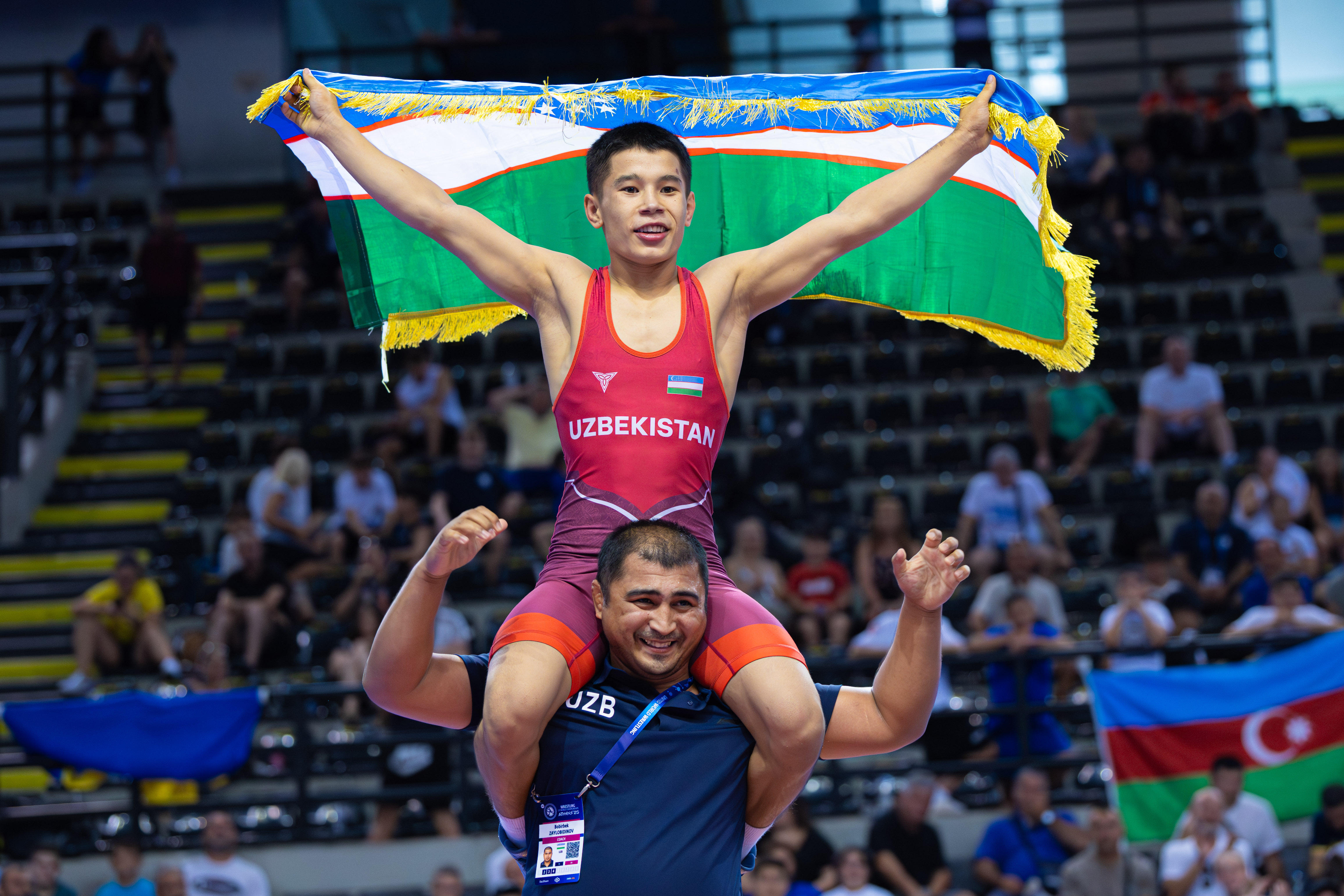 Otabek TURSUNOV (UZB) won the gold medal at 51kg in Athens. (Photo: United World Wrestling / Kostadin Andonov)
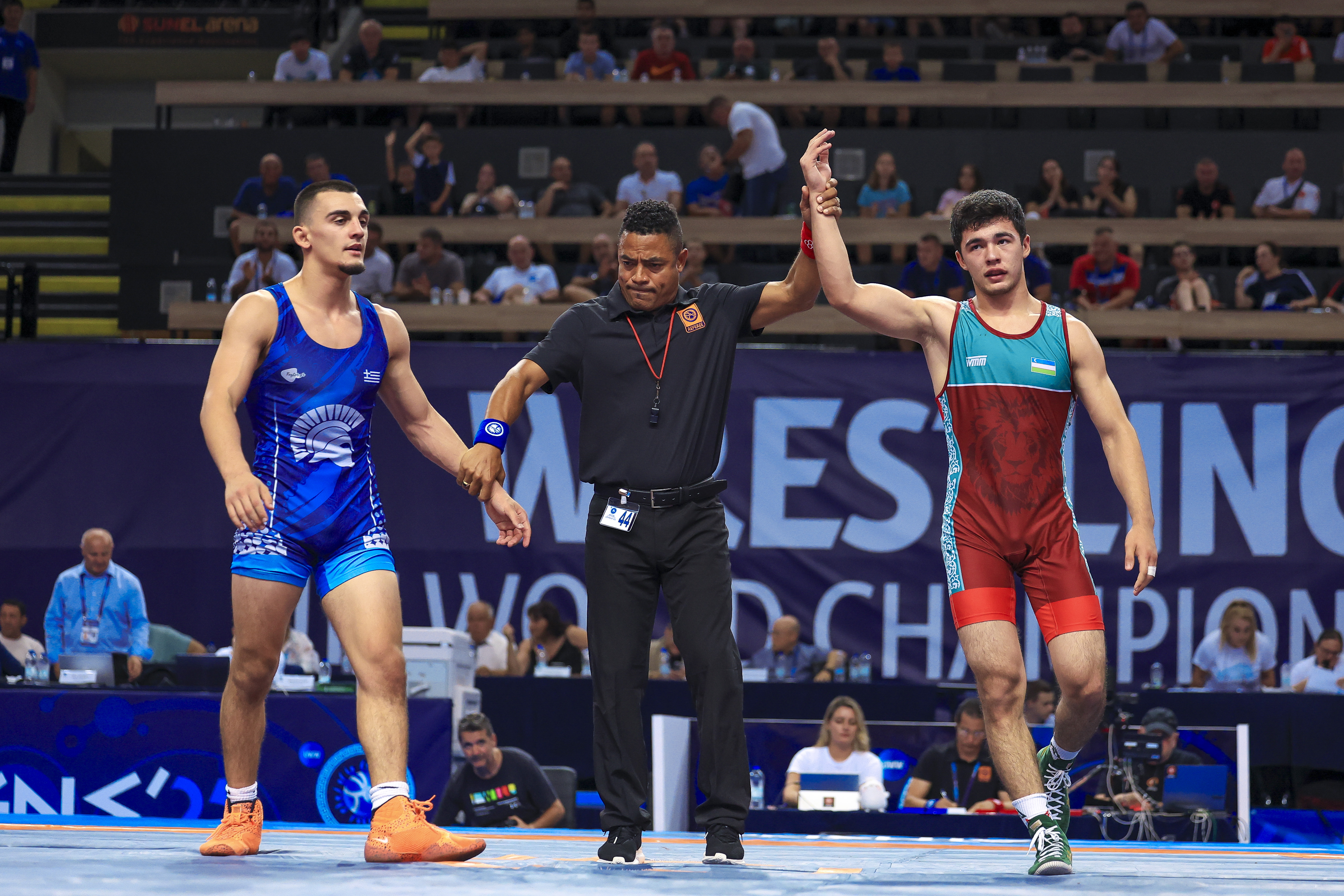 Behruzbek VALIEV (UZB) upgraded his bronze from 2024 to gold in 2025. (Photo: United World Wrestling / Amirreza Aliasgari)
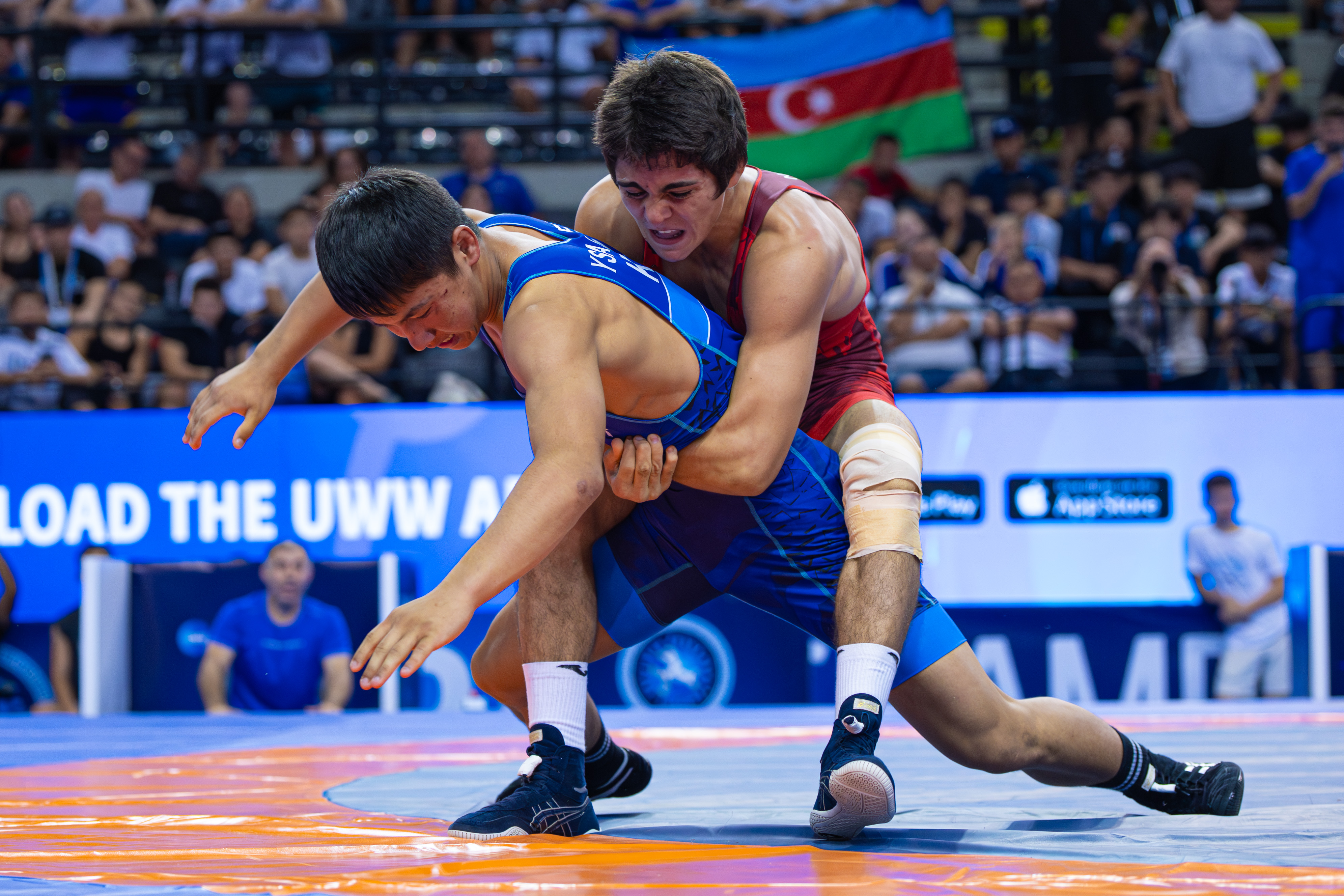 Ali NAZAROV (AZE) scored a 6-1 victory over Amangeldi YSAKBAEV (KGZ) in the 60kg final. (Photo: United World Wrestling / Kostadin Andonov)
Share your thoughts.
Comments